• Home
  • About
  • FAQ
  • Feeds
  • Glossary
  • Contact
Tours In Space
  • Home
  • Start Here
    • Intro to Commercial Spaceflight
    • How to Book a Space Tour
    • Is Space Tourism Safe?
    • Space Travel FAQs
    • View Earth from the Edge
    • What to Pack
  • Preparing for Your Trip
    • Insurance and Legal Waivers
    • Physical and Medical Requirements
    • Training Programs
    • What to Expect
  • Space Tourism Companies
    • Axiom Space
    • Blue Origin
    • SpaceX
    • Virgin Galactic
    • World View (stratospheric balloon flights)
    • Blue Origin vs Virgin Galactic
    • Comparison Chart: Features, Pricing, Booking
  • Space Tours
    • Custom & Luxury Packages
    • Duration, Training, Costs
    • Experiences
    • Future Moon/Mars Options
    • Orbital Flights
    • Parabolic Flight Experiences
    • Private Missions
    • Stratospheric Balloon Flights
    • Suborbital Flights
    • Zero-Gravity Flights
  • Spaceflight Technologies
    • Space Tourism Balloon
No Result
View All Result
  • Home
  • Start Here
    • Intro to Commercial Spaceflight
    • How to Book a Space Tour
    • Is Space Tourism Safe?
    • Space Travel FAQs
    • View Earth from the Edge
    • What to Pack
  • Preparing for Your Trip
    • Insurance and Legal Waivers
    • Physical and Medical Requirements
    • Training Programs
    • What to Expect
  • Space Tourism Companies
    • Axiom Space
    • Blue Origin
    • SpaceX
    • Virgin Galactic
    • World View (stratospheric balloon flights)
    • Blue Origin vs Virgin Galactic
    • Comparison Chart: Features, Pricing, Booking
  • Space Tours
    • Custom & Luxury Packages
    • Duration, Training, Costs
    • Experiences
    • Future Moon/Mars Options
    • Orbital Flights
    • Parabolic Flight Experiences
    • Private Missions
    • Stratospheric Balloon Flights
    • Suborbital Flights
    • Zero-Gravity Flights
  • Spaceflight Technologies
    • Space Tourism Balloon
No Result
View All Result
Tours In Space
No Result
View All Result
Home Uncategorized

ULA launches Viasat’s second shot at a terabit-class broadband satellite

Ensign by Ensign
November 15, 2025
in Uncategorized
0
ULA launches Viasat’s second shot at a terabit-class broadband satellite
189
SHARES
1.5k
VIEWS
Share on FacebookShare on Twitter

TAMPA, Fla. — An Atlas 5 rocket sent Viasat’s second ViaSat-3 satellite toward geostationary orbit Nov. 13, bringing the U.S. broadband provider closer to operating a terabit-per-second (Tbps) giant it had hoped to debut six years ago.

United Launch Alliance lofted ViaSat-3 F2 at 10:04 p.m. Eastern from Space Launch Complex 41 at Florida’s Cape Canaveral Space Force Station, releasing the payload into an elliptical geosynchronous transfer orbit about three and a half hours later.

Viasat announced initial signal acquisition shortly after, marking a key step ahead of the satellite’s roughly three-month journey to its final GEO position at 79 degrees West over the Americas.

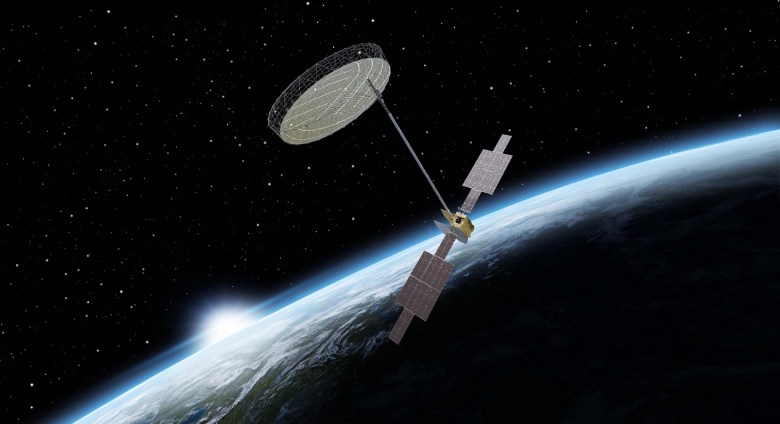
The six-ton satellite is one of the heaviest an Atlas 5 has ever sent to orbit, and at about the size of half a football field when fully unfolded, would provide more bandwidth capacity than all 23 satellites in Viasat’s current fleet combined.

Lift-off came a week after ULA scrubbed the mission following a faulty booster liquid oxygen tank vent valve, which was removed and replaced.

Subscribe Today
Get unlimited access to SpaceNews.com and our digital magazine with a monthly, quarterly or annual subscription.

Discounted Access
Learn more about savings available for academic, government and military readers on SpaceNews subscriptions.

Viasat had once aimed to operate a 1 Tbps broadband spacecraft in 2019, before production and supply chain issues compounded by COVID-19 pushed the first ViaSat-3 launch to 2023, only for it to lose more than 90% of its capacity because of a failed antenna deployment.

ULA was slated to launch ViaSat-3 F2 in 2023 before the issue with the Northrop Grumman antenna on ViaSat-3 F1, which is also stationed over the Americas.

Mark Dankberg, Viasat’s chairman and CEO, told <em>SpaceNews it should take a couple of weeks after ViaSat-3 F2 reaches its orbital slot to deploy and confirm its reworked antenna is operating successfully.

Because of similarities with the otherwise healthy ViaSat-3 F1, the operator expects to move quickly through remaining health checks to start services early next year.

Illustration of a ViaSat-3 satellite in geostationary orbit. Credit: Viasat

“It’s going to be a big boost to our network, especially to our mobility and fixed services,” Dankberg said, “but the whole point of the Viasat-3 series is its capacity and flexibility.”

For the in-flight connectivity market, for instance, he said a ViaSat-3 satellite is designed not only to provide a huge amount of bandwidth to a multitude of planes waiting at an airport, but also to follow them with a beam of connectivity as they fly to their destination.

“Some satellites have beam-forming to follow the plane around, but they’re doing that with 10, 20, 30 gigabits” of total capacity, he added. “Viasat-3 can do that with close to a thousand gigabits.”

Boeing is under contract to provide three ViaSat-3s in total, with the payloads designed and built by Viasat. The third is slated to enter service over Asia in early to mid-2026, using a deployable mesh antenna from L3Harris.

Dankberg said the company is now exploring ways to “miniaturize and package [ViaSat-3 technology] into much smaller satellites,” leveraging existing ground infrastructure and improving spacecraft manufacturing economics to further reduce bandwidth costs.

No Result
View All Result

Recent Posts

  • Germany outlines military space priorities in new strategy
  • Saturn’s rings will seem to disappear on Nov. 23: Here’s how to catch the illusion
  • Does the universe have extra dimensions hiding in plain sight?
  • Canon 8×20 IS binocular review
  • European Parliament member sees support for EU Space Act there

Categories

  • Excursions
  • Kepler Mission
  • NASA
  • NASA Breaking News
  • Physical Preparation
  • Preparation
  • Space News
  • Space Station News
  • Spacewalks
  • Tours
  • Uncategorized
  • Weightlessness Training
  • What Not to Pack
  • What to Pack

Meta

  • Log in
  • Entries feed
  • Comments feed
  • WordPress.org
  • Home
  • Start Here
  • Preparing for Your Trip
  • Space Tourism Companies
  • Space Tours
  • Contact

© 2025 JNews - Premium WordPress news & magazine theme by Jegtheme.

No Result
View All Result
  • About
  • Contact
  • Feeds
  • Frequently Asked Questions
  • Preparing for Your Trip
    • Insurance and Legal Waivers
    • Physical and Medical Requirements
    • Training Programs
    • What to Expect
  • Privacy Policy
  • Space Tourism Companies
    • Axiom Space
    • Blue Origin
    • Blue Origin vs Virgin Galactic
    • Comparison Chart: Features, Pricing, Booking
    • SpaceX
    • Virgin Galactic
    • World View (stratospheric balloon flights)
  • Space Tours
    • Custom & Luxury Packages
    • Duration, Training, Costs
    • Experiences
    • Future Moon/Mars Options
    • Orbital Flights
    • Parabolic Flight Experiences
    • Private Missions
    • Stratospheric Balloon Flights
    • Suborbital Flights
    • Zero-Gravity Flights
  • Spaceflight Technologies
    • Space Tourism Balloon
  • Start Here
    • How to Book a Space Tour
    • Intro to Commercial Spaceflight
    • Is Space Tourism Safe?
    • Space Travel FAQs
    • View Earth from the Edge
    • What to Pack
  • Tours in Space is your launchpad to the world of space tourism

© 2025 JNews - Premium WordPress news & magazine theme by Jegtheme.