• Home
  • About
  • FAQ
  • Feeds
  • Glossary
  • Contact
Tours In Space
  • Home
  • Start Here
    • Intro to Commercial Spaceflight
    • How to Book a Space Tour
    • Is Space Tourism Safe?
    • Space Travel FAQs
    • View Earth from the Edge
    • What to Pack
  • Preparing for Your Trip
    • Insurance and Legal Waivers
    • Physical and Medical Requirements
    • Training Programs
    • What to Expect
  • Space Tourism Companies
    • Axiom Space
    • Blue Origin
    • SpaceX
    • Virgin Galactic
    • World View (stratospheric balloon flights)
    • Blue Origin vs Virgin Galactic
    • Comparison Chart: Features, Pricing, Booking
  • Space Tours
    • Custom & Luxury Packages
    • Duration, Training, Costs
    • Experiences
    • Future Moon/Mars Options
    • Orbital Flights
    • Parabolic Flight Experiences
    • Private Missions
    • Stratospheric Balloon Flights
    • Suborbital Flights
    • Zero-Gravity Flights
  • Spaceflight Technologies
    • Space Tourism Balloon
No Result
View All Result
  • Home
  • Start Here
    • Intro to Commercial Spaceflight
    • How to Book a Space Tour
    • Is Space Tourism Safe?
    • Space Travel FAQs
    • View Earth from the Edge
    • What to Pack
  • Preparing for Your Trip
    • Insurance and Legal Waivers
    • Physical and Medical Requirements
    • Training Programs
    • What to Expect
  • Space Tourism Companies
    • Axiom Space
    • Blue Origin
    • SpaceX
    • Virgin Galactic
    • World View (stratospheric balloon flights)
    • Blue Origin vs Virgin Galactic
    • Comparison Chart: Features, Pricing, Booking
  • Space Tours
    • Custom & Luxury Packages
    • Duration, Training, Costs
    • Experiences
    • Future Moon/Mars Options
    • Orbital Flights
    • Parabolic Flight Experiences
    • Private Missions
    • Stratospheric Balloon Flights
    • Suborbital Flights
    • Zero-Gravity Flights
  • Spaceflight Technologies
    • Space Tourism Balloon
No Result
View All Result
Tours In Space
No Result
View All Result
Home Space News

Walk through the asteroid strike that killed the dinosaurs with American Museum of Natural History’s new ‘Impact’ exhibit

Ensign by Ensign
November 18, 2025
in Space News
0
Walk through the asteroid strike that killed the dinosaurs with American Museum of Natural History’s new ‘Impact’ exhibit
189
SHARES
1.5k
VIEWS
Share on FacebookShare on Twitter

NEW YORK — The American Museum of Natural History (AMNH) in New York City has opened a new exhibition that takes a multidisciplinary perspective on the asteroid strike that ended the Cretaceous period and killed all the non-avian dinosaurs. The exhibit — aptly called “Impact” — chronicles what was, in the words of AMNH curator of paleontology Roger Benson, Earth’s “worst day of the last half-billion years.”

One spring day 66 million years ago, a rock from outer space slammed into what is now the Yucatan Peninsula. The meteor was roughly the size of Mount Everest, and it struck with the force of 10 billion atomic bombs. Nearby forests instantly incinerated as atmospheric temperatures briefly soared to 500 degrees Fahrenheit. Many animals, including large dinosaurs, were buried in ash — though some were able to escape by digging underground or diving underwater.

The tremendous impact also flung a mushroom cloud of ash and dust into the atmosphere, eventually shrouding the planet in a cold gloom. Tiny glass beads rained down as far away as Wyoming. At the same time, the impact triggered landslides, earthquakes and tsunamis around the world.


You may like

A little backstory

The scene was nothing short of apocalyptic. “It sounds like science fiction or the stuff of Hollywood movies,” Benson told a small crowd of reporters at a preview press event. But piecing together the story of this violent end to the age of dinosaurs has been a centuries-long, interdisciplinary process.
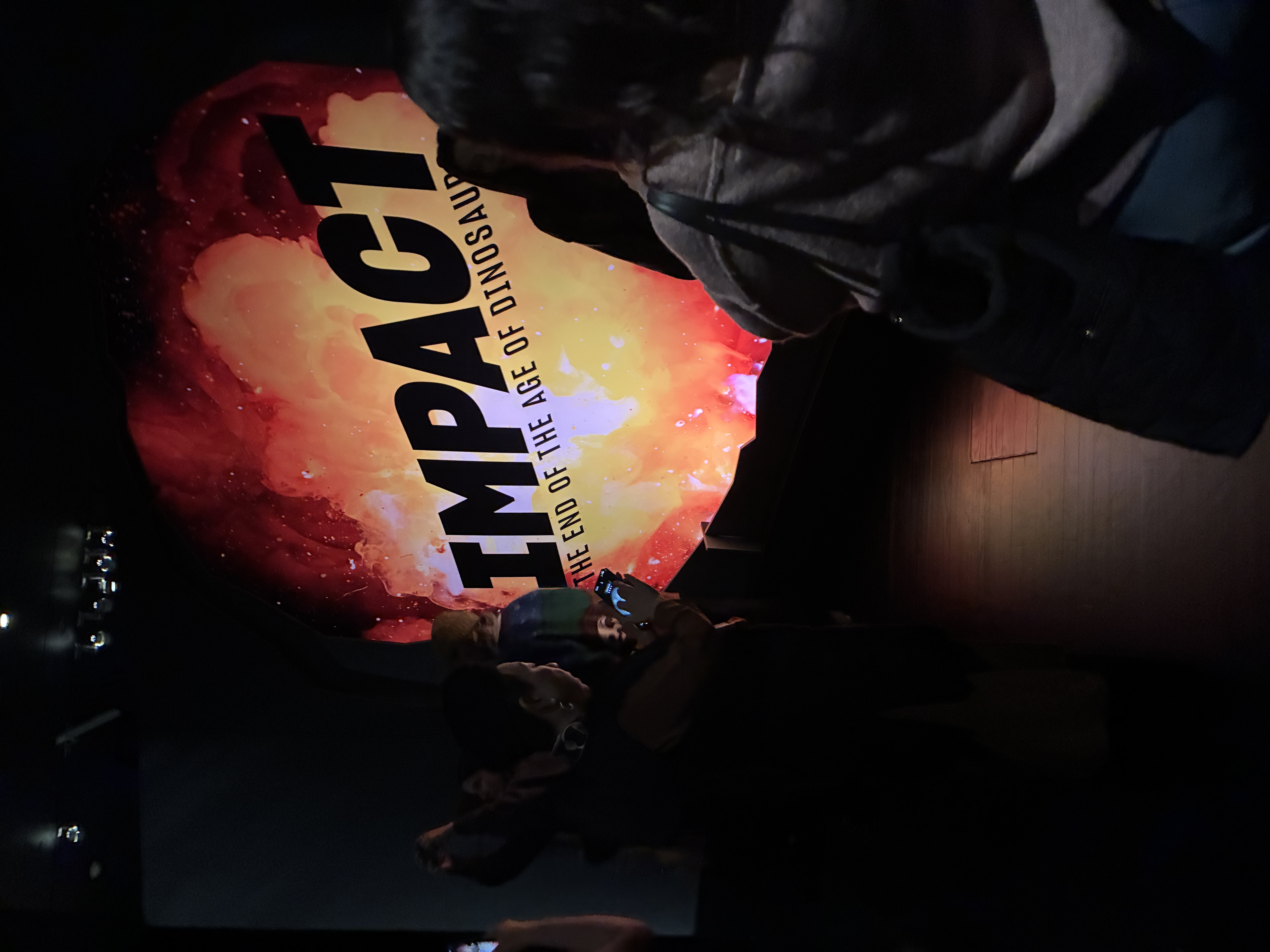
A lit up sign saying the word "Impact" in bold letters in a darkened room.

A sign for the AMNH ‘Impact’ exhibit. (Image credit: Joanna Thompson)

The first hint that something strange happened at the end of the Cretaceous period was the K-Pg boundary layer, a dark stripe of clay in the sedimentary rock record above which dinosaur fossils are absent. This layer was first recognized by geologists in the late 1700s and early 1800s. However, its exact cause — and geologic significance — remained a mystery until the 1980s. Only then did planetary scientist Walter Alvarez and his father, physicist Louis Alvarez, discover the K-Pg boundary layer contained an astonishingly high concentration of iridium, an element that is scarce on Earth’s surface but abundant in space rocks. The only plausible explanation? Our planet was struck by an asteroid millions of years ago.

It was a decisive blow to another popular scientific theory at the time — the concept of gradualism, which holds that geological and evolutionary changes only unfold slowly and over long periods of time. “It represented a paradigmatic shift in people’s thinking,” Neil Landman, a curator of fossil invertebrates at AMNH, told Space.com.
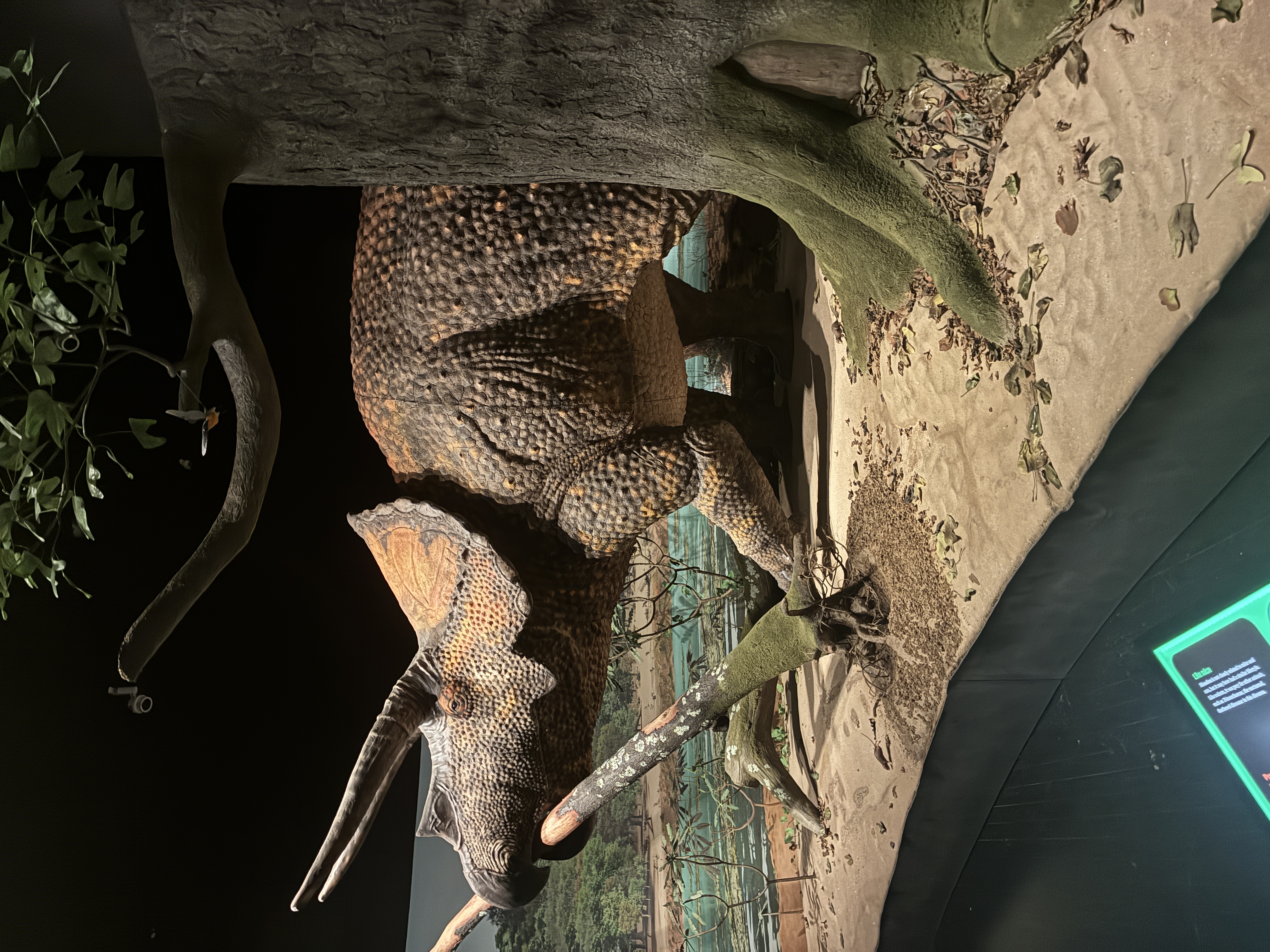
A dioramas of a dinosaur as part of a museum exhibit

A diorama showing a Triceratops is part of the AMNH exhibit. (Image credit: Joanna Thompson)

Since then, researchers from every corner of science have helped piece together our current understanding of the event. Meteorite experts pinpointed the impact site: the Chicxulub crater in Mexico. Invertebrate paleontologists identified widespread ocean acidification based on the mass deaths of tiny creatures called foraminifera. And evolutionary biologists and paleobotanists detailed life’s recovery through the fossil record.

Breaking space news, the latest updates on rocket launches, skywatching events and more!

“It’s been a tremendous coalescence of ideas,” Denton Ebel, a meteorite expert at AMNH, told Space.com.

The walkthrough

The exhibit walks guests through the event as it unfolded chronologically. First, visitors encounter panoramas depicting life at the end of the Cretaceous. In one, a massive mosasaur hunts a long-necked plesiosaur, both members of marine reptile lineages that died out after the asteroid impact. Across the way, a triceratops lumbers through a prehistoric forest alongside turtles, primitive mammals, small dinosaurs and toothed birds.
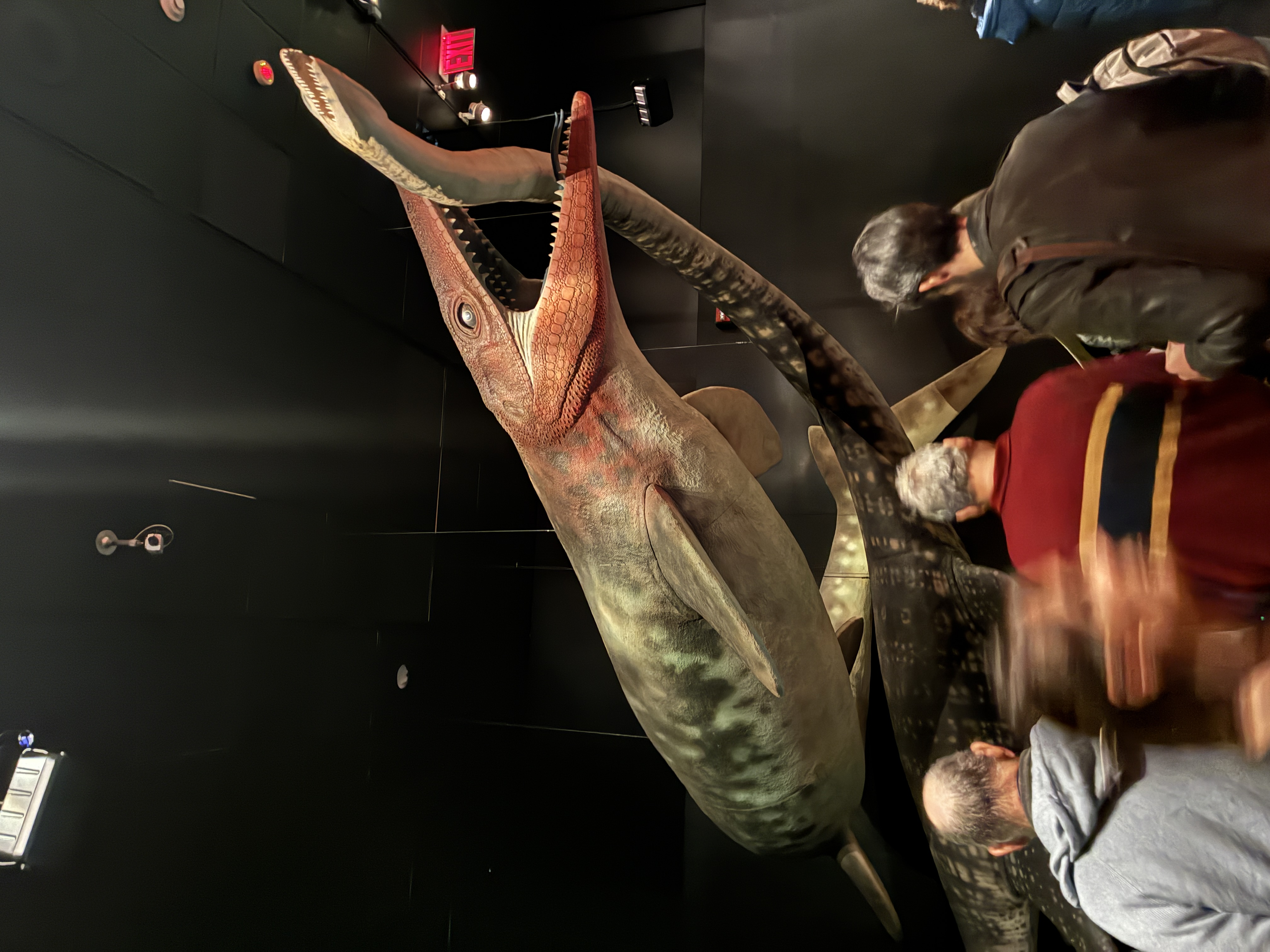
Various posters and dioramas of dinosaurs as part of a museum exhibit

The new exhibit shows what life was like before the dinosaur-killing asteroid. (Image credit: Joanna Thompson)

Various posters and dioramas of dinosaurs as part of a museum exhibit

A fossil from the era before the asteroid impact. (Image credit: Joanna Thompson)

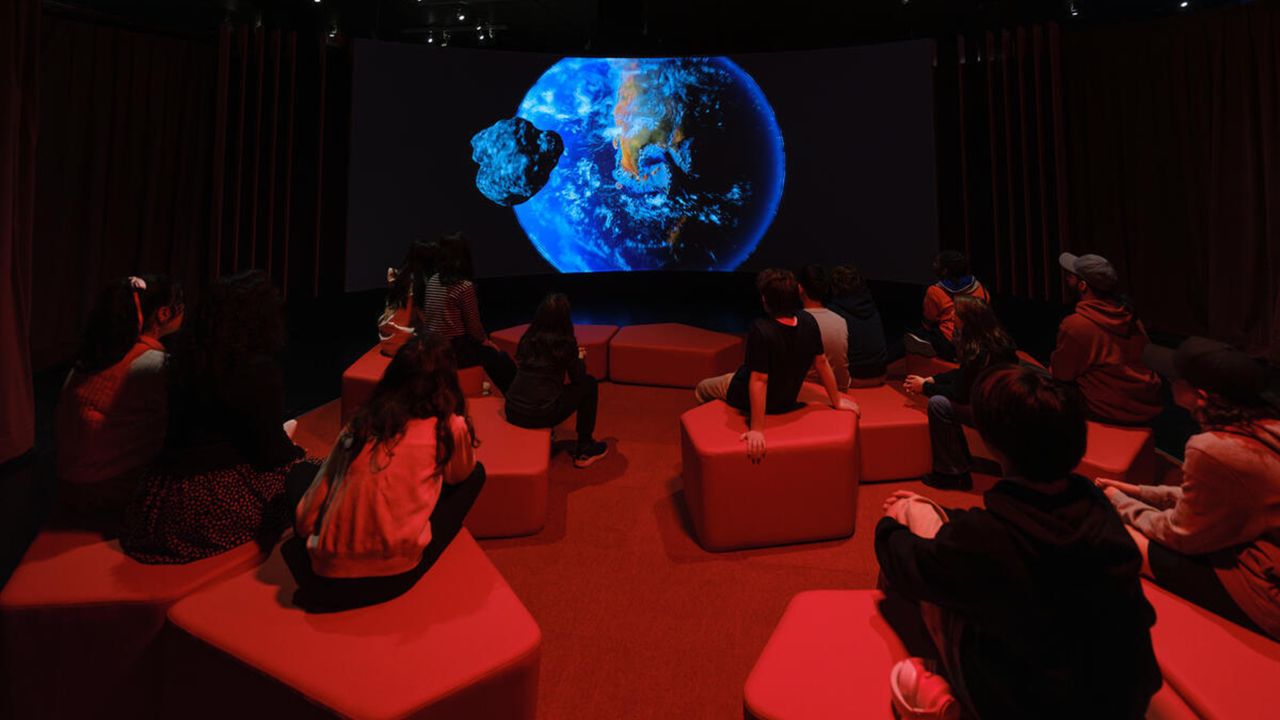
Then, visitors move into a small theater to watch a 6-minute video detailing the damage wrought by the meteor strike. Finally, the exhibit highlights the aftermath of the destruction, showing life’s slow recovery and how new organisms, like mammals, moved in to fill the niches left by the dinosaurs’ extinction.

Ultimately, Benson said he hopes guests leave with a sense of life’s ephemerality, as well as its resilience. We are currently living through another mass extinction, one less acute than the end of the Cretaceous, but potentially no less deadly. This time, however, humanity is the asteroid — and we have a chance to change our impact.

“We live on a changing planet,” said Benson. “Rates of species extinction over the last 100 years or may be comparable to those that occurred during mass extinction events of the past. But we still have time.”

The exhibit opened to the public on Nov. 17.
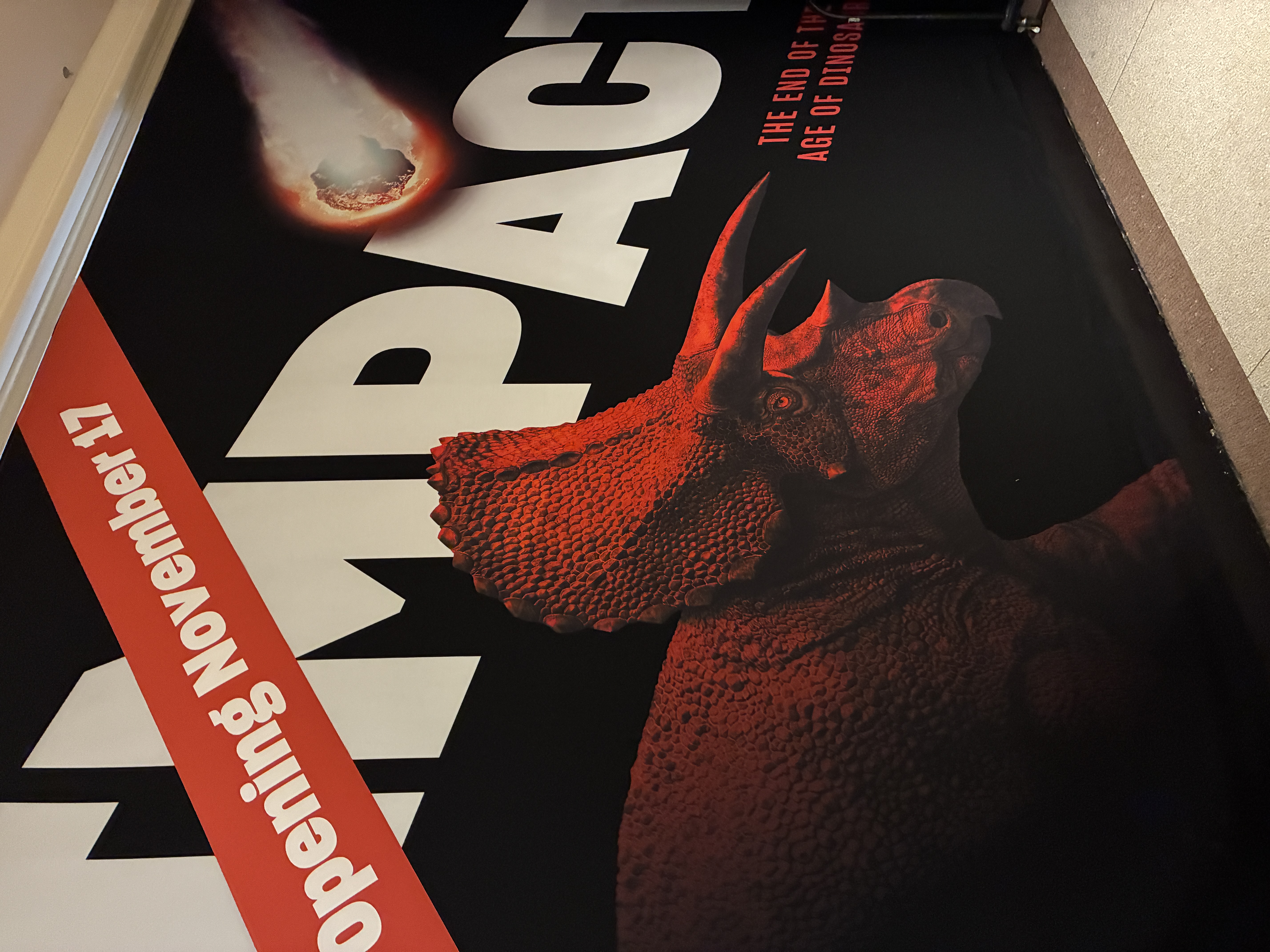
Various posters and dioramas of dinosaurs as part of a museum exhibit

A poster of the ‘Impact’ exhibit at the American Museum of Natural History. (Image credit: Joanna Thompson)
Tags: rocket launch
No Result
View All Result

Recent Posts

  • Germany outlines military space priorities in new strategy
  • Saturn’s rings will seem to disappear on Nov. 23: Here’s how to catch the illusion
  • Does the universe have extra dimensions hiding in plain sight?
  • Canon 8×20 IS binocular review
  • European Parliament member sees support for EU Space Act there

Categories

  • Excursions
  • Kepler Mission
  • NASA
  • NASA Breaking News
  • Physical Preparation
  • Preparation
  • Space News
  • Space Station News
  • Spacewalks
  • Tours
  • Uncategorized
  • Weightlessness Training
  • What Not to Pack
  • What to Pack

Meta

  • Log in
  • Entries feed
  • Comments feed
  • WordPress.org
  • Home
  • Start Here
  • Preparing for Your Trip
  • Space Tourism Companies
  • Space Tours
  • Contact

© 2025 JNews - Premium WordPress news & magazine theme by Jegtheme.

No Result
View All Result
  • About
  • Contact
  • Feeds
  • Frequently Asked Questions
  • Preparing for Your Trip
    • Insurance and Legal Waivers
    • Physical and Medical Requirements
    • Training Programs
    • What to Expect
  • Privacy Policy
  • Space Tourism Companies
    • Axiom Space
    • Blue Origin
    • Blue Origin vs Virgin Galactic
    • Comparison Chart: Features, Pricing, Booking
    • SpaceX
    • Virgin Galactic
    • World View (stratospheric balloon flights)
  • Space Tours
    • Custom & Luxury Packages
    • Duration, Training, Costs
    • Experiences
    • Future Moon/Mars Options
    • Orbital Flights
    • Parabolic Flight Experiences
    • Private Missions
    • Stratospheric Balloon Flights
    • Suborbital Flights
    • Zero-Gravity Flights
  • Spaceflight Technologies
    • Space Tourism Balloon
  • Start Here
    • How to Book a Space Tour
    • Intro to Commercial Spaceflight
    • Is Space Tourism Safe?
    • Space Travel FAQs
    • View Earth from the Edge
    • What to Pack
  • Tours in Space is your launchpad to the world of space tourism

© 2025 JNews - Premium WordPress news & magazine theme by Jegtheme.