• Home
  • About
  • FAQ
  • Feeds
  • Glossary
  • Contact
Tours In Space
  • Home
  • Start Here
    • Intro to Commercial Spaceflight
    • How to Book a Space Tour
    • Is Space Tourism Safe?
    • Space Travel FAQs
    • View Earth from the Edge
    • What to Pack
  • Preparing for Your Trip
    • Insurance and Legal Waivers
    • Physical and Medical Requirements
    • Training Programs
    • What to Expect
  • Space Tourism Companies
    • Axiom Space
    • Blue Origin
    • SpaceX
    • Virgin Galactic
    • World View (stratospheric balloon flights)
    • Blue Origin vs Virgin Galactic
    • Comparison Chart: Features, Pricing, Booking
  • Space Tours
    • Custom & Luxury Packages
    • Duration, Training, Costs
    • Experiences
    • Future Moon/Mars Options
    • Orbital Flights
    • Parabolic Flight Experiences
    • Private Missions
    • Stratospheric Balloon Flights
    • Suborbital Flights
    • Zero-Gravity Flights
  • Spaceflight Technologies
    • Space Tourism Balloon
No Result
View All Result
  • Home
  • Start Here
    • Intro to Commercial Spaceflight
    • How to Book a Space Tour
    • Is Space Tourism Safe?
    • Space Travel FAQs
    • View Earth from the Edge
    • What to Pack
  • Preparing for Your Trip
    • Insurance and Legal Waivers
    • Physical and Medical Requirements
    • Training Programs
    • What to Expect
  • Space Tourism Companies
    • Axiom Space
    • Blue Origin
    • SpaceX
    • Virgin Galactic
    • World View (stratospheric balloon flights)
    • Blue Origin vs Virgin Galactic
    • Comparison Chart: Features, Pricing, Booking
  • Space Tours
    • Custom & Luxury Packages
    • Duration, Training, Costs
    • Experiences
    • Future Moon/Mars Options
    • Orbital Flights
    • Parabolic Flight Experiences
    • Private Missions
    • Stratospheric Balloon Flights
    • Suborbital Flights
    • Zero-Gravity Flights
  • Spaceflight Technologies
    • Space Tourism Balloon
No Result
View All Result
Tours In Space
No Result
View All Result
Home Space News

Spot Uranus shining at its brightest this year — here’s what to expect on Nov. 21

Ensign by Ensign
November 21, 2025
in Space News
0
Spot Uranus shining at its brightest this year — here’s what to expect on Nov. 21
189
SHARES
1.5k
VIEWS
Share on FacebookShare on Twitter

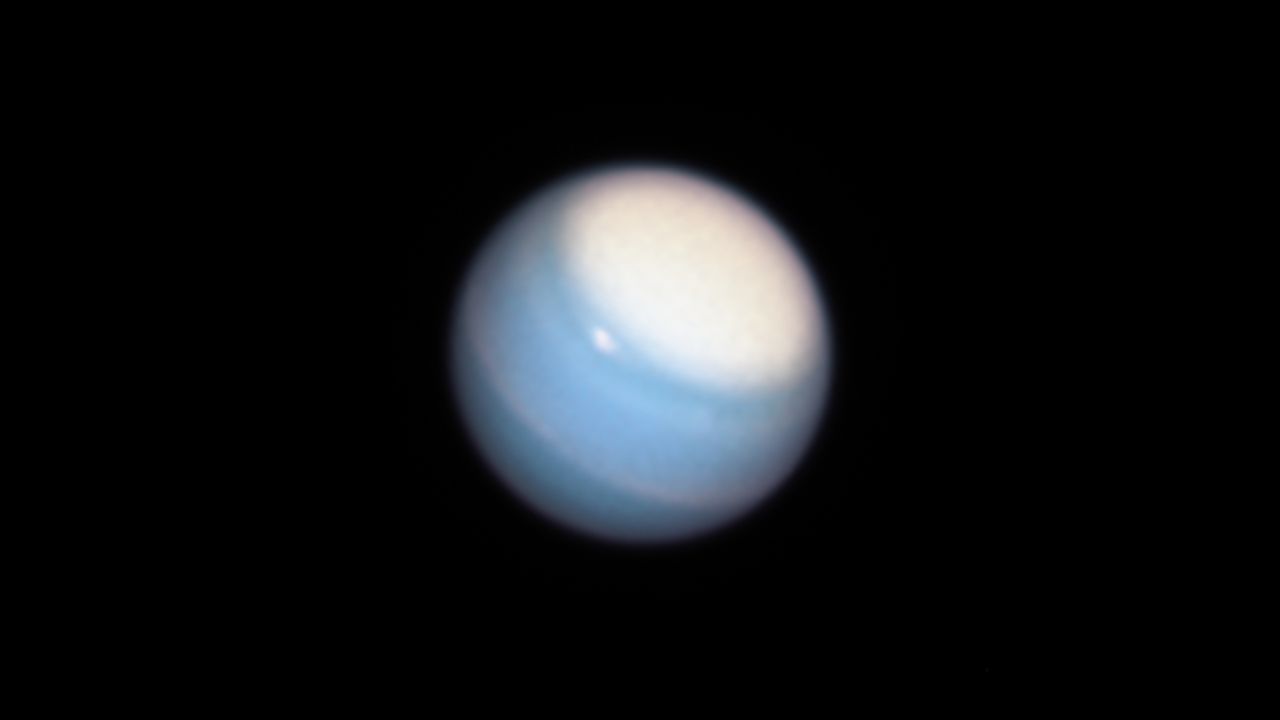
November is the best month of 2025 to catch a glimpse of the distant ice giant Uranus as it shines at opposition, though you’ll still need a telescope if you hope to spot the elusive planet hiding among the stars of the constellation Taurus.

TOP TELESCOPE PICK
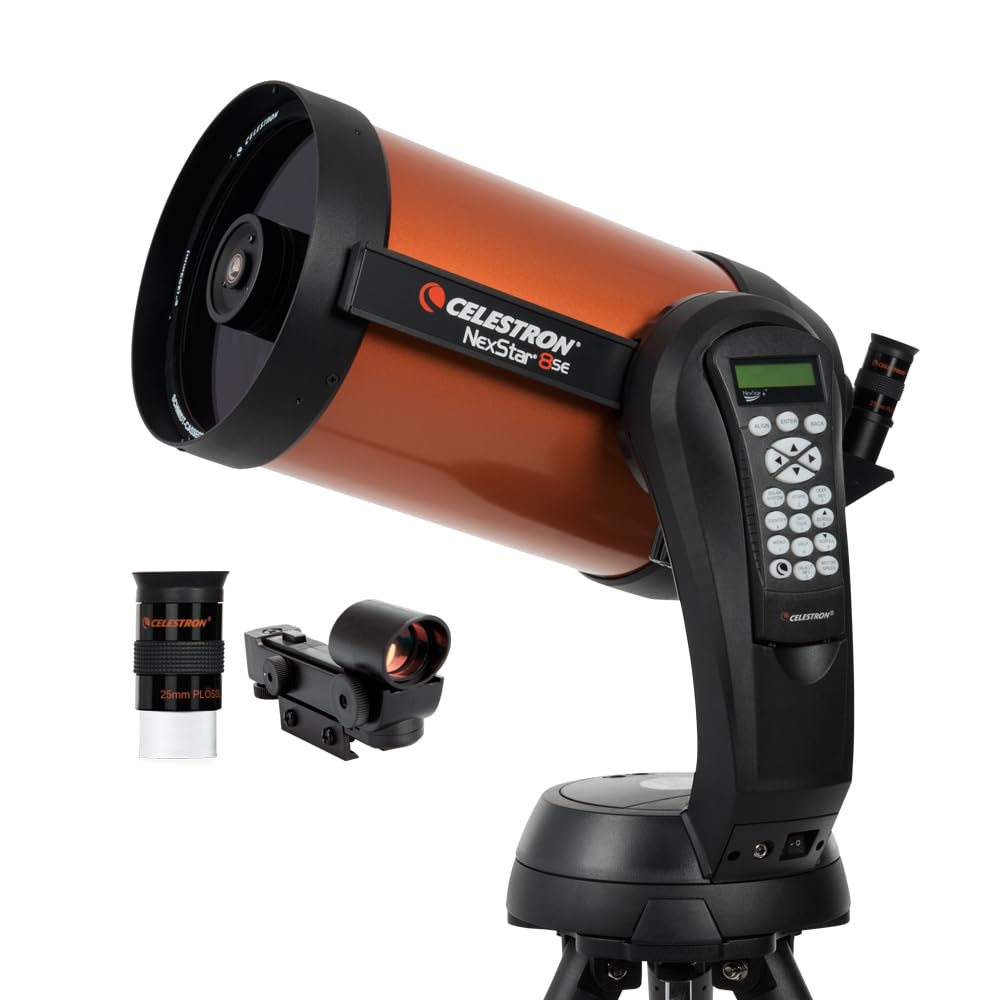
The Celestron NexStar 8SE Computerized Telescope side view with accessories details

(Image credit: Celestron)

If you want to take a look at Uranus, we recommend the Celestron NexStar 8SE. It’s pricey, but well worth the investment as it provides top imagery for planets, stars and beyond while offering crisp views across the field of view and a useful magnification of up to 180x. You can check out our Celestron NexStar 8SE review for more info!

Uranus will reach opposition at 7:17 a.m. EST (1217 GMT) on Nov. 21, when it will be positioned opposite the sun in Earth’s sky. according to the astronomy website In-the-sky.org. The weeks surrounding opposition present a perfect opportunity to hunt for the distant ice giant as it stays visible from dusk to dawn in the Autumn night sky.

The ice giant shines with an apparent brightness — or magnitude — of +5.6 around the time of opposition, which means that it’s technically possible to spot it with the naked eye under perfect dark sky conditions. (On the magnitude scale used by astronomers, lower numbers signify brighter objects). For example, at its brightest, the planet Venus shines with a magnitude of about -4.6.) However, a pair of binoculars or ideally a backyard telescope with an aperture of 8 inches (200mm) or more will make spotting the ancient world a whole lot easier.


Best picks for you

How to find Uranus

Look to the east in the hours following sunset on Nov. 21 to find the stars of the constellation Taurus shining low on the horizon, with the combined light of the Pleiades open star cluster glowing roughly 10 degrees, or the width of your clenched fist held at arm’s length, above it.
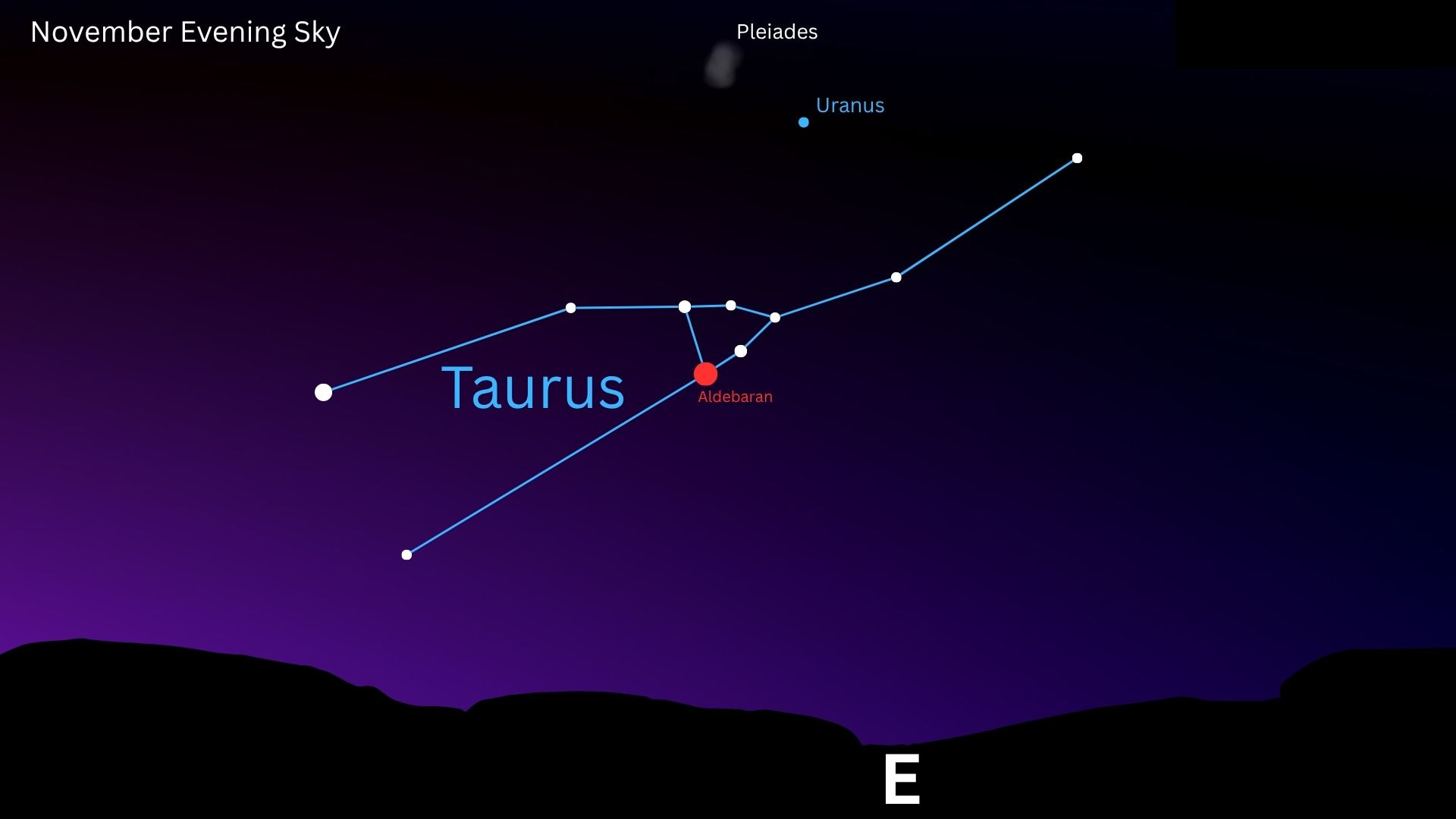
A finder chart simulating the night sky for Nov. 21 showing the location of the planet Uranus to the lower left of the Pleiades star cluster, with the constellation Taurus below, close to a silhouetted horizon.

A finder chart showing the location of Uranus close to the Pleiades on Nov. 21. (Image credit: Made by Anthony Wood in Canva)

Uranus can be found in a patch of sky less than 5 degrees to the lower right of the Pleiades, appearing as a tiny aqua dot against the blackness of space. Whilst this may seem underwhelming at first glance, it’s important to remember exactly what you’re looking at — a world 1.72 billion miles (2.77 billion km) from Earth, four times the size of our blue marble, which has only been visited by a single spacecraft in the history of our species.

Hoping to catch a glimpse of Uranus in November? Then check out our roundups of the best telescopes, binoculars and smart telescopes available for purchase in 2025. If astrophotography is your passion then be sure to read our guides to the best cameras and lenses for capturing the night sky to ensure that you’re ready to immortalize the next big stargazing event!

Breaking space news, the latest updates on rocket launches, skywatching events and more!

Tags: rocket launch
No Result
View All Result

Recent Posts

  • Germany outlines military space priorities in new strategy
  • Saturn’s rings will seem to disappear on Nov. 23: Here’s how to catch the illusion
  • Does the universe have extra dimensions hiding in plain sight?
  • Canon 8×20 IS binocular review
  • European Parliament member sees support for EU Space Act there

Categories

  • Excursions
  • Kepler Mission
  • NASA
  • NASA Breaking News
  • Physical Preparation
  • Preparation
  • Space News
  • Space Station News
  • Spacewalks
  • Tours
  • Uncategorized
  • Weightlessness Training
  • What Not to Pack
  • What to Pack

Meta

  • Log in
  • Entries feed
  • Comments feed
  • WordPress.org
  • Home
  • Start Here
  • Preparing for Your Trip
  • Space Tourism Companies
  • Space Tours
  • Contact

© 2025 JNews - Premium WordPress news & magazine theme by Jegtheme.

No Result
View All Result
  • About
  • Contact
  • Feeds
  • Frequently Asked Questions
  • Preparing for Your Trip
    • Insurance and Legal Waivers
    • Physical and Medical Requirements
    • Training Programs
    • What to Expect
  • Privacy Policy
  • Space Tourism Companies
    • Axiom Space
    • Blue Origin
    • Blue Origin vs Virgin Galactic
    • Comparison Chart: Features, Pricing, Booking
    • SpaceX
    • Virgin Galactic
    • World View (stratospheric balloon flights)
  • Space Tours
    • Custom & Luxury Packages
    • Duration, Training, Costs
    • Experiences
    • Future Moon/Mars Options
    • Orbital Flights
    • Parabolic Flight Experiences
    • Private Missions
    • Stratospheric Balloon Flights
    • Suborbital Flights
    • Zero-Gravity Flights
  • Spaceflight Technologies
    • Space Tourism Balloon
  • Start Here
    • How to Book a Space Tour
    • Intro to Commercial Spaceflight
    • Is Space Tourism Safe?
    • Space Travel FAQs
    • View Earth from the Edge
    • What to Pack
  • Tours in Space is your launchpad to the world of space tourism

© 2025 JNews - Premium WordPress news & magazine theme by Jegtheme.