

WASHINGTON — Enpulsion, an Austrian company that produces satellite electric propulsion systems, has raised its first significant outside funding to increase production and potentially acquire other companies.
Enpulsion announced this month that it raised 22.5 million euros ($26 million) in a round led by Nordwind Growth, a German fund that supports European technology companies.
“We invest in companies with sustainable business models ready to scale globally,” Tom Harder, partner and co-founder of Nordwind Growth, said in a statement. “Enpulsion’s strategic focus and maturity make it an ideal partner for Nordwind Growth’s first investment in the space sector.”
This round was the first significant outside funding Enpulsion has raised since its founding a decade ago, Alexander Reissner, chief executive of the company, said in an interview. The company has bootstrapped itself from an initial investment of a couple million euros from its founding partners, he said.
“We were not the typical startup that ran out of runway and therefore had to raise more money,” he said, noting the company has been profitable. “We’re out of this startup phase and wanted to scale.”
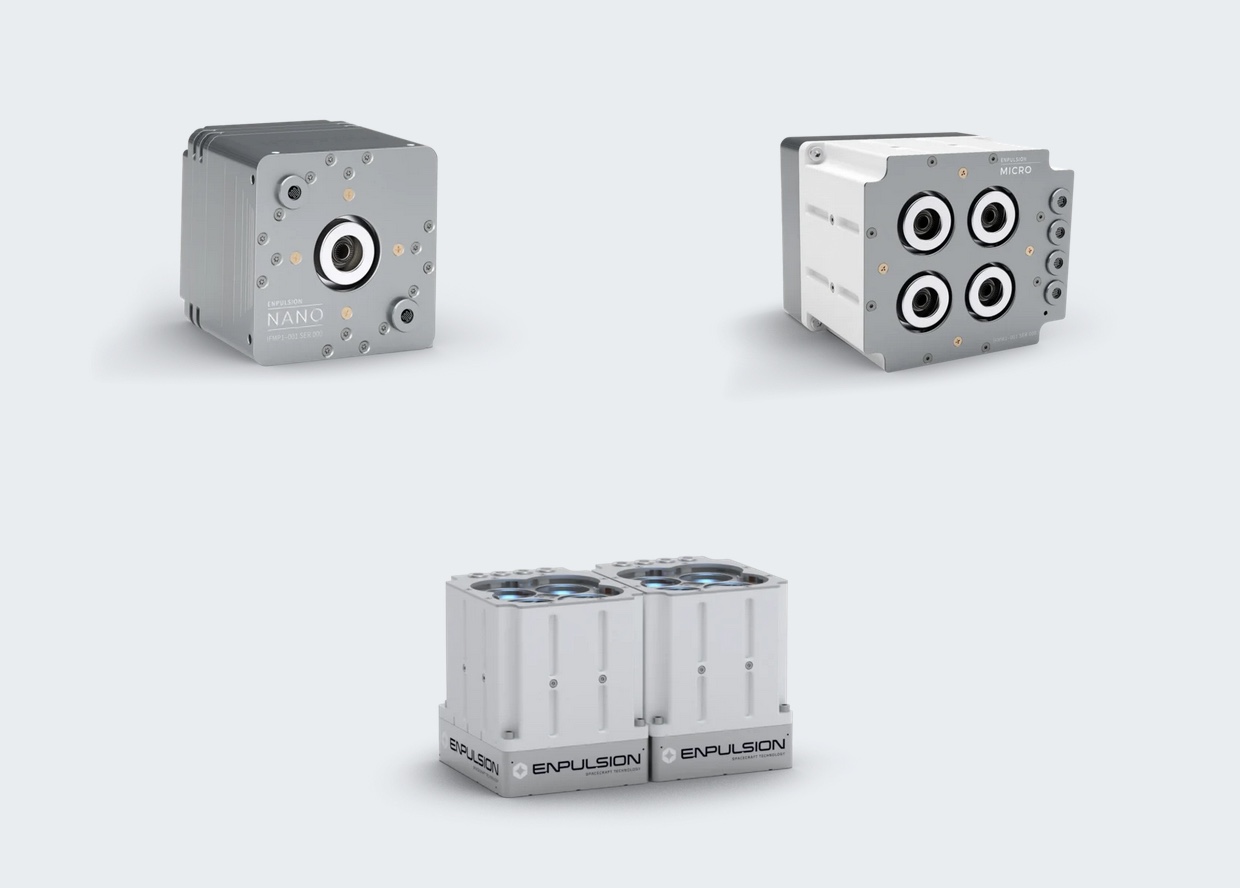
Enpulsion makes electric thrusters for small satellites using a technology called field-emission electric propulsion. The company says it has more than 320 of its thrusters operating in orbit today, with more than 500 years of combined flight heritage.
The funding gives the company an opportunity to expand beyond thrusters to full-fledged mobility systems, combining thrusters with other components, such as attitude determination and control systems.
“What we saw from working with dozens of customers is that it’s such a pain for most of these customers — four out of five — to bring together all the mobility components from different vendors,” he said. “We developed this vision a year ago to be a one-stop shop and the provider of mobility for all the primes.”
The company also wants to expand its presence in the United States. It has had a U.S. office for several years, but Reissner said Enpulsion has focused most of its attention on the European market.
“We basically want to strengthen our position in the U.S. in the sense of really being closer to the customers, having a more independent unit,” he said. That would include assembly and testing of propulsion systems.
The company is reserving some funding for “strategic” acquisitions. With the company largely vertically integrated, he said those deals would likely involve companies with products complementary to its current offerings.
Reissner added he expects a wave of consolidation in the next few years among both propulsion suppliers and customers. That will be driven by a move toward larger satellites that require more powerful propulsion systems, as well as demand by customers for more reliable systems.
“I think we’ll see a lot of consolidation happening in the next couple of years,” he predicted. “There are too many customers for us. It’s not possible that all of our customers are going to be successful. The same is true on the propulsion side. There’s way too many propulsion offerings.”
A surge in European government spending on space systems, which would appear to increase demand for propulsion, may only hasten that consolidation, he added.
“This institutional money comes with much higher scrutiny and demands for the whole supply chain,” he said. “It increases the pressure on quality and reliability of the products and that, I believe, will foster consolidation on the lower tiers of the supply chain.”