• Home
  • About
  • FAQ
  • Feeds
  • Glossary
  • Contact
Tours In Space
  • Home
  • Start Here
    • Intro to Commercial Spaceflight
    • How to Book a Space Tour
    • Is Space Tourism Safe?
    • Space Travel FAQs
    • View Earth from the Edge
    • What to Pack
  • Preparing for Your Trip
    • Insurance and Legal Waivers
    • Physical and Medical Requirements
    • Training Programs
    • What to Expect
  • Space Tourism Companies
    • Axiom Space
    • Blue Origin
    • SpaceX
    • Virgin Galactic
    • World View (stratospheric balloon flights)
    • Blue Origin vs Virgin Galactic
    • Comparison Chart: Features, Pricing, Booking
  • Space Tours
    • Custom & Luxury Packages
    • Duration, Training, Costs
    • Experiences
    • Future Moon/Mars Options
    • Orbital Flights
    • Parabolic Flight Experiences
    • Private Missions
    • Stratospheric Balloon Flights
    • Suborbital Flights
    • Zero-Gravity Flights
  • Spaceflight Technologies
    • Space Tourism Balloon
No Result
View All Result
  • Home
  • Start Here
    • Intro to Commercial Spaceflight
    • How to Book a Space Tour
    • Is Space Tourism Safe?
    • Space Travel FAQs
    • View Earth from the Edge
    • What to Pack
  • Preparing for Your Trip
    • Insurance and Legal Waivers
    • Physical and Medical Requirements
    • Training Programs
    • What to Expect
  • Space Tourism Companies
    • Axiom Space
    • Blue Origin
    • SpaceX
    • Virgin Galactic
    • World View (stratospheric balloon flights)
    • Blue Origin vs Virgin Galactic
    • Comparison Chart: Features, Pricing, Booking
  • Space Tours
    • Custom & Luxury Packages
    • Duration, Training, Costs
    • Experiences
    • Future Moon/Mars Options
    • Orbital Flights
    • Parabolic Flight Experiences
    • Private Missions
    • Stratospheric Balloon Flights
    • Suborbital Flights
    • Zero-Gravity Flights
  • Spaceflight Technologies
    • Space Tourism Balloon
No Result
View All Result
Tours In Space
No Result
View All Result
Home Space News

Arizona’s Meteor Crater is still revealing new secrets 50,000 years later

Ensign by Ensign
March 15, 2026
in Space News
0
Arizona’s Meteor Crater is still revealing new secrets 50,000 years later
189
SHARES
1.5k
VIEWS
Share on FacebookShare on Twitter

Arizona’s Meteor Crater and other scars leftover from collisions with space rocks continue to serve up their secrets.

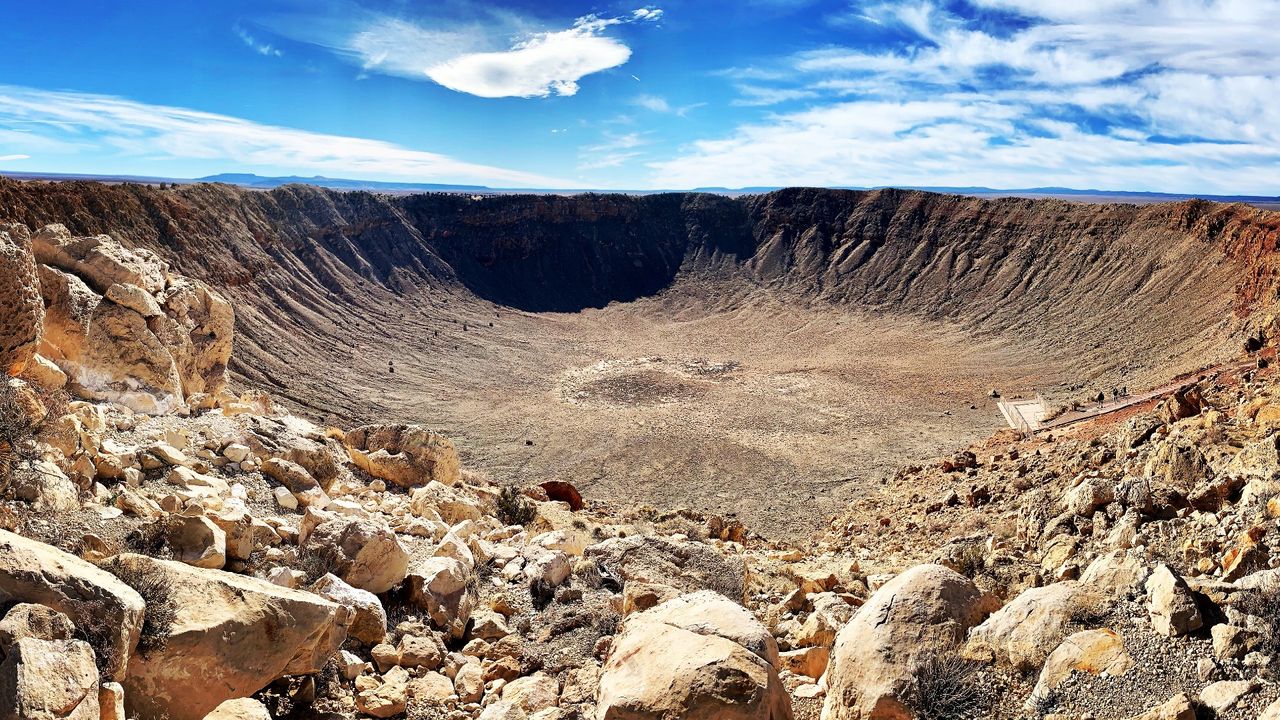
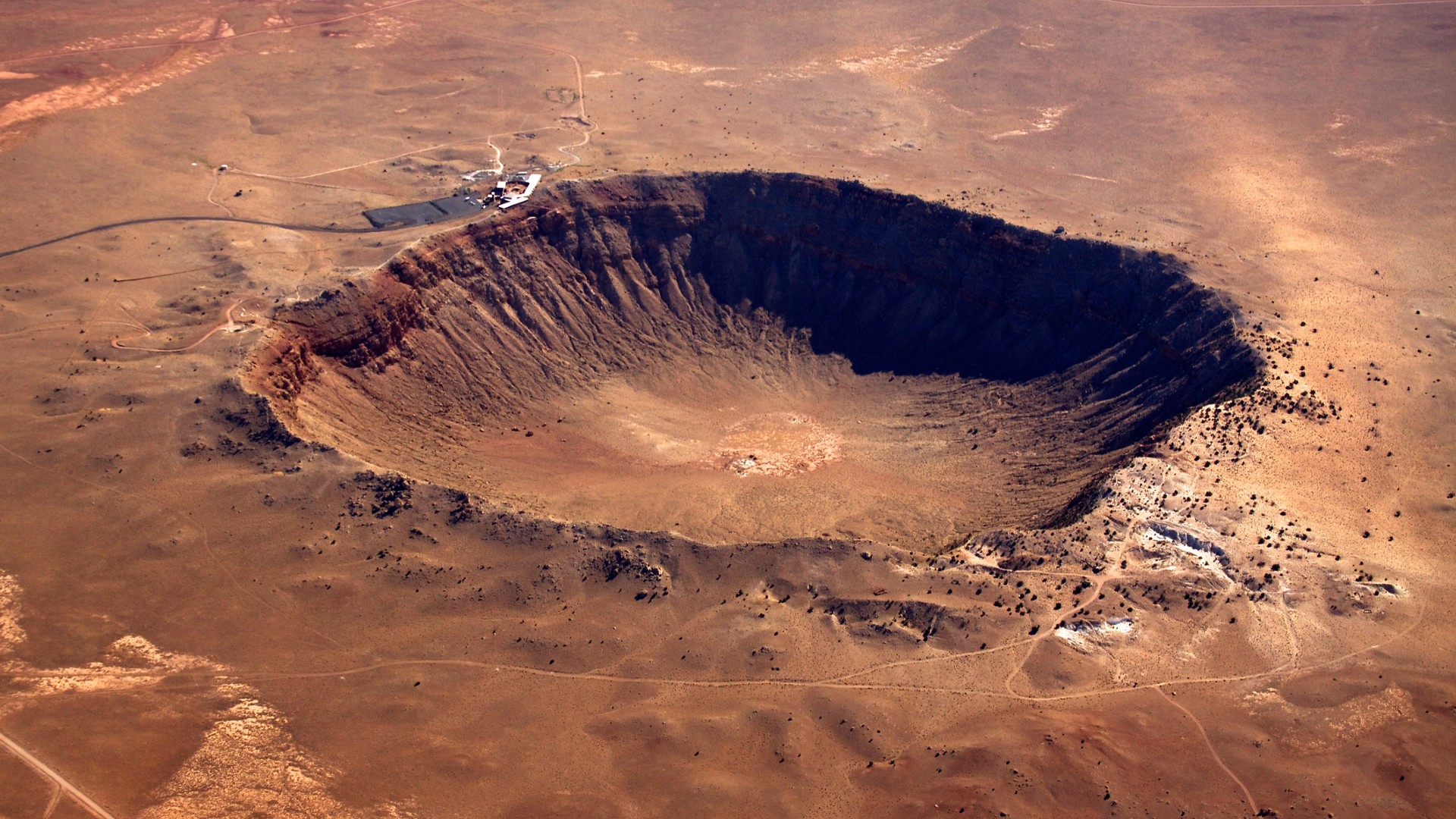
Meteor Crater formed some 50,000 years ago. It represents the best preserved meteor impact site in the world, measuring some 700 feet deep (213 meters), more than 4,000 feet across (1,219 meters), and 2.4 miles (3.9 kilometers) in circumference.

Impact features like Meteor Crater continue to be ongoing research sites, generating new data on what happens when objects from the cosmos strike our planet. In fact, a number of competitive grants are being offered to support field research at known or suspected impact sites worldwide. That funding is backing laboratory and computer analysis of research samples and findings, creating new data from digging in on old craters around our globe.

Article continues below


You may like

Natural laboratory

A recurring visitor to the crash site is Dan Durda, a research scientist at the Southwest Research Institute (SwRI) in Boulder, Colorado.

“Meteor Crater is the best-preserved and exposed impact crater on Earth,” Durda tells Space.com. “That makes it the perfect natural laboratory for impact crater studies. The crater is still providing new insights every year, so continued studies there are really important.”

Similar in view is Christian Koeberl at the Department of Lithospheric Researchwithin the University of Vienna in Austria. He chairs the Barringer Crater Company (BCC) scientific advisory committee. The Barringer Crater Company has introduced grants to support students and early career researchers who study terrestrial impact craters, for better understanding of these craters and their formations, and also to encourage students to go into such important research directions.

“Barringer Crater — also known as Meteor Crater — was one of the first, if not the first, crater recognized on Earth as being of impact origin in the early 20th century,” Koeberl tells Space.com.

Breaking space news, the latest updates on rocket launches, skywatching events and more!

The recognition of impact craters on the Earth is difficult, said Koeberl, because active geological and atmospheric processes on our planet tend to obscure or erase the impact record in geologically short time periods.

“Despite limited information about the early impact record we know that impacts had severe effects on the geological and biological evolution on Earth,” said Koeberl. For example, a large impact event on Earth marks the transition from the Cretaceous to the Paleogene eras, about 66 million years ago, he added.

The most iconic species that has fallen victim to an impact, the dinosaurs, “literally had no chance,” Koeberl said.


What to read next

Read more: 10 Earth impact craters you must see
an aerial view of a large, round crater in a desert landscape

Aerial shot of Meteor Crater aka Barringer Crater, near Winslow, Arizona. (Image credit: Chris Saulit/Getty Images)

High-energy geological event

Morphological and geophysical surveys are important for the recognition of anomalous subsurface structural features, Koeberl said, which may be deeply eroded craters or impact structures entirely covered by post-impact sediments.

“Detailed investigations involve confirmation of either shock metamorphic effects in minerals and rocks, and/or the presence of a meteoritic component in these rocks. In nature, shock metamorphic effects are uniquely characteristic of shock levels associated with hypervelocity impact,” Koeberl said.

Impact cratering is a short-time, high-energy geological event in which conditions are created that exceed conditions of nuclear bomb explosions.

These kinds of studies have led to the identification of, so far, of about 200 confirmed impact craters on Earth, Koeberl said. “Impact crater studies have actually grown in importance over the years and are an interdisciplinary effort. We encourage young researchers from all over the world to submit grant proposals,” he said.

Barringer Family Fund applications and awards are administered by The Meteoritical Society and are due by April 1.

No Result
View All Result

Recent Posts

  • Starcloud files plans for 88,000-satellite constellation
  • OSTP taking on space policy coordination work in place of National Space Council
  • Strait of Hormuz crisis drives demand for commercial geospatial intelligence
  • Deep underground, a telescope may soon detect ghosts of stars that died before Earth existed
  • Raytheon contract for protected satellite communications terminals raised by $2 billion

Categories

  • Excursions
  • Kepler Mission
  • NASA
  • NASA Breaking News
  • Physical Preparation
  • Preparation
  • Space News
  • Space Station News
  • Spacewalks
  • Tours
  • Uncategorized
  • Weightlessness Training
  • What Not to Pack
  • What to Pack

Meta

  • Log in
  • Entries feed
  • Comments feed
  • WordPress.org
  • Home
  • Start Here
  • Preparing for Your Trip
  • Space Tourism Companies
  • Space Tours
  • Contact

© 2026 JNews - Premium WordPress news & magazine theme by Jegtheme.

No Result
View All Result
  • About
  • Contact
  • Feeds
  • Frequently Asked Questions
  • Preparing for Your Trip
    • Insurance and Legal Waivers
    • Physical and Medical Requirements
    • Training Programs
    • What to Expect
  • Privacy Policy
  • Space Tourism Companies
    • Axiom Space
    • Blue Origin
    • Blue Origin vs Virgin Galactic
    • Comparison Chart: Features, Pricing, Booking
    • SpaceX
    • Virgin Galactic
    • World View (stratospheric balloon flights)
  • Space Tours
    • Custom & Luxury Packages
    • Duration, Training, Costs
    • Experiences
    • Future Moon/Mars Options
    • Orbital Flights
    • Parabolic Flight Experiences
    • Private Missions
    • Stratospheric Balloon Flights
    • Suborbital Flights
    • Zero-Gravity Flights
  • Spaceflight Technologies
    • Space Tourism Balloon
  • Start Here
    • How to Book a Space Tour
    • Intro to Commercial Spaceflight
    • Is Space Tourism Safe?
    • Space Travel FAQs
    • View Earth from the Edge
    • What to Pack
  • Tours in Space is your launchpad to the world of space tourism

© 2026 JNews - Premium WordPress news & magazine theme by Jegtheme.