• Home
  • About
  • FAQ
  • Feeds
  • Glossary
  • Contact
Tours In Space
  • Home
  • Start Here
    • Intro to Commercial Spaceflight
    • How to Book a Space Tour
    • Is Space Tourism Safe?
    • Space Travel FAQs
    • View Earth from the Edge
    • What to Pack
  • Preparing for Your Trip
    • Insurance and Legal Waivers
    • Physical and Medical Requirements
    • Training Programs
    • What to Expect
  • Space Tourism Companies
    • Axiom Space
    • Blue Origin
    • SpaceX
    • Virgin Galactic
    • World View (stratospheric balloon flights)
    • Blue Origin vs Virgin Galactic
    • Comparison Chart: Features, Pricing, Booking
  • Space Tours
    • Custom & Luxury Packages
    • Duration, Training, Costs
    • Experiences
    • Future Moon/Mars Options
    • Orbital Flights
    • Parabolic Flight Experiences
    • Private Missions
    • Stratospheric Balloon Flights
    • Suborbital Flights
    • Zero-Gravity Flights
  • Spaceflight Technologies
    • Space Tourism Balloon
No Result
View All Result
  • Home
  • Start Here
    • Intro to Commercial Spaceflight
    • How to Book a Space Tour
    • Is Space Tourism Safe?
    • Space Travel FAQs
    • View Earth from the Edge
    • What to Pack
  • Preparing for Your Trip
    • Insurance and Legal Waivers
    • Physical and Medical Requirements
    • Training Programs
    • What to Expect
  • Space Tourism Companies
    • Axiom Space
    • Blue Origin
    • SpaceX
    • Virgin Galactic
    • World View (stratospheric balloon flights)
    • Blue Origin vs Virgin Galactic
    • Comparison Chart: Features, Pricing, Booking
  • Space Tours
    • Custom & Luxury Packages
    • Duration, Training, Costs
    • Experiences
    • Future Moon/Mars Options
    • Orbital Flights
    • Parabolic Flight Experiences
    • Private Missions
    • Stratospheric Balloon Flights
    • Suborbital Flights
    • Zero-Gravity Flights
  • Spaceflight Technologies
    • Space Tourism Balloon
No Result
View All Result
Tours In Space
No Result
View All Result
Home Uncategorized

Starcloud files plans for 88,000-satellite constellation

Ensign by Ensign
March 16, 2026
in Uncategorized
0
Starcloud files plans for 88,000-satellite constellation
189
SHARES
1.5k
VIEWS
Share on FacebookShare on Twitter
image

WASHINGTON — An orbital data center startup is seeking approval from the Federal Communications Commission for a constellation of as many as 88,000 satellites.

The FCC accepted for filing March 13 an application by Starcloud, a company based in Redmond, Washington, to operate as many as 88,000 satellites in a range of low Earth orbits to serve as orbital data centers for artificial intelligence and other applications.

“Starcloud is designing its satellite system to accommodate the explosive growth of datacenter demands driven by AI, which is already encountering severe roadblocks to efforts to scale on the ground,” the company wrote in its filing. “By avoiding the constraints of terrestrial deployment, space datacenters will be the most cost-effective and scalable way to deliver compute this decade.”

The filing provides few details about the satellites themselves, such as their size and mass. The satellites will operate in “a select set of narrow orbital shells” up to 50 kilometers thick at altitudes between 600 and 850 kilometers. Those satellites will be in dusk-dawn sun-synchronous orbits to enable “near-continuous power generation” from the sun.

A constellation of 88,000 satellites would be far larger than anything in service today. SpaceX’s Starlink, the largest constellation, has about 10,000 satellites in orbit. However, the Starcloud proposal is far smaller than SpaceX’s proposal, filed with the FCC at the end of January, to develop a constellation of up to one million orbital data center satellites.

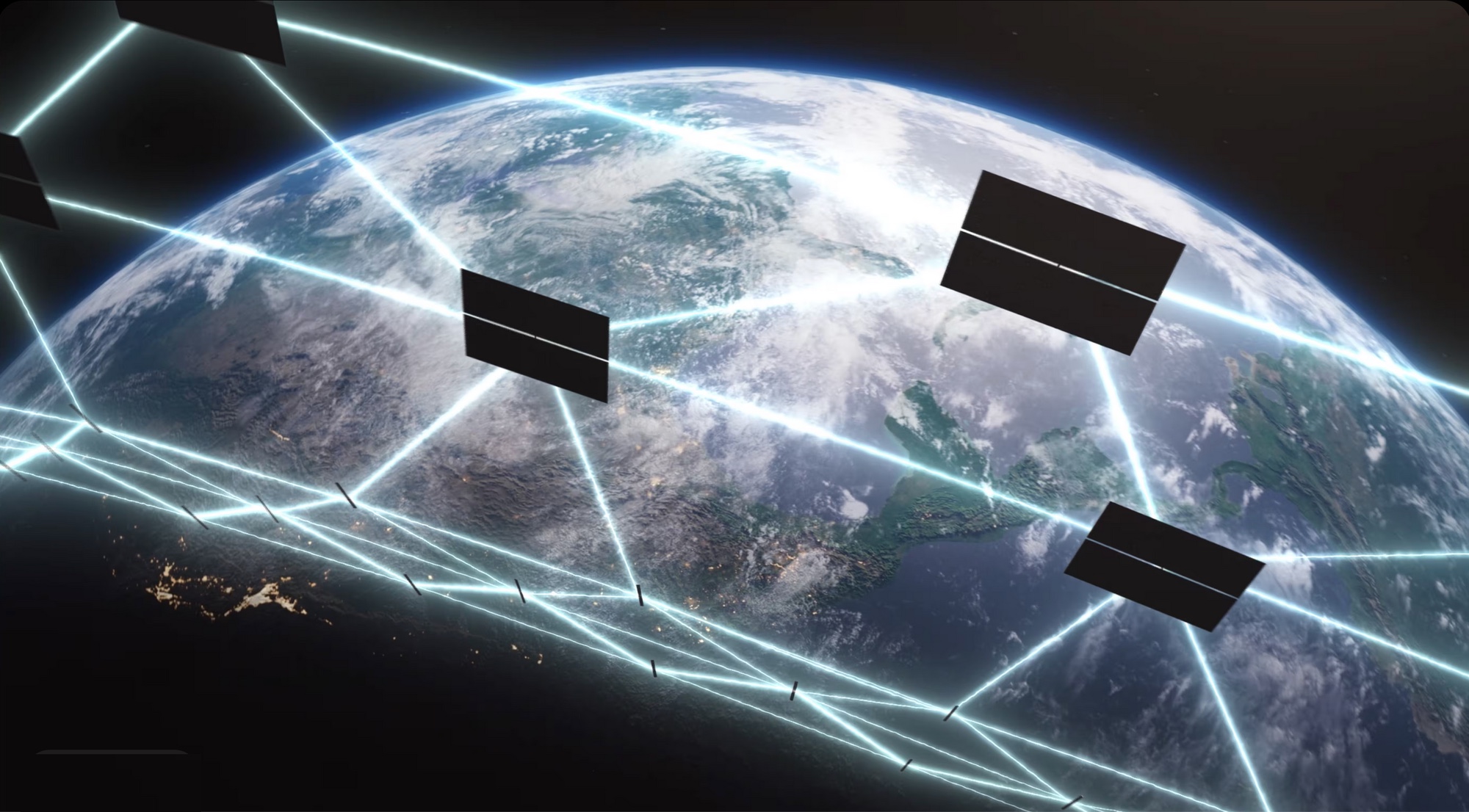
Like the SpaceX system, the Starcloud constellation would rely on optical intersatellite data links with broadband systems such as Starlink, Amazon’s Project Kuiper and Blue Origin’s Tera Wave for most communications. The FCC filing seeks authorization for some Ka-band spectrum for telemetry, tracking and control communications with the Starcloud satellites. Those communications, the company said, would be conducted on a non-interference basis.

While Starcloud did not disclose details about the satellites, it said it “takes seriously the safe and sustainable use of these soon-to-be highly utilized orbits.” The company said it would follow many best practices for safe satellite operations, including coordination with other operators and deploying satellites in lower orbits for initial checkouts before raising them to their operational altitudes, ensuring that a malfunctioning satellite quickly reenters.

The company added that its satellites are “designed for full demisability,” meaning they would burn up entirely on reentry with no debris reaching the ground.

“Starcloud will also work closely with the astronomy community to protect essential observations, including implementing established brightness mitigation measures,” it added.

Starcloud, previously known as Lumen Orbit, has deployed one small satellite to date. Starcloud-1 was placed in orbit in November on a SpaceX rideshare mission. The 60-kilogram satellite is the first to run an Nvidia H100 processor in orbit, which it used to run a version of Google’s Gemini AI model.

The company says on its website it is pursuing its first commercial spacecraft, Starcloud-2, scheduled to launch in 2027 into sun-synchronous orbit. The spacecraft will feature a cluster of processors and “proprietary thermal and power systems in a smallsat form factor.”

The company also has plans for constellations called Starcloud-3 and Starcloud-4. The latter would appear to involve massive satellites deployed on SpaceX Starship vehicles. According to a video on its website, a Starcloud-4 satellite would have arrays four kilometers on a side to support a five-gigawatt data center.

Tags: Blue OriginSpaceXStarlink
No Result
View All Result

Recent Posts

  • Starcloud files plans for 88,000-satellite constellation
  • OSTP taking on space policy coordination work in place of National Space Council
  • Strait of Hormuz crisis drives demand for commercial geospatial intelligence
  • Deep underground, a telescope may soon detect ghosts of stars that died before Earth existed
  • Raytheon contract for protected satellite communications terminals raised by $2 billion

Categories

  • Excursions
  • Kepler Mission
  • NASA
  • NASA Breaking News
  • Physical Preparation
  • Preparation
  • Space News
  • Space Station News
  • Spacewalks
  • Tours
  • Uncategorized
  • Weightlessness Training
  • What Not to Pack
  • What to Pack

Meta

  • Log in
  • Entries feed
  • Comments feed
  • WordPress.org
  • Home
  • Start Here
  • Preparing for Your Trip
  • Space Tourism Companies
  • Space Tours
  • Contact

© 2026 JNews - Premium WordPress news & magazine theme by Jegtheme.

No Result
View All Result
  • About
  • Contact
  • Feeds
  • Frequently Asked Questions
  • Preparing for Your Trip
    • Insurance and Legal Waivers
    • Physical and Medical Requirements
    • Training Programs
    • What to Expect
  • Privacy Policy
  • Space Tourism Companies
    • Axiom Space
    • Blue Origin
    • Blue Origin vs Virgin Galactic
    • Comparison Chart: Features, Pricing, Booking
    • SpaceX
    • Virgin Galactic
    • World View (stratospheric balloon flights)
  • Space Tours
    • Custom & Luxury Packages
    • Duration, Training, Costs
    • Experiences
    • Future Moon/Mars Options
    • Orbital Flights
    • Parabolic Flight Experiences
    • Private Missions
    • Stratospheric Balloon Flights
    • Suborbital Flights
    • Zero-Gravity Flights
  • Spaceflight Technologies
    • Space Tourism Balloon
  • Start Here
    • How to Book a Space Tour
    • Intro to Commercial Spaceflight
    • Is Space Tourism Safe?
    • Space Travel FAQs
    • View Earth from the Edge
    • What to Pack
  • Tours in Space is your launchpad to the world of space tourism

© 2026 JNews - Premium WordPress news & magazine theme by Jegtheme.