
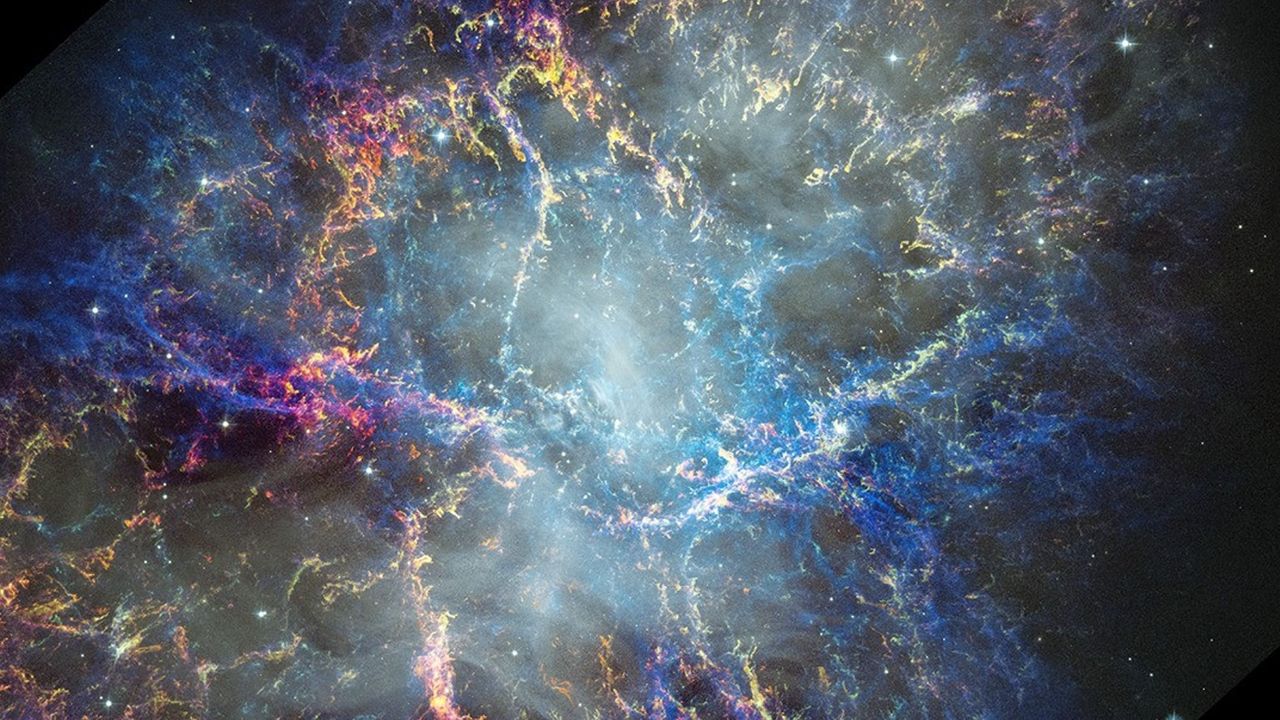

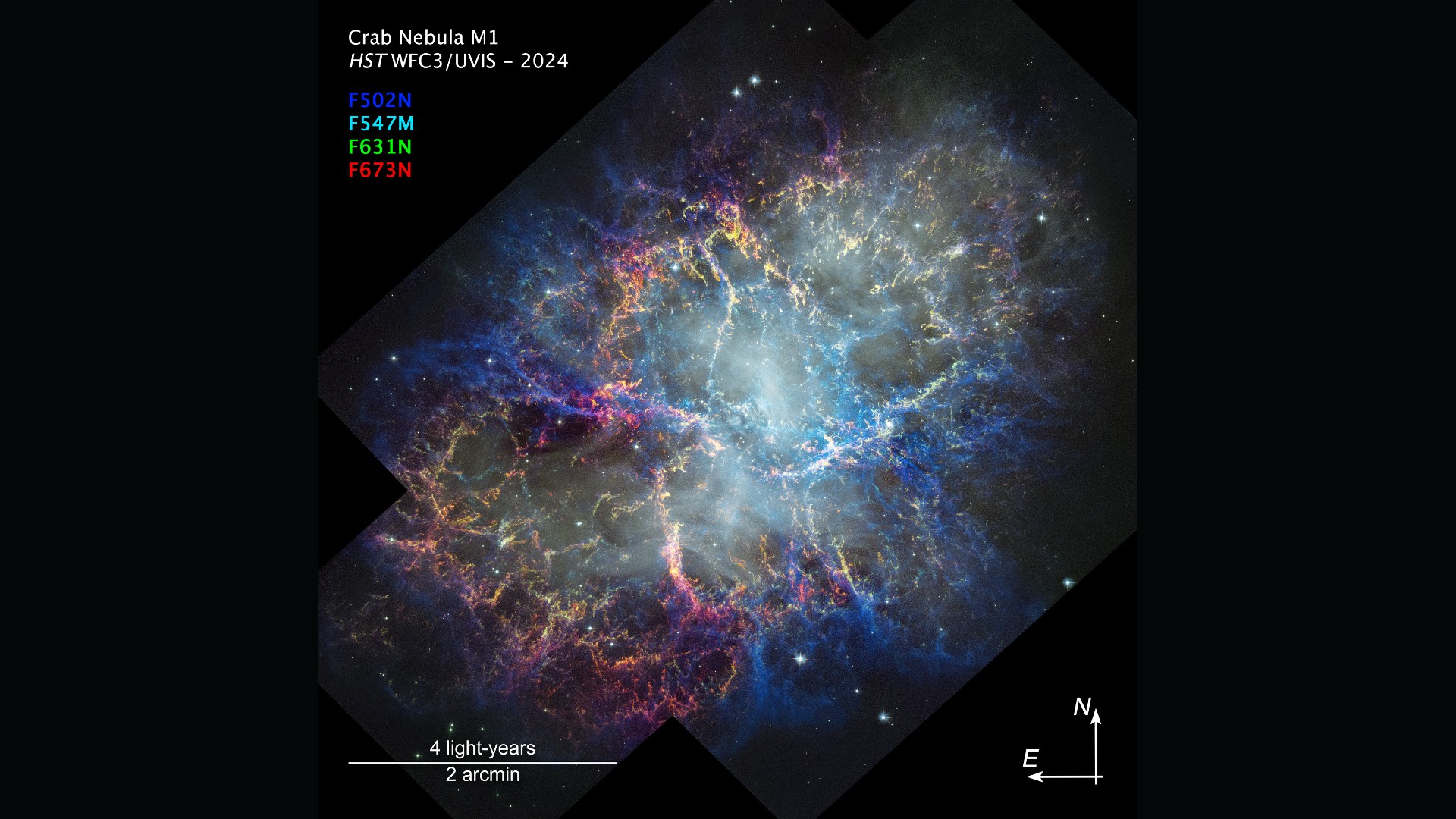
NASA has released new Hubble telescope images of the Crab Nebula — taken 25 years after the iconic observatory first gazed at the colorful cosmic crustacean.
What is it?
These new images reveal the changing clouds of gases being expelled from the site of a powerful supernova that exploded in the year 1054. It was so bright at the time of its explosion that it was visible during the day.
That supernova left behind the colorful remnant we see today known the Crab Nebula, or Messier 1. It is found 6,500 light-years from Earth in the constellation Taurus.
Article continues below
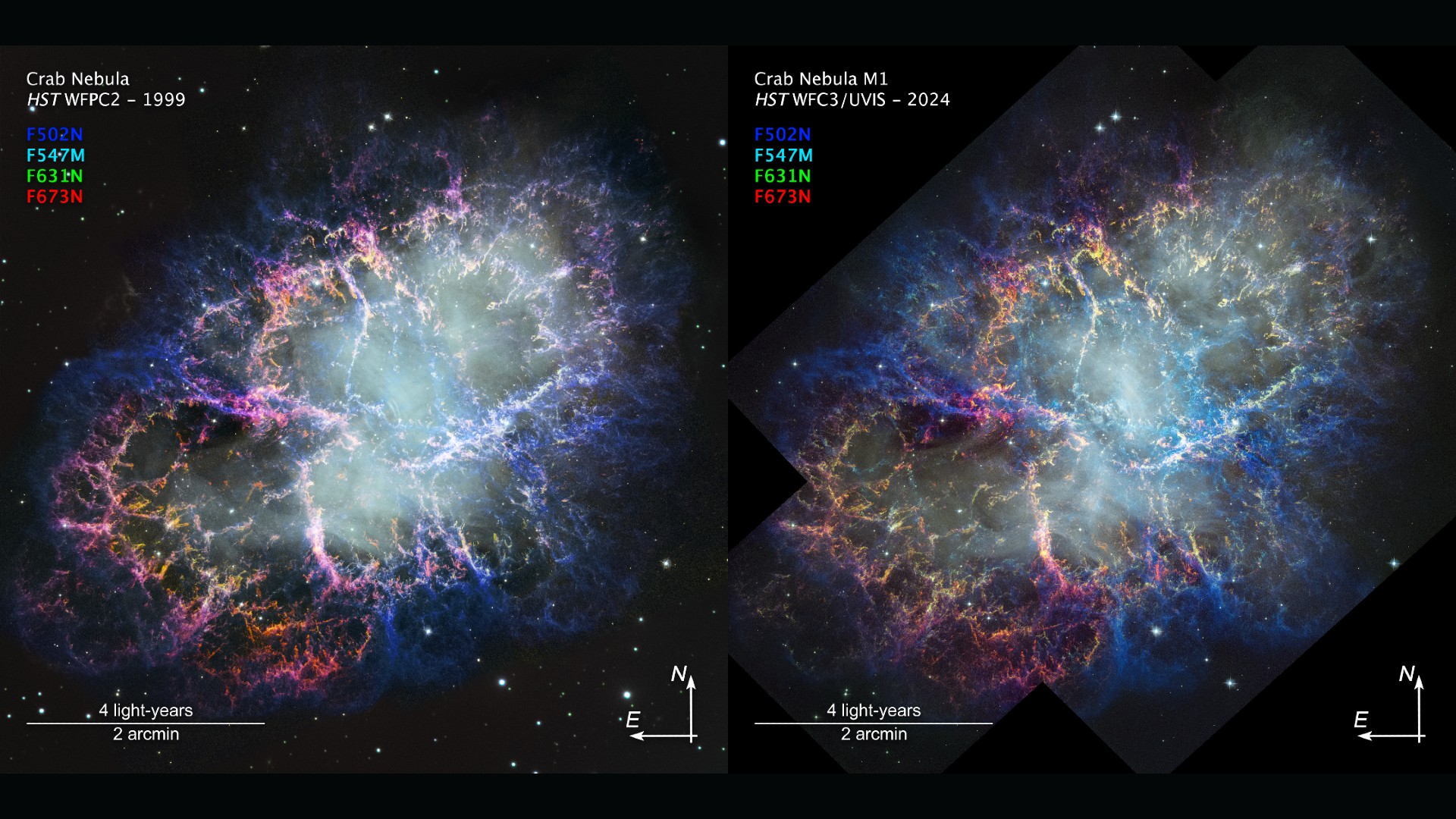
NASA’s Hubble Space Telescope first imaged the nebula in 1999, before the observatory was upgraded with its Wide Field Camera 3. Astronauts on the space shuttle STS-125 mission installed that camera in 2009, giving Hubble much greater resolution.
NASA pointed Hubble at the Crab Nebula again in 2024, revealing filaments of gas moving outward away from the site of the nebula’s progenitor supernova at 3.4 million miles per hour (5.5 million kilometers per hour).
Why is it amazing?
Compared with Hubble’s 1999 images, the 2024 images reveal changes in the temperature, density and chemical composition of the nebula’s gases. Astronomers are now able to study how supernova remnants like this one change over time, and it’s thanks to the tenure of the Hubble telescope.
“We tend to think of the sky as being unchanging, immutable,” Johns Hopkins University astronomer William Blair said in a NASA statement accompanying the image. “However, with the longevity of the Hubble Space Telescope, even an object like the Crab Nebula is revealed to be in motion, still expanding from the explosion nearly a millennium ago.”