• Home
  • About
  • FAQ
  • Feeds
  • Glossary
  • Contact
Tours In Space
  • Home
  • Start Here
    • Intro to Commercial Spaceflight
    • How to Book a Space Tour
    • Is Space Tourism Safe?
    • Space Travel FAQs
    • View Earth from the Edge
    • What to Pack
  • Preparing for Your Trip
    • Insurance and Legal Waivers
    • Physical and Medical Requirements
    • Training Programs
    • What to Expect
  • Space Tourism Companies
    • Axiom Space
    • Blue Origin
    • SpaceX
    • Virgin Galactic
    • World View (stratospheric balloon flights)
    • Blue Origin vs Virgin Galactic
    • Comparison Chart: Features, Pricing, Booking
  • Space Tours
    • Custom & Luxury Packages
    • Duration, Training, Costs
    • Experiences
    • Future Moon/Mars Options
    • Orbital Flights
    • Parabolic Flight Experiences
    • Private Missions
    • Stratospheric Balloon Flights
    • Suborbital Flights
    • Zero-Gravity Flights
  • Spaceflight Technologies
    • Space Tourism Balloon
No Result
View All Result
  • Home
  • Start Here
    • Intro to Commercial Spaceflight
    • How to Book a Space Tour
    • Is Space Tourism Safe?
    • Space Travel FAQs
    • View Earth from the Edge
    • What to Pack
  • Preparing for Your Trip
    • Insurance and Legal Waivers
    • Physical and Medical Requirements
    • Training Programs
    • What to Expect
  • Space Tourism Companies
    • Axiom Space
    • Blue Origin
    • SpaceX
    • Virgin Galactic
    • World View (stratospheric balloon flights)
    • Blue Origin vs Virgin Galactic
    • Comparison Chart: Features, Pricing, Booking
  • Space Tours
    • Custom & Luxury Packages
    • Duration, Training, Costs
    • Experiences
    • Future Moon/Mars Options
    • Orbital Flights
    • Parabolic Flight Experiences
    • Private Missions
    • Stratospheric Balloon Flights
    • Suborbital Flights
    • Zero-Gravity Flights
  • Spaceflight Technologies
    • Space Tourism Balloon
No Result
View All Result
Tours In Space
No Result
View All Result
Home Space News

Inside Artemis 2: NASA’s historic astronaut moon mission explained (video series)

Ensign by Ensign
March 26, 2026
in Space News
0
Inside Artemis 2: NASA’s historic astronaut moon mission explained (video series)
189
SHARES
1.5k
VIEWS
Share on FacebookShare on Twitter

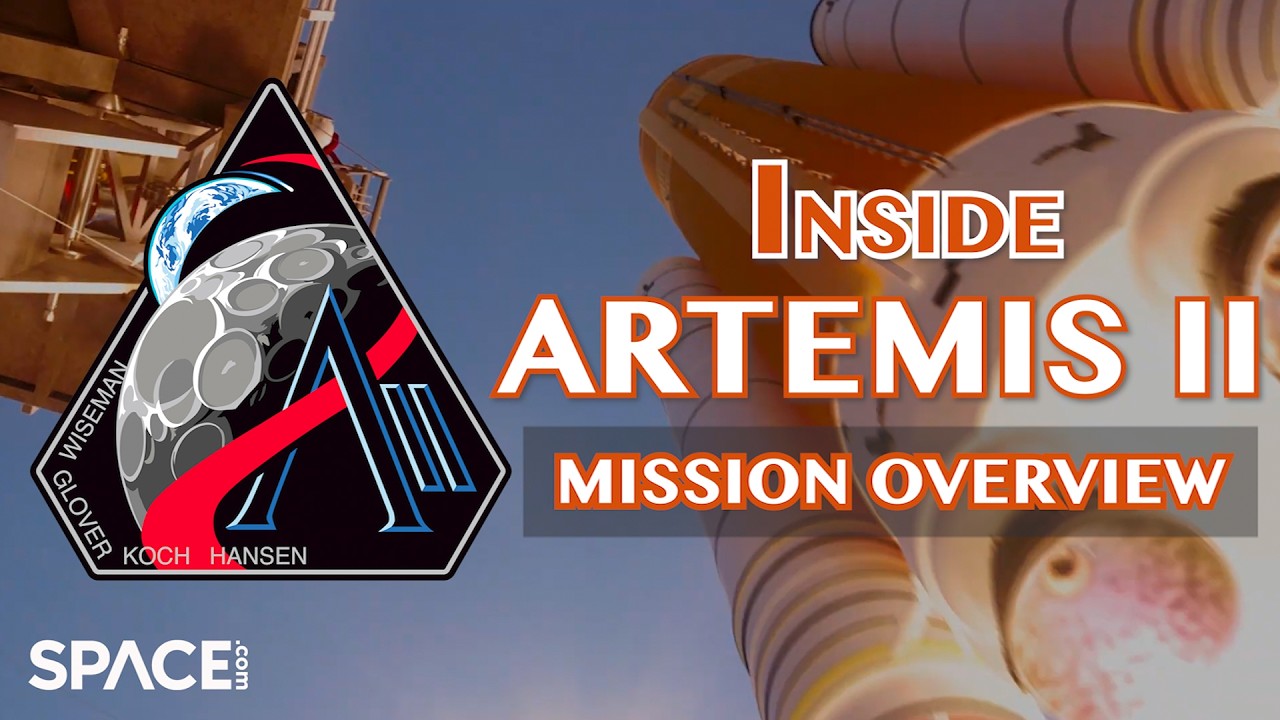
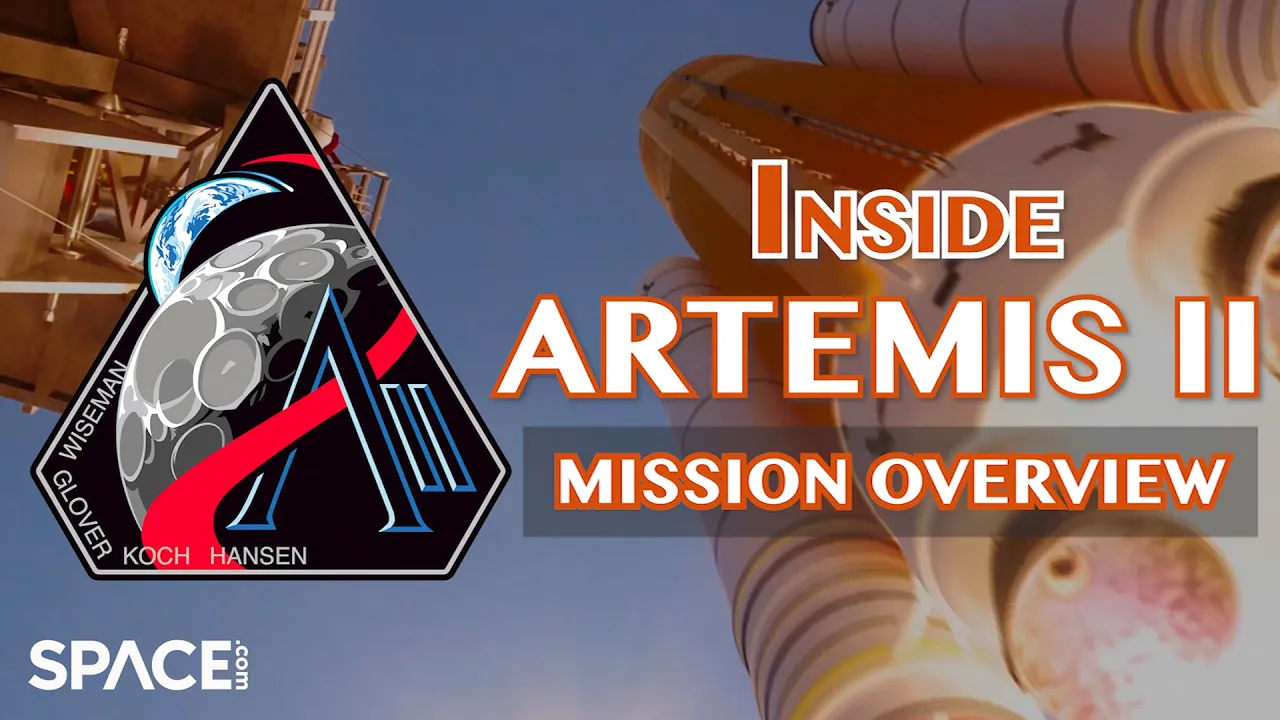
NASA’s Artemis 2 mission is poised to take humans around the moon for the first time in over 50 years. The mission is historic: a return to the moon by an astronaut crew that will serve as the vanguard for what NASA hopes will lead to a permanent outpost on the lunar surface.

But what exactly is NASA’s Artemis 2 mission launching on April 1? If you’re asking that question, then you’re in the right place. In our four-part video series “Inside Artemis II,” Space.com Editor-in-Chief Tariq Malik explains the basics of NASA’s first crewed flight to the moon since 1972 from the Kennedy Space Center Visitor Complex, just a few miles from the launch site in Cape Canaveral, Florida.

Below, you’ll see an overview of the Artemis 2 mission, meet its four-astronaut crew, and learn about the Space Launch System megarocket and Orion spacecraft making it possible. The episodes debut on March 25, March 26, March 30 and March 31.

Article continues below


You may like

Artemis 2: The mission explained

Inside Artemis II: NASA’s first crewed mission back to the moon – YouTube
Inside Artemis II: NASA's first crewed mission back to the moon - YouTube

Watch On

The Artemis 2 mission is scheduled to take its four-astronaut crew on a 10-day trip beyond Earth orbit. It will swing farther from Earth than any crewed mission since Apollo 17 in 1972, looping around the moon before heading home.

This isn’t a landing attempt — it’s a proving flight. Artemis 2 will test life-support, communications, and deep-space navigation systems — everything we’ll need to live and work on the moon for real.

Here’s a look at how the mission will work, what its major goals are throughout its 10 days and what the Artemis 2 astronauts will do during their circumlunar flight.

March 26: Meet the Artemis 2 crew
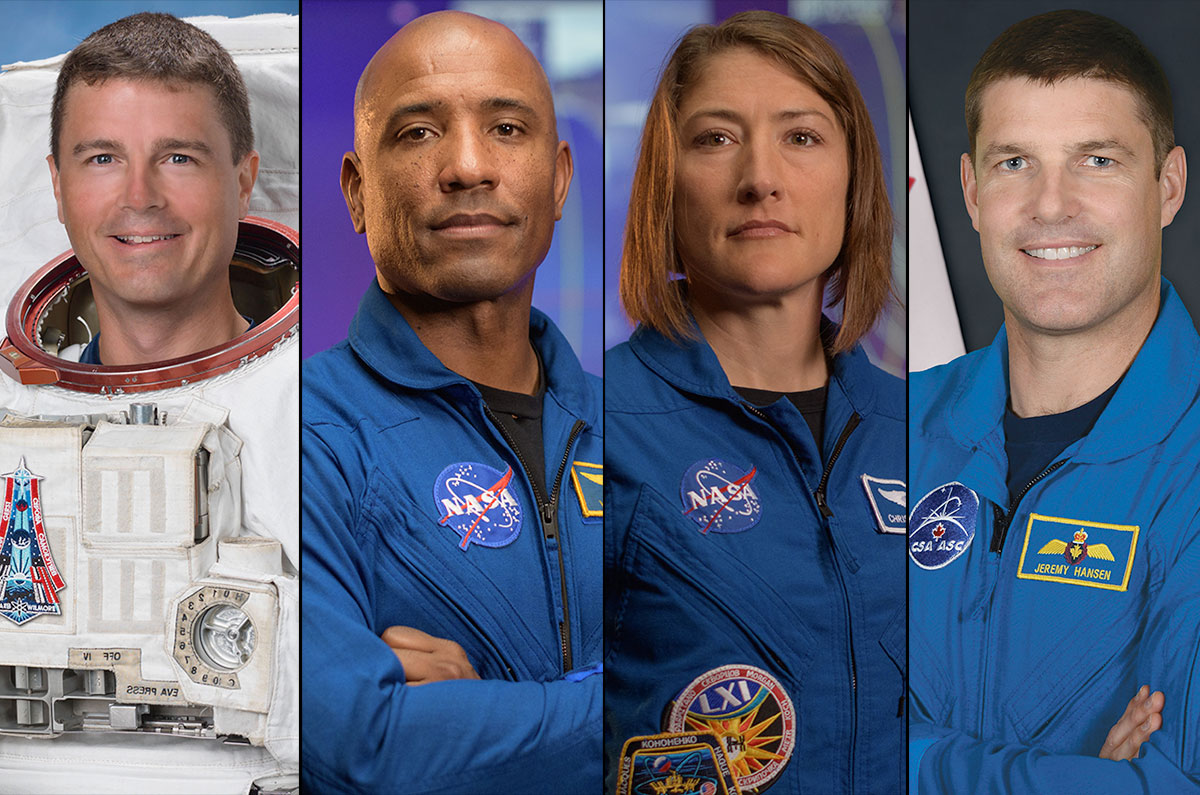
NASA announced the crew of the Artemis 2 moon mission on April 3, 2023. They are, from left: Reid Wiseman, Victor Glover and Christina Koch of NASA and Jeremy Hansen of the Canadian Space Agency.

(Image credit: NASA/collectSPACE.com)

The astronauts of NASA’s Artemis 2 mission will make history when they become the first people to fly to the moon and back in the 21st century. But who are these four explorers?

Breaking space news, the latest updates on rocket launches, skywatching events and more!

On March 26, in our “Meet the Artemis 2 Crew” episode, you’ll meet mission commander Reid Wiseman, a retired U.S. Navy captain and test pilot who’s served as NASA’s Chief Astronaut. He leads a team that includes pilot Victor Glover, a test pilot, Navy captain and the first Black astronaut to live long-term on the International Space Station; mission specialist Christina Koch, an engineer and the record-holder for the longest spaceflight by a woman; and mission specialist Jeremy Hansen, a Canadian Space Agency astronaut making his first flight to space.

Together, these four astronauts will become the first Artemis astronauts to visit the moon and, just possibly, fly the farthest from Earth than any human before them.

March 30: Space Launch System — The megarocket
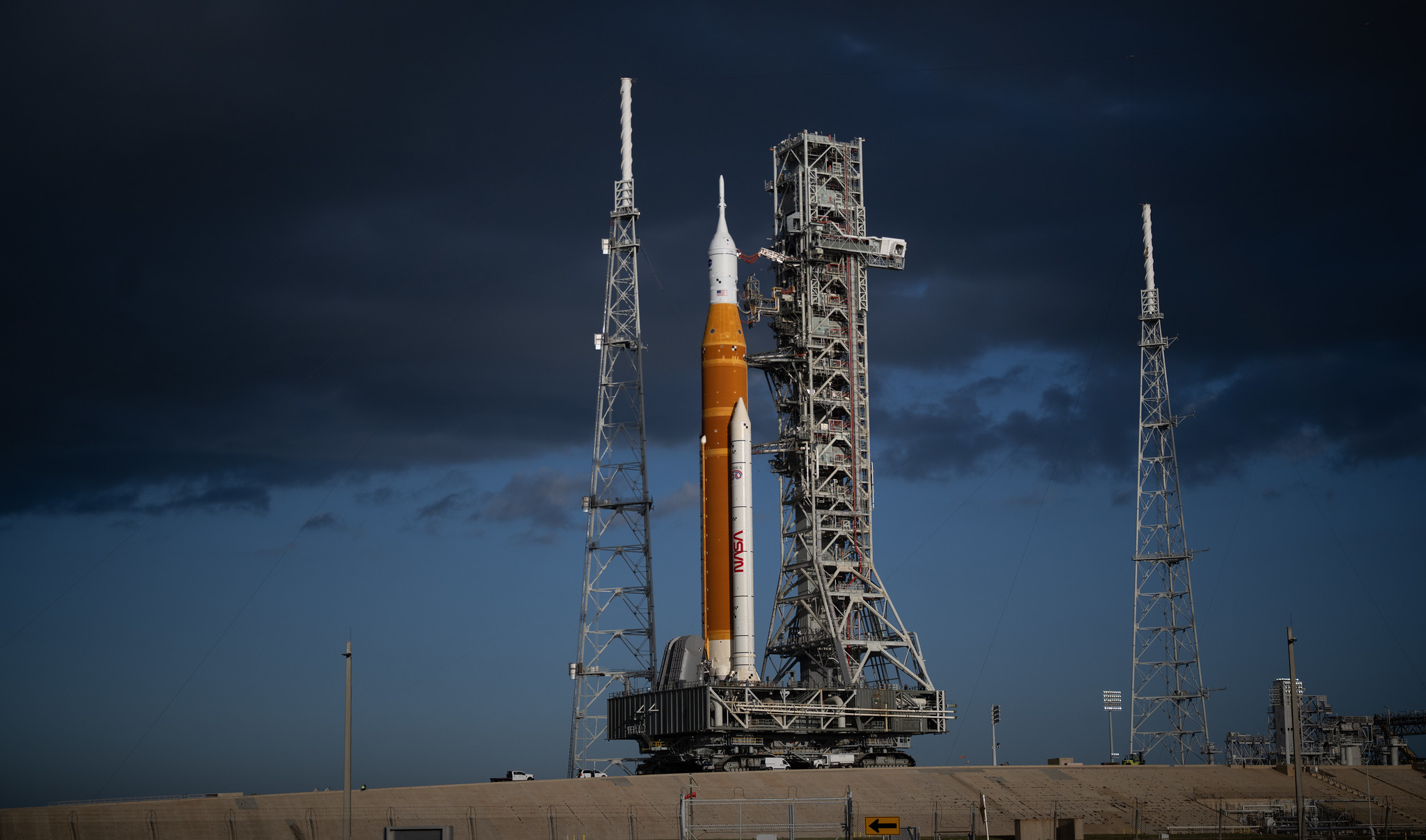
An orange rocket stands on a mound before a dark blue sky.

The Space Launch System megarocket that will carry Artemis 2 off the Earth. (Image credit: NASA/Joel Kowsky)

Coming on March 30, you’ll meet the muscle behind the Artemis 2 mission, NASA’s Space Launch System rocket (or SLS for short).


What to read next

Standing 322 feet tall, the SLS is taller than the Statue of Liberty and is NASA’s most powerful rocket since the Apollo program’s mighty Saturn V. It’s a two-stage booster and is designed to do what no rocket has in over 50 years: send humans back into deep space.

Let’s see what it takes to build NASA’s newest giant rocket.

March 31: Orion — NASA’s new moon ship
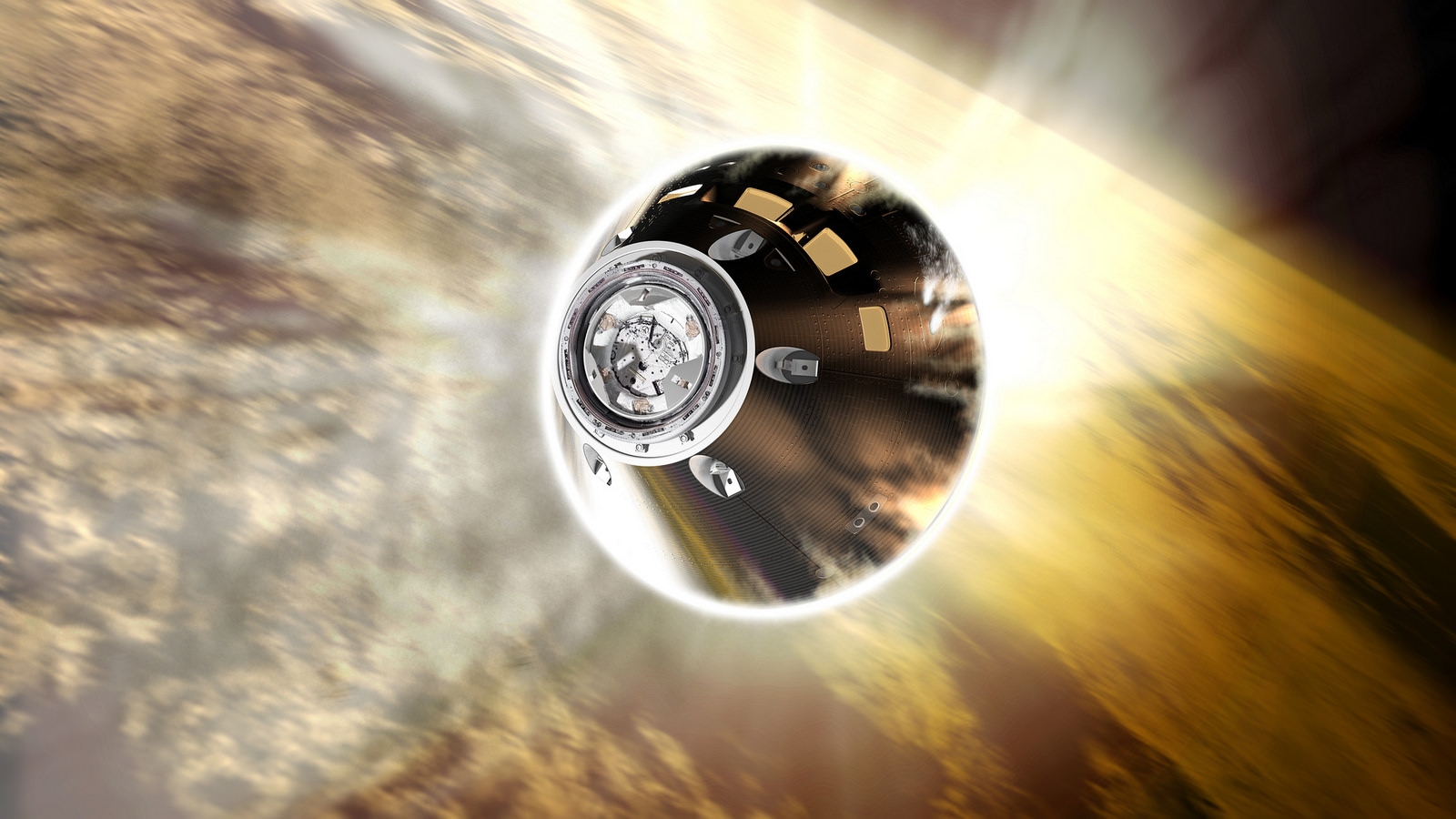
During its high-speed return from the moon, the thermal protection system of Orion's crew module must endure blistering temperatures to keep crew members safe. Measuring 16.5 feet (5 meters) in diameter, Orion's heat shield is the largest of its kind developed for missions carrying astronauts.

The Orion spacecraft will fly astronauts to and from the moon. (Image credit: NASA)

On March 31, one day before launch, we’ll complete our video series with Orion, NASA’s new moon ship.

The Orion spacecraft is NASA’s deep-space crew vehicle — the astronauts’ home, control room, and lifeboat for the entire journey around the moon. Behind me in this video, you’ll see the first prototype ever launched at the Kennedy Space Center Visitor Complex.

Orion is built to handle the harshest environment humans have ever faced: extreme radiation, massive temperature swings, and the deep-space vacuum. It’s packed with cutting-edge tech — from its launch abort system that can pull the crew to safety in seconds, to its heat shield, the largest ever built, protecting them on reentry at 25,000 miles an hour. And yes, there’s even a toilet.

Here’s a look inside Orion and how it will carry its astronaut crew to the moon.

Get ready for liftoff

So there you have it, space fans. Those are the basics of NASA’s Artemis 2 moon mission. We hope this helped as NASA prepares to restart humanity’s journey into deep space.

Be sure to visit Space.com on April 1 for complete coverage of the Artemis 2 moon mission. We’ll be covering the mission live from NASA’s Kennedy Space Center in Florida at launch, as well as from the Johnson Space Center in Houston during the flght. And if you’re wondering how to express your moon mission excitement, we’ve got a guide to the best Artemis 2 gear you can get right now.

Tags: NASArocket launchspace station
No Result
View All Result

Recent Posts

  • Rattling the Roman Space Telescope | Space photo of the day for March 26, 2026
  • Incredible new NASA images reveal Saturn in a new light — and it’s all thanks to a telescope team-up from Webb and Hubble
  • Who is Artemis? Meet the Greek goddess who inspired NASA’s return to the moon
  • These 45 exoplanets may be the best places to search for alien life
  • Aim for the stars for under $15 with this Estes 2441 Mini Arcas Model Rocket Kit at Walmart, now 17% cheaper in the spring sales

Categories

  • Excursions
  • Kepler Mission
  • NASA
  • NASA Breaking News
  • Physical Preparation
  • Preparation
  • Space News
  • Space Station News
  • Spacewalks
  • Tours
  • Uncategorized
  • Weightlessness Training
  • What Not to Pack
  • What to Pack

Meta

  • Log in
  • Entries feed
  • Comments feed
  • WordPress.org
  • Home
  • Start Here
  • Preparing for Your Trip
  • Space Tourism Companies
  • Space Tours
  • Contact

© 2026 JNews - Premium WordPress news & magazine theme by Jegtheme.

No Result
View All Result
  • About
  • Contact
  • Feeds
  • Frequently Asked Questions
  • Preparing for Your Trip
    • Insurance and Legal Waivers
    • Physical and Medical Requirements
    • Training Programs
    • What to Expect
  • Privacy Policy
  • Space Tourism Companies
    • Axiom Space
    • Blue Origin
    • Blue Origin vs Virgin Galactic
    • Comparison Chart: Features, Pricing, Booking
    • SpaceX
    • Virgin Galactic
    • World View (stratospheric balloon flights)
  • Space Tours
    • Custom & Luxury Packages
    • Duration, Training, Costs
    • Experiences
    • Future Moon/Mars Options
    • Orbital Flights
    • Parabolic Flight Experiences
    • Private Missions
    • Stratospheric Balloon Flights
    • Suborbital Flights
    • Zero-Gravity Flights
  • Spaceflight Technologies
    • Space Tourism Balloon
  • Start Here
    • How to Book a Space Tour
    • Intro to Commercial Spaceflight
    • Is Space Tourism Safe?
    • Space Travel FAQs
    • View Earth from the Edge
    • What to Pack
  • Tours in Space is your launchpad to the world of space tourism

© 2026 JNews - Premium WordPress news & magazine theme by Jegtheme.