• Home
  • About
  • FAQ
  • Feeds
  • Glossary
  • Contact
Tours In Space
  • Home
  • Start Here
    • Intro to Commercial Spaceflight
    • How to Book a Space Tour
    • Is Space Tourism Safe?
    • Space Travel FAQs
    • View Earth from the Edge
    • What to Pack
  • Preparing for Your Trip
    • Insurance and Legal Waivers
    • Physical and Medical Requirements
    • Training Programs
    • What to Expect
  • Space Tourism Companies
    • Axiom Space
    • Blue Origin
    • SpaceX
    • Virgin Galactic
    • World View (stratospheric balloon flights)
    • Blue Origin vs Virgin Galactic
    • Comparison Chart: Features, Pricing, Booking
  • Space Tours
    • Custom & Luxury Packages
    • Duration, Training, Costs
    • Experiences
    • Future Moon/Mars Options
    • Orbital Flights
    • Parabolic Flight Experiences
    • Private Missions
    • Stratospheric Balloon Flights
    • Suborbital Flights
    • Zero-Gravity Flights
  • Spaceflight Technologies
    • Space Tourism Balloon
No Result
View All Result
  • Home
  • Start Here
    • Intro to Commercial Spaceflight
    • How to Book a Space Tour
    • Is Space Tourism Safe?
    • Space Travel FAQs
    • View Earth from the Edge
    • What to Pack
  • Preparing for Your Trip
    • Insurance and Legal Waivers
    • Physical and Medical Requirements
    • Training Programs
    • What to Expect
  • Space Tourism Companies
    • Axiom Space
    • Blue Origin
    • SpaceX
    • Virgin Galactic
    • World View (stratospheric balloon flights)
    • Blue Origin vs Virgin Galactic
    • Comparison Chart: Features, Pricing, Booking
  • Space Tours
    • Custom & Luxury Packages
    • Duration, Training, Costs
    • Experiences
    • Future Moon/Mars Options
    • Orbital Flights
    • Parabolic Flight Experiences
    • Private Missions
    • Stratospheric Balloon Flights
    • Suborbital Flights
    • Zero-Gravity Flights
  • Spaceflight Technologies
    • Space Tourism Balloon
No Result
View All Result
Tours In Space
No Result
View All Result
Home Space News

Who is Artemis? Meet the Greek goddess who inspired NASA’s return to the moon

Ensign by Ensign
March 26, 2026
in Space News
0
Who is Artemis? Meet the Greek goddess who inspired NASA’s return to the moon
189
SHARES
1.5k
VIEWS
Share on FacebookShare on Twitter

NASA is gearing up to send astronauts back toward the moon for the first time in more than 50 years with Artemis 2 — a mission that marks the next chapter in human lunar exploration — but who <em>is Artemis?

The Artemis program is named for the Greek goddess of the moon and wilderness, and represents the agency’s most ambitious human exploration campaign since the Apollo program — the series of missions that first carried astronauts to the lunar surface more than 50 years ago. Artemis 2, the program’s first crewed mission, will send four astronauts on a roughly 10‑day free‑return flight around the moon and back to Earth.

Together, Artemis and Apollo form a symbolic, and literal, bridge between the past and future of human spaceflight. Unlike Apollo, which focused on short-term missions, Artemis aims to establish a sustained human presence on and around the moon. NASA also plans to explore new regions, particularly near the lunar south pole, where water ice may support long-term habitation and future missions to Mars. But in the excitement over human exploration of the moon, the meanings behind the missions’ namesakes and the mythological figures that inspired them can get lost. Just who were Artemis and Apollo?

Article continues below


You may like

Who is Artemis?

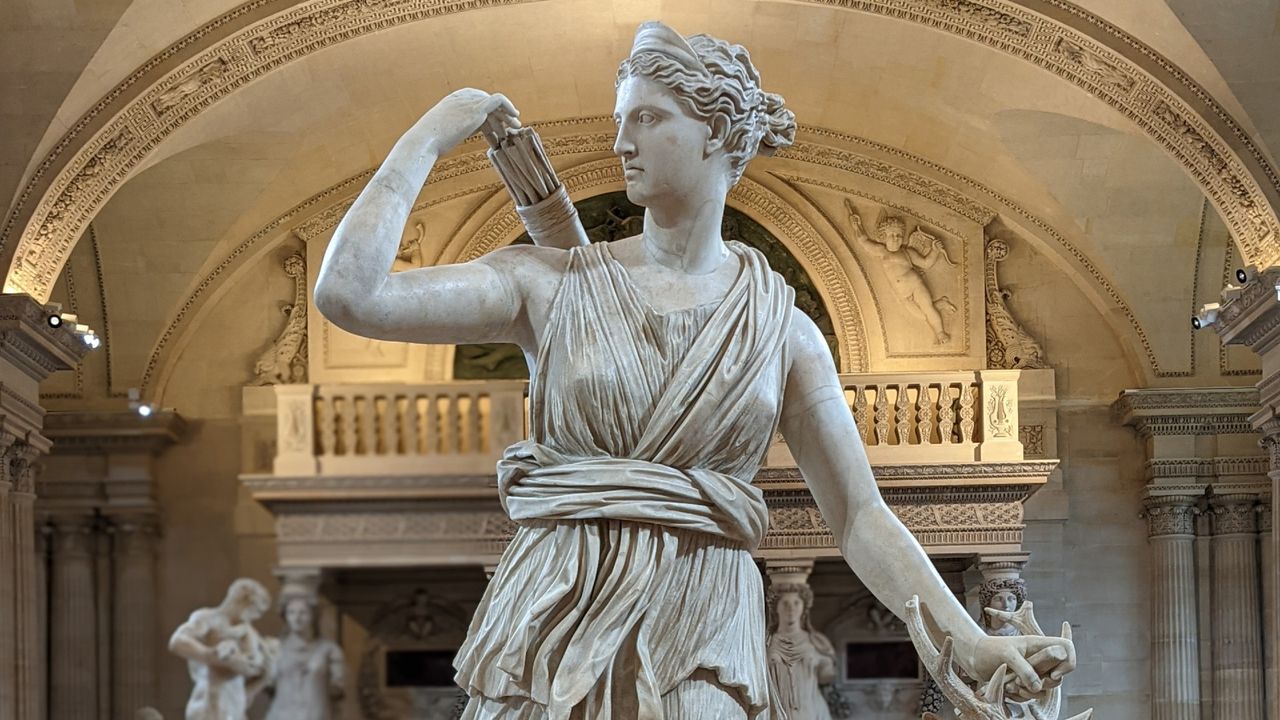
In Greek mythology, Artemis is the twin sister of Apollo and the goddess of the moon, hunting and wild places. In Roman mythology, she is known as Diana. Artemis is the daughter of Zeus, who rules over all of the other gods, and Leto, one of the goddesses of childhood.

Artemis is often portrayed as independent, fiercely protective and closely connected to nature — qualities that resonate with NASA’s vision for a sustainable lunar program and mission designed to explore uncharted territory. She is often depicted carrying a bow, or sometimes a torch.

While Apollo missions landed near the moon’s equator, Artemis 3 and future missions will venture farther south than any human mission before, investigating permanently shadowed craters and new lunar landscapes. The goddess’s association with protection and renewal also mirrors NASA’s emphasis on sustainability, international partnerships and long-term exploration.

NASA has also highlighted the symbolic importance of Artemis as a female figure, aligning with the program’s goal to land the first woman on the moon.

Breaking space news, the latest updates on rocket launches, skywatching events and more!

a white statue of a female figure in a toga holding a quiver of arrows, placing her hand on the head of a deer

A statue of Artemis at the Luxembourg Garden in Paris. (Image credit: Konstantinos Katsiras/Getty Images)

Who is Apollo?

Apollo, Artemis’s twin brother, is the Greek god of the sun, light, music and prophecy. In spaceflight history, his name is synonymous with NASA’s original moon program, which flew between 1961 and 1972 and culminated in six successful lunar landings.

The Apollo missions proved that humans could travel to another world, work there and return safely — a technological and cultural achievement that defined a generation. Apollo 11’s first lunar landing in 1969 remains one of the most iconic moments in human history, symbolizing exploration, ambition and ingenuity.

The pairing of Apollo and Artemis is more than poetic. In mythology, the twins balance day and night, or sun and moon. In spaceflight, Apollo represents what humanity has already accomplished, while Artemis represents what comes next.
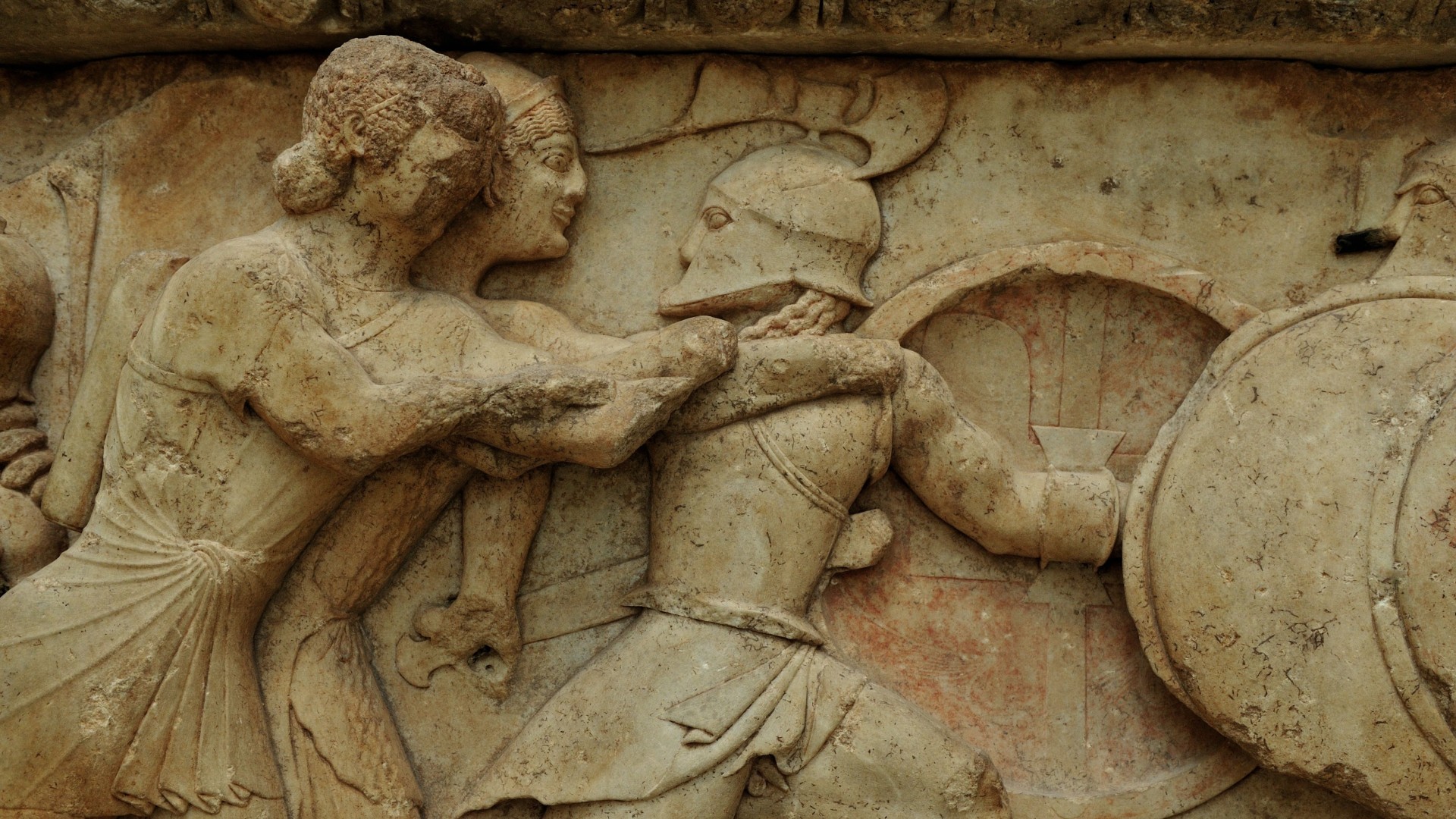
a relief of two human figures attacking a third figure wearing armor

A frieze depicting Artemis and Apollo attacking a giant found at the Siphnian Treasury in Delphi, Greece. (Image credit: DEA/ALBERT CEOLAN/Getty Images)

Now, Artemis 2 prepares to carry astronauts back toward the moon. NASA is now targeting April 1 for the historic launch, although the timing will depend on technical and weather conditions.

While Apollo paved the way to the moon, the Artemis program builds on that legacy, advancing human exploration and establishing a sustainable presence beyond Earth.

Tags: MarsNASArocket launch
No Result
View All Result

Recent Posts

  • Rattling the Roman Space Telescope | Space photo of the day for March 26, 2026
  • Incredible new NASA images reveal Saturn in a new light — and it’s all thanks to a telescope team-up from Webb and Hubble
  • Who is Artemis? Meet the Greek goddess who inspired NASA’s return to the moon
  • These 45 exoplanets may be the best places to search for alien life
  • Aim for the stars for under $15 with this Estes 2441 Mini Arcas Model Rocket Kit at Walmart, now 17% cheaper in the spring sales

Categories

  • Excursions
  • Kepler Mission
  • NASA
  • NASA Breaking News
  • Physical Preparation
  • Preparation
  • Space News
  • Space Station News
  • Spacewalks
  • Tours
  • Uncategorized
  • Weightlessness Training
  • What Not to Pack
  • What to Pack

Meta

  • Log in
  • Entries feed
  • Comments feed
  • WordPress.org
  • Home
  • Start Here
  • Preparing for Your Trip
  • Space Tourism Companies
  • Space Tours
  • Contact

© 2026 JNews - Premium WordPress news & magazine theme by Jegtheme.

No Result
View All Result
  • About
  • Contact
  • Feeds
  • Frequently Asked Questions
  • Preparing for Your Trip
    • Insurance and Legal Waivers
    • Physical and Medical Requirements
    • Training Programs
    • What to Expect
  • Privacy Policy
  • Space Tourism Companies
    • Axiom Space
    • Blue Origin
    • Blue Origin vs Virgin Galactic
    • Comparison Chart: Features, Pricing, Booking
    • SpaceX
    • Virgin Galactic
    • World View (stratospheric balloon flights)
  • Space Tours
    • Custom & Luxury Packages
    • Duration, Training, Costs
    • Experiences
    • Future Moon/Mars Options
    • Orbital Flights
    • Parabolic Flight Experiences
    • Private Missions
    • Stratospheric Balloon Flights
    • Suborbital Flights
    • Zero-Gravity Flights
  • Spaceflight Technologies
    • Space Tourism Balloon
  • Start Here
    • How to Book a Space Tour
    • Intro to Commercial Spaceflight
    • Is Space Tourism Safe?
    • Space Travel FAQs
    • View Earth from the Edge
    • What to Pack
  • Tours in Space is your launchpad to the world of space tourism

© 2026 JNews - Premium WordPress news & magazine theme by Jegtheme.