• Home
  • About
  • FAQ
  • Feeds
  • Glossary
  • Contact
Tours In Space
  • Home
  • Start Here
    • Intro to Commercial Spaceflight
    • How to Book a Space Tour
    • Is Space Tourism Safe?
    • Space Travel FAQs
    • View Earth from the Edge
    • What to Pack
  • Preparing for Your Trip
    • Insurance and Legal Waivers
    • Physical and Medical Requirements
    • Training Programs
    • What to Expect
  • Space Tourism Companies
    • Axiom Space
    • Blue Origin
    • SpaceX
    • Virgin Galactic
    • World View (stratospheric balloon flights)
    • Blue Origin vs Virgin Galactic
    • Comparison Chart: Features, Pricing, Booking
  • Space Tours
    • Custom & Luxury Packages
    • Duration, Training, Costs
    • Experiences
    • Future Moon/Mars Options
    • Orbital Flights
    • Parabolic Flight Experiences
    • Private Missions
    • Stratospheric Balloon Flights
    • Suborbital Flights
    • Zero-Gravity Flights
  • Spaceflight Technologies
    • Space Tourism Balloon
No Result
View All Result
  • Home
  • Start Here
    • Intro to Commercial Spaceflight
    • How to Book a Space Tour
    • Is Space Tourism Safe?
    • Space Travel FAQs
    • View Earth from the Edge
    • What to Pack
  • Preparing for Your Trip
    • Insurance and Legal Waivers
    • Physical and Medical Requirements
    • Training Programs
    • What to Expect
  • Space Tourism Companies
    • Axiom Space
    • Blue Origin
    • SpaceX
    • Virgin Galactic
    • World View (stratospheric balloon flights)
    • Blue Origin vs Virgin Galactic
    • Comparison Chart: Features, Pricing, Booking
  • Space Tours
    • Custom & Luxury Packages
    • Duration, Training, Costs
    • Experiences
    • Future Moon/Mars Options
    • Orbital Flights
    • Parabolic Flight Experiences
    • Private Missions
    • Stratospheric Balloon Flights
    • Suborbital Flights
    • Zero-Gravity Flights
  • Spaceflight Technologies
    • Space Tourism Balloon
No Result
View All Result
Tours In Space
No Result
View All Result
Home Uncategorized

ESA launches first Celeste satellites to test complementary LEO navigation layer

Ensign by Ensign
March 31, 2026
in Uncategorized
0
ESA launches first Celeste satellites to test complementary LEO navigation layer
189
SHARES
1.5k
VIEWS
Share on FacebookShare on Twitter
image

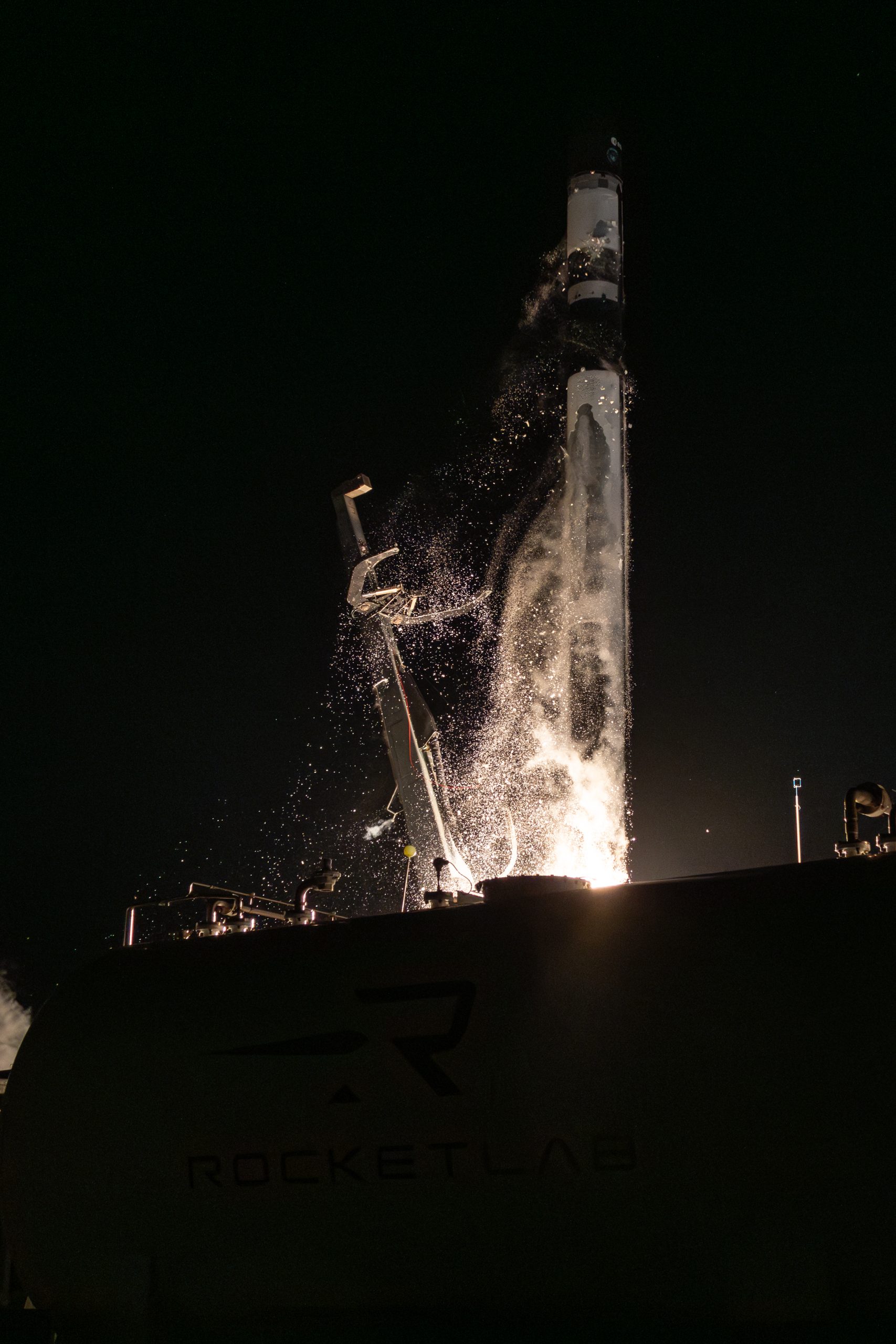
MILAN — The European Space Agency has launched the first two satellites of the Celeste in-orbit demonstration mission from New Zealand aboard a Rocket Lab Electron launcher on March 28.

The two satellites were launched at 10:14 CET and separated from the launcher about an hour later into a quasi-polar low Earth orbit at 510 kilometers. Acquisition of signal has been confirmed for both spacecraft.

Roberto Prieto-Cerderia, Celeste program manager at ESA, explained the choice of Rocket Lab over a European launcher during a pre-launch briefing. “We had an obligation to use the frequencies by May 2026. In Europe, the main possibility was Vega-C, which was fully booked at the time, so we had to find alternative solutions.”

Sign up for First Up: Get the latest updates on SpaceX, Artemis, NASA and more. From Jeff Foust, First Up is a recap of the day’s space industry news, including civil, commercial, and military space developments.

By submitting this form, you agree to the SpaceNews privacy policy and terms and conditions and to receive email from us and our partners. You can opt-out at any time.

Designed as an in-orbit demonstration (IOD) mission to assess the benefits of a complementary low Earth orbit (LEO) layer for Galileo, the final goal of Celeste is to pave the way for a fully operational PNT constellation in LEO from 2030 onward.

The current IOD phase is planned to include 11 satellites in orbit and one on the ground as a spare, for a total of 12 satellites to be launched between now and the end of 2027.

The two satellites launched Saturday, named IOD-1 and IOD-2, will validate core technologies and new signals and will bring into use the required L- and S-band frequencies for the mission’s operational phase.

“But this is not an end in itself,” Prieto said. “Ultimately, what we want to enable is an operational layer complementing Galileo and EGNOS as part of EU navigation capabilities. We are already working with the Commission to define and consolidate what this layer will be.”

The constellation is being developed through two parallel contracts led by GMV Spain with OHB Germany as a core partner, and by Thales Alenia Space France as prime contractor with Thales Alenia Space Italy responsible for the space segment. The two consortia involve more than 50 entities.

The next set of nine satellites is planned to be launched by the end of 2027 and will be injected into a quasi-polar orbit at 560 kilometers. They will be more sophisticated, larger and equipped with more advanced payloads and an extended number of frequencies, explained Miguel Romay, navigation systems general manager at GMV, during the pre-launch briefing.

“Over the last decades, Europe has built the most advanced PNT infrastructures in the world,” Romay added. “But navigation systems cannot remain static. They must continuously evolve technically, operationally, and architecturally. Celeste embodies that dynamic dimension of the European navigation ecosystem.”

Celeste received a boost at the latest Ministerial Council in Bremen,  to move the program from the IOD phase to the in-orbit preparation phase, which ESA expects to begin deployment from 2028 onward.

No Result
View All Result

Recent Posts

  • Second Starlink satellite suffers anomaly, generating debris
  • Rocket Lab wins German approval for Mynaric deal
  • Varda flies navigation payload, heat shield tests on sixth reentry mission
  • ESA launches first Celeste satellites to test complementary LEO navigation layer
  • SpaceX launches Transporter-16 rideshare mission

Categories

  • Excursions
  • Kepler Mission
  • NASA
  • NASA Breaking News
  • Physical Preparation
  • Preparation
  • Space News
  • Space Station News
  • Spacewalks
  • Tours
  • Uncategorized
  • Weightlessness Training
  • What Not to Pack
  • What to Pack

Meta

  • Log in
  • Entries feed
  • Comments feed
  • WordPress.org
  • Home
  • Start Here
  • Preparing for Your Trip
  • Space Tourism Companies
  • Space Tours
  • Contact

© 2026 JNews - Premium WordPress news & magazine theme by Jegtheme.

No Result
View All Result
  • About
  • Contact
  • Feeds
  • Frequently Asked Questions
  • Preparing for Your Trip
    • Insurance and Legal Waivers
    • Physical and Medical Requirements
    • Training Programs
    • What to Expect
  • Privacy Policy
  • Space Tourism Companies
    • Axiom Space
    • Blue Origin
    • Blue Origin vs Virgin Galactic
    • Comparison Chart: Features, Pricing, Booking
    • SpaceX
    • Virgin Galactic
    • World View (stratospheric balloon flights)
  • Space Tours
    • Custom & Luxury Packages
    • Duration, Training, Costs
    • Experiences
    • Future Moon/Mars Options
    • Orbital Flights
    • Parabolic Flight Experiences
    • Private Missions
    • Stratospheric Balloon Flights
    • Suborbital Flights
    • Zero-Gravity Flights
  • Spaceflight Technologies
    • Space Tourism Balloon
  • Start Here
    • How to Book a Space Tour
    • Intro to Commercial Spaceflight
    • Is Space Tourism Safe?
    • Space Travel FAQs
    • View Earth from the Edge
    • What to Pack
  • Tours in Space is your launchpad to the world of space tourism

© 2026 JNews - Premium WordPress news & magazine theme by Jegtheme.