

WASHINGTON — Rocket Lab said has secured approval from German authorities to acquire laser communications firm Mynaric, clearing a key regulatory hurdle for a deal that had faced prolonged scrutiny over national security concerns.
The Long Beach, California-based launch and satellite manufacturer said on March 30 that Germany’s Federal Ministry for Economic Affairs and Energy approved the transaction under foreign investment rules, paving the way for the acquisition to close in April. Rocket Lab first announced the roughly $150 million acquisition in March last year.
The decision follows months of uncertainty around the proposed purchase, which had drawn attention from German officials and lawmakers wary of allowing a supplier of sensitive space technology to fall under foreign ownership. Earlier reports indicated the deal was at risk as Berlin weighed whether Mynaric’s laser communications systems — used in military and commercial satellite networks — should remain under German control.
The approval suggests regulators have concluded those concerns can be managed, even as Europe broadly moves to strengthen domestic control over defense-related technologies.
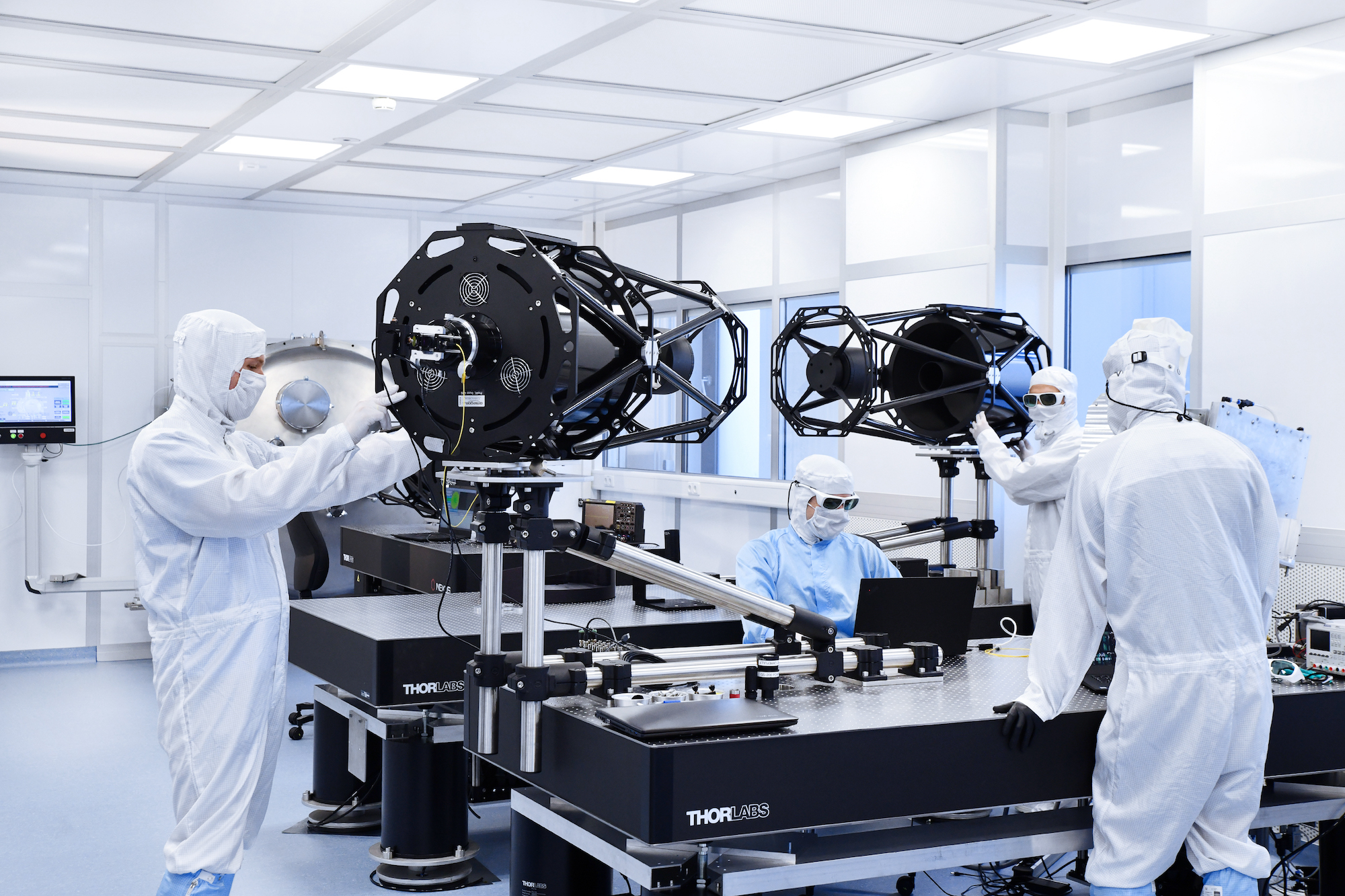
Rocket Lab has positioned the acquisition as a way to secure a critical component in the satellite supply chain while expanding its presence in Europe. Mynaric, headquartered in Munich, produces optical communications terminals that enable satellites to transmit data via laser links, a technology increasingly central to next-generation constellations.
“Receiving regulatory approval is an important milestone on the path to acquiring Mynaric,” Rocket Lab’s chief executive Peter Beck said in a statement. He added the company expects to expand its support for German and European space programs following the deal’s close.
Laser terminals a cornerstone technology
Laser communications systems allow satellites to exchange data at higher rates and with greater resistance to interference than traditional radio-frequency links. The technology is viewed as a cornerstone of proliferated constellations in low Earth orbit, including military networks designed for secure communications and missile tracking.
Despite growing demand, such terminals have been in limited supply, with manufacturers struggling to produce them in high volumes at competitive prices. Rocket Lab said it plans to scale Mynaric’s manufacturing output, applying a strategy it has used in prior acquisitions to increase production and reduce costs for satellite subsystems.
Mynaric will remain headquartered in Munich after the deal closes, establishing Rocket Lab’s first European foothold. The companies already have an established relationship: Mynaric supplies its CONDOR Mk3 optical terminals for Rocket Lab-built satellites under contracts with the U.S. Space Development Agency.
The acquisition would deepen Rocket Lab’s vertical integration, giving it in-house access to a technology that has become a bottleneck for both commercial operators and government programs.
For Germany, the approval marks a balancing act between attracting foreign investment and preserving control over technologies seen as strategically important. Across Europe, governments are increasing defense spending and tightening oversight of cross-border deals as they seek to build more self-reliant industrial bases in space and defense.