• Home
  • About
  • FAQ
  • Feeds
  • Glossary
  • Contact
Tours In Space
  • Home
  • Start Here
    • Intro to Commercial Spaceflight
    • How to Book a Space Tour
    • Is Space Tourism Safe?
    • Space Travel FAQs
    • View Earth from the Edge
    • What to Pack
  • Preparing for Your Trip
    • Insurance and Legal Waivers
    • Physical and Medical Requirements
    • Training Programs
    • What to Expect
  • Space Tourism Companies
    • Axiom Space
    • Blue Origin
    • SpaceX
    • Virgin Galactic
    • World View (stratospheric balloon flights)
    • Blue Origin vs Virgin Galactic
    • Comparison Chart: Features, Pricing, Booking
  • Space Tours
    • Custom & Luxury Packages
    • Duration, Training, Costs
    • Experiences
    • Future Moon/Mars Options
    • Orbital Flights
    • Parabolic Flight Experiences
    • Private Missions
    • Stratospheric Balloon Flights
    • Suborbital Flights
    • Zero-Gravity Flights
  • Spaceflight Technologies
    • Space Tourism Balloon
No Result
View All Result
  • Home
  • Start Here
    • Intro to Commercial Spaceflight
    • How to Book a Space Tour
    • Is Space Tourism Safe?
    • Space Travel FAQs
    • View Earth from the Edge
    • What to Pack
  • Preparing for Your Trip
    • Insurance and Legal Waivers
    • Physical and Medical Requirements
    • Training Programs
    • What to Expect
  • Space Tourism Companies
    • Axiom Space
    • Blue Origin
    • SpaceX
    • Virgin Galactic
    • World View (stratospheric balloon flights)
    • Blue Origin vs Virgin Galactic
    • Comparison Chart: Features, Pricing, Booking
  • Space Tours
    • Custom & Luxury Packages
    • Duration, Training, Costs
    • Experiences
    • Future Moon/Mars Options
    • Orbital Flights
    • Parabolic Flight Experiences
    • Private Missions
    • Stratospheric Balloon Flights
    • Suborbital Flights
    • Zero-Gravity Flights
  • Spaceflight Technologies
    • Space Tourism Balloon
No Result
View All Result
Tours In Space
No Result
View All Result
Home Uncategorized

Tracking the next SDA challenge

Ensign by Ensign
April 9, 2026
in Uncategorized
0
Tracking the next SDA challenge
189
SHARES
1.5k
VIEWS
Share on FacebookShare on Twitter
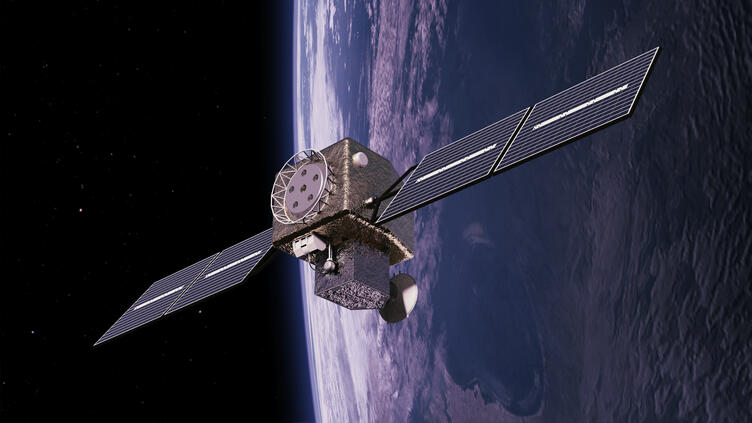
image

A flurry of commercial innovation has left the U.S. government with no shortage of sensors and AI-driven insights to monitor the increasingly packed and contested space environment.

The challenge is turning this abundance of data into an operational space domain awareness (SDA) capability.

“I don’t think the problem today is a lack of data,” said Rhet Turnbull, a Leidos solution architect working under the Space Force’s SDA Tools, Applications and Processing Lab, a government-run effort to test emerging capabilities against real mission problems. “It’s making sure we get the right data at the right time — and how can we use that data?”

Leidos provides advanced command-and-control and sensor orchestration capabilities as part of the SDA TAP Lab cohort, where the company is demonstrating a software platform called OC2ELOT that is designed to stitch together and facilitate large numbers of sensors and data sources.

“It makes it very easy to plug in different capabilities, try them [and] maybe swap them out,” he said in an interview.

According to Turnbull, hundreds of sensors from dozens of providers are connected through the system, tracking the location, behavior and intent of more than 1,000 objects in orbit.

In one scenario, software automatically re-tasked sensors in less than two seconds after detecting a launch, without interrupting surveillance of existing objects.

But while experimentation has demonstrated impressive speed and adaptability, the transition to operational use remains a work in progress.

“The operational environment is typically classified on the government side,” Turnbull said, and many companies participating in SDA experiments lack the clearances required to operate inside those environments.

Other players are foreign firms, raising questions about how their data can be trusted, secured and integrated.

“Sometimes [government users] want to look at an object, but they don’t want anybody to know that they’re looking at it,” he added.

“If I task a commercial sensor to go look at something, and they know that data is going to the government, that’s an operational security concern.”

To help tackle these challenges, the Space Force recently moved the TAP Lab under Kronos, a program aimed at modernizing space battle management by fusing real-time data to support operational decision-making.

The move is intended to accelerate the integration of commercial tools into the Space Force’s most sensitive operational and intelligence systems.

“In the short term, my goal is really to boost the amount of capability that we’re taking from the lab and putting it in my program,” Lt. Col. Collin Greiser, who leads Kronos at Space Systems Command, said during a SpaceNews webinar Feb. 19.

Turnbull hailed the shift as a positive sign that the government is serious about figuring out how to rapidly acquire technology, develop prototypes and transition it into newfound capability and practicality in the real world.

As potentially tens of thousands of additional satellites are set to launch over the course of the next five years, the ability to rapidly integrate and operationalize commercial capabilities is becoming less of a strategic advantage and more of a necessity.

Maintaining safe operations also depends heavily on coordination across operators and nations, even as governments remain reluctant to share sensitive information.

“Nations … protect their national security and other sovereign equities, which makes global acceptance of any single national space domain awareness solution difficult,” said Andrew D’Uva, senior policy advisor to the Space Data Association, a nonprofit information-sharing platform focused on global spaceflight safety.

That constraint leaves a coordination role for neutral, non-sovereign actors that the nonprofit aims to fill.

“Safety is the only globally scalable mission,” D’Uva added.

<em>This article first appeared in the April 2026 issue of SpaceNews Magazine.

No Result
View All Result

Recent Posts

  • Improved thresholds and SSA accuracy can reduce most satellite collision risk
  • Space Sovereignty Is No Longer Optional
  • ‘Audible screams of delight’ from NASA scientists over micrometeorite impacts on the moon witnessed by Artemis 2 astronauts
  • April 30: Opportunities for On-Orbit Computing
  • Tracking the next SDA challenge

Categories

  • Excursions
  • Kepler Mission
  • NASA
  • NASA Breaking News
  • Physical Preparation
  • Preparation
  • Space News
  • Space Station News
  • Spacewalks
  • Tours
  • Uncategorized
  • Weightlessness Training
  • What Not to Pack
  • What to Pack

Meta

  • Log in
  • Entries feed
  • Comments feed
  • WordPress.org
  • Home
  • Start Here
  • Preparing for Your Trip
  • Space Tourism Companies
  • Space Tours
  • Contact

© 2026 JNews - Premium WordPress news & magazine theme by Jegtheme.

No Result
View All Result
  • About
  • Contact
  • Feeds
  • Frequently Asked Questions
  • Preparing for Your Trip
    • Insurance and Legal Waivers
    • Physical and Medical Requirements
    • Training Programs
    • What to Expect
  • Privacy Policy
  • Space Tourism Companies
    • Axiom Space
    • Blue Origin
    • Blue Origin vs Virgin Galactic
    • Comparison Chart: Features, Pricing, Booking
    • SpaceX
    • Virgin Galactic
    • World View (stratospheric balloon flights)
  • Space Tours
    • Custom & Luxury Packages
    • Duration, Training, Costs
    • Experiences
    • Future Moon/Mars Options
    • Orbital Flights
    • Parabolic Flight Experiences
    • Private Missions
    • Stratospheric Balloon Flights
    • Suborbital Flights
    • Zero-Gravity Flights
  • Spaceflight Technologies
    • Space Tourism Balloon
  • Start Here
    • How to Book a Space Tour
    • Intro to Commercial Spaceflight
    • Is Space Tourism Safe?
    • Space Travel FAQs
    • View Earth from the Edge
    • What to Pack
  • Tours in Space is your launchpad to the world of space tourism

© 2026 JNews - Premium WordPress news & magazine theme by Jegtheme.