
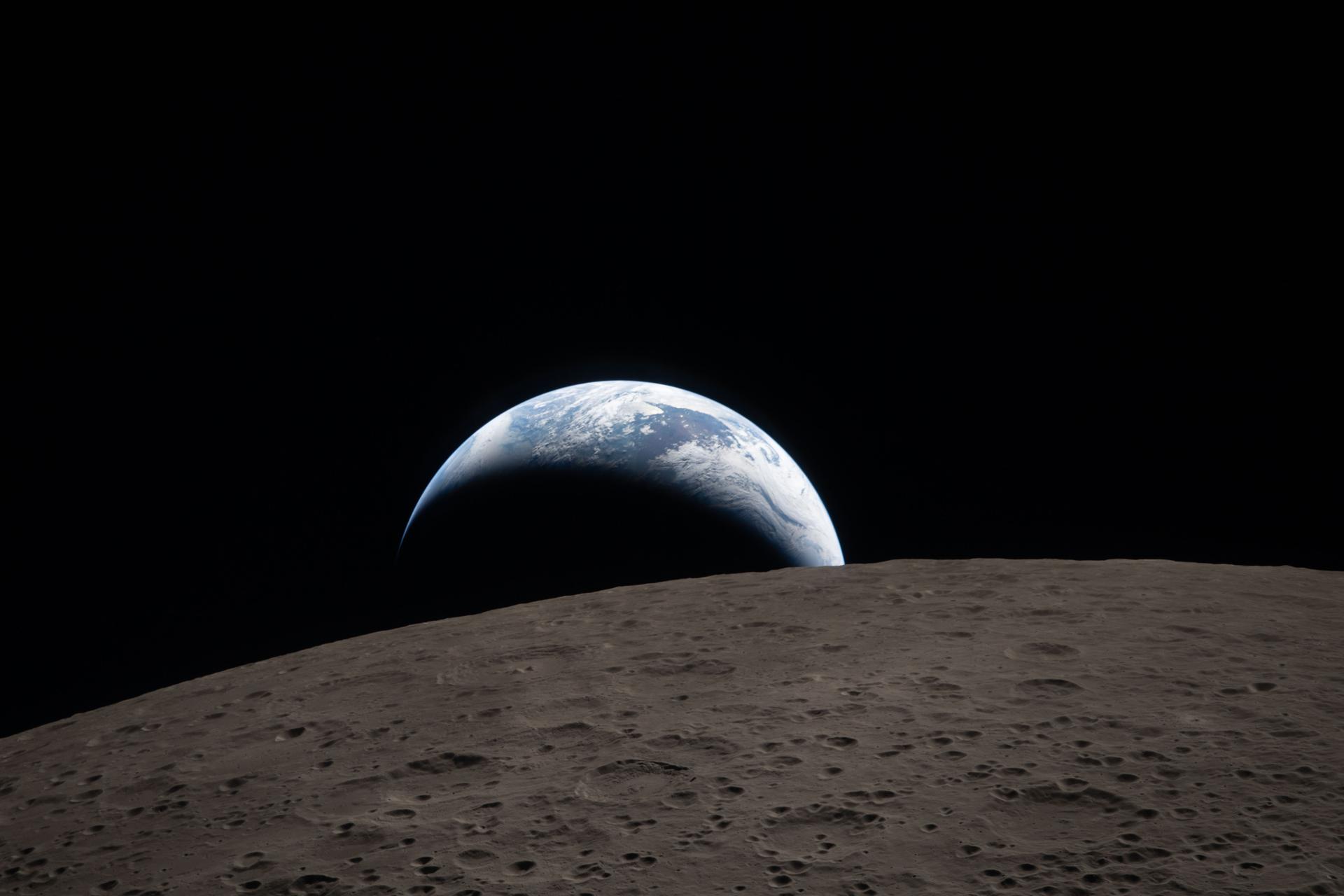


Preparing to send astronauts back to the moon is no small feat. Spaceflight exposes the body to both known and unknown risks, some of which are subtle, cumulative, and difficult to predict. When humans were last on the lunar surface in 1972, they stayed for just over three days. On that final mission, Apollo astronauts tracked fine gray dust, which they described as smelling like burnt gunpowder, back into their spacecraft on boots, gloves, and suits. The lunar dust particles clung stubbornly to surfaces, irritated their eyes and throats, and left some crew members with what they described as a kind of “lunar hay fever.”
NASA intends to solve the health effects of lunar dust through engineering by minimizing exposure of the humans to it, but it is likely that exposure will not be completely eliminated. As NASA astronauts venture beyond low Earth orbit (LEO) to explore the moon again on Artemis 2, human health is becoming central to how we design and sustain long-term lunar missions.
Human health outside low Earth orbit
Outside LEO, the spaceflight environment changes in ways that significantly impact human physiology. Earth’s magnetic field no longer provides the same shielding from cosmic radiation. Communication delays grow with distance, and even short missions beyond this protective envelope expose crews to hazards that are less familiar and harder to study in real-time. Artemis II, though not a moon-landing mission, marks the first return to this environment in more than half a century. It also highlights how far space health science has advanced since the last time humans ventured this far from Earth.
Radiation exposure has long been recognized as one of the central challenges of deep-space travel. During the Apollo era, that risk was managed largely through mission timing and duration, with limited ability to measure individual exposure or assess biological response during flight. Missions were short, solar activity was relatively quiet, and serious radiation events were avoided. Only years later did some long-term effects, including elevated rates of cataracts among Apollo astronauts, become apparent through retrospective analysis.
Today, radiation is approached less as a single hazard to be avoided and more as a chronic exposure to be understood. Individual dosimeters allow exposure to be tracked at the level of each crew member. Advances in molecular biology and health surveillance make it possible to study how radiation affects cells and DNA integrity, informing efforts to characterize risk and guide the development of potential countermeasures. Research supported by the Translational Research Institute for Space Health (TRISH), including initiatives such as SENTINEL, is using human tissue chips to better understand how spaceflight hazards like radiation interact with human biology over time. In fact, NASA is sending human tissue chips derived from the Artemis astronauts’ own stem cells to the lunar surface on Artemis II.
Spaceflight also alters how fluids distribute through the body, contributing to changes in vision and brain structures. Bone and muscle mass decline without countermeasures such as exercise. Immune responses, sleep and circadian rhythms, as well as astronauts’ cognitive acuity are significantly affected. During Apollo, many of these changes were documented primarily after crews returned to Earth. Today, they can be monitored during flight, allowing researchers to observe how physiological systems adapt in real time. Efforts such as Hermes, which focus on unobtrusive and continuous health monitoring and risk assessment during exploration-class missions, reflect this shift toward earlier observation of health status changes and a more integrated understanding when intervention is merited.
Looking towards future crewed events
Future crewed missions to the lunar surface will mark the first return since Apollo, bringing with them a different set of health considerations than those faced in orbit alone. Beyond the hazards of operating outside Earth’s magnetosphere, surface missions introduce risks tied to longer exposure and repeated activity in the lunar environment.
Lunar dust remains a concern. During the Apollo missions, fine regolith tracked into the cabin irritated astronauts’ eyes and throats, but the effects were poorly characterized at the time. As future missions envision longer surface stays, understanding how repeated dust exposure affects the lungs, skin, and eyes becomes increasingly important.
Radiation risk also changes on the lunar surface, where crews will spend extended periods without Earth’s magnetic shielding and with limited options for rapidly accessible shelter or return. At the same time, reduced gravity, increased physical workload, and disrupted sleep place additional demands on the body and mind.
Decades of experience have taught us that while we can calculate risks and screen for pre-existing conditions to reduce the chance that serious medical events will occur during a deep space mission, unexpected situations may still occur. What we bring in a medical kit to the moon will have to include “Swiss army knife” technologies that are flexible and essential. Much of what we learn from these types of trade analyses informs healthcare in extreme environments on Earth.
Preparation for future crewed lunar missions draws on decades of space health research, improved monitoring, and a more integrated understanding of how multiple stressors interact. Applying that knowledge deliberately will be essential as lunar missions grow longer and more complex.
As missions move toward longer surface operations and eventually continuous presence on the lunar surface, addressing these health challenges will require coordination beyond any single program or agency. Preparing for sustained lunar exploration depends on collaboration across government, commercial providers, international partners, and the medical and research communities, alongside shared protocols, knowledge, and standards that ensure health data can be collected, interpreted, and acted on responsibly so that we continue to learn and improve healthcare for humans on and off the planet.
<em>Dorit Donoviel is the executive director of the Translational Research Institute for Space Health (TRISH), a NASA-funded consortium of Baylor College of Medicine, California Institute for Technology and Massachusetts Institute for Technology. She is also an associate professor and Director of Research at Baylor College of Medicine’s Center for Space Medicine.
SpaceNews is committed to publishing our community’s diverse perspectives. Whether you’re an academic, executive, engineer or even just a concerned citizen of the cosmos, send your arguments and viewpoints to opinion (at) spacenews.com to be considered for publication online or in our next magazine. If you have something to submit, read some of our recent opinion articles and our submission guidelines to get a sense of what we’re looking for. The perspectives shared in these opinion articles are solely those of the authors and do not necessarily represent their employers or professional affiliations.