
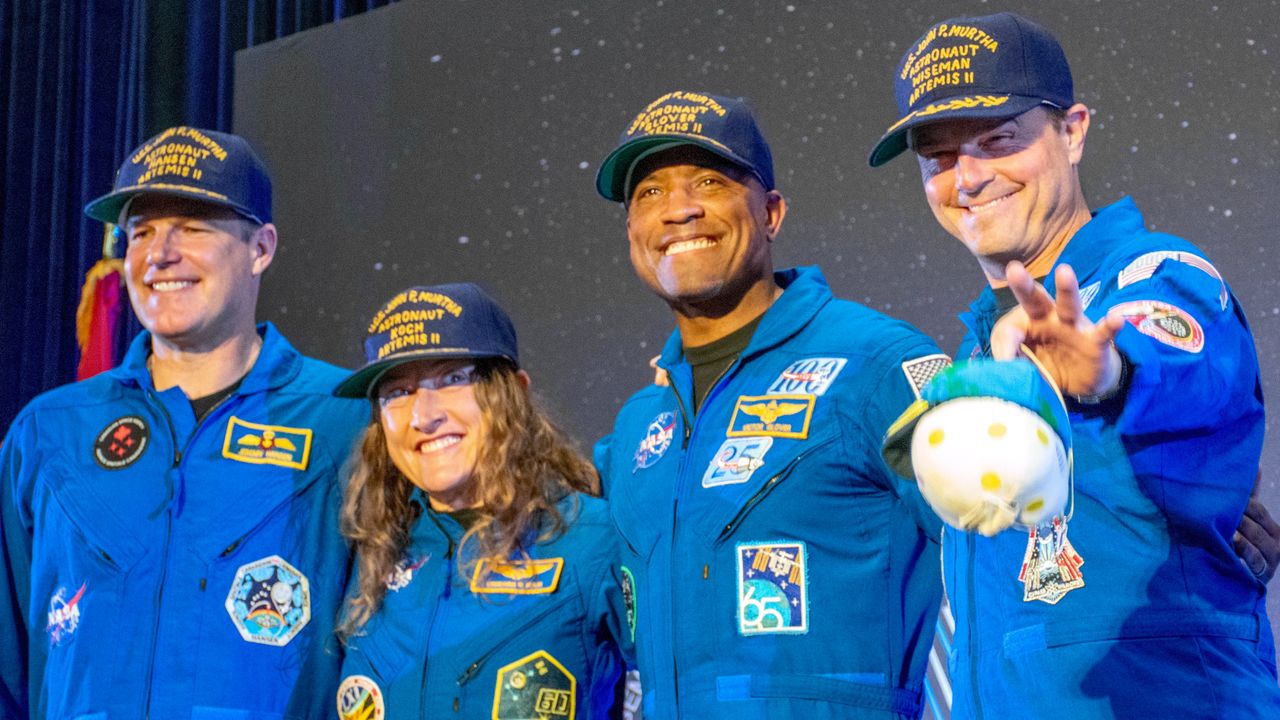

HOUSTON — The crew of NASA’s Artemis 2 mission around the moon is back on Earth — and now back home, here in Houston.
NASA astronauts Reid Wiseman, Victor Glover and Christina Koch and the Canadian Space Agency’s Jermey Hansen landed Saturday (April 11) at Ellington Field Joint Reserve Base, a short drive down the road from NASA’s Johnson Space Center (JSC).
Article continues below
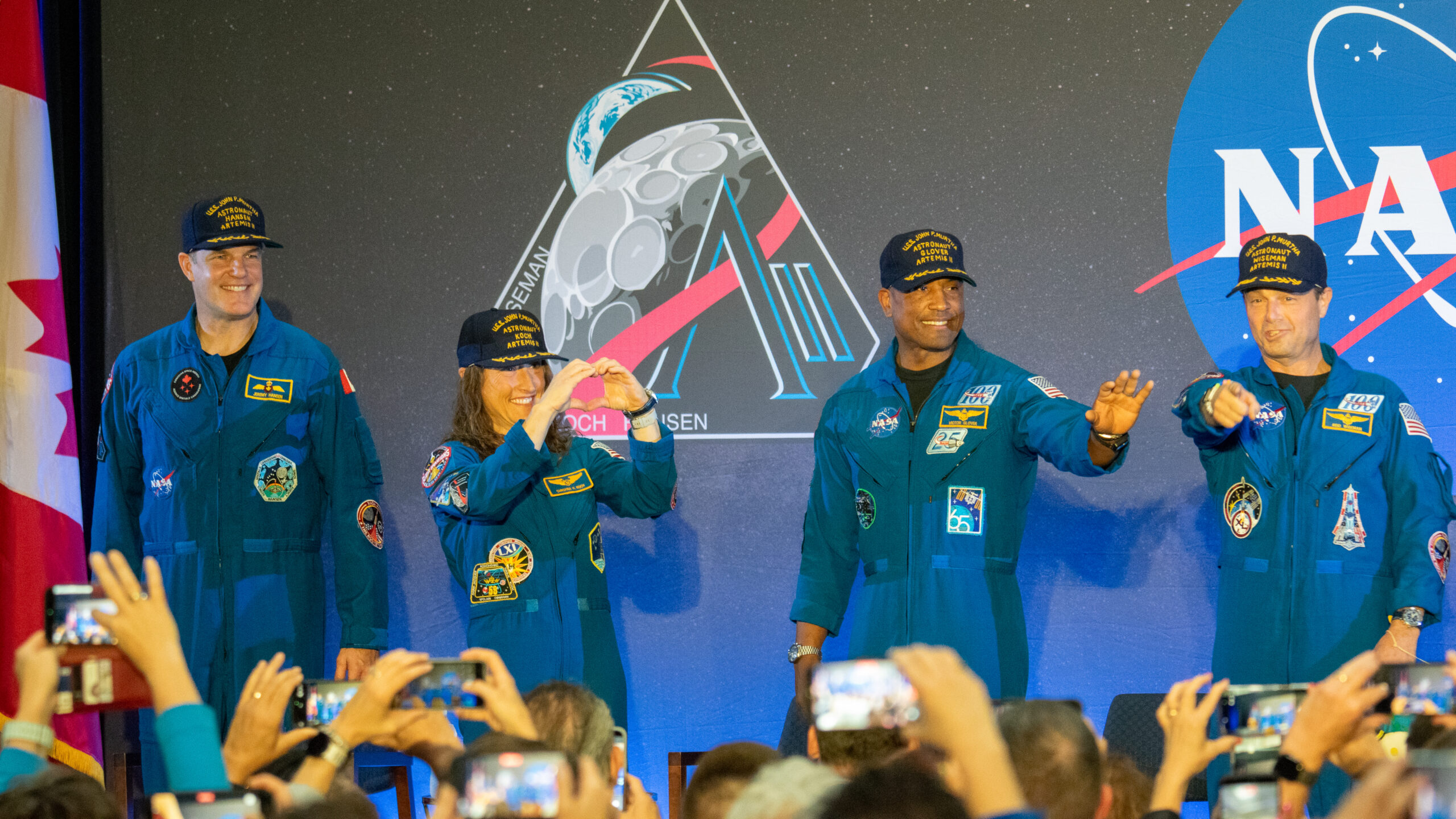
Wiseman, Glover, Koch and Hansen flew into Houston, landing at Ellington Field around 3:45 p.m. EDT (1945 GMT) on Saturday. It was the last in a string of vehicles that ultimately ferried the crew from the splashdown site back home to NASA’s mission control and astronaut training facilities at JSC.
Artemis 2 launched atop NASA’s Space Launch System (SLS) rocket on April 1. Their mission flew them first into Earth orbit, then on a dramatic flyby around the far side of the moon, which broke the record for the farthest any astronaut has flown from Earth. The lunar flyby took just one of the crew’s roughly 10 days in space; the rest were spent traversing the vast distance between our home planet and its natural satellite.
After landing at Ellington Field, the crew reunited privately with their families before joining a hangar full of friends, loved ones, NASA colleagues and journalists. The four astronauts were greeted with applause as NASA Administrator Jared Isaacman brought them on stage to say a few words.
Wiseman, the Artemis 2 commander, spoke first.
“Victor, Christina and Jeremy, we are bonded forever,” he said, calling their shared experience “the most special thing that will ever happen in my life.”
“Being 200,000-plus miles away from home — before you launch, it feels like it’s the greatest dream on Earth. And when you’re out there, you just want to get back to your families and your friends,” Wiseman said. “It’s a special thing to be a human, and it’s a special thing to be on planet Earth.”
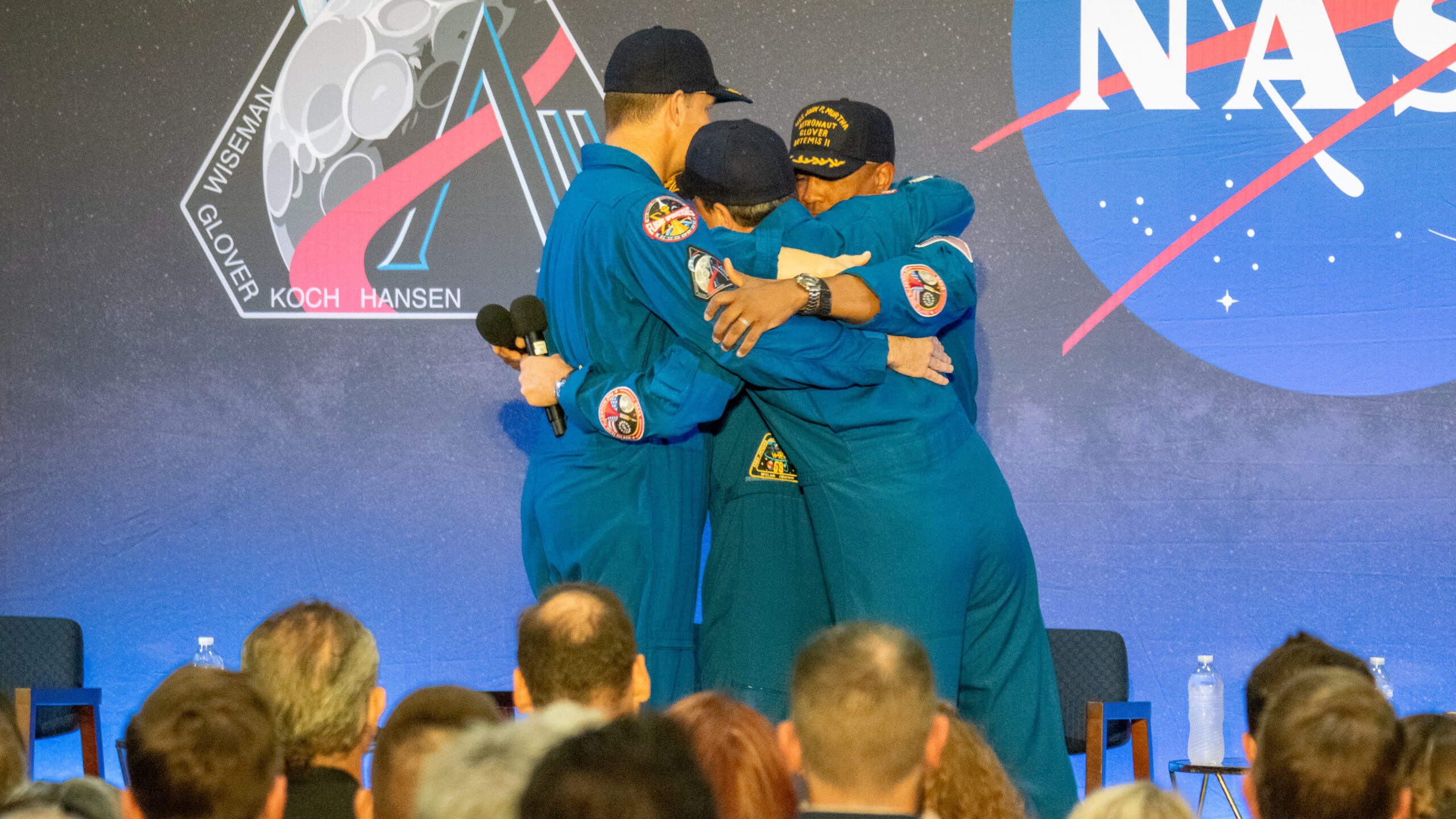
Glover went next, stressing how tough it is to put the experience into words.
“I’m going to keep it brief, because I don’t … I’m afraid to start talking,” he said. “I have not processed what we just did, and I’m afraid to start even trying.”
“Even bigger than my challenge trying to describe what we went through [is] the gratitude of seeing what we saw, doing what we did, and being with who I was with. It’s too big to just be in one body,” Glover said.
Koch went next. She used her time to reflect on an answer she gave several years ago when asked the difference between a team and a crew.
“A crew is … a group that is in it all the time, no matter what, that is stroking together every minute, with the same purpose, that is willing to sacrifice silently for each other, that gives grace, that holds accountable. A crew has the same cares and the same needs, and a crew is inescapably, beautifully, dutifully linked,” Koch said.
“When we saw tiny Earth, people asked our crew what impressions we had. And honestly, what struck me wasn’t necessarily just Earth — it was all the blackness around it,” she continued. “Earth was just this lifeboat hanging undisturbingly in the universe.”
“I know I haven’t learned everything that this journey has yet to teach me, but there’s one new thing I know, and that is, Planet Earth, you are a crew,” Koch said to the gathered crowd, speaking to all of humanity.
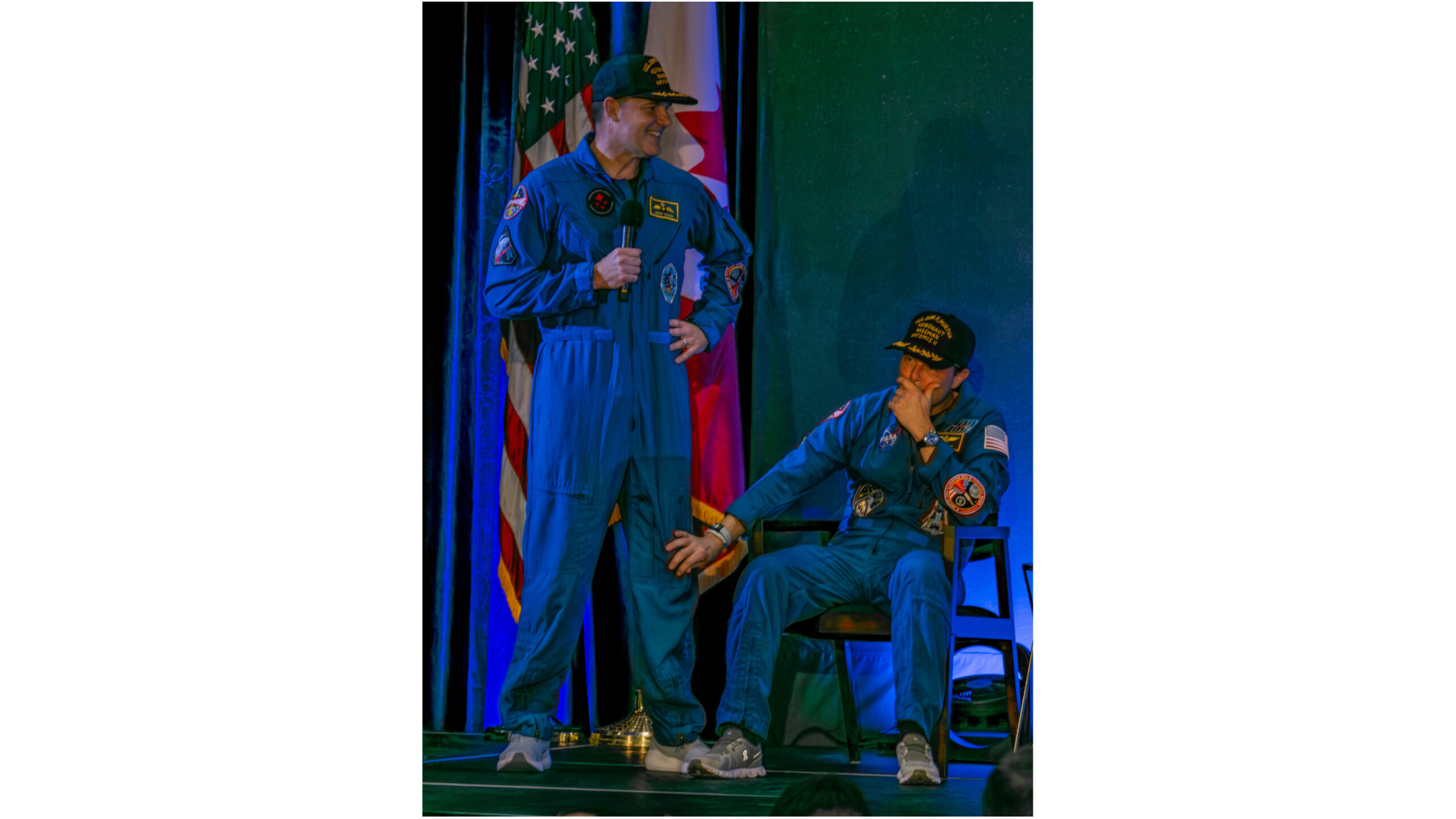
Hansen spoke last, and added some humor to the event.
“Well, it’s been a lot. This isn’t helping,” he said of his crewmates’ emotional remarks. “This is the furthest I’ve been away from Reid in a long time,” Hansen joked, looking across the stage at Wiseman.
(Orion’s interior is about the same size as that of two minivans, so the astronauts were in very close quarters during their time in space.)
Wiseman then stood up and crossed the stage to sit in Hansen’s chair as he continued speaking. Then, in what turned out to be a heartwarming gesture, with Hansen standing next to him, Wiseman put his hand lightly on his crewmate’s shin.
“I’ll start with gratitude — gratitude for my family, gratitude for NASA, for its leadership, gratitude for the Canadian Space Agency,” Hansen said. “I don’t think people will really ever fully comprehend how well supported and trained we were. It is almost unbelievable.”