• Home
  • About
  • FAQ
  • Feeds
  • Glossary
  • Contact
Tours In Space
  • Home
  • Start Here
    • Intro to Commercial Spaceflight
    • How to Book a Space Tour
    • Is Space Tourism Safe?
    • Space Travel FAQs
    • View Earth from the Edge
    • What to Pack
  • Preparing for Your Trip
    • Insurance and Legal Waivers
    • Physical and Medical Requirements
    • Training Programs
    • What to Expect
  • Space Tourism Companies
    • Axiom Space
    • Blue Origin
    • SpaceX
    • Virgin Galactic
    • World View (stratospheric balloon flights)
    • Blue Origin vs Virgin Galactic
    • Comparison Chart: Features, Pricing, Booking
  • Space Tours
    • Custom & Luxury Packages
    • Duration, Training, Costs
    • Experiences
    • Future Moon/Mars Options
    • Orbital Flights
    • Parabolic Flight Experiences
    • Private Missions
    • Stratospheric Balloon Flights
    • Suborbital Flights
    • Zero-Gravity Flights
  • Spaceflight Technologies
    • Space Tourism Balloon
No Result
View All Result
  • Home
  • Start Here
    • Intro to Commercial Spaceflight
    • How to Book a Space Tour
    • Is Space Tourism Safe?
    • Space Travel FAQs
    • View Earth from the Edge
    • What to Pack
  • Preparing for Your Trip
    • Insurance and Legal Waivers
    • Physical and Medical Requirements
    • Training Programs
    • What to Expect
  • Space Tourism Companies
    • Axiom Space
    • Blue Origin
    • SpaceX
    • Virgin Galactic
    • World View (stratospheric balloon flights)
    • Blue Origin vs Virgin Galactic
    • Comparison Chart: Features, Pricing, Booking
  • Space Tours
    • Custom & Luxury Packages
    • Duration, Training, Costs
    • Experiences
    • Future Moon/Mars Options
    • Orbital Flights
    • Parabolic Flight Experiences
    • Private Missions
    • Stratospheric Balloon Flights
    • Suborbital Flights
    • Zero-Gravity Flights
  • Spaceflight Technologies
    • Space Tourism Balloon
No Result
View All Result
Tours In Space
No Result
View All Result
Home Uncategorized

Shenzhou-20 astronauts safely return to Earth on Shenzhou-21 spacecraft after space debris damage concerns

Ensign by Ensign
November 15, 2025
in Uncategorized
0
Shenzhou-20 astronauts safely return to Earth on Shenzhou-21 spacecraft after space debris damage concerns
189
SHARES
1.5k
VIEWS
Share on FacebookShare on Twitter

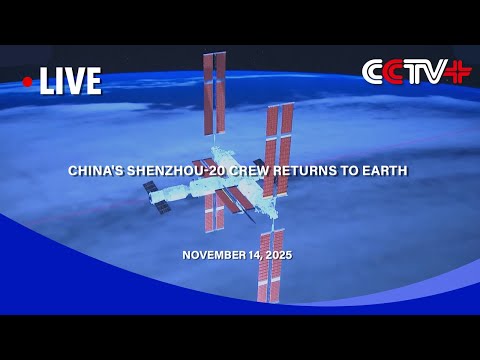
HELSINKI — Three Chinese astronauts have safely returned to Earth in the recently-launched Shenzhou-21 spacecraft after their own spacecraft was declared unsafe.

The Shenzhou-21 return module touched down at 3:40 a.m. Eastern (0840 UTC, or 4:40 p.m. Beijing time) Nov. 14 in the Dongfeng landing area in Inner Mongolia, close to the Jiuquan Satellite Launch Center. The Shenzhou-20 crew exceptionally returned to Earth in the spacecraft which launched the Shenzhou-21 astronauts Oct. 31.

Shenzhou-20 astronauts—commander Chen Dong, Chen Zhongrui and Wang Jie—were extracted from the return module around 30 minutes later by recovery crews. The astronauts thanked the country and its space professionals when interviewed immediately by on-site state media reporters.

The three crew members were initially scheduled to return to Earth Nov. 5, but their departure from the Tiangong space station was postponed due to their Shenzhou-20 spacecraft suffering a suspected small space debris impact.

China Manned Space Engineering Office (CMSEO), the country’s human spaceflight agency, provided an update Nov. 11, stating that assessment and undisclosed rescue plans were proceeding in an orderly fashion. An airspace closure notice appeared Nov. 12, indicating the planned landing of a Shenzhou spacecraft landing Nov. 14, but CMSEO did not provide official comment.

Subscribe Today
Get unlimited access to SpaceNews.com and our digital magazine with a monthly, quarterly or annual subscription.

Discounted Access
Learn more about savings available for academic, government and military readers on SpaceNews subscriptions.

The Shenzhou-21 spacecraft undocked from Tiangong at 10:14 p.m. Eastern Nov. 13 (0314 UTC, Nov. 14), CMSEO announced, also revealing why the Shenzhou-20 spacecraft was deemed unsafe. CMSEO emphasized earlier that it was following a “life first, safety first” approach.

“Based on preliminary analysis of photographs, design review, simulation analysis, and wind tunnel testing, a comprehensive assessment determined that the Shenzhou-20 manned spacecraft’s return capsule window glass had developed a minor crack, most likely caused by an external impact from space debris, thus failing to meet the requirements for a safe crewed return,” a Nov. 14 CMSEO statement read. “The Shenzhou-20 manned spacecraft will remain in orbit to conduct relevant experiments.”

The Shenzhou-20 crew launched April 24 from Jiuquan on a Long March 2F rocket and completed their six-month-long mission aboard Tiangong. The subsequent crew arrived on Shenzhou-21 Oct. 31, with the crews going through a station handover ceremony Nov. 4. The delay made the Shenzhou-20 crew the first to spend more than 200 days consecutively in space.

The return of the Shenzhou-21 spacecraft appears to leave the Shenzhou-21 crew aboard Tiangong with no lifeboat in the case of emergency in the short term. The next steps for CMSEO will be to launch the Shenzhou-22 spacecraft without a crew to Tiangong for the Shenzhou-21 crew. A date for this launch has yet to be announced. 

Emergency contingencies for China’s human spaceflight program include keeping a Long March 2F rocket and Shenzhou spacecraft in a state of near readiness at Jiuquan, which could be readied for launch in around 8.5 days in best case scenarios. The country will also deorbit the Shenzhou-20 spacecraft at some point in the future.

Tiangong is a three-module space station completed in late 2022. It is designed to hold three astronauts for stays of around 180 days, while hosting six astronauts for short periods of time during crew changeovers.

Hosting six astronauts aboard Tiangong is sustainable in the short term, with three private sleeping quarters in the Wentian experiment module and three more in the Tianhe core module. The presence of three more astronauts would have drained essential consumables—water, oxygen and food—at a much greater rate and put additional strain on recycling systems and carbon dioxide scrubbers. 

The Shenzhou-20 incident highlights the growing issue of space debris in low Earth orbit. Both the International Space Station and Tiangong have needed to maneuver to avoid potential collisions with debris. The most numerous pieces are too small to track using ground-based methods. As objects in low Earth orbit travel at around 8 kilometers per second (though relative velocities of two objects vary) even the impact of a small piece of debris is a highly energetic event.

China aims to keep the Tiangong space station permanently occupied for at least 10 years. CMSEO has commissioned the development of low-cost cargo spacecraft to serve the station and complement the standard Tianzhou cargo spacecraft, and China is also planning to expand the orbital outpost with further modules and a co-orbital space telescope.
YouTube video

[embedded content]

Tags: space station
No Result
View All Result

Recent Posts

  • Germany outlines military space priorities in new strategy
  • Saturn’s rings will seem to disappear on Nov. 23: Here’s how to catch the illusion
  • Does the universe have extra dimensions hiding in plain sight?
  • Canon 8×20 IS binocular review
  • European Parliament member sees support for EU Space Act there

Categories

  • Excursions
  • Kepler Mission
  • NASA
  • NASA Breaking News
  • Physical Preparation
  • Preparation
  • Space News
  • Space Station News
  • Spacewalks
  • Tours
  • Uncategorized
  • Weightlessness Training
  • What Not to Pack
  • What to Pack

Meta

  • Log in
  • Entries feed
  • Comments feed
  • WordPress.org
  • Home
  • Start Here
  • Preparing for Your Trip
  • Space Tourism Companies
  • Space Tours
  • Contact

© 2025 JNews - Premium WordPress news & magazine theme by Jegtheme.

No Result
View All Result
  • About
  • Contact
  • Feeds
  • Frequently Asked Questions
  • Preparing for Your Trip
    • Insurance and Legal Waivers
    • Physical and Medical Requirements
    • Training Programs
    • What to Expect
  • Privacy Policy
  • Space Tourism Companies
    • Axiom Space
    • Blue Origin
    • Blue Origin vs Virgin Galactic
    • Comparison Chart: Features, Pricing, Booking
    • SpaceX
    • Virgin Galactic
    • World View (stratospheric balloon flights)
  • Space Tours
    • Custom & Luxury Packages
    • Duration, Training, Costs
    • Experiences
    • Future Moon/Mars Options
    • Orbital Flights
    • Parabolic Flight Experiences
    • Private Missions
    • Stratospheric Balloon Flights
    • Suborbital Flights
    • Zero-Gravity Flights
  • Spaceflight Technologies
    • Space Tourism Balloon
  • Start Here
    • How to Book a Space Tour
    • Intro to Commercial Spaceflight
    • Is Space Tourism Safe?
    • Space Travel FAQs
    • View Earth from the Edge
    • What to Pack
  • Tours in Space is your launchpad to the world of space tourism

© 2025 JNews - Premium WordPress news & magazine theme by Jegtheme.