
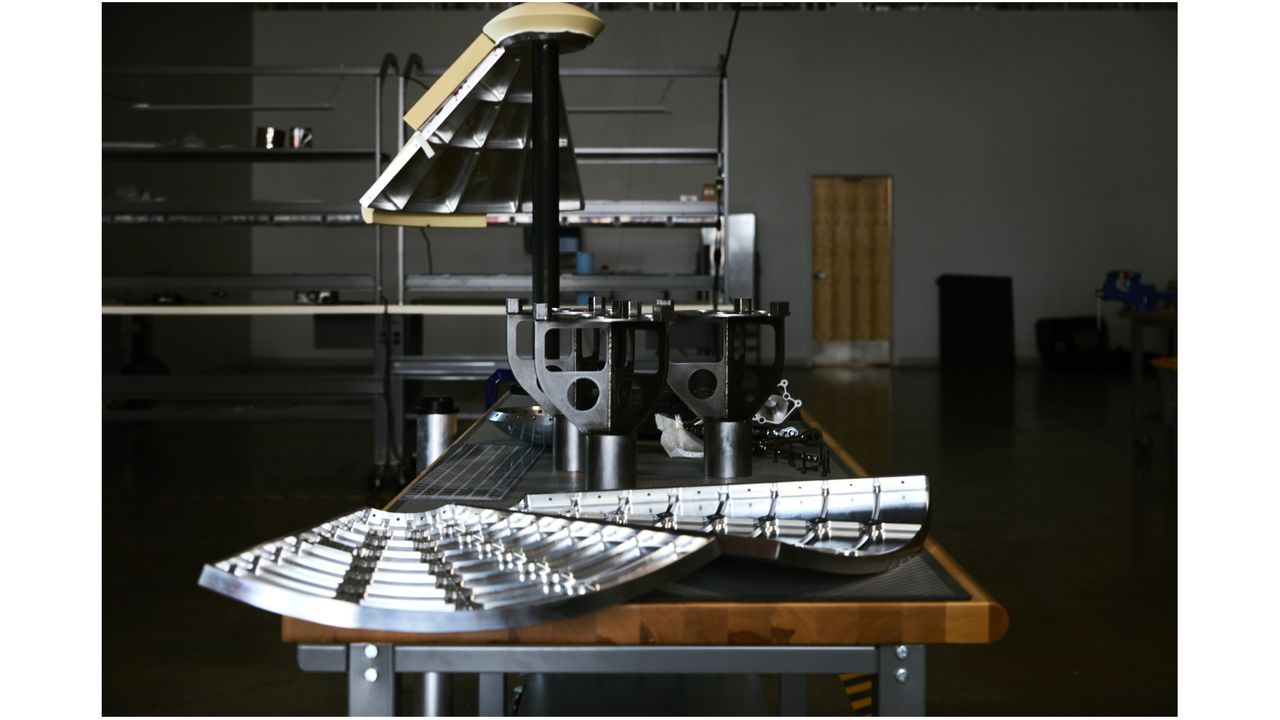

Lux Aeterna just got some more money to take reusability in a new direction.
The Colorado-based company announced today (March 10) that it has raised $10 million, which it will use to accelerate the development of fully reusable satellites — technology that it believes will be as transformative as reusable rockets.
Article continues below
Reusable rocket technology is key to SpaceX’s dominance of the launch market these days, allowing Elon Musk‘s company to fly frequently and relatively cheaply. Satellite reuse will be a big cost-saver as well, according to Taylor.
“It’s not only the cost of building another satellite; it’s also the supply chain and the capital expenditure of building another satellite,” he told Space.com.
“In general, the idea of refurbishing something and optimizing that refurbishment really reduces not only the unit cost but also the supply chain burden — everything you have to create from scratch for every vehicle,” added Taylor, who previously worked on the Starlink and Amazon Leo satellite projects at SpaceX and Amazon, respectively. “So it really compounds on just the cost.”
Reusable satellites will also give customers much greater flexibility, he said, allowing them to fly payloads that aren’t designed to (and constrained by) typical spacecraft operational lifetimes.
“You can design your missions around the payload, as opposed to designing the payload around a bus whose maximum life is, you know, five to seven years in low Earth orbit,” Taylor said. “So it really, in our mind, opens up these new mission architectures, in addition to obviously covering the down-mass market, which is in-space manufacturing, cargo resupply, hypersonics — things like that.”
Other companies are active in this broader market as well. For example, Varda Space has conducted multiple missions with its W-series return capsules, which it bills as orbital mini-factories. And Outpost aims to provide pinpoint cargo-delivery and in-space manufacturing services with its series of scalable vehicles. But Lux Aeterna distinguishes itself by focusing on satellite missions with full reusability, Taylor said.
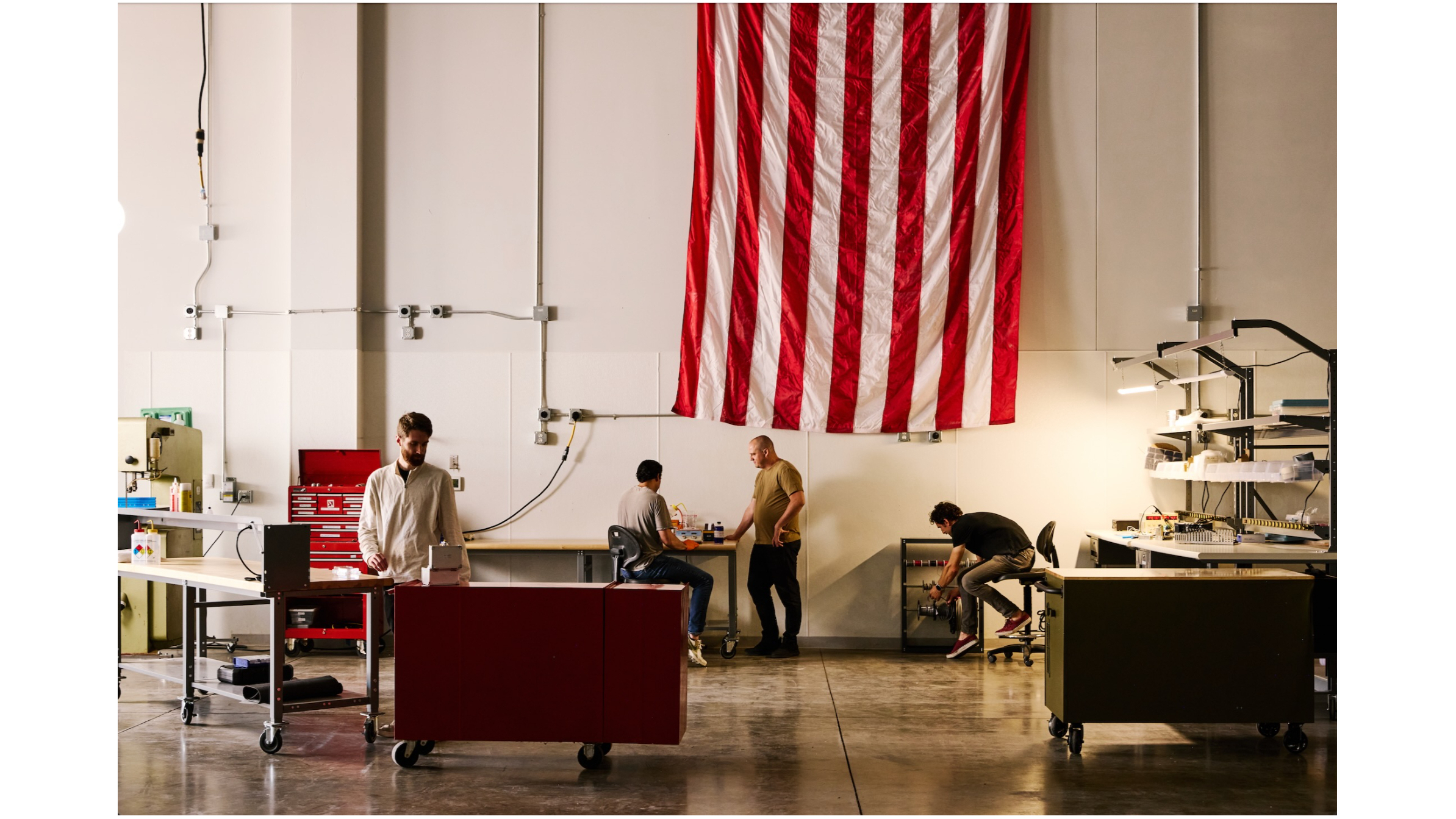
The newly announced funding came via an oversubscribed “seed” round, which was led by Konvoy with participation from Decisive Point, Cubit Capital, Wave Function and other investment firms. Lux Aeterna raised $4 million in a “pre-seed” round last year, bringing its total investment haul to date to $14 million.
The new funds will go toward the development and production of Delphi, Lux Aeterna’s prototype reusable satellite platform. The vehicle, which is about 3.6 feet (1.1 meters) wide and weighs 440 pounds (200 kilograms), is slated to fly for the first time in early 2027, on one of SpaceX‘s Transporter rideshare missions.
Though that mission is primarily a technology demonstrator, Delphi will carry a number of payloads up (and back down to Earth). Lux Aeterna isn’t releasing details about the manifest, but “it does include a cross section of civil defense and commercial customers that are all taking part in this mission,” Taylor said.
Delphi is a pathfinder, not a production vehicle; Lux Aeterna’s fleet will consist of bigger and more capable satellite platforms. The next-generation spacecraft will fit atop currently available rockets, Taylor said, while the one after that will likely be sized to fly on SpaceX’s Starship megarocket.
If all goes to plan, Lux Aeterna will have tens of satellites in operation by 2030 and “on the order of hundreds” by 2035, he added.
“Lux Aeterna is the first company building a returnable fleet that truly compresses mission timelines and costs,” Josh Chapman, managing partner at Konvoy, said in the same statement.
“With a team that has launched thousands of satellites, they have the unique expertise required to build a fleet of reentry satellites that will create a new category in the space industry, yet one that feels familiar to airline fleets on Earth,” Chapman added. “We believe they’re on the cusp of unlocking an entirely new market for space missions that simply hasn’t existed until now.”