• Home
  • About
  • FAQ
  • Feeds
  • Glossary
  • Contact
Tours In Space
  • Home
  • Start Here
    • Intro to Commercial Spaceflight
    • How to Book a Space Tour
    • Is Space Tourism Safe?
    • Space Travel FAQs
    • View Earth from the Edge
    • What to Pack
  • Preparing for Your Trip
    • Insurance and Legal Waivers
    • Physical and Medical Requirements
    • Training Programs
    • What to Expect
  • Space Tourism Companies
    • Axiom Space
    • Blue Origin
    • SpaceX
    • Virgin Galactic
    • World View (stratospheric balloon flights)
    • Blue Origin vs Virgin Galactic
    • Comparison Chart: Features, Pricing, Booking
  • Space Tours
    • Custom & Luxury Packages
    • Duration, Training, Costs
    • Experiences
    • Future Moon/Mars Options
    • Orbital Flights
    • Parabolic Flight Experiences
    • Private Missions
    • Stratospheric Balloon Flights
    • Suborbital Flights
    • Zero-Gravity Flights
  • Spaceflight Technologies
    • Space Tourism Balloon
No Result
View All Result
  • Home
  • Start Here
    • Intro to Commercial Spaceflight
    • How to Book a Space Tour
    • Is Space Tourism Safe?
    • Space Travel FAQs
    • View Earth from the Edge
    • What to Pack
  • Preparing for Your Trip
    • Insurance and Legal Waivers
    • Physical and Medical Requirements
    • Training Programs
    • What to Expect
  • Space Tourism Companies
    • Axiom Space
    • Blue Origin
    • SpaceX
    • Virgin Galactic
    • World View (stratospheric balloon flights)
    • Blue Origin vs Virgin Galactic
    • Comparison Chart: Features, Pricing, Booking
  • Space Tours
    • Custom & Luxury Packages
    • Duration, Training, Costs
    • Experiences
    • Future Moon/Mars Options
    • Orbital Flights
    • Parabolic Flight Experiences
    • Private Missions
    • Stratospheric Balloon Flights
    • Suborbital Flights
    • Zero-Gravity Flights
  • Spaceflight Technologies
    • Space Tourism Balloon
No Result
View All Result
Tours In Space
No Result
View All Result
Home Space News

No sun, no problem? How life could thrive on moons of starless ‘rogue’ planets

Ensign by Ensign
March 16, 2026
in Space News
0
No sun, no problem? How life could thrive on moons of starless ‘rogue’ planets
189
SHARES
1.5k
VIEWS
Share on FacebookShare on Twitter
image

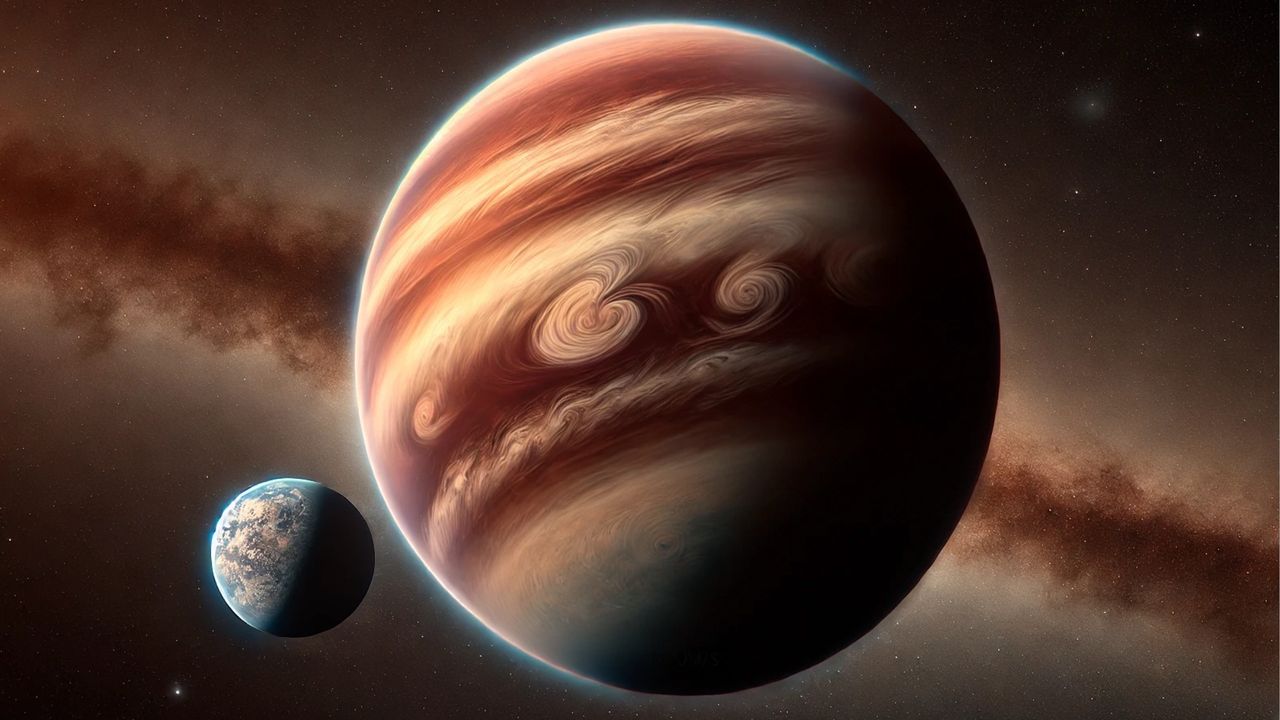
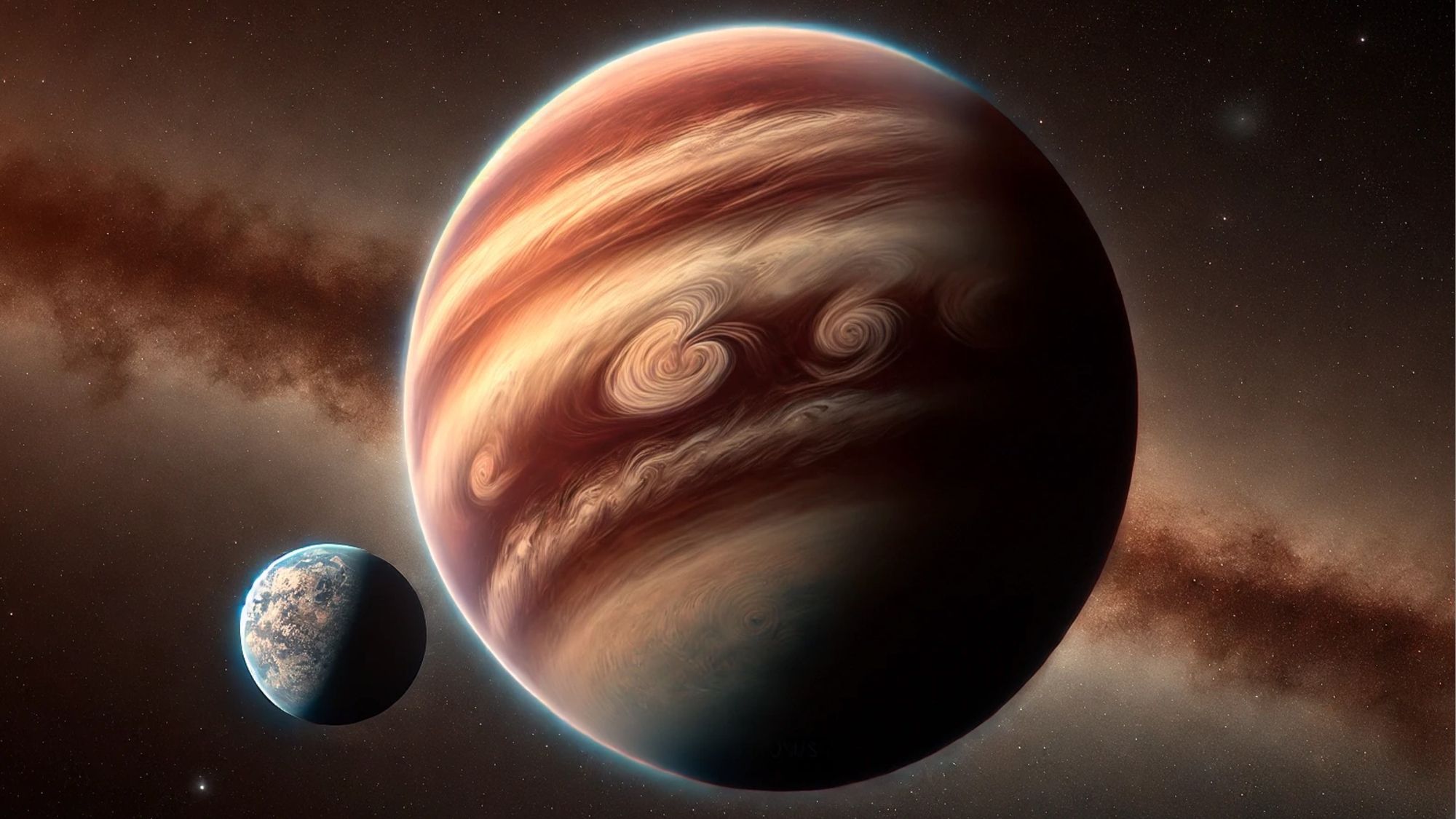
Moons orbiting starless “rogue” planets could stay warm enough to host liquid water for billions of years, a new study suggests, potentially creating long-lived habitats for life in the depths of space.

Using computer models, researchers found that temperatures on an Earth-size moon orbiting a Jupiter-like rogue planet could remain warm enough to support liquid water on its surface for up to 4.3 billion years — nearly as long as Earth has existed.

“The cradle of life does not necessarily require a sun,” study lead author David Dahlbüdding, a researcher at the Ludwig Maximilian University of Munich in Germany, said in a statement.

Article continues below


You may like

The new study focuses on natural satellites of exoplanets, known as exomoons, specifically those orbiting free-floating rogue planets. Astronomers have yet to confirm the existence of an exomoon beyond doubt, but mounting circumstantial evidence suggests the first discovery may not be far off.

Rogue planets are byproducts of chaotic young planetary systems, where close gravitational encounters can fling worlds out of orbit around the host star and into interstellar space. Recent research suggests that these nomadic planets have a significant probability of retaining their moons even after being ejected. The violent process can, however, dramatically reshape those moons’ orbits, stretching them into elongated paths around their planets.

As a moon moves closer to and farther from its planet along such elliptical paths, the planet’s gravity repeatedly squeezes and flexes its interior. In our own solar system, this process powers the intense volcanic activity of Jupiter’s moon Io and helps keep subsurface oceans from freezing on icy moons such as Europa and Saturn’s Enceladus.

Known as tidal heating, the process generates internal heat through friction and, according to the new study, could be strong enough to keep liquid water oceans from freezing even in the cold of interstellar space.

Breaking space news, the latest updates on rocket launches, skywatching events and more!

Whether that heat can remain at the surface depends largely on the moon’s atmosphere, the researchers say. Earlier studies suggested that carbon dioxide could provide enough greenhouse warming to keep such moons habitable for up to 1.6 billion years. In the extreme cold of interstellar space, however, carbon dioxide can condense, causing the atmosphere to collapse and allowing heat to escape, the new study notes.

Hydrogen, however, behaves differently under thick, high-pressure conditions, the study argues. The team’s simulations show that, when hydrogen molecules collide, they can briefly absorb heat that would otherwise radiate away into space. This allows a dense hydrogen atmosphere to act like an insulating blanket, trapping warmth far more effectively.

The results, published in February in the journal Monthly Notices of the Royal Astronomical Society, show that under these conditions some exomoons could remain warm enough for liquid water — and therefore be potentially habitable for life as we know it — for up to 4.3 billion years.

The findings could “significantly broaden the spectrum of possible environments that could harbor life,” the statement read, suggesting that “life could arise and endure even in the darkest regions of the galaxy.”

Tags: rocket launch
No Result
View All Result

Recent Posts

  • Space Force overhauls buying structure with new mission portfolios
  • Telesat pivots Lightspeed toward defense as delays push global service to 2028
  • Office of Space Commerce weighing options for TraCSS user fees
  • Space boom strains supply chain, industry report warns
  • Golden Dome cost estimate rises to $185 billion as Pentagon expands space layer

Categories

  • Excursions
  • Kepler Mission
  • NASA
  • NASA Breaking News
  • Physical Preparation
  • Preparation
  • Space News
  • Space Station News
  • Spacewalks
  • Tours
  • Uncategorized
  • Weightlessness Training
  • What Not to Pack
  • What to Pack

Meta

  • Log in
  • Entries feed
  • Comments feed
  • WordPress.org
  • Home
  • Start Here
  • Preparing for Your Trip
  • Space Tourism Companies
  • Space Tours
  • Contact

© 2026 JNews - Premium WordPress news & magazine theme by Jegtheme.

No Result
View All Result
  • About
  • Contact
  • Feeds
  • Frequently Asked Questions
  • Preparing for Your Trip
    • Insurance and Legal Waivers
    • Physical and Medical Requirements
    • Training Programs
    • What to Expect
  • Privacy Policy
  • Space Tourism Companies
    • Axiom Space
    • Blue Origin
    • Blue Origin vs Virgin Galactic
    • Comparison Chart: Features, Pricing, Booking
    • SpaceX
    • Virgin Galactic
    • World View (stratospheric balloon flights)
  • Space Tours
    • Custom & Luxury Packages
    • Duration, Training, Costs
    • Experiences
    • Future Moon/Mars Options
    • Orbital Flights
    • Parabolic Flight Experiences
    • Private Missions
    • Stratospheric Balloon Flights
    • Suborbital Flights
    • Zero-Gravity Flights
  • Spaceflight Technologies
    • Space Tourism Balloon
  • Start Here
    • How to Book a Space Tour
    • Intro to Commercial Spaceflight
    • Is Space Tourism Safe?
    • Space Travel FAQs
    • View Earth from the Edge
    • What to Pack
  • Tours in Space is your launchpad to the world of space tourism

© 2026 JNews - Premium WordPress news & magazine theme by Jegtheme.