• Home
  • About
  • FAQ
  • Feeds
  • Glossary
  • Contact
Tours In Space
  • Home
  • Start Here
    • Intro to Commercial Spaceflight
    • How to Book a Space Tour
    • Is Space Tourism Safe?
    • Space Travel FAQs
    • View Earth from the Edge
    • What to Pack
  • Preparing for Your Trip
    • Insurance and Legal Waivers
    • Physical and Medical Requirements
    • Training Programs
    • What to Expect
  • Space Tourism Companies
    • Axiom Space
    • Blue Origin
    • SpaceX
    • Virgin Galactic
    • World View (stratospheric balloon flights)
    • Blue Origin vs Virgin Galactic
    • Comparison Chart: Features, Pricing, Booking
  • Space Tours
    • Custom & Luxury Packages
    • Duration, Training, Costs
    • Experiences
    • Future Moon/Mars Options
    • Orbital Flights
    • Parabolic Flight Experiences
    • Private Missions
    • Stratospheric Balloon Flights
    • Suborbital Flights
    • Zero-Gravity Flights
  • Spaceflight Technologies
    • Space Tourism Balloon
No Result
View All Result
  • Home
  • Start Here
    • Intro to Commercial Spaceflight
    • How to Book a Space Tour
    • Is Space Tourism Safe?
    • Space Travel FAQs
    • View Earth from the Edge
    • What to Pack
  • Preparing for Your Trip
    • Insurance and Legal Waivers
    • Physical and Medical Requirements
    • Training Programs
    • What to Expect
  • Space Tourism Companies
    • Axiom Space
    • Blue Origin
    • SpaceX
    • Virgin Galactic
    • World View (stratospheric balloon flights)
    • Blue Origin vs Virgin Galactic
    • Comparison Chart: Features, Pricing, Booking
  • Space Tours
    • Custom & Luxury Packages
    • Duration, Training, Costs
    • Experiences
    • Future Moon/Mars Options
    • Orbital Flights
    • Parabolic Flight Experiences
    • Private Missions
    • Stratospheric Balloon Flights
    • Suborbital Flights
    • Zero-Gravity Flights
  • Spaceflight Technologies
    • Space Tourism Balloon
No Result
View All Result
Tours In Space
No Result
View All Result
Home Space News

Russia aims to reclaim Soviet space glory with 2036 launch of ambitious Venus mission

Ensign by Ensign
March 16, 2026
in Space News
0
Russia aims to reclaim Soviet space glory with 2036 launch of ambitious Venus mission
190
SHARES
1.5k
VIEWS
Share on FacebookShare on Twitter
image

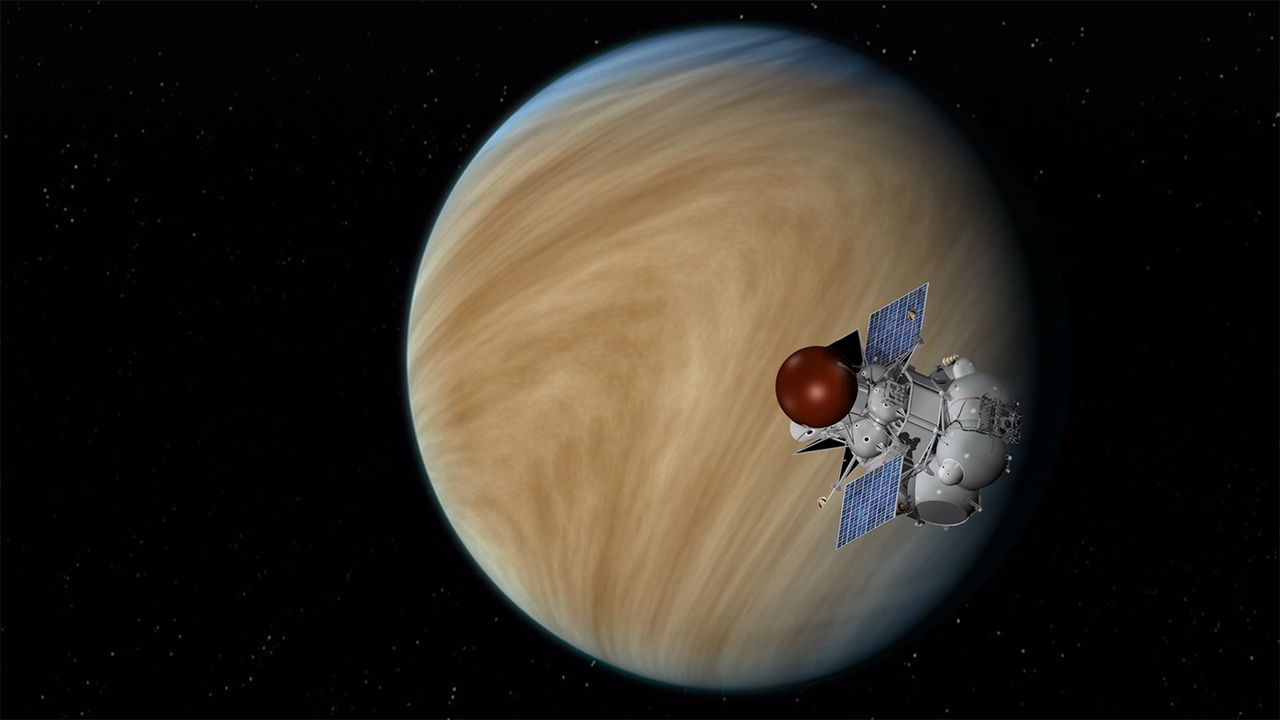
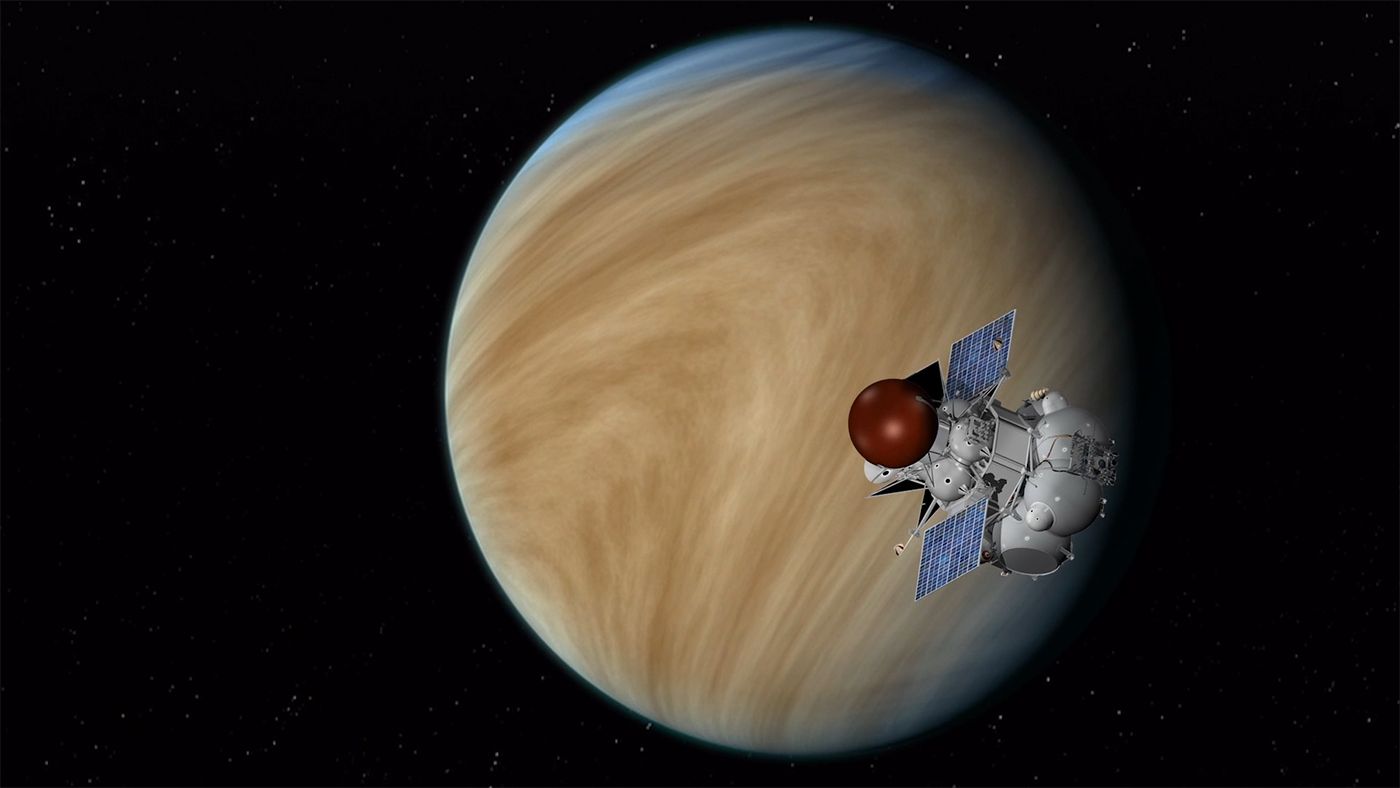
Russia is apparently getting ready to return to the searing surface of Venus.

The nation wants to launch Venera-D — a multi-vehicle mission involving a lander, balloon and orbiter — to Venus in 2036, Russian state media said on Tuesday (March 10).

Venera-D has been in the works since 2003, according to RussianSpaceWeb. Once upon a time, before Russia’s 2022 invasion of Ukraine, Venera-D was even considered as a possible joint mission with NASA.

Article continues below


You may like

While NASA is no longer collaborating on Russian space projects (apart from the International Space Station), Russia is still moving forward with Venera-D. The mission is said to be part of a suite of robotic spacecraft Russia plans to send to the moon and Venus, which “currently occupy a central place” in the ambitions of Russian space agency Roscosmos, First Deputy Prime Minister Denis Manturov said in an interview with the Razvedchik Journal, which was cited Tuesday by the state-owned Russian outlet TASS.

A new Venus project would extend a series of successful landing missions in the 1960s, 1970s and 1980s by previous Venera spacecraft operated by the former Soviet Union, which remains the only nation to have successfully landed and operated spacecraft in the hellish conditions of the Venusian surface.

“Let me remind you that back in 1970, our country succeeded in successfully landing a spacecraft on another planet in the solar system. And that was Venus. Therefore, we will probably move in this direction first,” Manturov said.

One of Venera-D’s goals will be looking for microbial life in Venus’ clouds, following on from disputed recent findings of phosphine and ammonia (possible biomarkers) in the planet’s atmosphere.

Breaking space news, the latest updates on rocket launches, skywatching events and more!

The 1970 mission Manturov mentioned was Venera 7, which was one of four Soviet Venera spacecraft to touch down successfully on Venus and send back pictures from the surface, according to The Planetary Society. Venera 7 and other Soviet landing missions successfully withstood temperatures of 900 degrees Fahrenheit (480 degrees Celsius) and a surface pressure over 90 times that of Earth at sea level to show a volcanic-rock surface tinged in yellow (an effect of the sulfuric-acid clouds making up the atmosphere).

The Soviet Union launched more than a dozen Venera missions over the course of 22 years. Venera 1 and Venera 2, which launched in February 1961 and November 1965, respectively, were designed to fly by Venus but didn’t send back the data needed. Venera 3 entered the atmosphere as planned in March 1966 but fell silent.

The next three in the series, Veneras 4 to 6, successfully entered the atmosphere and sent back data to prepare for the first landing attempt, by Venera 7, which launched in August 1970. The Soviet Union then sent nine more missions to Venus as landers and orbiters, concluding with the successful Venera 16 in 1983.

NASA, the European Space Agency and Japan have between them sent several orbiting missions to Venus in the last few decades, and Russia isn’t the only nation looking to make a Venus return.

Both ESA and NASA have missions in development; NASA’s VERITAS and DAVINCI projects just survived cancellation threats in the U.S. budget for 2026. India is planning to send its own Venus mission aloft for the first time in 2028 or so, while Rocket Lab and the Massachusetts Institute of Technology want to launch the private Venus Life Finder spacecraft out there as soon as this year.

Tags: NASArocket launch
No Result
View All Result

Recent Posts

  • Sophia and Kepler to marry orbital compute with optical links
  • From spa to boat party: 10 epic events for the Aug. 12, 2026, total solar eclipse in Spain and Iceland
  • Rocket Lab wins contract for three more iQPS launches
  • ‘The most special thing that will ever happen in my life’: Artemis 2 astronauts describe their epic moon mission
  • Falcon 9 launches Cygnus cargo spacecraft to the ISS

Categories

  • Excursions
  • Kepler Mission
  • NASA
  • NASA Breaking News
  • Physical Preparation
  • Preparation
  • Space News
  • Space Station News
  • Spacewalks
  • Tours
  • Uncategorized
  • Weightlessness Training
  • What Not to Pack
  • What to Pack

Meta

  • Log in
  • Entries feed
  • Comments feed
  • WordPress.org
  • Home
  • Start Here
  • Preparing for Your Trip
  • Space Tourism Companies
  • Space Tours
  • Contact

© 2026 JNews - Premium WordPress news & magazine theme by Jegtheme.

No Result
View All Result
  • About
  • Contact
  • Feeds
  • Frequently Asked Questions
  • Preparing for Your Trip
    • Insurance and Legal Waivers
    • Physical and Medical Requirements
    • Training Programs
    • What to Expect
  • Privacy Policy
  • Space Tourism Companies
    • Axiom Space
    • Blue Origin
    • Blue Origin vs Virgin Galactic
    • Comparison Chart: Features, Pricing, Booking
    • SpaceX
    • Virgin Galactic
    • World View (stratospheric balloon flights)
  • Space Tours
    • Custom & Luxury Packages
    • Duration, Training, Costs
    • Experiences
    • Future Moon/Mars Options
    • Orbital Flights
    • Parabolic Flight Experiences
    • Private Missions
    • Stratospheric Balloon Flights
    • Suborbital Flights
    • Zero-Gravity Flights
  • Spaceflight Technologies
    • Space Tourism Balloon
  • Start Here
    • How to Book a Space Tour
    • Intro to Commercial Spaceflight
    • Is Space Tourism Safe?
    • Space Travel FAQs
    • View Earth from the Edge
    • What to Pack
  • Tours in Space is your launchpad to the world of space tourism

© 2026 JNews - Premium WordPress news & magazine theme by Jegtheme.