• Home
  • About
  • FAQ
  • Feeds
  • Glossary
  • Contact
Tours In Space
  • Home
  • Start Here
    • Intro to Commercial Spaceflight
    • How to Book a Space Tour
    • Is Space Tourism Safe?
    • Space Travel FAQs
    • View Earth from the Edge
    • What to Pack
  • Preparing for Your Trip
    • Insurance and Legal Waivers
    • Physical and Medical Requirements
    • Training Programs
    • What to Expect
  • Space Tourism Companies
    • Axiom Space
    • Blue Origin
    • SpaceX
    • Virgin Galactic
    • World View (stratospheric balloon flights)
    • Blue Origin vs Virgin Galactic
    • Comparison Chart: Features, Pricing, Booking
  • Space Tours
    • Custom & Luxury Packages
    • Duration, Training, Costs
    • Experiences
    • Future Moon/Mars Options
    • Orbital Flights
    • Parabolic Flight Experiences
    • Private Missions
    • Stratospheric Balloon Flights
    • Suborbital Flights
    • Zero-Gravity Flights
  • Spaceflight Technologies
    • Space Tourism Balloon
No Result
View All Result
  • Home
  • Start Here
    • Intro to Commercial Spaceflight
    • How to Book a Space Tour
    • Is Space Tourism Safe?
    • Space Travel FAQs
    • View Earth from the Edge
    • What to Pack
  • Preparing for Your Trip
    • Insurance and Legal Waivers
    • Physical and Medical Requirements
    • Training Programs
    • What to Expect
  • Space Tourism Companies
    • Axiom Space
    • Blue Origin
    • SpaceX
    • Virgin Galactic
    • World View (stratospheric balloon flights)
    • Blue Origin vs Virgin Galactic
    • Comparison Chart: Features, Pricing, Booking
  • Space Tours
    • Custom & Luxury Packages
    • Duration, Training, Costs
    • Experiences
    • Future Moon/Mars Options
    • Orbital Flights
    • Parabolic Flight Experiences
    • Private Missions
    • Stratospheric Balloon Flights
    • Suborbital Flights
    • Zero-Gravity Flights
  • Spaceflight Technologies
    • Space Tourism Balloon
No Result
View All Result
Tours In Space
No Result
View All Result
Home Uncategorized

Nvidia unveils AI computing module for space-based data centers

Ensign by Ensign
March 17, 2026
in Uncategorized
0
Nvidia unveils AI computing module for space-based data centers
189
SHARES
1.5k
VIEWS
Share on FacebookShare on Twitter
image

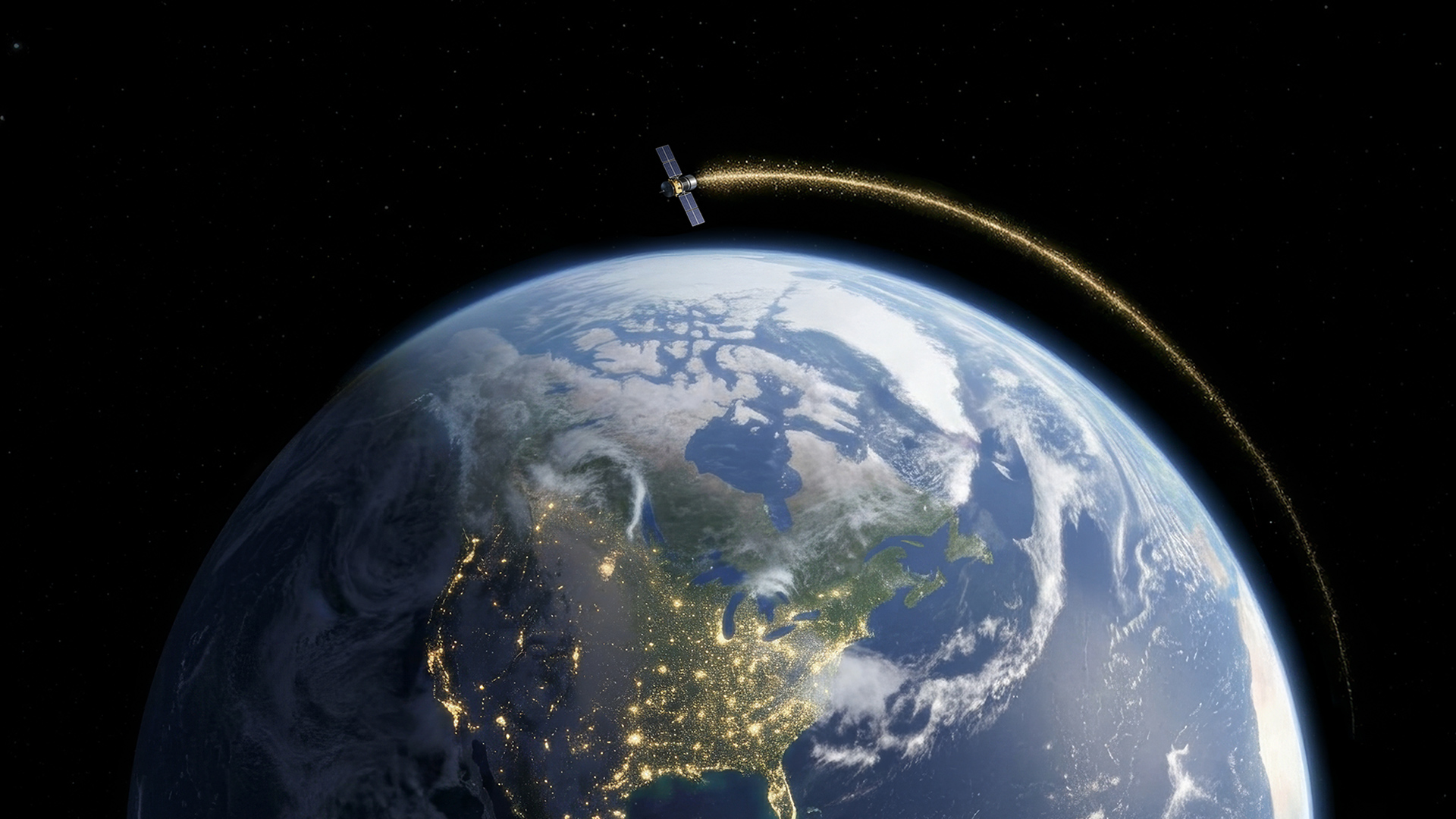
WASHINGTON — Nvidia is pushing its artificial-intelligence hardware beyond Earth, unveiling a computing module designed for space missions and potential orbital data centers.

The California-based company said March 16 at its annual GTC conference in San Jose that it is developing the Space-1 Vera Rubin Module, a computing system intended to bring more powerful AI processing to satellites and other space platforms.

Nvidia said the system is designed to deliver significantly more computing power than the Nvidia H100 GPU, a chip already being tested on spacecraft. The company expects the module to support future space-based data centers and onboard AI analysis for satellite constellations.

The new system combines several Nvidia technologies, including the IGX Thor and Jetson Orin computing platforms, and is designed for spacecraft environments where size, weight and power are limited.

“Space computing, the final frontier, has arrived,” said Jensen Huang, Nvidia’s founder and chief executive. “As we deploy satellite constellations and explore deeper into space, intelligence must live wherever data is generated.”

Huang said in a keynote address that Nvidia is working with partners on computers for orbital data centers but acknowledged that technical hurdles remain, including radiation exposure and thermal management in orbit.

“We have to figure out how to cool these systems out in space,” he said. “But we’ve got lots of great engineers working on it.”

The announcement reflects growing interest in performing AI processing directly in orbit. Satellite operators increasingly want to analyze data in space rather than transmitting raw information to Earth, which can be limited by communications bandwidth.

Orbital data centers

The idea of orbital data centers — satellites or space stations hosting powerful computing systems — has gained increased attention after Elon Musk merged two of his companies, xAI and SpaceX, in part to focus on bringing computing to space.

The concept remains experimental. Large-scale space data centers would depend on lower launch costs and improvements in spacecraft power systems capable of supporting energy-intensive computing hardware.

Still, Nvidia’s processors are already becoming part of the space industry’s technology stack. Many satellite companies rely on the company’s GPUs in ground-based data centers for imagery processing and analytics, and a growing number are experimenting with placing Nvidia hardware directly in orbit.

Several space companies — including Aetherflux, Axiom Space, Kepler Communications, Planet Labs, Sophia Space and Starcloud — are using Nvidia processors for space-based AI applications.

Starcloud, for example, launched a small satellite in November carrying the first H100 GPU to test the idea of satellites acting as orbital data centers.

Planet Labs on Monday announced a new collaboration with Nvidia aimed at accelerating the analysis of Earth-imaging data. The company said it plans to use Nvidia platforms to reduce the time required to process imagery from hours to seconds.

Planet said it has successfully tested Nvidia’s IGX Jetson Thor module for space applications and plans to integrate the GPU into its next generation of imaging satellites to generate insights directly in orbit.

Nvidia said the Space-1 Vera Rubin Module is not yet available but is expected to reach customers in the near future.

Tags: axiom spaceElon Muskspace missionspace stationSpaceX
No Result
View All Result

Recent Posts

  • Nvidia unveils AI computing module for space-based data centers
  • Kayrros sale signals rising demand for satellite intelligence amid Hormuz crisis
  • Melagen Labs and Satlyt Announce Joint ISS Mission to Demonstrate Radiation-Resilient In-Orbit Computing and Next-Gen Shielding
  • Kepler Communications: Call for Live-Stream Payload Concepts
  • Timboy Chaco in the Mars borderlands | Space photo of the day for March 16, 2026

Categories

  • Excursions
  • Kepler Mission
  • NASA
  • NASA Breaking News
  • Physical Preparation
  • Preparation
  • Space News
  • Space Station News
  • Spacewalks
  • Tours
  • Uncategorized
  • Weightlessness Training
  • What Not to Pack
  • What to Pack

Meta

  • Log in
  • Entries feed
  • Comments feed
  • WordPress.org
  • Home
  • Start Here
  • Preparing for Your Trip
  • Space Tourism Companies
  • Space Tours
  • Contact

© 2026 JNews - Premium WordPress news & magazine theme by Jegtheme.

No Result
View All Result
  • About
  • Contact
  • Feeds
  • Frequently Asked Questions
  • Preparing for Your Trip
    • Insurance and Legal Waivers
    • Physical and Medical Requirements
    • Training Programs
    • What to Expect
  • Privacy Policy
  • Space Tourism Companies
    • Axiom Space
    • Blue Origin
    • Blue Origin vs Virgin Galactic
    • Comparison Chart: Features, Pricing, Booking
    • SpaceX
    • Virgin Galactic
    • World View (stratospheric balloon flights)
  • Space Tours
    • Custom & Luxury Packages
    • Duration, Training, Costs
    • Experiences
    • Future Moon/Mars Options
    • Orbital Flights
    • Parabolic Flight Experiences
    • Private Missions
    • Stratospheric Balloon Flights
    • Suborbital Flights
    • Zero-Gravity Flights
  • Spaceflight Technologies
    • Space Tourism Balloon
  • Start Here
    • How to Book a Space Tour
    • Intro to Commercial Spaceflight
    • Is Space Tourism Safe?
    • Space Travel FAQs
    • View Earth from the Edge
    • What to Pack
  • Tours in Space is your launchpad to the world of space tourism

© 2026 JNews - Premium WordPress news & magazine theme by Jegtheme.