
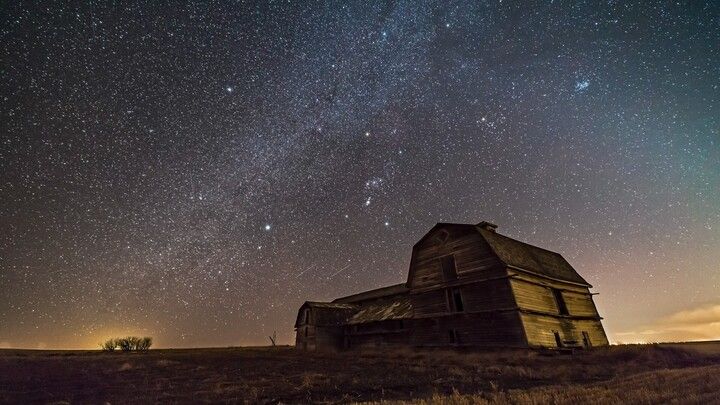

March’s new moon phase is upon us, bringing gorgeous dark skies free of natural light pollution — perfect for exploring constellations and deep sky objects that are all too often obscured by moonlight!
This month’s new moon occurs at 9:23 p.m. EDT on March 18 (0223 GMT on March 19) as the lunar disk passes between the sun and Earth. Around this time, the lunar disk is invisible from our perspective, lost in the sun’s glare.
Article continues below
Visible planets
Stake out a spot with a clear view to the west for a chance to see Venus shining low on the horizon in the hour following sunset. This inner world — often referred to as Earth’s twin due to its size and rocky composition — will disappear swiftly below the horizon roughly 90 minutes after the setting sun, so be quick!
With the moon tucked safely below the horizon, Jupiter will be the brightest object in the night sky. It can be found shining high overhead in the southern sky as the sun sets in mid-March, close to the bright stars Castor and Pollux in the constellation Gemini.
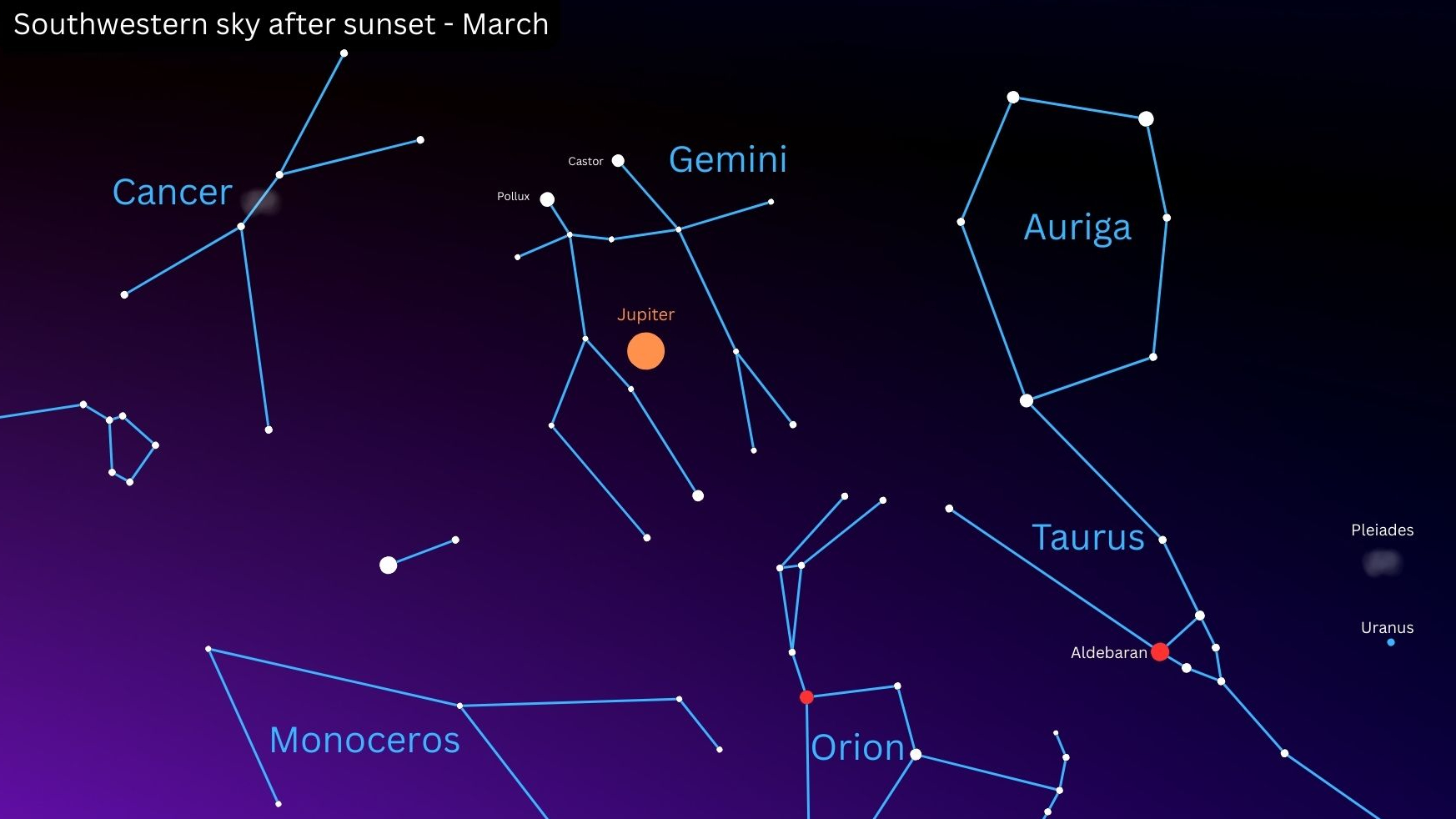
Uranus, meanwhile, lurks in the constellation Taurus, too dim for the unaided eye to see. To find Uranus, first locate the bright red star Aldebaran, which shines to the right of Orion in the evening sky. Uranus tiny aqua disk can be found by sweeping an 8-inch (200 mm) scope across the patch of sky 5 degrees to the lower right of Aldebaran — roughly the width of your three middle fingers held at arm’s length — close to the hazy light of the Pleiades open star cluster.
Mercury is visible as a predawn planet in mid-to-late March, which will appear rising low on the eastern horizon before swiftly becoming lost in the glare of the rising sun. Mars, and Neptune remain too close to the sun to be seen.
As always, the greatest care must be taken to never point a telescope or binoculars close to the rising sun, as doing so will permanently and immediately damage your vision.
Stars and constellations
Look above the southwestern horizon in the hours following sunset to trace the bright stars of the Winter Hexagon shining defiantly in the early spring sky.
Start with Sirius — the brightest star in the night sky — which can be found above the southern evening horizon in the constellation Canis Major, the Big Dog.
Next, find the brilliant light of the blue supergiant star Rigel twinkling beneath the familiar sight of Orion’s Belt to the upper right of Sirius, before leaping higher in the west to the red star Aldebaran, which forms the right eye of the celestial bull in the constellation Taurus.
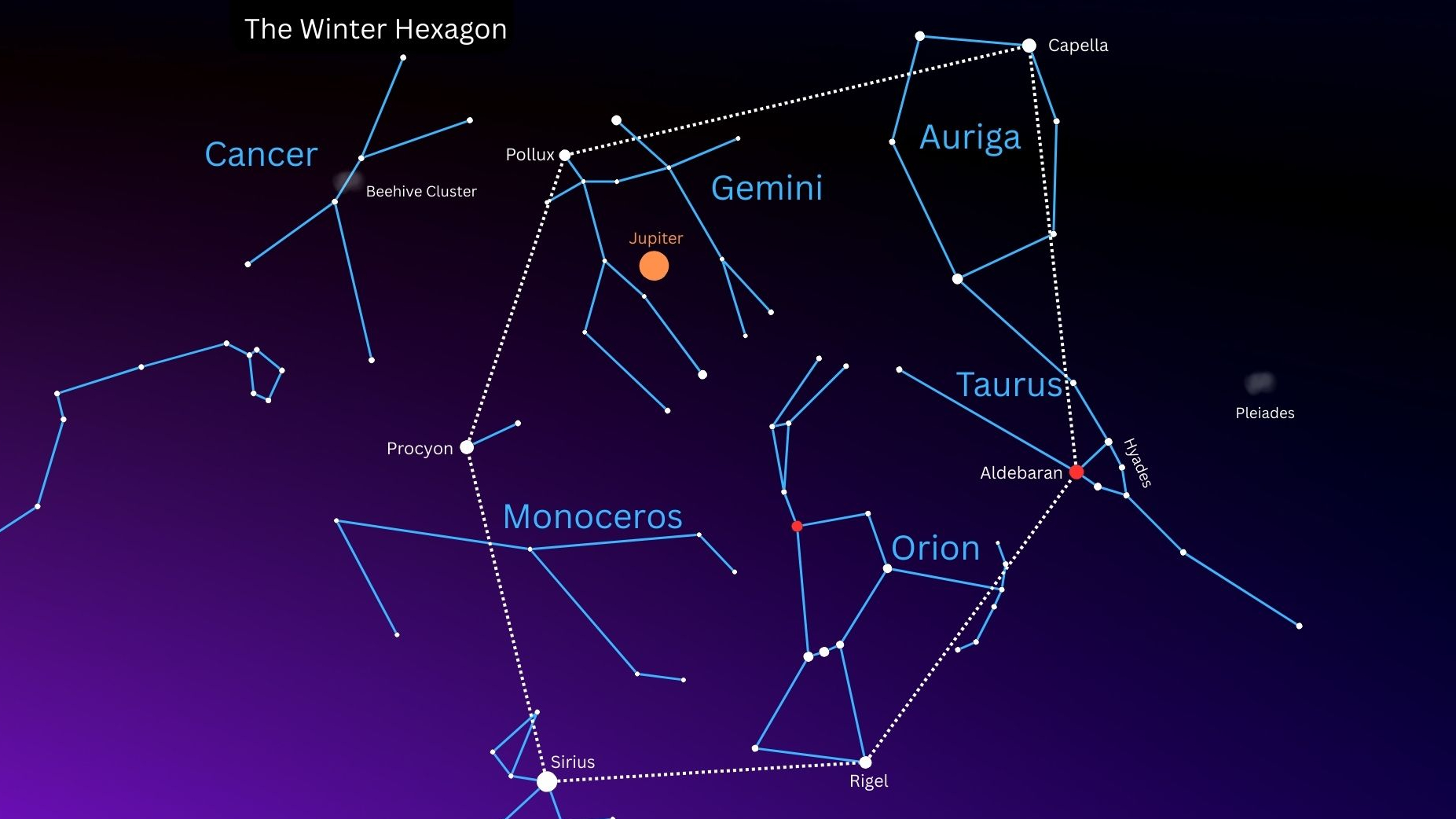
Our next stop is Capella, higher still, which stands as the brightest point in the constellation Auriga, before we travel to the east to find bright Pollux to the upper left of Jupiter, which represents the head of one of two immortal twins in the constellation Gemini. The final Winter Hexagon star, Procyon, can be found shining between Pollux and Sirius, in the constellation Canis Minor, the “Little Dog”.
Star clusters and deep-sky objects
Celestron NexStar 4SE
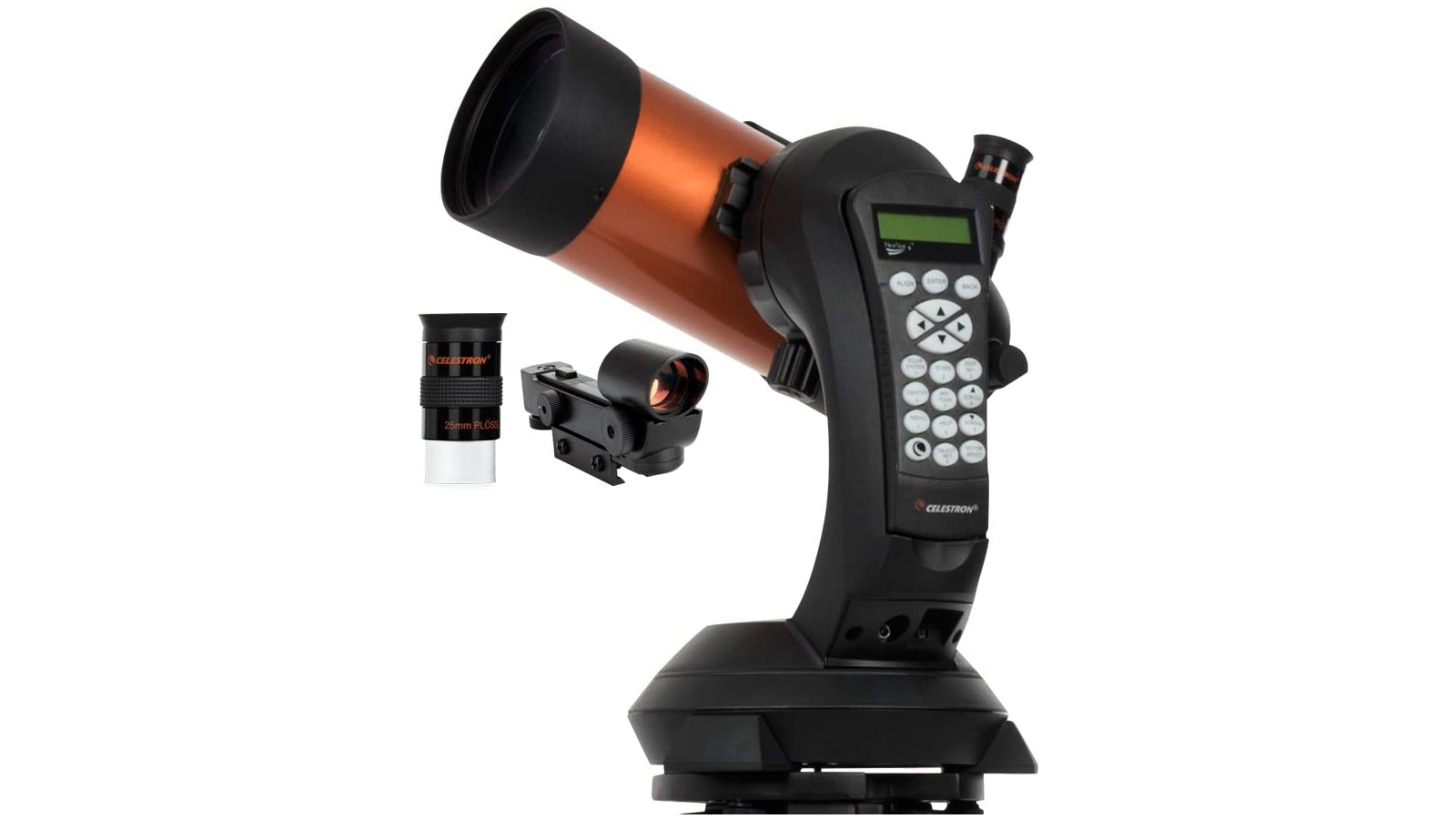
The Celestron NexStar 4SE is ideal for beginners wanting quality, reliable and quick views of the night sky. It’s sturdily built, quick to set up and automatically locates night sky targets and provides crisp, clear views of them. For a more in-depth look at our Celestron NexStar 4SE review
The nights surrounding the new moon phase are a great time to spot the ancient diffuse light of star clusters glowing in the pristinely dark spring sky.
Allow at least 20 minutes for your eyes to adapt to the dark before turning your gaze back to the constellation Taurus and red Aldebaran. The “V” formation of stars extended from it is the Hyades open star cluster, which represents the face of a great bull charging towards Orion, the hunter.
From there, look about 15 degrees to the right of the Hyades to see the ancient light of the Pleiades star cluster, appearing as a hazy patch of light to the unaided eye from a dark sky location. A pair of 10X50 binoculars will allow you to see its seven brightest members — from which it gained the nickname of the “Seven Sisters” — while a small telescope will bring dozens more of its 1,000-strong stars into view.
To the left of Castor and Pollux lies the constellation Cancer, the crab, the core of which plays host to the 100-strong stellar population of the Beehive Cluster (M44), which is visible as a small, misty patch of light on moonless nights.
The new moon is also an ideal time to observe the light of ancient galaxies, as spring brings a string of constellations packed with wonderful galactic targets to prominence. Check out our guide to the spring galaxy season to find out more!
Zodiacal light
If you’re lucky, you may spot a strange pillar of pale light extending up from the western horizon in the hours following sunset in late March. This phenomenon, known as zodiacal light, occurs when sunlight reflects off a vast cloud of dust spread along the plane of the solar system, known as the ecliptic.
Want to get a closer look at the wonders of the post-sunset realm? Then be sure to read our roundup of the top telescopes and binoculars for observing the night sky. If photography is your thing, then you’d do well to read our picks of the best lenses and camera bodies for astrophotography in 2026.
<em>Editor’s Note: If you would like to share your astrophotography with Space.com’s readers, then please send your photo(s), comments, and your name and location to spacephotos@space.com.