

As NASA prepares to send astronauts to the moon for the first time in more than half a century, the agency is revising its long-term plans for Earth’s natural satellite.
Speaking at the Lunar and Planetary Science Conference on Monday (March 16), NASA Associate Administrator Amit Kshatriya said that Artemis 2 remains on track for an April 1 launch. If successful, the mission will send astronauts farther from Earth than humans have ever traveled before, surpassing the distance record set by Apollo 13 in 1970.
Article continues below
The roughly 10-day mission will carry commander Reid Wiseman, pilot Victor Glover, and mission specialists Christina Koch and Jeremy Hansen on a trajectory around the far side of the moon. At closest approach, the moon will appear to them about the size of a basketball held at arm’s length. From that vantage point, the astronauts will document various surface features, including regions scientists believe have never been seen by humans.
“We tell the crew that their verbal descriptions are actually going to be the monumental scientific data set from this mission,” said Ariel Deutsch, a planetary scientist at NASA’s Ames Research Center in California and a member of the science team helping plan Artemis 2 observations. “As humans, the crew provides critical perceptual context that just can’t be replicated with robotic sensors.”
The Artemis 2 crew may spend up to six hours conducting observations, using handheld Nikon cameras, recording verbal descriptions, and making sketches and annotations on tablets. While many lunar targets are large or otherwise easy to identify, scientists are particularly interested in subtle variations in color, lighting and terrain — features human perception can capture in ways that instruments alone may miss, Deutsch said.
To guide the effort, NASA has developed an interactive lunar atlas to help the crew track priority targets based on lighting and viewing conditions during the flyby. The final observation plan will be uploaded after launch, once the spacecraft’s precise trajectory is confirmed, said Deutsch.
Preparation for Artemis 2 has included three years of training rooted in Apollo-era techniques, particularly field geology, along with an intensive “lunar fundamentals” course designed to build the vocabulary and observational skills needed to describe the moon from orbit, said Cindy Evans of NASA’s Johnson Space Center in Houston, who led the geology training program for the crew.
“We practiced a lot their visual observations and their descriptions,” Evans said, “so that they would feel confident in being able to talk about the moon and knowing that they were talking about critical features that are important to lunar scientists back on the Earth.”
A more flexible path back to the moon
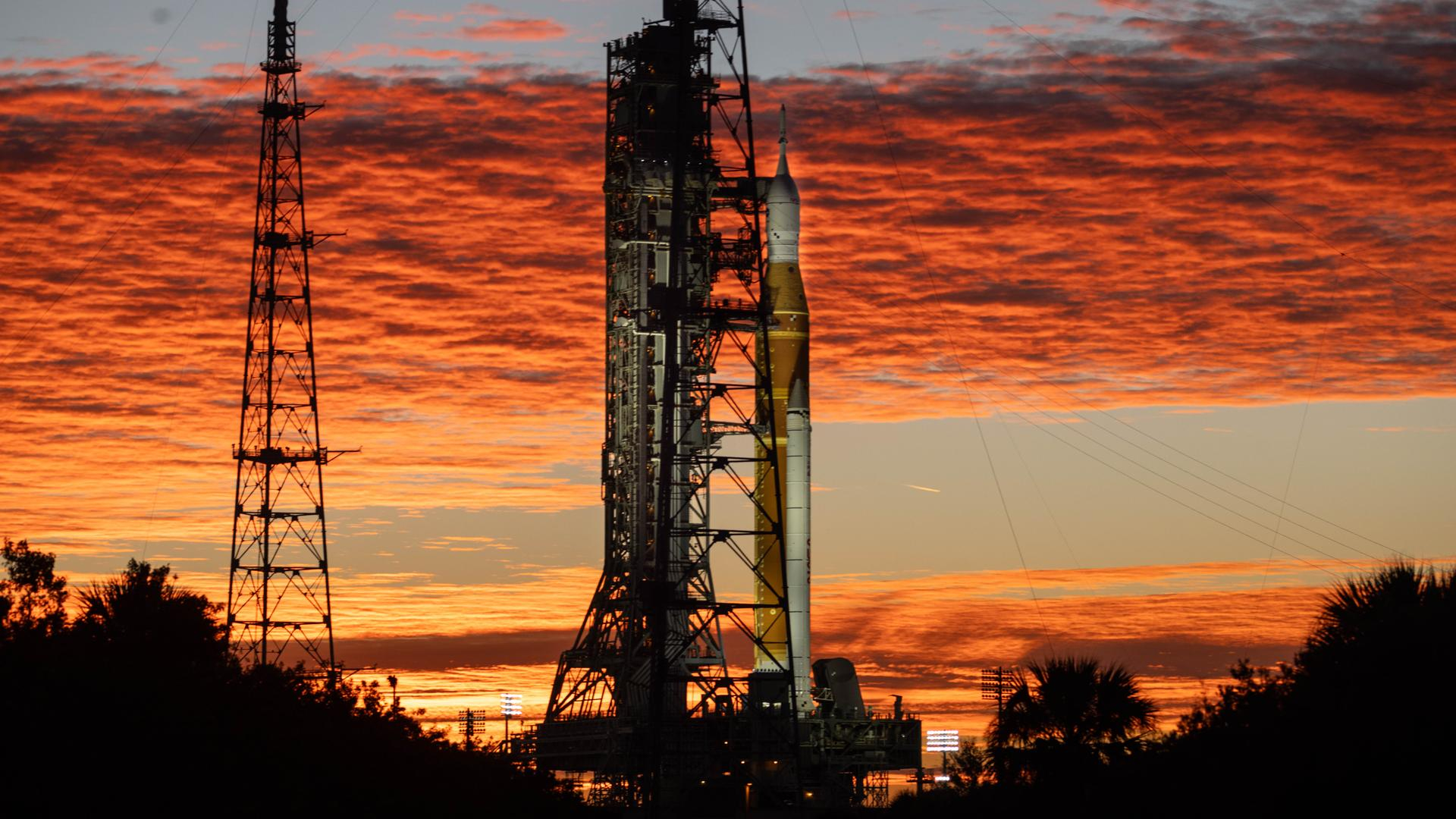
Artemis 2 was, until recently, billed as the precursor to a crewed lunar landing in 2028. But in late February, NASA Administrator Jared Isaacman said that milestone will shift from Artemis 3, as originally planned, to Artemis 4, which is now positioned to become the first crewed moon landing since the Apollo era.
The ultimate destination remains the lunar south pole, a region believed to harbor water ice — a crucial resource for future human exploration — in permanently shadowed craters. But the terrain there is far more challenging than the relatively smooth equatorial sites visited during Apollo, with steep slopes, rugged mountains and extreme lighting conditions.
“The whole point is to get down to the south pole,” Kshatriya said. “I think we agree, still, hopefully, that that’s the right place to go. We are going to keep our sights there.”
To make that goal “more achievable,” NASA is opening up the performance specifications for early Artemis landing missions “in as many ways as we can,” Kshatriya said. The changes allow greater flexibility in spacecraft orbits and mission design, accounting for capabilities and limitations of current systems while giving industry partners more freedom to propose faster paths forward, he said.
“But we’re not yet giving up on the south pole, and I don’t think we will, because I think that’s a place we need to go,” Kshatriya said. “We need to challenge ourselves, and we need to go to some place that we’ve never been.”
The revised strategy places increased emphasis on robotic precursor missions to lay the groundwork for a sustained human presence. NASA envisions a steady cadence of robotic landings near the south pole — potentially as often as monthly — beginning as early as 2027, to gather data on temperature extremes, soil properties and communications challenges.
The data will help reduce risk for future crews and “actually give ourselves a credible shot at aggregating a lunar base in the right spot,” Kshatriya said.
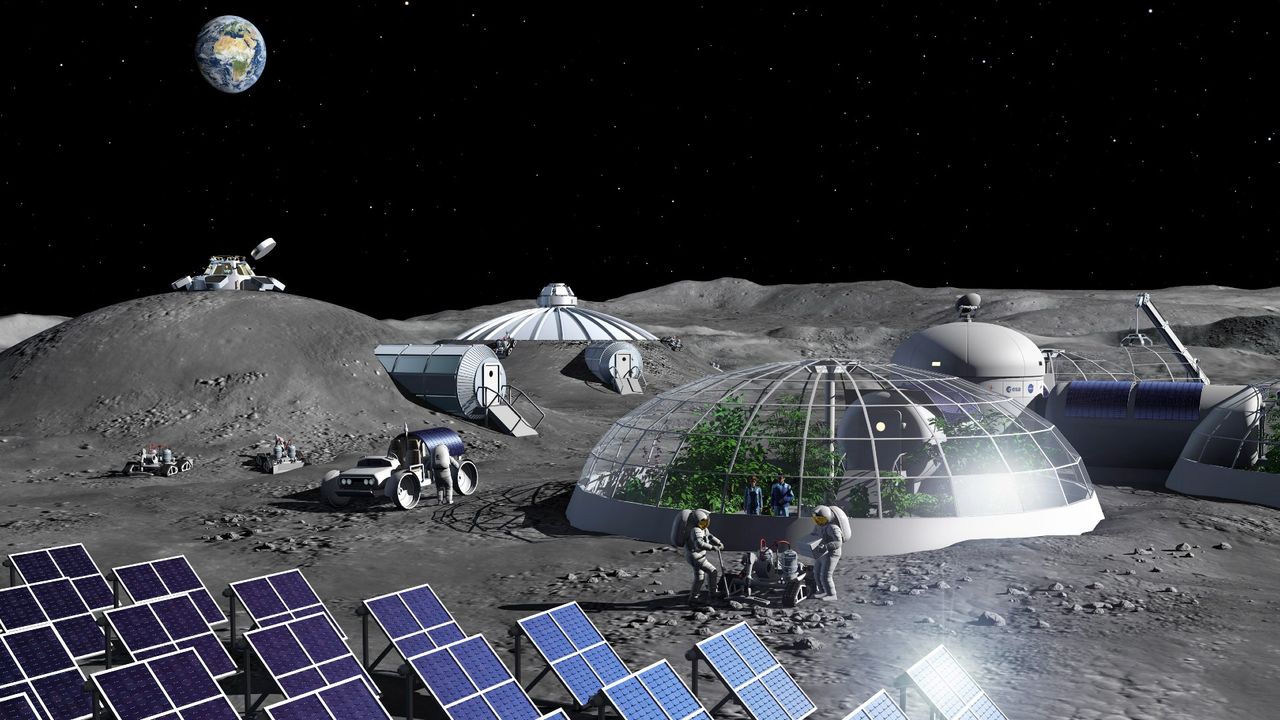
“We’re not just going to plop down a magical bubble dome that everybody lives in and has plants and amazing things,” he said. “We know that that’s not credible.”
The strategy shift comes amid delays to SpaceX’s massive Starship rocket, whose upper stage NASA tapped to be the Artemis program’s first crewed moon lander. Under the original architecture, Artemis 3 depended on the completion of several complex milestones that Starship has yet to demonstrate. These include large-scale transfer and storage of super-cooled propellant in space, as well as a dozen or so refueling flights in Earth orbit before the vehicle can head to the moon.
NASA has also selected the Blue Moon lander from Blue Origin, which has paused its suborbital space tourism efforts for at least two years to accelerate development of its lunar lander. NASA plans to test the rendezvous and docking capabilities of Orion alongside Starship and/or Blue Moon in Earth orbit during Artemis 3, which is now targeted to launch in 2027
NASA hopes the revised plan will keep it on track for a lunar landing in 2028, while also positioning the agency to return astronauts to the moon before China — and before the end of the current U.S. presidential term in January 2029.
Kshatriya said meeting that timeline will require what he described as “a sea change” in how NASA works with industry.
“It’s going to take NASA folks rolling up their sleeves and getting side by side with industry to finish some of these things,” he said, “which I think a lot of us want to do anyway, but that’s what it’s going to take.”
“It’s ambitious, but I think we can do it.”