• Home
  • About
  • FAQ
  • Feeds
  • Glossary
  • Contact
Tours In Space
  • Home
  • Start Here
    • Intro to Commercial Spaceflight
    • How to Book a Space Tour
    • Is Space Tourism Safe?
    • Space Travel FAQs
    • View Earth from the Edge
    • What to Pack
  • Preparing for Your Trip
    • Insurance and Legal Waivers
    • Physical and Medical Requirements
    • Training Programs
    • What to Expect
  • Space Tourism Companies
    • Axiom Space
    • Blue Origin
    • SpaceX
    • Virgin Galactic
    • World View (stratospheric balloon flights)
    • Blue Origin vs Virgin Galactic
    • Comparison Chart: Features, Pricing, Booking
  • Space Tours
    • Custom & Luxury Packages
    • Duration, Training, Costs
    • Experiences
    • Future Moon/Mars Options
    • Orbital Flights
    • Parabolic Flight Experiences
    • Private Missions
    • Stratospheric Balloon Flights
    • Suborbital Flights
    • Zero-Gravity Flights
  • Spaceflight Technologies
    • Space Tourism Balloon
No Result
View All Result
  • Home
  • Start Here
    • Intro to Commercial Spaceflight
    • How to Book a Space Tour
    • Is Space Tourism Safe?
    • Space Travel FAQs
    • View Earth from the Edge
    • What to Pack
  • Preparing for Your Trip
    • Insurance and Legal Waivers
    • Physical and Medical Requirements
    • Training Programs
    • What to Expect
  • Space Tourism Companies
    • Axiom Space
    • Blue Origin
    • SpaceX
    • Virgin Galactic
    • World View (stratospheric balloon flights)
    • Blue Origin vs Virgin Galactic
    • Comparison Chart: Features, Pricing, Booking
  • Space Tours
    • Custom & Luxury Packages
    • Duration, Training, Costs
    • Experiences
    • Future Moon/Mars Options
    • Orbital Flights
    • Parabolic Flight Experiences
    • Private Missions
    • Stratospheric Balloon Flights
    • Suborbital Flights
    • Zero-Gravity Flights
  • Spaceflight Technologies
    • Space Tourism Balloon
No Result
View All Result
Tours In Space
No Result
View All Result
Home Uncategorized

Parsons unveils new satellite antenna aimed at military market

Ensign by Ensign
March 24, 2026
in Uncategorized
0
Parsons unveils new satellite antenna aimed at military market
189
SHARES
1.5k
VIEWS
Share on FacebookShare on Twitter
image

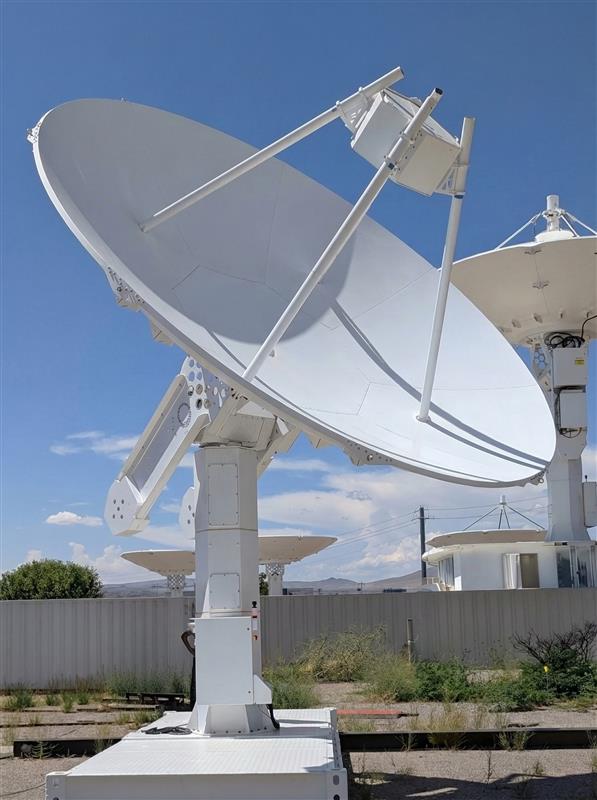
WASHINGTON — Parsons Corporation is rolling out a new satellite ground antenna, targeting a market opening left by the Space Force’s recent cancellation of a planned antenna procurement.

Developed in collaboration with Raven Defense, the SPARTAN antenna — short for S-Band Phased Array Receive and Transmit Antenna Node — combines a six-meter parabolic dish with an electronically steered phased-array feed. The S-band frequency is commonly used for telemetry, tracking and command, the links that allow operators to control satellites and monitor their status.

Parsons, a defense and intelligence contractor based in Chantilly, Virginia, is positioning the antenna to address a demand for commercial alternatives after the Space Force canceled a $1.7 billion procurement of advanced phased-array antennas, a program known as Satellite Communications Augmentation Resource, or SCAR. 

The first SPARTAN antenna is now integrated into Parsons’ OrbitXchange network, a global ground station service the company offers to commercial and government users.

Ed Baron, senior vice president of space engineering solutions at Parsons, said the hybrid design allows the antenna to maintain the sensitivity of a traditional dish while adding the ability to support multiple spacecraft simultaneously. The phased-array feed enables eight electronically steerable downlink beams and a dedicated uplink beam, allowing operators to command and receive data from several satellites at once.

Subscribe Today
Get unlimited access to SpaceNews.com and our digital magazine with a monthly, quarterly or annual subscription.

Discounted Access
Learn more about savings available for academic, government and military readers on SpaceNews subscriptions.

As the military deploys more satellites, these require frequent but brief contacts with ground stations as they pass overhead. Managing those interactions across large fleets places new demands on ground infrastructure, particularly for command-and-control links.

Unlike payload data, which can be routed through relay networks, command links must be maintained continuously, making antenna capacity a limiting factor as constellations expand.

Need for more ground capacity

The Space Force’s SCAR program sought to address that issue by procuring mobile, multi-band phased-array antennas to supplement the aging Satellite Control Network, which relies largely on fixed, mechanically steered dishes. But the program grew in cost and complexity before being terminated.

Baron said the military has added little new antenna capacity in decades. “They operate from the same seven global sites as they did over 30 years ago with an average of 15 to 18 antennas operational at any given time,” he said, adding that the current infrastructure is not sufficient to support the projected growth in satellites.

Following the SCAR cancellation, Space Force officials have indicated they plan to rely more on commercially available systems across multiple frequency bands and sizes.

Baron said the SPARTAN is designed to be priced closer to a traditional parabolic antenna while offering greater capacity. “This antenna doesn’t do everything SCAR was intended to do … but it can fill a part of that niche,” he said.

New Mexico-based Raven Defense, which manufactures the antennas, has primarily focused on tracking missile tests and providing telemetry services for government and commercial customers, including Rocket Lab and Kratos. The company produces between 20 and 50 six-meter antennas annually and is also developing phased-array systems.

Raven’s chief executive Christopher Patscheck described SPARTAN as a compromise between high-end phased arrays and legacy dishes. “Not everyone can afford hundreds of millions of dollars for a large scale multi-beam phased array,” he said. “And not everyone wants the legacy parabolic systems.”

The hybrid approach also offers a potential upgrade path for existing infrastructure. By replacing the feed on legacy antennas with a phased-array system, operators could increase capacity without building entirely new ground stations, Patscheck said.

Parsons said the antenna can be scaled to larger apertures for missions beyond Earth orbit. A six-meter dish can support satellites in low and medium orbits, while larger versions could extend coverage to geostationary orbit and cislunar space.

Baron said the system also aligns with a broader shift toward lower cost commercial systems. In a conflict, high-value ground stations could be targeted with low-cost drones. “A proliferated ground antenna architecture is a much better approach,” he said, noting that a larger number of lower-cost systems could provide redundancy.

Parsons plans to market the antenna to international customers as well as U.S. defense users.

No Result
View All Result

Recent Posts

  • Space Force adds cyber units to guard rocket launches
  • Amazon Leo targets faster deployment cadence as deadline pressure mounts
  • Parsons unveils new satellite antenna aimed at military market
  • Sovereign demand and institutional capital reshape space economy
  • Astrophotographer spies Thor’s Helmet shining 15,000 light-years away in spectacular photo

Categories

  • Excursions
  • Kepler Mission
  • NASA
  • NASA Breaking News
  • Physical Preparation
  • Preparation
  • Space News
  • Space Station News
  • Spacewalks
  • Tours
  • Uncategorized
  • Weightlessness Training
  • What Not to Pack
  • What to Pack

Meta

  • Log in
  • Entries feed
  • Comments feed
  • WordPress.org
  • Home
  • Start Here
  • Preparing for Your Trip
  • Space Tourism Companies
  • Space Tours
  • Contact

© 2026 JNews - Premium WordPress news & magazine theme by Jegtheme.

No Result
View All Result
  • About
  • Contact
  • Feeds
  • Frequently Asked Questions
  • Preparing for Your Trip
    • Insurance and Legal Waivers
    • Physical and Medical Requirements
    • Training Programs
    • What to Expect
  • Privacy Policy
  • Space Tourism Companies
    • Axiom Space
    • Blue Origin
    • Blue Origin vs Virgin Galactic
    • Comparison Chart: Features, Pricing, Booking
    • SpaceX
    • Virgin Galactic
    • World View (stratospheric balloon flights)
  • Space Tours
    • Custom & Luxury Packages
    • Duration, Training, Costs
    • Experiences
    • Future Moon/Mars Options
    • Orbital Flights
    • Parabolic Flight Experiences
    • Private Missions
    • Stratospheric Balloon Flights
    • Suborbital Flights
    • Zero-Gravity Flights
  • Spaceflight Technologies
    • Space Tourism Balloon
  • Start Here
    • How to Book a Space Tour
    • Intro to Commercial Spaceflight
    • Is Space Tourism Safe?
    • Space Travel FAQs
    • View Earth from the Edge
    • What to Pack
  • Tours in Space is your launchpad to the world of space tourism

© 2026 JNews - Premium WordPress news & magazine theme by Jegtheme.