

TAMPA, Fla. — SES has ordered an initial 28 satellites from manufacturing startup K2 Space for meoSphere, a next-generation medium Earth orbit (MEO) network slated to be in operation by 2030.
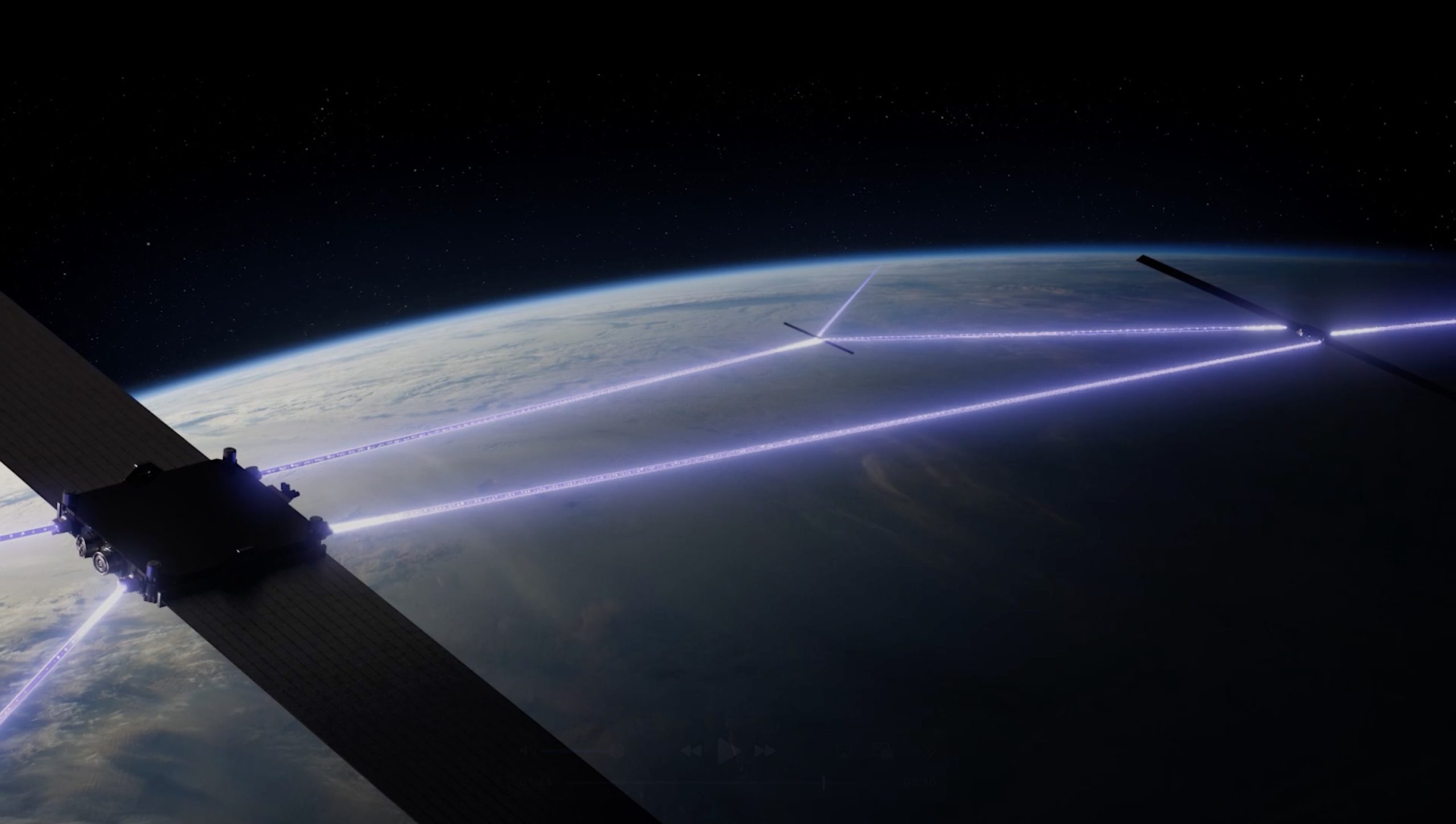
The Luxembourg-based operator said the satellites would deliver high-speed broadband, support optical intersatellite links for data relay and enable hosted payloads across commercial and government missions.
The network would support up to 1 gigabit per second Ka-band broadband for flat-panel antennas as small as 25 by 25 centimeters and up to 4 Gbps using parabolic antennas for high-capacity connections, alongside optical links of up to 100 Gbps to relay traffic between satellites and emerging infrastructure such as space stations and orbital data centers.
“Space is the invisible backbone of the global data economy and national security,” SES CEO Adel Al-Saleh said in a March 24 news release that was light on finer details.
“Together with K2 Space and other space partners, we’re building meoSphere as essential infrastructure — constructed faster, designed to handle massive data demands globally, and built to support the secure, resilient sovereign networks that our global government allies depend on.”
SES outlined its vision for meoSphere in September when it announced a partnership with California-based K2 to pursue a more iterative approach to upgrading its MEO constellation.
The operator is still completing its current O3b mPower buildout, with the last three of 13 Boeing-built MEO satellites scheduled to launch this year. Those spacecraft are designed to deliver more than 10 times the throughput of its first-generation fleet of 20 O3b MEO satellites.
SES is co-developing meoSphere with K2, providing payloads built in Luxembourg for integration with K2’s satellite bus across the Atlantic. The approach is intended to give SES tighter control over the supply chain and shorten production timelines to help make the network more scalable.
A source familiar with the situation said SpaceX is slated to launch an initial SES-K2 meoSphere pathfinder March 30 from Vandenberg, California. The pathfinder, which at 2,200 kilograms would be the same size as the operational spacecraft, includes optical technology designed primarily to test links between satellites and an optical ground station supplied by France’s Cailabs.
The mission is part of K2’s U.S. Space Force-funded Gravitas program, marking the first flight of the company’s “Mega” class satellite in MEO. The spacecraft is expected to operate at multiple altitudes while carrying a mix of national security and commercial payloads, testing survivability in the region’s high-radiation environment and using high-power electric propulsion to raise its orbit over several months.
The companies plan to deploy a series of pathfinders over the next three years to validate payload components and K2’s satellite platform.
“We’re going to fly 10 of this exact same satellite over the next 21 months, all before the constellation rollout,” K2 cofounder and CEO Karan Kunjur told journalists March 24 on the sidelines of the Satellite Conference in Washington, D.C.
“The whole goal is rapidly iterate to get a lot of data on the performance of these systems, so that they’re fully de-risked before constellation roll-out.”
Two of those test satellites would be dedicated to SES, Kunjur said, with launches for the 28 operational spacecraft slated to get underway in 2029.
Al-Saleh said during the media briefing that contract options are in place with an aim to reach 100 meoSphere satellites “as quick as possible.”
Kunjur added: “We’ve announced publicly that the list price for a single satellite is $15 million … that’s for the 20-kilowatt satellite with the full capabilities.
“One of the benefits of this arrangement is, with scale, we can obviously drive down cost and our cost structure.”
Around seven of the satellites could be stacked to fit on a single SpaceX Falcon 9 rocket to low Earth orbit (LEO), according to Kunjur, from where they would use onboard propulsion to climb to MEO in two to three months.
Military resiliency
SES said meoSphere will also include protected military Ka-band frequencies in its support for government customers in addition to aviation, maritime and other enterprise users.
The Phase 1 architecture calls for 28 satellites across four inclined orbital planes to provide global pole-to-pole coverage, which SES says offers a different resilience profile compared with more densely populated LEO constellations.
SES, which also operates a global fleet of geostationary satellites for broadband and video distribution, said the network would also be designed for compatibility with Europe’s IRIS² sovereign broadband initiative that it is supporting via a public-private partnerships with other domestic operators.
The announcement comes months after K2 Space raised $250 million in a Series C round that valued the startup at $3 billion, following its founding in 2022.
<em>SpaceNews correspondent Debra Werner contributed to this article from Washington, D.C.