• Home
  • About
  • FAQ
  • Feeds
  • Glossary
  • Contact
Tours In Space
  • Home
  • Start Here
    • Intro to Commercial Spaceflight
    • How to Book a Space Tour
    • Is Space Tourism Safe?
    • Space Travel FAQs
    • View Earth from the Edge
    • What to Pack
  • Preparing for Your Trip
    • Insurance and Legal Waivers
    • Physical and Medical Requirements
    • Training Programs
    • What to Expect
  • Space Tourism Companies
    • Axiom Space
    • Blue Origin
    • SpaceX
    • Virgin Galactic
    • World View (stratospheric balloon flights)
    • Blue Origin vs Virgin Galactic
    • Comparison Chart: Features, Pricing, Booking
  • Space Tours
    • Custom & Luxury Packages
    • Duration, Training, Costs
    • Experiences
    • Future Moon/Mars Options
    • Orbital Flights
    • Parabolic Flight Experiences
    • Private Missions
    • Stratospheric Balloon Flights
    • Suborbital Flights
    • Zero-Gravity Flights
  • Spaceflight Technologies
    • Space Tourism Balloon
No Result
View All Result
  • Home
  • Start Here
    • Intro to Commercial Spaceflight
    • How to Book a Space Tour
    • Is Space Tourism Safe?
    • Space Travel FAQs
    • View Earth from the Edge
    • What to Pack
  • Preparing for Your Trip
    • Insurance and Legal Waivers
    • Physical and Medical Requirements
    • Training Programs
    • What to Expect
  • Space Tourism Companies
    • Axiom Space
    • Blue Origin
    • SpaceX
    • Virgin Galactic
    • World View (stratospheric balloon flights)
    • Blue Origin vs Virgin Galactic
    • Comparison Chart: Features, Pricing, Booking
  • Space Tours
    • Custom & Luxury Packages
    • Duration, Training, Costs
    • Experiences
    • Future Moon/Mars Options
    • Orbital Flights
    • Parabolic Flight Experiences
    • Private Missions
    • Stratospheric Balloon Flights
    • Suborbital Flights
    • Zero-Gravity Flights
  • Spaceflight Technologies
    • Space Tourism Balloon
No Result
View All Result
Tours In Space
No Result
View All Result
Home Space News

‘It was an incredible moment’: One photographer’s journey to capture the March 3 total lunar eclipse over Malaysia

Ensign by Ensign
March 25, 2026
in Space News
0
‘It was an incredible moment’: One photographer’s journey to capture the March 3 total lunar eclipse over Malaysia
189
SHARES
1.5k
VIEWS
Share on FacebookShare on Twitter

Planning, uncertainty, a last-minute road trip and elation in the battle against cloud cover. Malaysian photographer Tharuman Gnanamoorthy set off on a personal mission to capture the March 3 Blood Moon total lunar eclipse.

Gnanamoorthy’s stunning composite photos document the mesmerizing beauty of the orange-red full moon as it rose fully eclipsed over the eastern coast of Malaysia, along with the waning partial phases that followed as Earth‘s shadow slipped from its ancient surface. They represent the culmination of weeks of planning, skill and luck, which may never have come to fruition had a single decision fallen the wrong way.

“This eclipse was a particularly meaningful experience for me, shaped as much by the challenges on the ground as by the celestial event itself,” Gnanamoorthy told Space.com in an email. The weeks leading up to the event had seen Gnanamoorthy rehearsing the workflow for his dual-imaging setup from his home in the Seremban region of the Malay Peninsula, where he works as a paediatrician.

Article continues below


You may like

Gnanamoorthy kept a watchful eye on the weather forecast as the eclipse drew closer, tracking cloud fronts that could make or break his expedition. “At one point, I even experimented with trying to “train” my Seestar S50 to detect the moon through cloud cover — an attempt that, unsurprisingly, proved futile,” lamented Gnanamoorthy.

He had initially planned to pack up his equipment and embark on a 280-mile (450-kilometer) trip north to the western coastal city of Alor Setar in the state of Kedah, after using Google Earth and Photopills to meticulously plan the shoot.
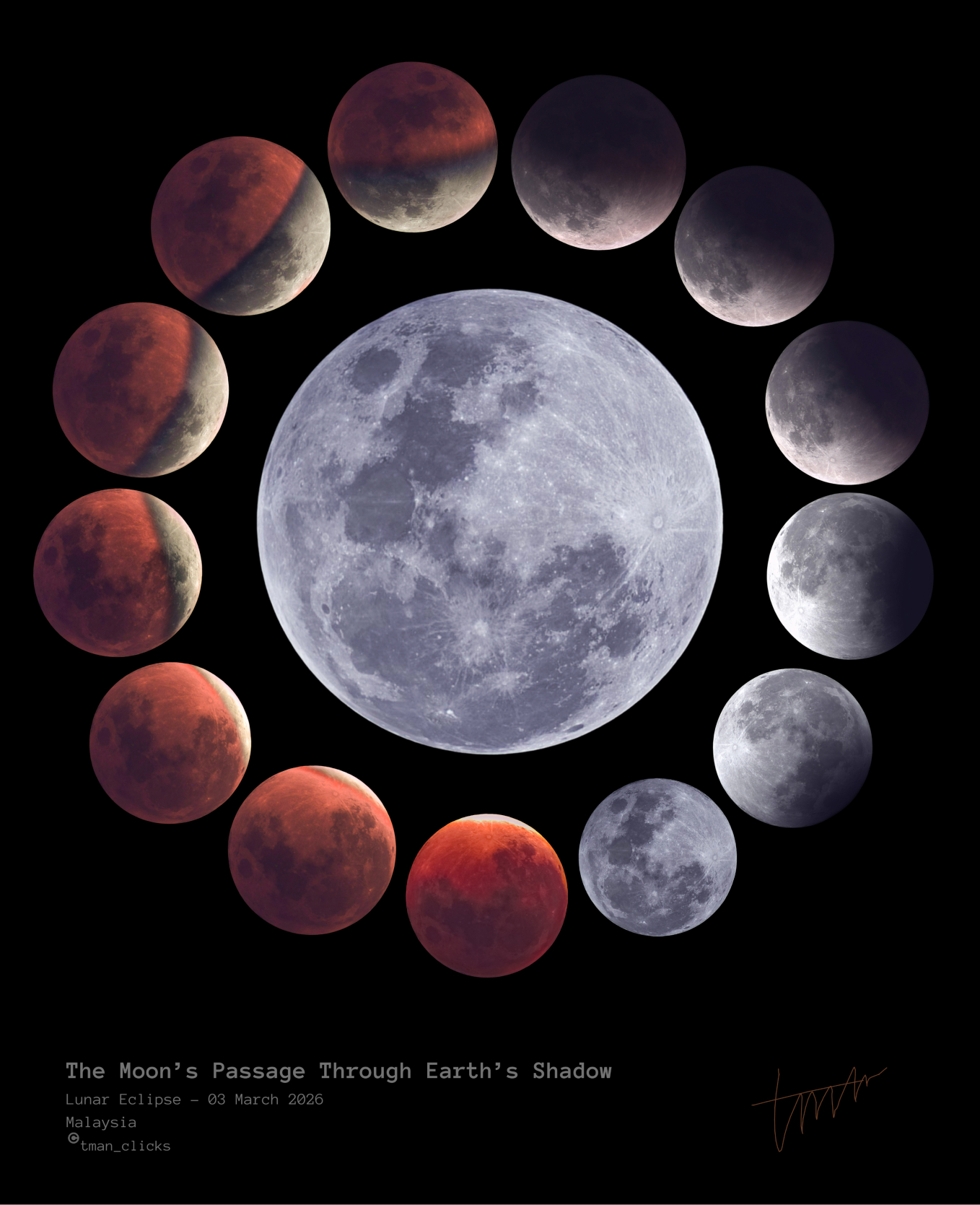
A composite image showing a string of full moons captured during a total lunar eclipse, which depict the total and waning partial phases of the event. The smaller moons are arranged around a single larger uneclipsed moon

A composite view revealing the climactic blood moon and waning partial phases of the eclipse (Image credit: Dr. Tharuman Gnanamoorthy)

His goal was to capture the blood moon as it rose fully immersed in Earth’s shadow at sunset on March 3, as our planet passed between the sun and moon during the climactic phase of the total lunar eclipse. During this phase, also known as totality, light filtered by Earth’s atmosphere would be bent onto the lunar disk, turning it a bloody red hue.

As the day of the eclipse dawned, the weather over Alor Setar deteriorated, forcing Gnanamoorthy to abandon his original plan in favor of a new destination on the eastern shoreline of the peninsula, close to the city of Kota Bharu, 310 miles (500 km) to the north. With luck, he would find a spot with a clear view of the moon as it rose, eclipsed over the South China Sea, and hope that clouds didn’t arrive to ruin the show.

Breaking space news, the latest updates on rocket launches, skywatching events and more!

“Faced with this uncertainty, I made a last-minute decision to drive across the country,” recalled Gnanamoorthy. “The journey took more than seven hours, cutting across the peninsula with little room for delay. I needed to arrive before sunset to scout for a suitable location and set up my equipment.”
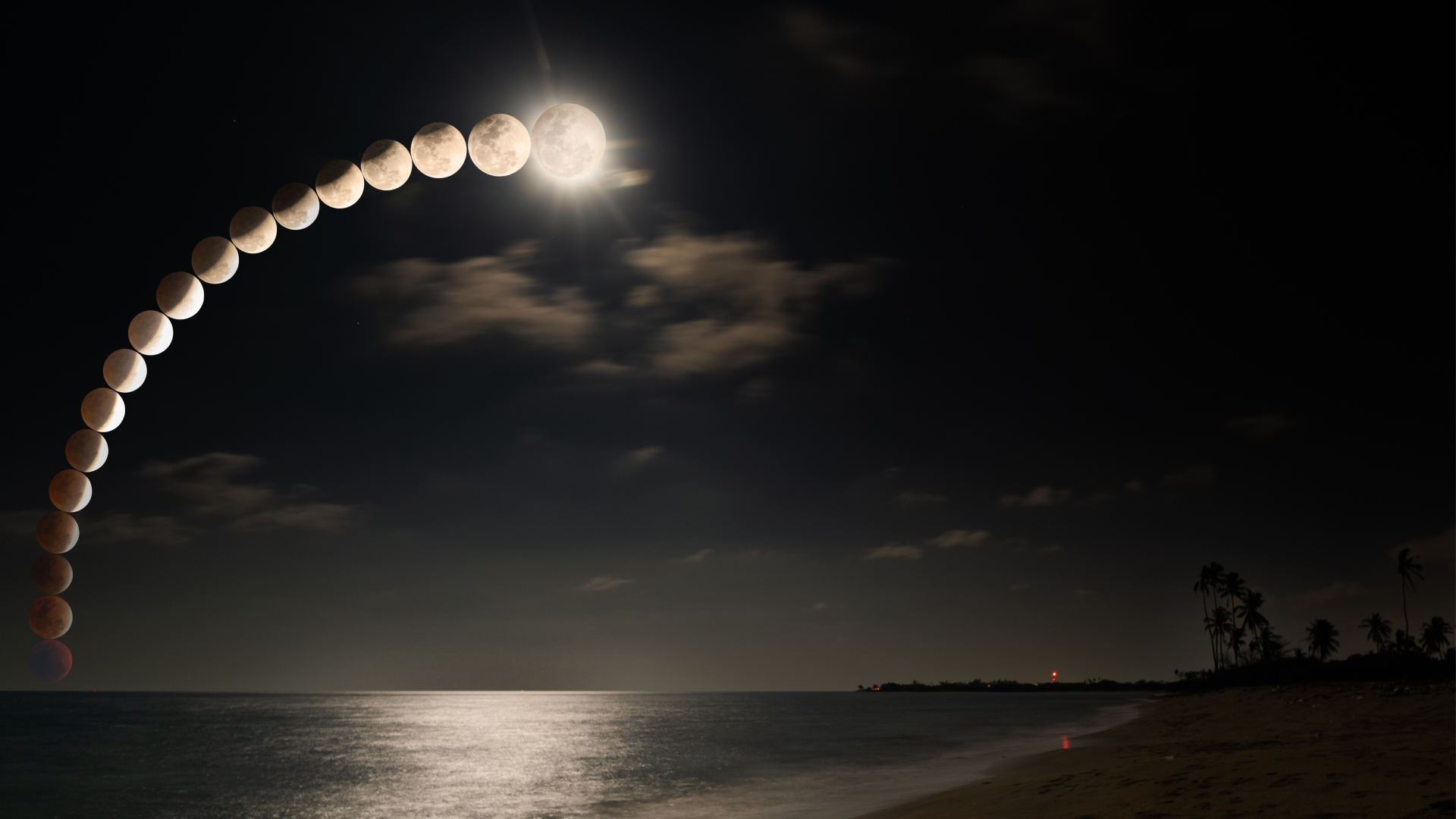
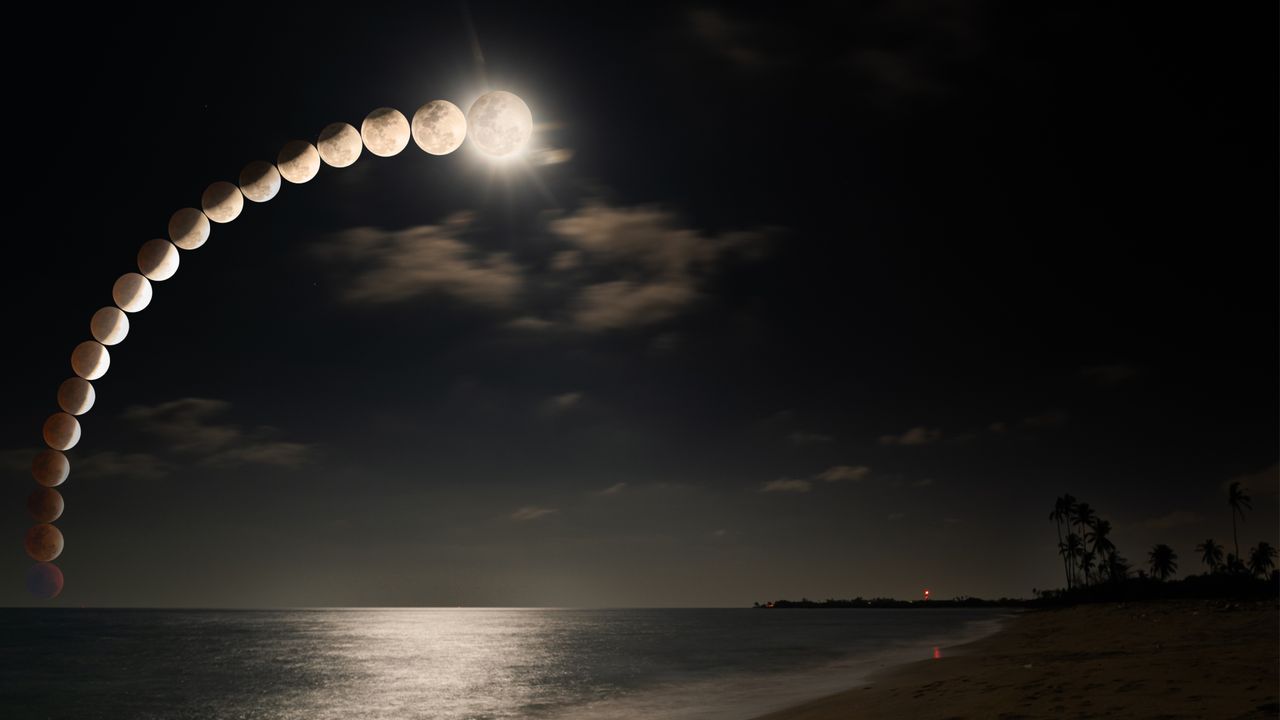
A composite image showing a string of full moons captured during a total lunar eclipse. The lunar disk closest to the horizon is fully eclipsed and red, with each subsequent moon Earth's shadow can be seen slipping from the lunar disk above an ocean bordering a beach.

The March 3 total lunar eclipse captured in the skies of Malaysia. (Image credit: Dr. Tharuman Gnanamoorthy)

Gnanamoorthy would use a Sony A7 III mirrorless camera paired with a 300 mm telephoto lens and a Seestar S50 smart telescope to capture the scene. The mirrorless camera was used to snap bracketed exposures — where the same scene is imaged with a variety of exposure durations — while the smart telescope was tasked with capturing RAW footage of the eclipse.

“I eventually settled on a stretch of coastline at Pantai Pak Amat, just outside Kota Bharu, with a clear eastern horizon over the South China Sea,” explained Gnanamoorthy. “Conditions were not perfect — low clouds still hugged the horizon — but they were far more promising than those on the west coast.”

What to read next

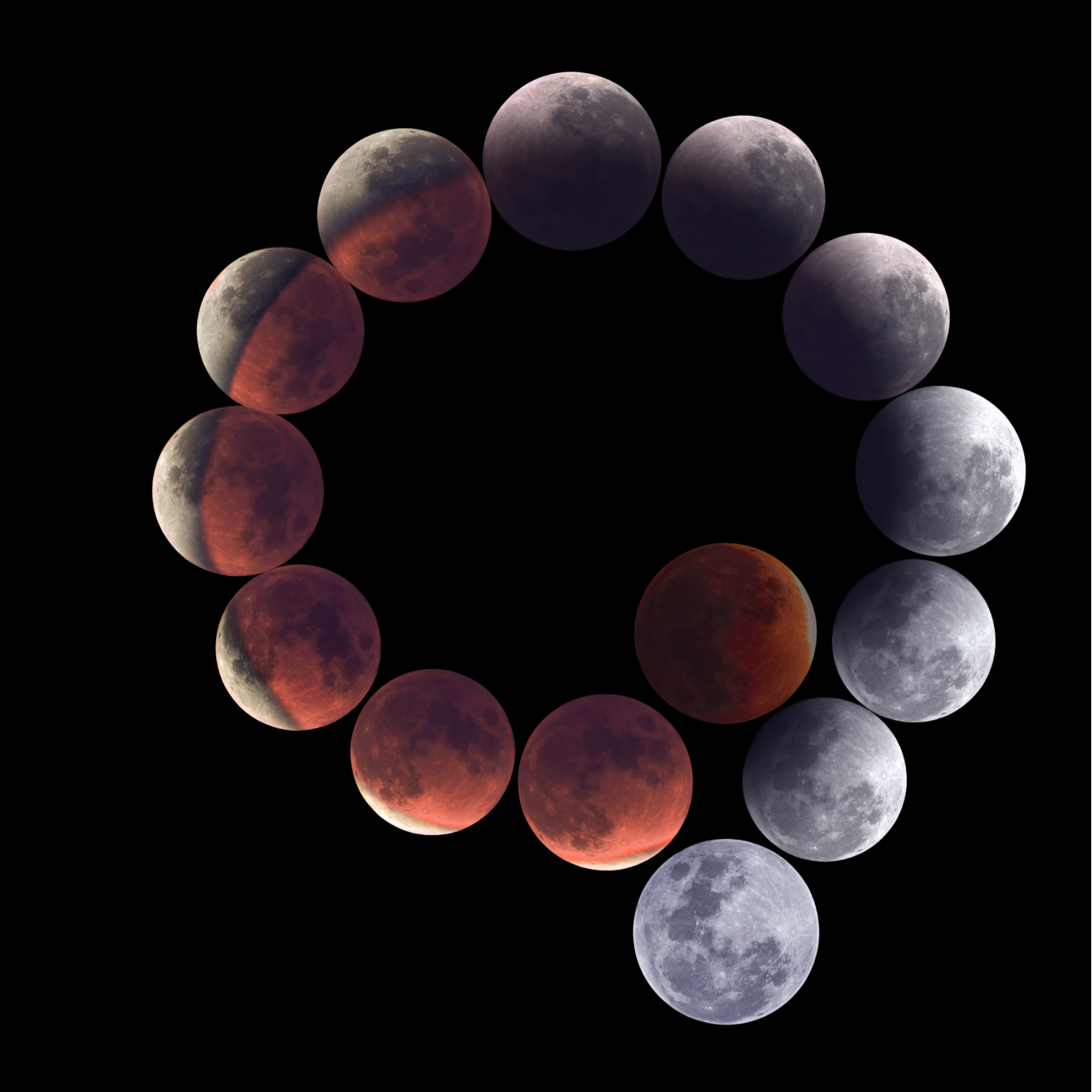
A composite image showing a string of full moons captured during a total lunar eclipse. The images of the lunar disk are arranged in a spiral set against a black background. The innermost moon is a dull red disk photographed during totality, while later moons show the waning partial phase of the eclipse, ending in an uneclipsed, silver lunar disk.

A lunar spiral revealing Earth’s shadow as it slipped from the lunar disk on March 3. (Image credit: Dr. Tharuman Gnanamoorthy)

Gnanamoorthy waited alone on the deserted beach as the appointed moment of moonrise came and went, hidden behind an impenetrable barrier of cloud that had settled low on the horizon.

Emotions rose as the fleeting phase of totality continued to ebb away with the moon lost from sight behind a veil of clouds. Finally, a little over 30 minutes after moonrise, the clouds parted, revealing the lunar disk as it passed through the deepest section of our planet’s shadow, while bathed in the orange-red light of every sunrise and sunset on Earth.
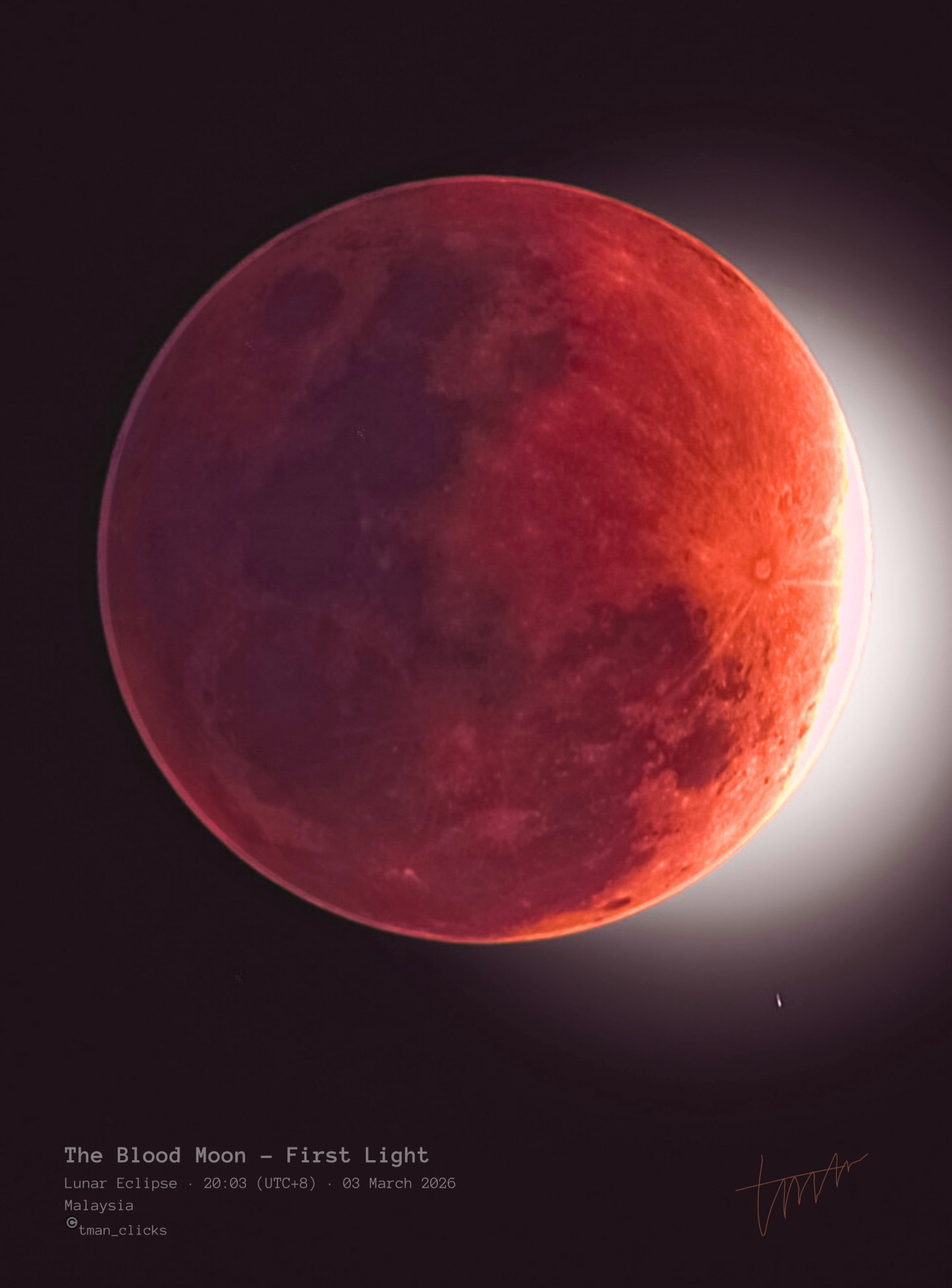
A red full moon is pictured during a total lunar eclipse against a black sky.

The March full moon captured during totality. (Image credit: Dr. Tharuman Gnanamoorthy)

“It was an incredible moment,” recounted Gnanamoorthy. “For a brief instant, I simply stood there, stunned. Then instinct took over. I moved quickly between both systems, following the imaging workflow I had rehearsed.”

The payoff was spectacular.

Gnanamoorthy combined the bracketed images captured using the Sony A7III with footage from the Seestar S50 in Adobe Photoshop and Lightroom to create gorgeous compositions that chronicled the blood moon’s transformation from rusty crimson back to its usual silvery lustre.
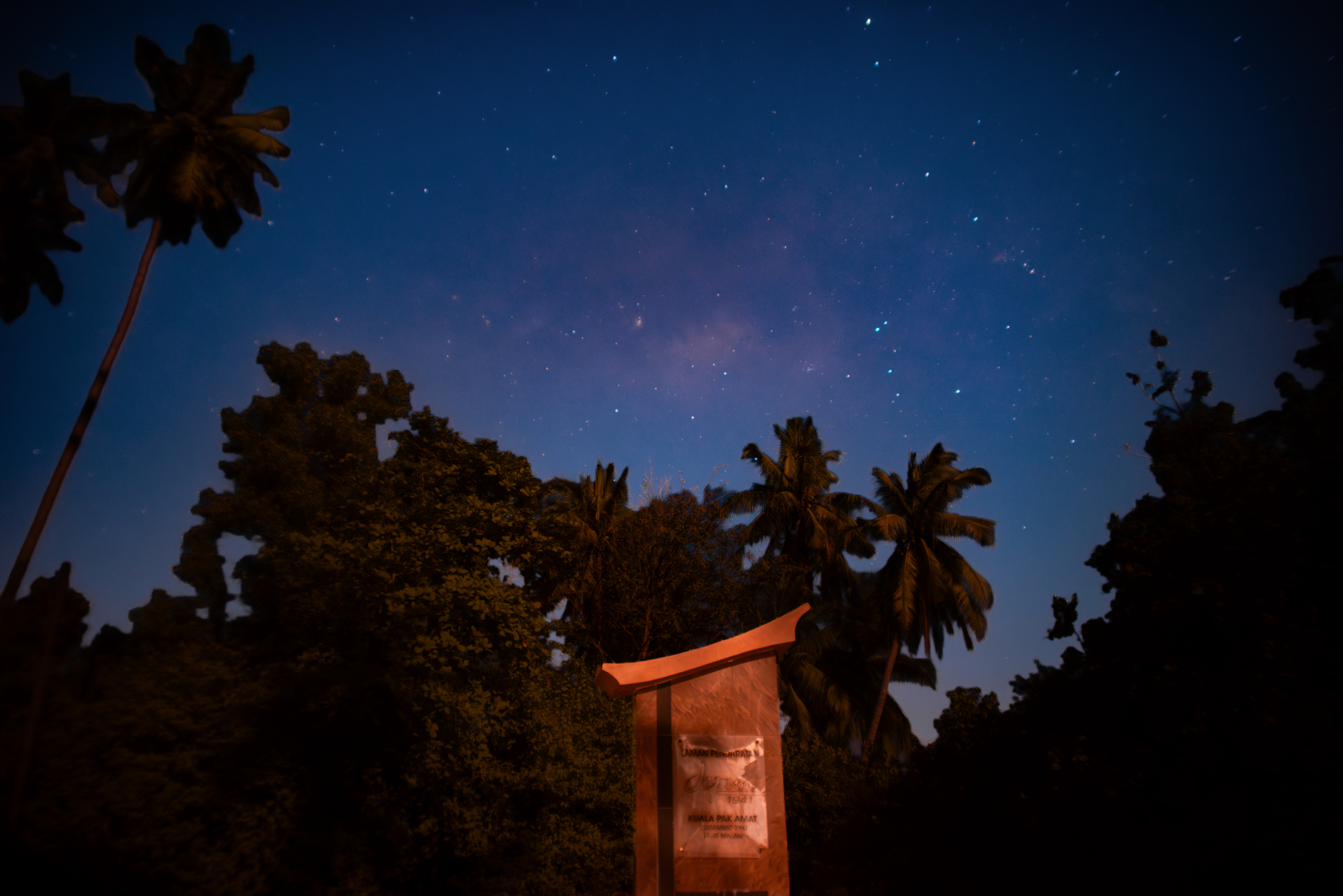
A starry night sky is pictured above palm trees. A minument is visible at the bottom of the image.

Stars shine over the Pantai Pak Amat, which was the site of Japanese forces on Malaya in December 1941. (Image credit: Dr. Tharuman Gnanamoorthy)

“One unexpected aspect of the experience came afterward,” said Gnanamoorthy. “I later discovered that Pantai Pak Amat is historically significant — it marks the landing site of Japanese forces in Malaya on December 8, 1941. I returned the following morning to photograph the monument, along with the rising Milky Way core above the same coastline.”

Today’s best Sony Alpha A7 III deals

Inspired to begin your own astrophotography journey? Then be sure to read our guides to imaging the lunar surface and capturing the night sky. Don’t forget to also peruse our roundups of the best cameras and lenses available in 2026 if you’re new to photography, or simply want to upgrade your equipment.

<em>Editor’s Note: If you would like to share your astrophotography with Space.com’s readers, then please send your photo(s), comments, and your name and location to spacephotos@space.com.

Tags: rocket launch
No Result
View All Result

Recent Posts

  • ‘It was an incredible moment’: One photographer’s journey to capture the March 3 total lunar eclipse over Malaysia
  • Rocket shines under the northern lights | Space photo of the day for March 25, 2026
  • Like ‘accelerating from stationary to supersonic flight’: Europe’s Hera probe boosts speed, stays on course for November asteroid rendezvous
  • Europe plans EPIC SpaceX mission to send 4 astronauts to the ISS before its retirement
  • Scientists finally solve century-old mystery of star with unexpected X-ray emissions

Categories

  • Excursions
  • Kepler Mission
  • NASA
  • NASA Breaking News
  • Physical Preparation
  • Preparation
  • Space News
  • Space Station News
  • Spacewalks
  • Tours
  • Uncategorized
  • Weightlessness Training
  • What Not to Pack
  • What to Pack

Meta

  • Log in
  • Entries feed
  • Comments feed
  • WordPress.org
  • Home
  • Start Here
  • Preparing for Your Trip
  • Space Tourism Companies
  • Space Tours
  • Contact

© 2026 JNews - Premium WordPress news & magazine theme by Jegtheme.

No Result
View All Result
  • About
  • Contact
  • Feeds
  • Frequently Asked Questions
  • Preparing for Your Trip
    • Insurance and Legal Waivers
    • Physical and Medical Requirements
    • Training Programs
    • What to Expect
  • Privacy Policy
  • Space Tourism Companies
    • Axiom Space
    • Blue Origin
    • Blue Origin vs Virgin Galactic
    • Comparison Chart: Features, Pricing, Booking
    • SpaceX
    • Virgin Galactic
    • World View (stratospheric balloon flights)
  • Space Tours
    • Custom & Luxury Packages
    • Duration, Training, Costs
    • Experiences
    • Future Moon/Mars Options
    • Orbital Flights
    • Parabolic Flight Experiences
    • Private Missions
    • Stratospheric Balloon Flights
    • Suborbital Flights
    • Zero-Gravity Flights
  • Spaceflight Technologies
    • Space Tourism Balloon
  • Start Here
    • How to Book a Space Tour
    • Intro to Commercial Spaceflight
    • Is Space Tourism Safe?
    • Space Travel FAQs
    • View Earth from the Edge
    • What to Pack
  • Tours in Space is your launchpad to the world of space tourism

© 2026 JNews - Premium WordPress news & magazine theme by Jegtheme.