

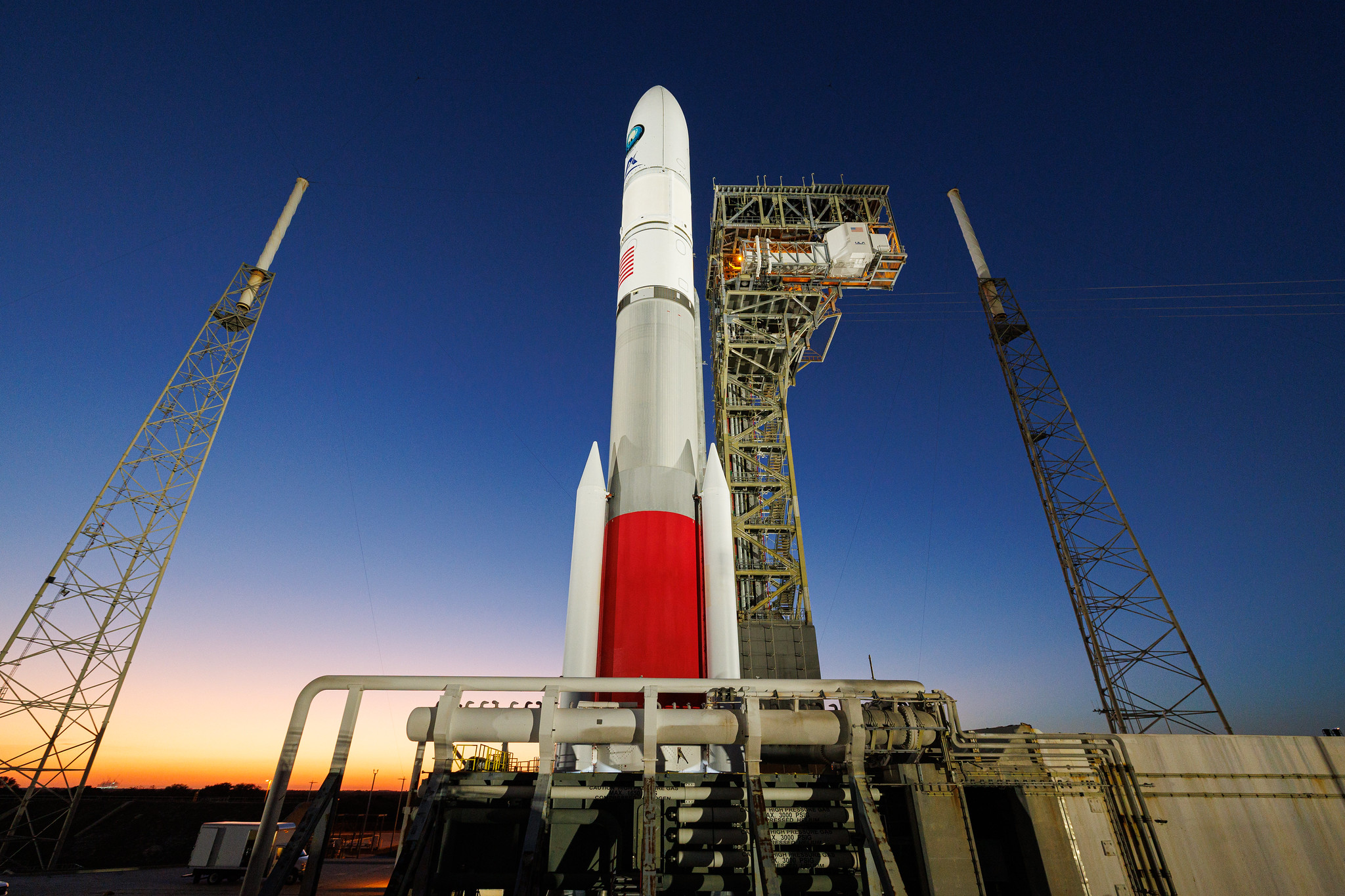
WASHINGTON — U.S. Space Force officials are working to reshuffle launch plans for a slate of national security missions after United Launch Alliance’s Vulcan rocket was sidelined by a booster anomaly that could take months to resolve.
At a March 25 hearing of the House Armed Services Committee’s strategic forces subcommittee, lawmakers pressed Pentagon officials on the fallout from the Feb. 12 launch issue, with Chairman Rep. Scott DesJarlais (R., Tenn.) pointing to what “will probably be at least a six month delay to any Vulcan launch.”
The Vulcan rocket experienced a performance anomaly on one of its solid rocket boosters shortly after liftoff on the USSF-87 mission. Despite the issue, the rocket and its Centaur upper stage delivered the payload to geosynchronous orbit as planned. The Space Force subsequently paused additional Vulcan national security launches pending the outcome of a joint investigation with ULA.
Lt. Gen. Douglas Schiess, deputy chief of space operations, told lawmakers the service is now assessing how to manage the disruption.
“First off, we were very concerned about this, but we were very happy that the satellites were placed in the proper orbit and would be able to perform their missions,” Schiess said. He added that officials are “actively looking through what the impacts will be.”
The Space Force has already reassigned one GPS satellite launch from ULA to SpaceX, and more missions could face delays unless alternative launch options are found. Vulcan had been expected to carry several high-priority payloads this year, including a next-generation missile warning satellite, a wideband communications satellite and intelligence spacecraft for the National Reconnaissance Office.
Only ULA and SpaceX are currently certified to launch national security missions, limiting near-term flexibility. Blue Origin’s New Glenn rocket is working toward certification but must complete additional flights before it can be cleared for such missions, and its timeline remains uncertain.
“We are actively looking at several launches coming up to see what we can do,” Schiess said. “Can we extend the current satellites that are on orbit, and what we can do to maybe move other satellites to different providers?”
Thomas Ainsworth, performing the duties of assistant secretary of the Air Force for space acquisition and integration, said the Pentagon is examining a range of options, including rideshare opportunities and reassignment of missions where possible.
“We are looking at different options,” Ainsworth said, adding that program executives have been directed to explore ways to maintain delivery of critical capabilities.
At the same time, the Space Force and the National Reconnaissance Office are working with ULA and its parent companies, Boeing and Lockheed Martin, to resolve the issue.
“The investigation is still ongoing, but we are very focused on getting the fleet up and running,” Ainsworth said.