• Home
  • About
  • FAQ
  • Feeds
  • Glossary
  • Contact
Tours In Space
  • Home
  • Start Here
    • Intro to Commercial Spaceflight
    • How to Book a Space Tour
    • Is Space Tourism Safe?
    • Space Travel FAQs
    • View Earth from the Edge
    • What to Pack
  • Preparing for Your Trip
    • Insurance and Legal Waivers
    • Physical and Medical Requirements
    • Training Programs
    • What to Expect
  • Space Tourism Companies
    • Axiom Space
    • Blue Origin
    • SpaceX
    • Virgin Galactic
    • World View (stratospheric balloon flights)
    • Blue Origin vs Virgin Galactic
    • Comparison Chart: Features, Pricing, Booking
  • Space Tours
    • Custom & Luxury Packages
    • Duration, Training, Costs
    • Experiences
    • Future Moon/Mars Options
    • Orbital Flights
    • Parabolic Flight Experiences
    • Private Missions
    • Stratospheric Balloon Flights
    • Suborbital Flights
    • Zero-Gravity Flights
  • Spaceflight Technologies
    • Space Tourism Balloon
No Result
View All Result
  • Home
  • Start Here
    • Intro to Commercial Spaceflight
    • How to Book a Space Tour
    • Is Space Tourism Safe?
    • Space Travel FAQs
    • View Earth from the Edge
    • What to Pack
  • Preparing for Your Trip
    • Insurance and Legal Waivers
    • Physical and Medical Requirements
    • Training Programs
    • What to Expect
  • Space Tourism Companies
    • Axiom Space
    • Blue Origin
    • SpaceX
    • Virgin Galactic
    • World View (stratospheric balloon flights)
    • Blue Origin vs Virgin Galactic
    • Comparison Chart: Features, Pricing, Booking
  • Space Tours
    • Custom & Luxury Packages
    • Duration, Training, Costs
    • Experiences
    • Future Moon/Mars Options
    • Orbital Flights
    • Parabolic Flight Experiences
    • Private Missions
    • Stratospheric Balloon Flights
    • Suborbital Flights
    • Zero-Gravity Flights
  • Spaceflight Technologies
    • Space Tourism Balloon
No Result
View All Result
Tours In Space
No Result
View All Result
Home Uncategorized

Telesat eyes defense role with laser comms test ahead of LEO debut

Ensign by Ensign
March 26, 2026
in Uncategorized
0
Telesat eyes defense role with laser comms test ahead of LEO debut
189
SHARES
1.5k
VIEWS
Share on FacebookShare on Twitter
image

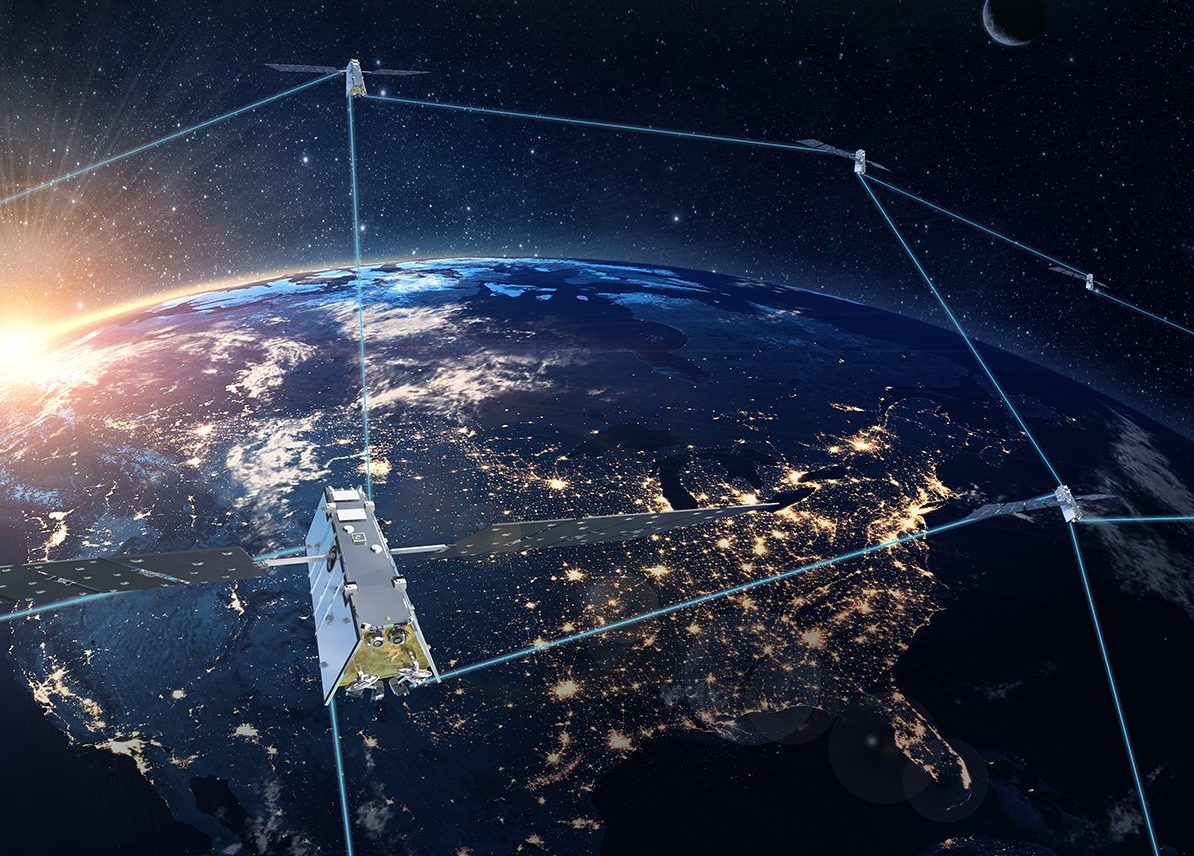
WASHINGTON — As it prepares to launch the first satellites for its Lightspeed low Earth orbit constellation, Telesat is sharpening its pitch to U.S. defense customers with a planned laser communications demonstration and changes to its system design aimed at military compatibility.

The Canadian satellite operator is positioning Lightspeed as a high-capacity data transport layer for defense networks, capable of moving large volumes of information with low latency while reducing exposure to jamming or interception. The effort includes adding military Ka-band frequencies — aligned with the Pentagon’s existing wideband satcom systems — and testing optical inter-satellite links under a NASA contract.

Chuck Cynamon, president of Telesat Government Solutions, said the company’s upcoming demonstration will be a key proof point as the Pentagon and U.S. Space Force look for ways to move data rapidly across global networks.

“There’s a demand for hybrid architectures,” Cynamon said in an interview at the Satellite 2026 conference.

Pentagon data ambitions

The Space Force is developing what it calls a “space data network,” a system intended to connect satellites, sensors and weapons into a unified, real-time architecture. The Pentagon’s Golden Dome missile defense initiative would depend on that network as its core transport layer, routing data between sensors, command systems and interceptors in near real time.

Subscribe Today
Get unlimited access to SpaceNews.com and our digital magazine with a monthly, quarterly or annual subscription.

Discounted Access
Learn more about savings available for academic, government and military readers on SpaceNews subscriptions.

Program officials have signaled growing demand for such capacity. Gen. Michael Guetlein, who leads Golden Dome, said recently that funding for the space data network is increasing.

“There’s probably no limit on how much capability is going to be needed on orbit from a space data network for the data needs of Golden Dome … to be able to track,target, track and engage targets,” Cynamon said.

Telesat is seeking to align Lightspeed with those requirements, arguing that commercial networks can supplement government systems and help close near-term gaps in capacity.

Laser links as a proving ground

The company plans to launch its first two Lightspeed satellites in December and conduct a laser communications relay demonstration in 2027 under a $30 million NASA contract awarded in 2022.

The test will simulate a data relay scenario in orbit: one satellite will act as a mission spacecraft, the other as a relay node. A second phase will involve a Planet Labs imaging satellite equipped with an optical terminal, which will send data through the Lightspeed system to a ground station.

Each of the planned 198 Lightspeed satellites will carry four optical terminals supplied by Tesat-Spacecom, enabling high-speed links between spacecraft.

Cynamon said the demonstration is intended to validate how data can be routed in space under conditions similar to those required for missile defense and other high-demand applications.

“This is the kind of capability with direct applicability to what perhaps Space Force might want for a more diverse space data network, certainly the need for moving vast quantities of data with low latency from sensors to shooters for Golden Dome,” he said.

Optical links are already used by major commercial constellations, including those operated by SpaceX and Amazon, but scaling them reliably across a full network remains technically challenging. A successful demonstration could strengthen Telesat’s standing with government customers.

Positioning for hybrid networks

Cynamon said the company intends to offer the government a “capacity pool” model, allowing it to access Lightspeed’s bandwidth — and potentially optical links—without owning satellites.

“We could also offer a pool of optical connections on a daily, weekly or monthly basis,” he said.

The approach reflects a broader shift toward hybrid architectures that blend military and commercial infrastructure.

Telesat expects to begin commercial service in 2028 after deploying the first 156 satellites, with launches contracted to SpaceX in batches of roughly 15 spacecraft.

The company is entering a competitive field dominated by SpaceX’s Starlink and Starshield, and emerging systems such as Amazon LEO. Both competitors are also pursuing defense business and deploying optical inter-satellite links.

At the same time, new demand drivers are emerging.

Cynamon said concepts for orbital data centers could further increase pressure on satellite networks to expand capacity and move data more quickly between space and the ground.

“I think it’s going to put pressure on the ability to have large pipes and land data quickly on the ground,” he said.

Tags: NASASpaceXStarlink
No Result
View All Result

Recent Posts

  • Space Force weighs launch alternatives as Vulcan faces potential months-long grounding
  • Office of Space Commerce releases mission authorization proposal
  • Terran Orbital Introduces New Star Tracker Product Line at SATSHOW 2026
  • ‘It was an incredible moment’: One photographer’s journey to capture the March 3 total lunar eclipse over Malaysia
  • Telesat eyes defense role with laser comms test ahead of LEO debut

Categories

  • Excursions
  • Kepler Mission
  • NASA
  • NASA Breaking News
  • Physical Preparation
  • Preparation
  • Space News
  • Space Station News
  • Spacewalks
  • Tours
  • Uncategorized
  • Weightlessness Training
  • What Not to Pack
  • What to Pack

Meta

  • Log in
  • Entries feed
  • Comments feed
  • WordPress.org
  • Home
  • Start Here
  • Preparing for Your Trip
  • Space Tourism Companies
  • Space Tours
  • Contact

© 2026 JNews - Premium WordPress news & magazine theme by Jegtheme.

No Result
View All Result
  • About
  • Contact
  • Feeds
  • Frequently Asked Questions
  • Preparing for Your Trip
    • Insurance and Legal Waivers
    • Physical and Medical Requirements
    • Training Programs
    • What to Expect
  • Privacy Policy
  • Space Tourism Companies
    • Axiom Space
    • Blue Origin
    • Blue Origin vs Virgin Galactic
    • Comparison Chart: Features, Pricing, Booking
    • SpaceX
    • Virgin Galactic
    • World View (stratospheric balloon flights)
  • Space Tours
    • Custom & Luxury Packages
    • Duration, Training, Costs
    • Experiences
    • Future Moon/Mars Options
    • Orbital Flights
    • Parabolic Flight Experiences
    • Private Missions
    • Stratospheric Balloon Flights
    • Suborbital Flights
    • Zero-Gravity Flights
  • Spaceflight Technologies
    • Space Tourism Balloon
  • Start Here
    • How to Book a Space Tour
    • Intro to Commercial Spaceflight
    • Is Space Tourism Safe?
    • Space Travel FAQs
    • View Earth from the Edge
    • What to Pack
  • Tours in Space is your launchpad to the world of space tourism

© 2026 JNews - Premium WordPress news & magazine theme by Jegtheme.