

TAMPA, Fla. — Starcloud has raised $170 million to accelerate development of its next-generation spacecraft, reaching a $1.1 billion valuation as it awaits permission to deploy an 88,000-strong orbital data center network.
The Redmond, Washington-based startup said March 30 that the Series A round makes it the fastest company in Y Combinator’s history to reach unicorn status, coming 17 months after completing an accelerator that has backed more than 5,000 ventures since 2005.
The round brings Starcloud’s total capital raised to about $200 million since its founding in 2024 to build space-based data centers that bypass terrestrial constraints threatening artificial intelligence computing growth.
From smallsat to multi-ton spacecraft
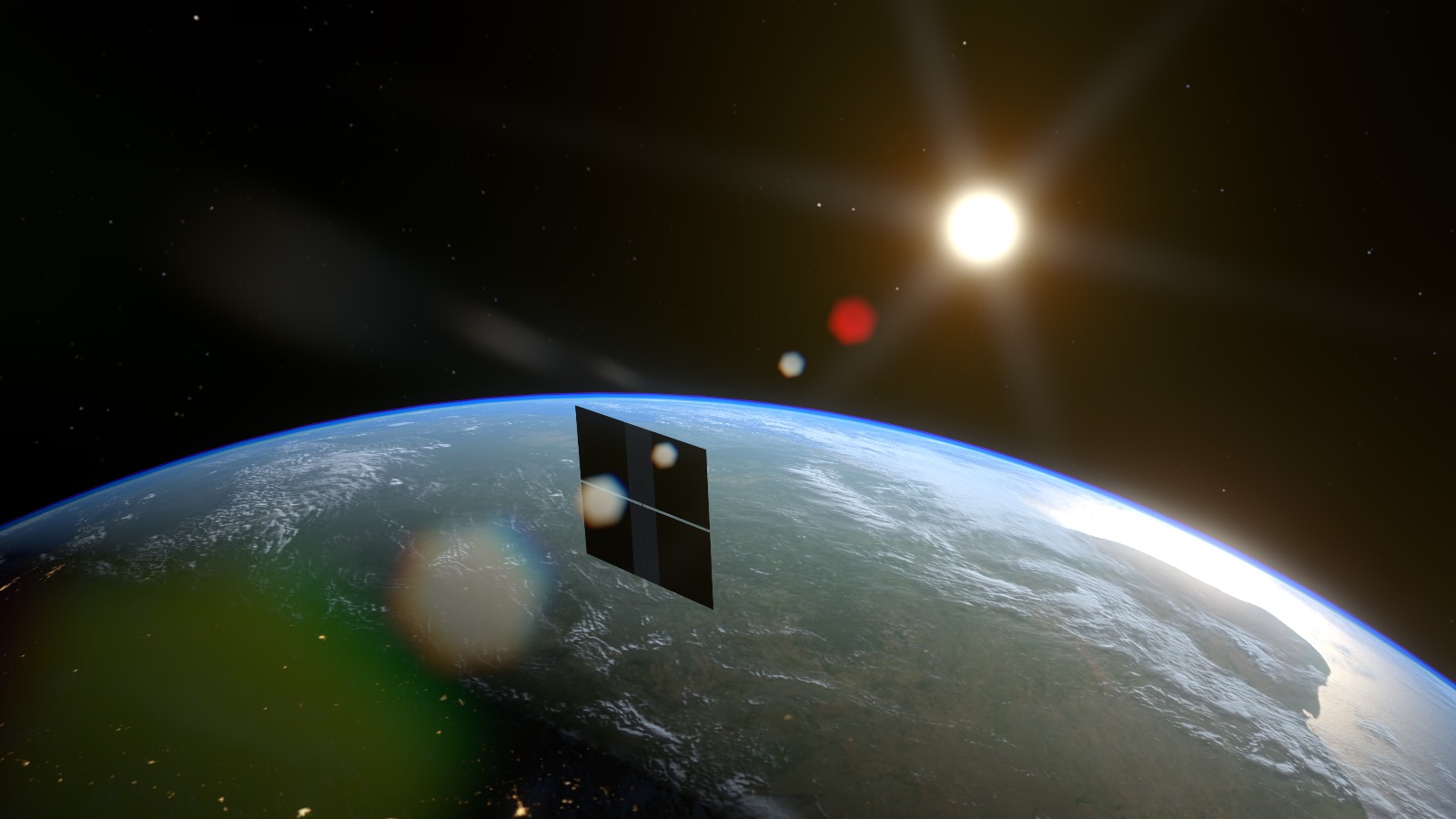
Starcloud plans to use the funding to scale production of Starcloud-3, a three-ton spacecraft that marks a significant increase from the 60-kilogram Starcloud-1 that launched in November and the 450-kilogram Starcloud-2 slated to fly later this year.
Philip Johnston, Starcloud’s co-founder and CEO, said the venture plans to conduct research and development and start setting up production lines for the 200-kilowatt-class spacecraft at a new 3,000-square-meter facility in nearby Woodinville.
“We have to build it in-house because the cost equation is brutal,” said Johnston, who previously worked on satellite projects for national space agencies at consultancy McKinsey & Co.
He said Starcloud-3’s relatively simple and cost-effective design make it well-suited for high-volume manufacturing.
“It’s solar panels, radiators, chips and two optical terminals,” he told <em>SpaceNews in an interview, describing a stripped-down low Earth orbit architecture relying on intersatellite data links with third-party broadband systems.
Betting on Starship
The company plans to deploy Starcloud-3 satellites using the heavy-lift Starship vehicle that SpaceX is developing.
A single Starship launch could carry about 50 Starcloud-3 satellites, according to Johnston, equivalent to roughly 10 megawatts of computing capacity per launch.
The long-term vision calls for launching hundreds of satellites per month to add tens of gigawatts of capacity annually, depending on how quickly Starship ramps up.
“As soon as Starship is ready, we’ll be ready,” Johnston said, adding that the company has already welded up the chassis of a Starcloud-3.
He said Starcloud could begin flying on Starship in the mid- to late-2028 timeframe, based on expectations that SpaceX will be ready to deploy larger Starlink V3 broadband satellites on the vehicle by early next year, with commercial payloads following about 18 to 24 months later.
Chasing space-based compute
Starcloud is one of several companies pursuing orbital data centers, including SpaceX, which is seeking to deploy up to one million of them.
SpaceX CEO Elon Musk outlined plans March 21 for an initial “AI Sat Mini” spacecraft that would provide 100 kilowatts of power for onboard AI processors. SpaceX acquired Musk’s artificial intelligence company xAI in February as part of its push into orbital data centers, with its Grok model likely to be a key user of in-orbit computing capacity.
Rather than operating its own AI workloads, Starcloud is positioning itself as an infrastructure provider. Customers would be able to install their own computing hardware and services, Johnston said, similar to leasing capacity in terrestrial data centers.
Starcloud-1 demonstrated the use of an Nvidia H100 processor in orbit to run AI workloads after launching last year on a SpaceX rideshare mission.
Starcloud-2 is set to be the venture’s first satellite to run commercial cloud workloads, including for early customer Crusoe, an AI infrastructure provider, alongside partnerships with Nvidia and cloud providers AWS and Google.
Johnston said Starcloud-2 will generate about 8 kilowatts of power — around 100 times more than Starcloud-1 — and feature the largest commercial deployable radiator sent to space.
It will also be Starcloud’s first spacecraft to generate more revenue than it costs to design, build and launch, according to Johnston, citing demand from Department of Defense and Earth observation customers.
“We’ve got a whole bunch of hosted payloads on there which actually cover the whole cost of the development,” he said.
“Until Starship is flying we can basically tread water launching [Starcloud-2] on Falcon 9.”
Investor backing
The Series A round was led by venture capital firm Benchmark and EQT Ventures, a private equity firm with more than $100 billion in assets under management, including more than 70 data centers.
Additional investors included Macquarie Capital, NFX, Nebular, Adjacent, 776 Ventures, Fuse Ventures, Manhattan West and Monolith Power Systems, alongside Y Combinator.
Angel investors joining the round included former Boeing CEO Dennis Muilenburg, former Starbucks CEO Kevin Johnson and retired U.S. Air Force Gen. Stephen Wilson.
Benchmark partner Chetan Puttagunta will join Starcloud’s board as part of the investment.