• Home
  • About
  • FAQ
  • Feeds
  • Glossary
  • Contact
Tours In Space
  • Home
  • Start Here
    • Intro to Commercial Spaceflight
    • How to Book a Space Tour
    • Is Space Tourism Safe?
    • Space Travel FAQs
    • View Earth from the Edge
    • What to Pack
  • Preparing for Your Trip
    • Insurance and Legal Waivers
    • Physical and Medical Requirements
    • Training Programs
    • What to Expect
  • Space Tourism Companies
    • Axiom Space
    • Blue Origin
    • SpaceX
    • Virgin Galactic
    • World View (stratospheric balloon flights)
    • Blue Origin vs Virgin Galactic
    • Comparison Chart: Features, Pricing, Booking
  • Space Tours
    • Custom & Luxury Packages
    • Duration, Training, Costs
    • Experiences
    • Future Moon/Mars Options
    • Orbital Flights
    • Parabolic Flight Experiences
    • Private Missions
    • Stratospheric Balloon Flights
    • Suborbital Flights
    • Zero-Gravity Flights
  • Spaceflight Technologies
    • Space Tourism Balloon
No Result
View All Result
  • Home
  • Start Here
    • Intro to Commercial Spaceflight
    • How to Book a Space Tour
    • Is Space Tourism Safe?
    • Space Travel FAQs
    • View Earth from the Edge
    • What to Pack
  • Preparing for Your Trip
    • Insurance and Legal Waivers
    • Physical and Medical Requirements
    • Training Programs
    • What to Expect
  • Space Tourism Companies
    • Axiom Space
    • Blue Origin
    • SpaceX
    • Virgin Galactic
    • World View (stratospheric balloon flights)
    • Blue Origin vs Virgin Galactic
    • Comparison Chart: Features, Pricing, Booking
  • Space Tours
    • Custom & Luxury Packages
    • Duration, Training, Costs
    • Experiences
    • Future Moon/Mars Options
    • Orbital Flights
    • Parabolic Flight Experiences
    • Private Missions
    • Stratospheric Balloon Flights
    • Suborbital Flights
    • Zero-Gravity Flights
  • Spaceflight Technologies
    • Space Tourism Balloon
No Result
View All Result
Tours In Space
No Result
View All Result
Home Uncategorized

Swift spacecraft reorientation buys time for reboost mission

Ensign by Ensign
April 3, 2026
in Uncategorized
0
Swift spacecraft reorientation buys time for reboost mission
189
SHARES
1.5k
VIEWS
Share on FacebookShare on Twitter
image

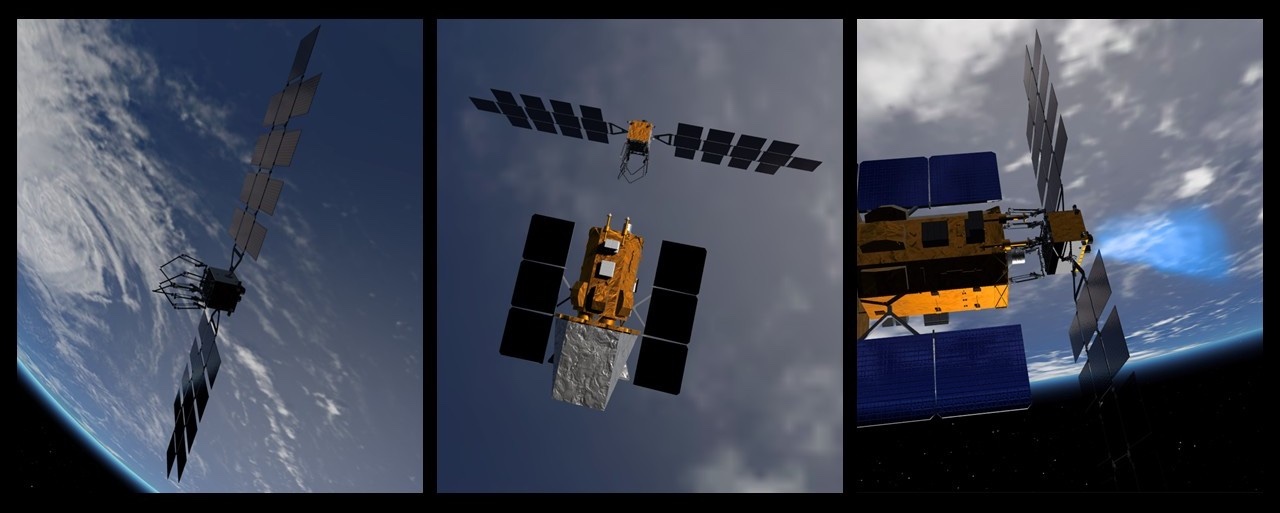
WASHINGTON — NASA modified operations of an astrophysics spacecraft in a decaying orbit to buy more time for a mission later this year that will attempt to raise its orbit.

NASA announced in September it selected Katalyst Space to develop a spacecraft that will rendezvous with the Neil Gehrels Swift Observatory and raise its orbit. Swift, launched in 2004, is in a decaying orbit, and the $30 million reboost mission would keep the spacecraft from reentering.

At an astronomy conference in early January, Jamie Kennea, a research professor at Penn State University who is head of Swift’s science operations team, said models projected that Swift’s orbit would decay below 300 kilometers, the minimum altitude for the reboost mission, sometime between mid-October 2026 and January 2027. That provided several months of margin for Katalyst’s Link spacecraft, scheduled to launch as soon as June 1 on a Northrop Grumman Pegasus XL.

Sign up for First Up: Get the latest updates on SpaceX, Artemis, NASA and more. From Jeff Foust, First Up is a recap of the day’s space industry news, including civil, commercial, and military space developments.

By submitting this form, you agree to the SpaceNews privacy policy and terms and conditions and to receive email from us and our partners. You can opt-out at any time.

However, in a presentation to the National Academies’ Committee on Astronomy and Astrophysics March 26, Kennea said updated models in January moved up the date when Swift would pass below 300 kilometers. There was now a 10% chance Swift would decay below 300 kilometers in late May, before the Katalyst mission would launch, and a 90% chance of doing so by mid-July.

“With this news in hand, we had to do something about it,” he said. On Feb. 10, the spacecraft halted most of its science operations so that it could be reconfigured to reduce drag.

Engineers had developed a plan to reorient Swift when it passed through an atmospheric bulge on the sunward side of its orbit, limiting science operations for 20 minutes at a time. “With the existence of this very dramatic prediction of orbit decay, we decided to move into doing it for the entire orbit,” he said.

The goal of the reorientation of the spacecraft was to reduce drag by 30%, and tracking data shows that the rate of orbital decay has slowed as a result. A new model of the spacecraft’s orbit now predicts Swift has a 10% chance of reaching the 300-kilometer mark by Aug. 11 and a 90% chance of doing so by Sept. 24.

“We’re really maximizing our chances here,” he said.

The spacecraft reorientation does have drawbacks. In this reconfigured mode, only the spacecraft’s Burst Alert Telescope, which is designed to detect gamma-ray bursts, is in operation. Other instruments, which require the spacecraft to reorient itself, have stopped operations.

Kennea said that, if the Katalyst mission is successful in raising Swift’s orbit, those instruments will be able to resume observations. The instruments themselves will likely be turned off during the reboost, requiring some time afterward to turn them on and recalibrate them before resuming science operations.

“I feel like this is going to be a phoenix-from-the-ashes situation where the mission starts anew,” he said.

That depends, though, on Katalyst’s Link spacecraft launching on schedule and being able to dock with and reboost Swift. He said he is not involved in planning for the reboost and did not know how firm that proposed June 1 launch date is.

Earlier in the meeting, Shawn Domagal-Goldman, director of NASA’s astrophysics division, said he had visited a Katalyst facility in Colorado earlier in the month to check on the progress they are making with Link. Engineers there, he said, are working nights and weekends to get the spacecraft ready.

“This team is facing a major hurdle every week between now and mid-April. If they clear all of those hurdles, they’re going to be on a good path to go and boost Swift,” he said. He added a launch at the beginning of June would set up Link to dock with Swift on or around July 4.

“If everything goes well,” Kennea said, “Swift will be as good as it’s always been.”

Tags: NASA
No Result
View All Result

Recent Posts

  • Artemis 2 heads to the moon
  • Swift spacecraft reorientation buys time for reboost mission
  • Former Sierra Space CEO Tom Vice to lead Astrion 
  • Optical terminals still a bottleneck in Pentagon’s proliferated constellation
  • Pentagon awards Raytheon $45 million for GPS ground system as program future is reassessed

Categories

  • Excursions
  • Kepler Mission
  • NASA
  • NASA Breaking News
  • Physical Preparation
  • Preparation
  • Space News
  • Space Station News
  • Spacewalks
  • Tours
  • Uncategorized
  • Weightlessness Training
  • What Not to Pack
  • What to Pack

Meta

  • Log in
  • Entries feed
  • Comments feed
  • WordPress.org
  • Home
  • Start Here
  • Preparing for Your Trip
  • Space Tourism Companies
  • Space Tours
  • Contact

© 2026 JNews - Premium WordPress news & magazine theme by Jegtheme.

No Result
View All Result
  • About
  • Contact
  • Feeds
  • Frequently Asked Questions
  • Preparing for Your Trip
    • Insurance and Legal Waivers
    • Physical and Medical Requirements
    • Training Programs
    • What to Expect
  • Privacy Policy
  • Space Tourism Companies
    • Axiom Space
    • Blue Origin
    • Blue Origin vs Virgin Galactic
    • Comparison Chart: Features, Pricing, Booking
    • SpaceX
    • Virgin Galactic
    • World View (stratospheric balloon flights)
  • Space Tours
    • Custom & Luxury Packages
    • Duration, Training, Costs
    • Experiences
    • Future Moon/Mars Options
    • Orbital Flights
    • Parabolic Flight Experiences
    • Private Missions
    • Stratospheric Balloon Flights
    • Suborbital Flights
    • Zero-Gravity Flights
  • Spaceflight Technologies
    • Space Tourism Balloon
  • Start Here
    • How to Book a Space Tour
    • Intro to Commercial Spaceflight
    • Is Space Tourism Safe?
    • Space Travel FAQs
    • View Earth from the Edge
    • What to Pack
  • Tours in Space is your launchpad to the world of space tourism

© 2026 JNews - Premium WordPress news & magazine theme by Jegtheme.