• Home
  • About
  • FAQ
  • Feeds
  • Glossary
  • Contact
Tours In Space
  • Home
  • Start Here
    • Intro to Commercial Spaceflight
    • How to Book a Space Tour
    • Is Space Tourism Safe?
    • Space Travel FAQs
    • View Earth from the Edge
    • What to Pack
  • Preparing for Your Trip
    • Insurance and Legal Waivers
    • Physical and Medical Requirements
    • Training Programs
    • What to Expect
  • Space Tourism Companies
    • Axiom Space
    • Blue Origin
    • SpaceX
    • Virgin Galactic
    • World View (stratospheric balloon flights)
    • Blue Origin vs Virgin Galactic
    • Comparison Chart: Features, Pricing, Booking
  • Space Tours
    • Custom & Luxury Packages
    • Duration, Training, Costs
    • Experiences
    • Future Moon/Mars Options
    • Orbital Flights
    • Parabolic Flight Experiences
    • Private Missions
    • Stratospheric Balloon Flights
    • Suborbital Flights
    • Zero-Gravity Flights
  • Spaceflight Technologies
    • Space Tourism Balloon
No Result
View All Result
  • Home
  • Start Here
    • Intro to Commercial Spaceflight
    • How to Book a Space Tour
    • Is Space Tourism Safe?
    • Space Travel FAQs
    • View Earth from the Edge
    • What to Pack
  • Preparing for Your Trip
    • Insurance and Legal Waivers
    • Physical and Medical Requirements
    • Training Programs
    • What to Expect
  • Space Tourism Companies
    • Axiom Space
    • Blue Origin
    • SpaceX
    • Virgin Galactic
    • World View (stratospheric balloon flights)
    • Blue Origin vs Virgin Galactic
    • Comparison Chart: Features, Pricing, Booking
  • Space Tours
    • Custom & Luxury Packages
    • Duration, Training, Costs
    • Experiences
    • Future Moon/Mars Options
    • Orbital Flights
    • Parabolic Flight Experiences
    • Private Missions
    • Stratospheric Balloon Flights
    • Suborbital Flights
    • Zero-Gravity Flights
  • Spaceflight Technologies
    • Space Tourism Balloon
No Result
View All Result
Tours In Space
No Result
View All Result
Home Uncategorized

Optical terminals still a bottleneck in Pentagon’s proliferated constellation

Ensign by Ensign
April 3, 2026
in Uncategorized
0
Optical terminals still a bottleneck in Pentagon’s proliferated constellation
189
SHARES
1.5k
VIEWS
Share on FacebookShare on Twitter
image

ARLINGTON, Va. — When 21 Lockheed Martin satellites for the Space Development Agency’s Tracking Layer Tranche 1 launched Oct. 15, each carried three laser communication terminals instead of the planned four, reflecting a shortfall in the supply of optical crosslink hardware.

The satellites rely on optical communications terminals, or OCTs, to exchange data via laser links, forming the mesh network at the core of SDA’s architecture. With fewer terminals on board, the spacecraft can still operate but with reduced crosslink capacity and less flexibility in routing data across the constellation.

The gap reflects a broader supply issue. For this plane of satellites, Tesat-Spacecom delivered 42 terminals, while CACI provided only 21.

Sign up for First Up: Get the latest updates on SpaceX, Artemis, NASA and more. From Jeff Foust, First Up is a recap of the day’s space industry news, including civil, commercial, and military space developments.

By submitting this form, you agree to the SpaceNews privacy policy and terms and conditions and to receive email from us and our partners. You can opt-out at any time.

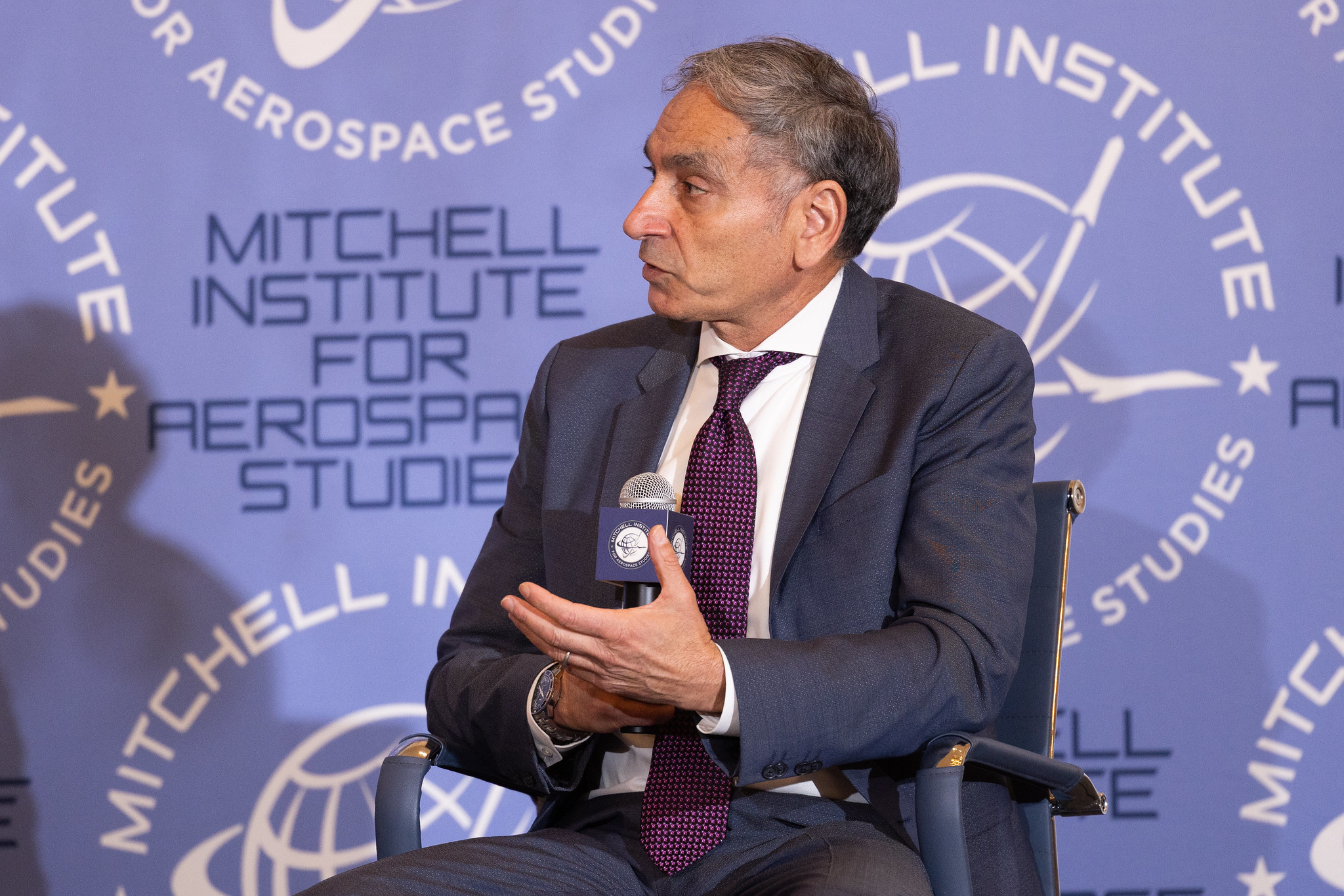
SDA acting director Gurpartap “GP” Sandhoo acknowledged the constraint, describing optical terminals as an ongoing bottleneck in the agency’s push to deploy a large constellation.

“From an optical communications terminal perspective, we’re not there yet on how many we need,” Sandhoo said April 1 at the Mitchell Institute’s Spacepower Security Forum. “The throughput is not there yet.”

“We did launch one plane with three OCTs. They were supposed to have four, but we can do four in the next one,” Sandhoo said.

The supply challenge persists despite the agency placing orders for Tranche 1 Transport Layer satellites more than four years ago, highlighting the difficulty of scaling production of a component that has historically been built in small numbers.

Optical terminals combine precision optics, fine-pointing mechanisms and high-reliability electronics, all of which must be space-qualified. They also must meet strict interoperability requirements so terminals from different vendors can link with one another.

SDA has also found that testing takes longer than expected. The agency partnered with the U.S. Naval Research Laboratory in 2020 to develop a hardware- and software-in-the-loop testbed. That effort evolved into a dedicated optical communications test environment, with NRL running interoperability tests since 2023.

Early Tranche 0 terminals were evaluated for waveform compatibility but not full pointing, acquisition and tracking, the precise functions required to maintain laser links between fast-moving satellites. More comprehensive testing was introduced for Tranche 1, adding further time to the qualification process.

Slower launch cadence

SDA launched two planes of satellites in September and October but is projecting a roughly seven-month gap before the next planned launch, which Sandhoo said is now expected in the May-June timeframe.

Part of the delay stems from longer on-orbit checkouts, prompting the agency to reconsider how frequently it should launch satellites.

“We are starting to make sure we fix those things on the ground,” Sandhoo said, citing software updates, optical terminal performance and thermal management issues identified on orbit.

With regard to laser terminals, industry studies point to structural constraints. A recent report by the Aerospace Industries Association and PwC identified optical inter-satellite links as a key supply chain issue, citing a limited vendor base and fragile component supply chains.

“While these components are critical for satellite communication… the supply of vendors is limited, and the supply chain for parts is complex and fragile,” the report said.

With only a handful of suppliers capable of producing flight-ready terminals, the lack of competition is contributing to longer lead times and higher costs, the report added. SDA’s initial demonstration tranche was delayed by two years, and about half of the participating prime contractors lacked optical crosslink capability.

The agency so far has qualified four suppliers of optical terminals: CACI, Tesat-Spacecom, Skyloom and Mynaric. 

For SDA, which is attempting to deploy hundreds of satellites in rapid cycles, the availability of optical terminals remains a concern. “We plan to be at speed and scale by the time we get to Tranche 2 and Tranche 3,” Sandhoo said.

No Result
View All Result

Recent Posts

  • Artemis 2 heads to the moon
  • Swift spacecraft reorientation buys time for reboost mission
  • Former Sierra Space CEO Tom Vice to lead Astrion 
  • Optical terminals still a bottleneck in Pentagon’s proliferated constellation
  • Pentagon awards Raytheon $45 million for GPS ground system as program future is reassessed

Categories

  • Excursions
  • Kepler Mission
  • NASA
  • NASA Breaking News
  • Physical Preparation
  • Preparation
  • Space News
  • Space Station News
  • Spacewalks
  • Tours
  • Uncategorized
  • Weightlessness Training
  • What Not to Pack
  • What to Pack

Meta

  • Log in
  • Entries feed
  • Comments feed
  • WordPress.org
  • Home
  • Start Here
  • Preparing for Your Trip
  • Space Tourism Companies
  • Space Tours
  • Contact

© 2026 JNews - Premium WordPress news & magazine theme by Jegtheme.

No Result
View All Result
  • About
  • Contact
  • Feeds
  • Frequently Asked Questions
  • Preparing for Your Trip
    • Insurance and Legal Waivers
    • Physical and Medical Requirements
    • Training Programs
    • What to Expect
  • Privacy Policy
  • Space Tourism Companies
    • Axiom Space
    • Blue Origin
    • Blue Origin vs Virgin Galactic
    • Comparison Chart: Features, Pricing, Booking
    • SpaceX
    • Virgin Galactic
    • World View (stratospheric balloon flights)
  • Space Tours
    • Custom & Luxury Packages
    • Duration, Training, Costs
    • Experiences
    • Future Moon/Mars Options
    • Orbital Flights
    • Parabolic Flight Experiences
    • Private Missions
    • Stratospheric Balloon Flights
    • Suborbital Flights
    • Zero-Gravity Flights
  • Spaceflight Technologies
    • Space Tourism Balloon
  • Start Here
    • How to Book a Space Tour
    • Intro to Commercial Spaceflight
    • Is Space Tourism Safe?
    • Space Travel FAQs
    • View Earth from the Edge
    • What to Pack
  • Tours in Space is your launchpad to the world of space tourism

© 2026 JNews - Premium WordPress news & magazine theme by Jegtheme.