• Home
  • About
  • FAQ
  • Feeds
  • Glossary
  • Contact
Tours In Space
  • Home
  • Start Here
    • Intro to Commercial Spaceflight
    • How to Book a Space Tour
    • Is Space Tourism Safe?
    • Space Travel FAQs
    • View Earth from the Edge
    • What to Pack
  • Preparing for Your Trip
    • Insurance and Legal Waivers
    • Physical and Medical Requirements
    • Training Programs
    • What to Expect
  • Space Tourism Companies
    • Axiom Space
    • Blue Origin
    • SpaceX
    • Virgin Galactic
    • World View (stratospheric balloon flights)
    • Blue Origin vs Virgin Galactic
    • Comparison Chart: Features, Pricing, Booking
  • Space Tours
    • Custom & Luxury Packages
    • Duration, Training, Costs
    • Experiences
    • Future Moon/Mars Options
    • Orbital Flights
    • Parabolic Flight Experiences
    • Private Missions
    • Stratospheric Balloon Flights
    • Suborbital Flights
    • Zero-Gravity Flights
  • Spaceflight Technologies
    • Space Tourism Balloon
No Result
View All Result
  • Home
  • Start Here
    • Intro to Commercial Spaceflight
    • How to Book a Space Tour
    • Is Space Tourism Safe?
    • Space Travel FAQs
    • View Earth from the Edge
    • What to Pack
  • Preparing for Your Trip
    • Insurance and Legal Waivers
    • Physical and Medical Requirements
    • Training Programs
    • What to Expect
  • Space Tourism Companies
    • Axiom Space
    • Blue Origin
    • SpaceX
    • Virgin Galactic
    • World View (stratospheric balloon flights)
    • Blue Origin vs Virgin Galactic
    • Comparison Chart: Features, Pricing, Booking
  • Space Tours
    • Custom & Luxury Packages
    • Duration, Training, Costs
    • Experiences
    • Future Moon/Mars Options
    • Orbital Flights
    • Parabolic Flight Experiences
    • Private Missions
    • Stratospheric Balloon Flights
    • Suborbital Flights
    • Zero-Gravity Flights
  • Spaceflight Technologies
    • Space Tourism Balloon
No Result
View All Result
Tours In Space
No Result
View All Result
Home Space News

Only 12 people on Earth saw this ‘ring-of-fire’ eclipse. Here’s how one improvised to capture a once-in-a-lifetime photo from Antarctica

Ensign by Ensign
April 20, 2026
in Space News
0
Only 12 people on Earth saw this ‘ring-of-fire’ eclipse. Here’s how one improvised to capture a once-in-a-lifetime photo from Antarctica
190
SHARES
1.5k
VIEWS
Share on FacebookShare on Twitter

Last week, Artemis 2 astronauts witnessed a total solar eclipse from space, as the Orion spacecraft spent nearly an hour in the moon’s shadow. But, as a remote team at the French-Italian Concordia Research Station recently experienced, you don’t need to travel beyond the moon to see a truly private eclipse.

The Concordia Research Station is the most remote research base in Antarctica, located 750 miles (1207 kilometers) inland at an altitude of 10,600 feet (3,230 meters). The small crew stationed there endures average winter temperatures of -58 degrees Fahrenheit (-50 degrees Celsius), and four months each without seeing the sun rise above the horizon. This region is also one of the driest on Earth — part of Antarctica’s vast polar desert.

Despite its harsh environment, Concordia is an ideal site for a wide range of scientific research, including glaciology, atmospheric science, astronomy and space medicine.


You may like

On Feb. 17 2026, the Concordia team witnessed something likely seen nowhere else on Earth — an annular solar eclipse.

Annular solar eclipses, often called “ring-of-fire” eclipses, occur when the moon passes in front of the sun at a point in its orbit where it appears slightly smaller in the sky. Instead of completely blocking the sun, the moon leaves a bright ring of sunlight visible around its edges.

Unlike total solar eclipses, which reveal the sun’s faint outer atmosphere, annular eclipses are still a form of partial eclipse and require proper eye protection to view safely.

The path of annularity, where the ring-of-fire effect is visible, crossed Antarctica during the Feb. 17 event. It passed over just two inhabited locations: Concordia Research Station and Mirny Station, a Russian base.

Breaking space news, the latest updates on rocket launches, skywatching events and more!

But clouds obscured the view over Mirny.

That left a small group at Concordia as the only people on Earth to witness this eclipse in its full annular form. I spoke to one of them, Andrea Traverso, about the experience.

Traverso arrived at Concordia in November 2025 and will remain there until November 2026. He oversees scientific experiments and monitoring systems across the station, including studies of geomagnetism, seismology and meteorology, as well as investigations into how the upper atmosphere interacts with solar wind.


What to read next

This marks his third “winterover” at the base, following previous stays in 2019 and 2020.

When I asked where he observed the eclipse from, Traverso described the station’s layout — two cylindrical towers with windows facing multiple directions.
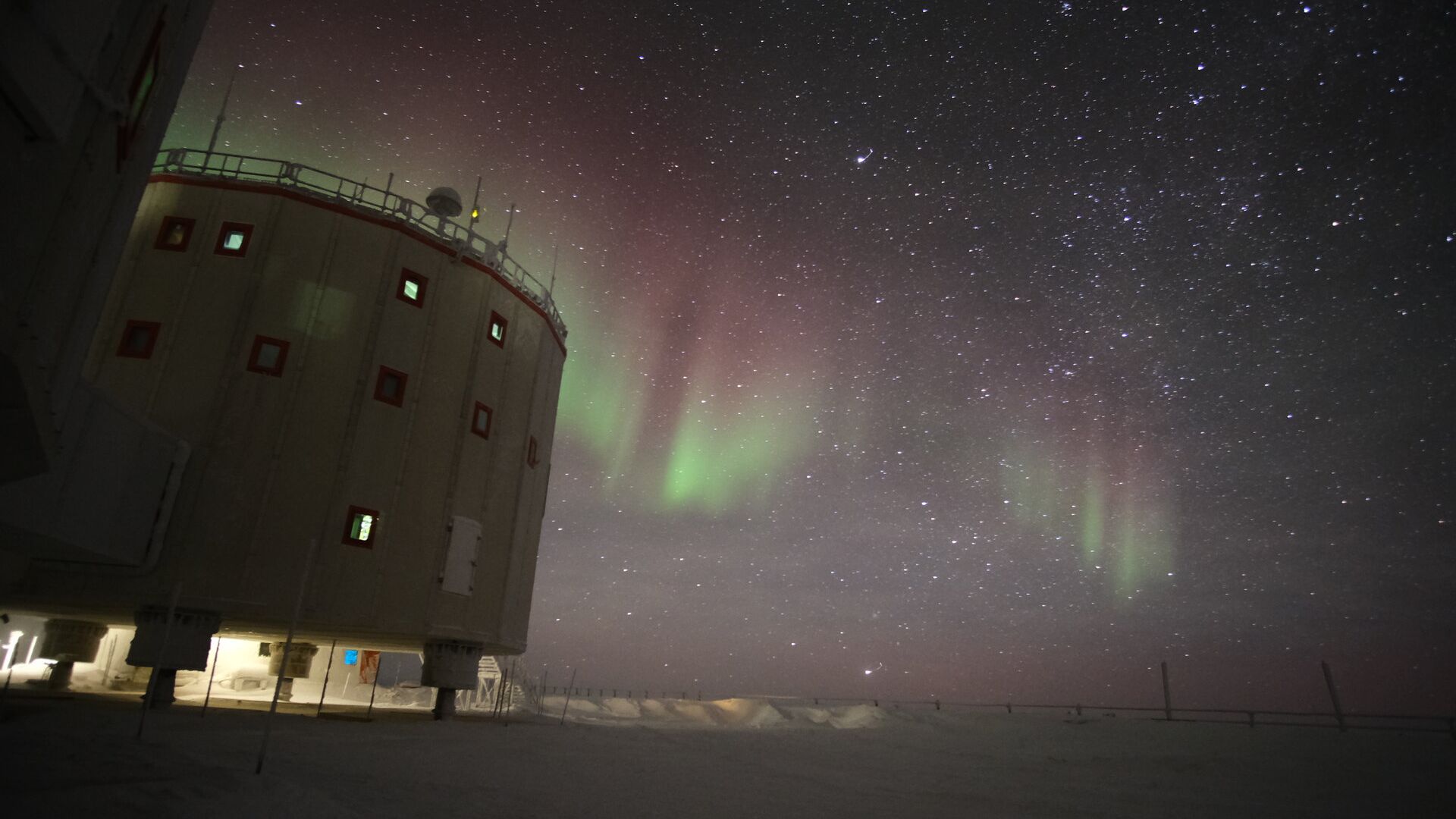
cylindrical building with lots of little windows. the southern lights dance in the sky behind, ribbons of green and magenta against a sky full of stars.

The southern lights or aurora australis seen over Concordia station July 2025. (Image credit: ESA/IPEV/PNRA-N. Purivs/Lacrampe)

During the event, he positioned himself at “a window in perfect alignment with the eclipse,” which offered “many possibilities from a photographic point of view”.

Sheltered from the extreme cold, he simply opened the window to avoid reflections from the glass and began taking photos.

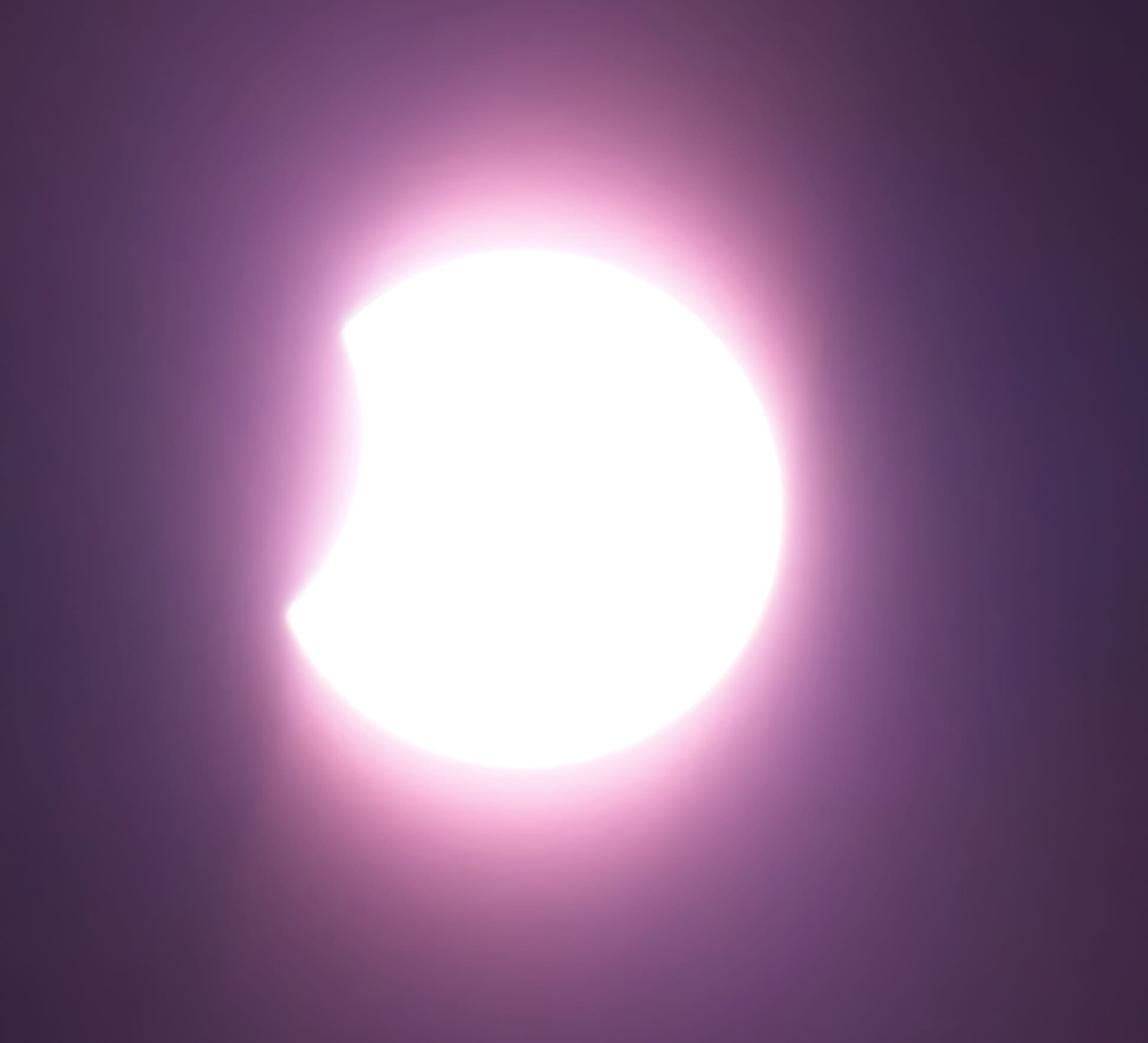
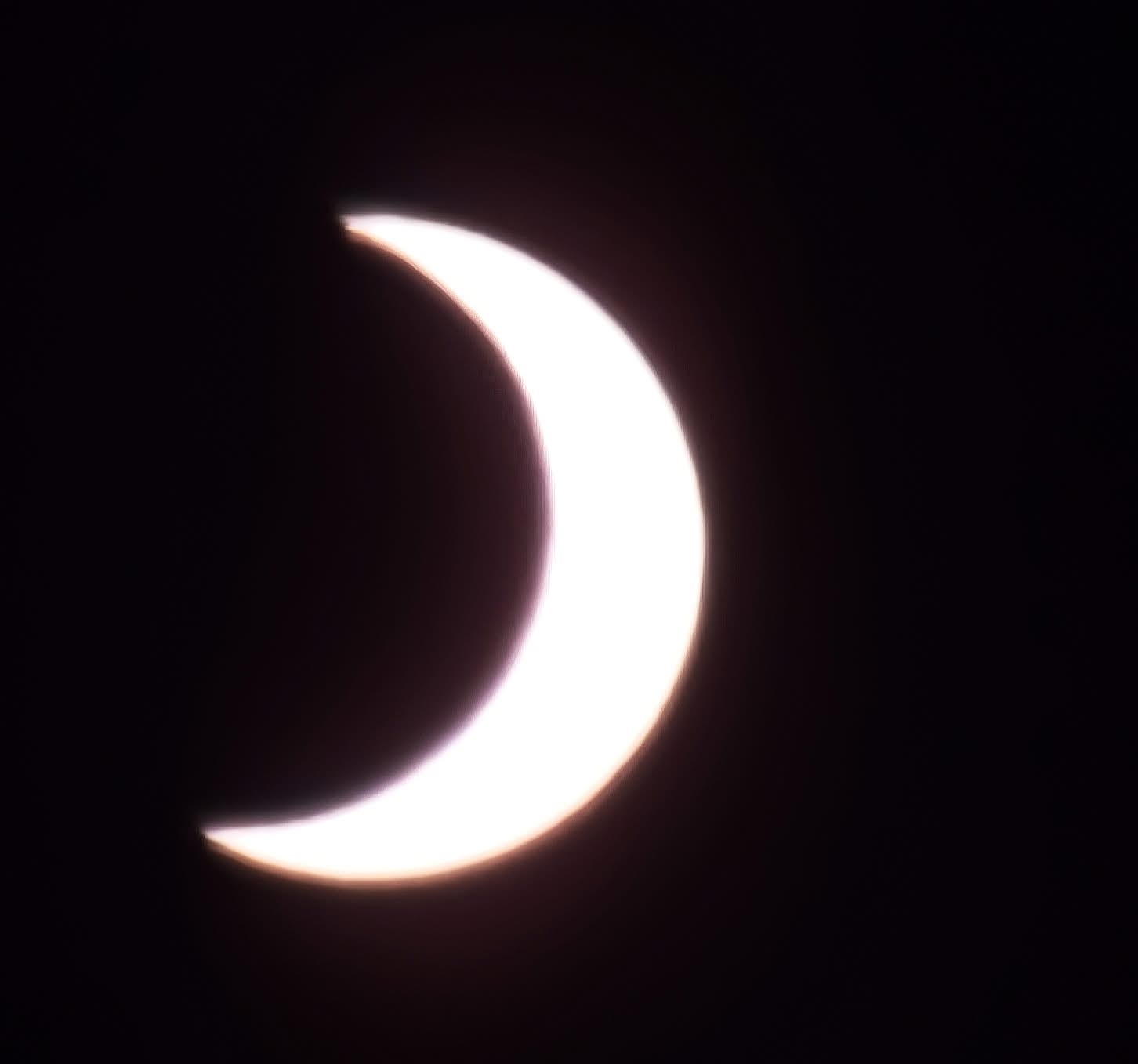
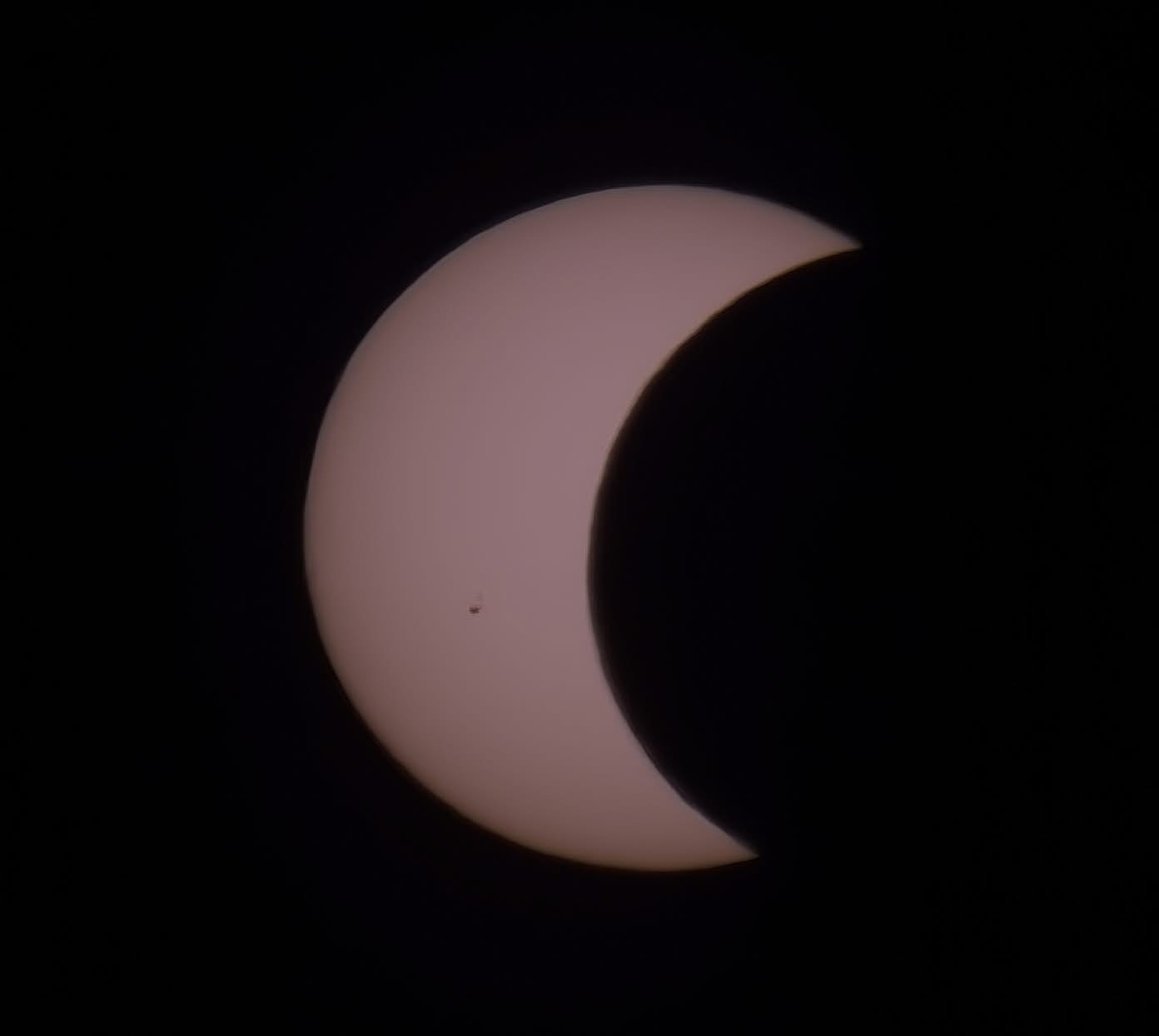
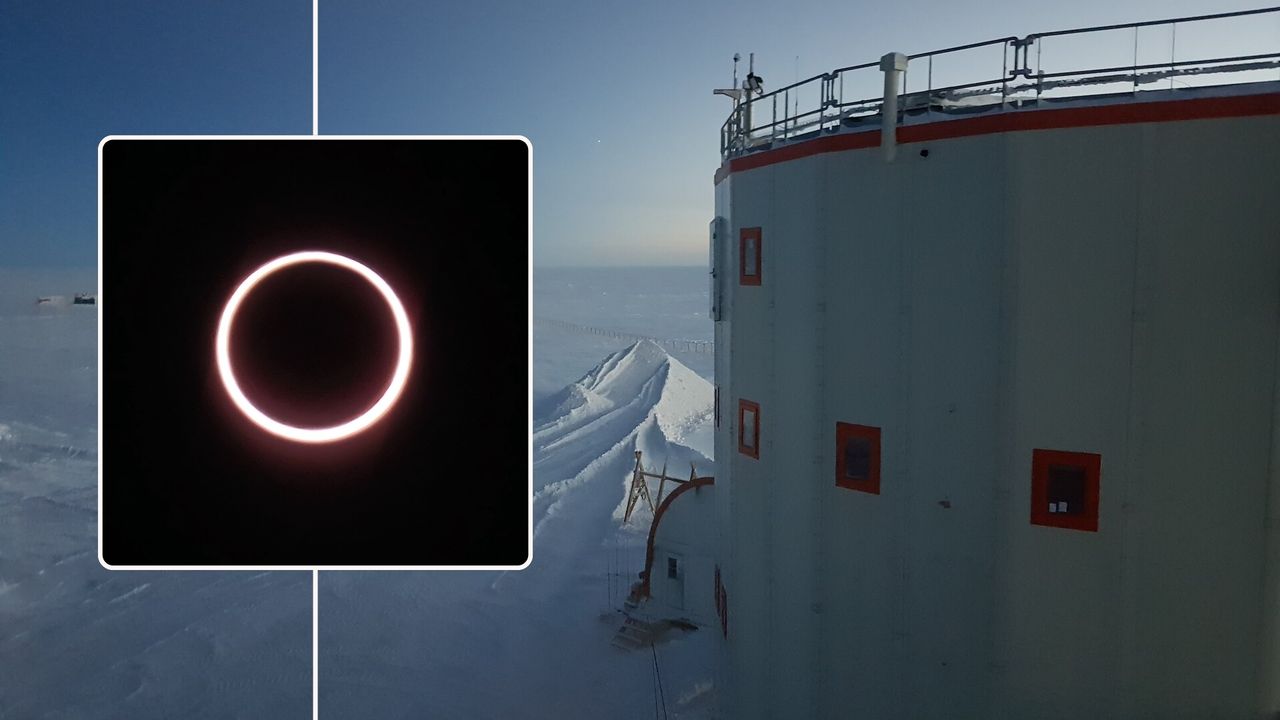
The result was remarkable.

Image 1 of 4
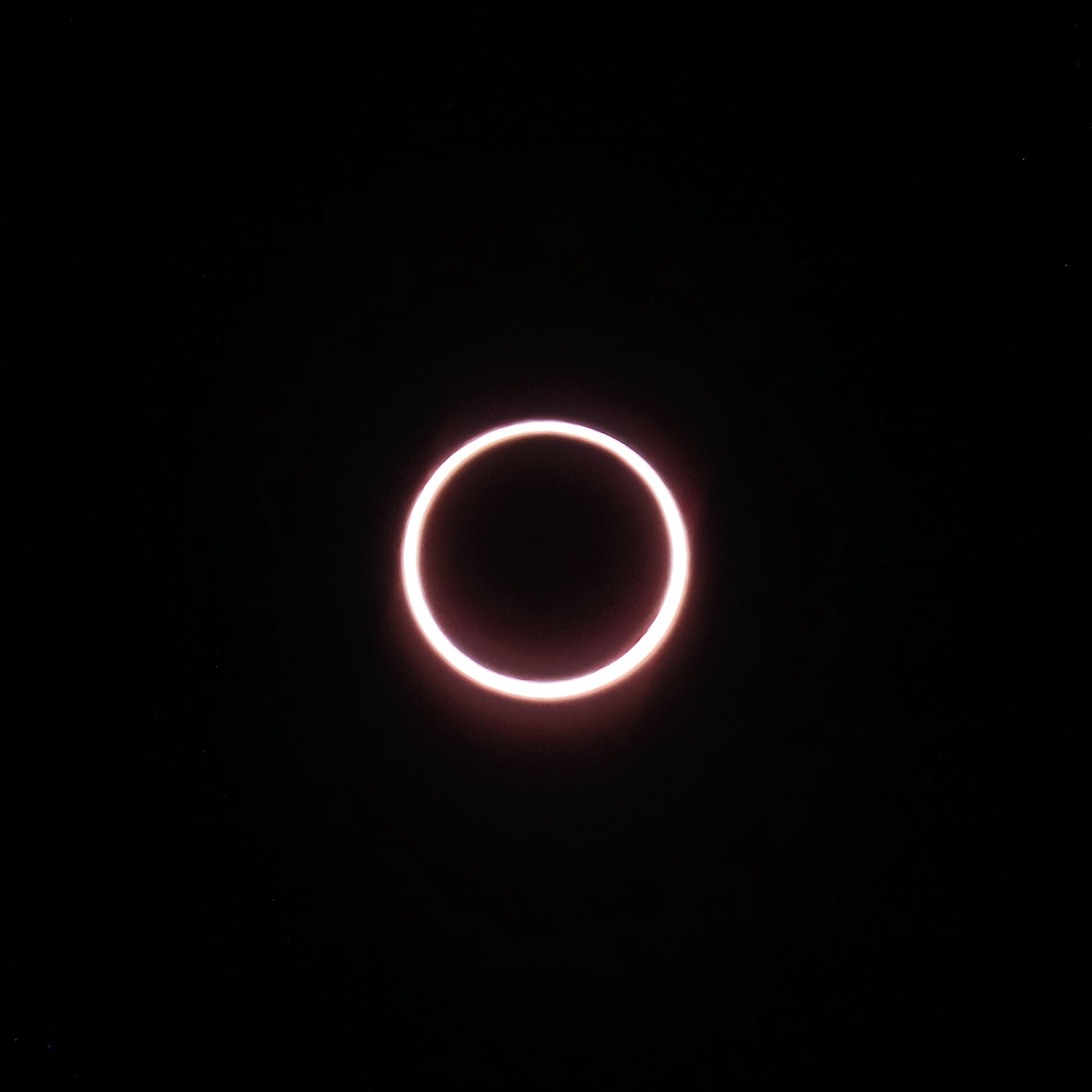
a ring of fire solar eclipse as the moon covers the sun it leaves just a thin ring of light around it.
(Image credit: ESA/IPEV/PNRA-A. Traverso)

close up view of the sun as the moon starts to cover it.
(Image credit: Andrea Traverso)

close up view of the sun appearing as a crescent as the moon starts to cover it.
(Image credit: Andrea Traverso)

close up view of the sun appearing as a crescent as the moon starts to cover it.
(Image credit: Andrea Traverso)

Traverso captured a striking image of the ring-of-fire eclipse that was later shared widely by the European Space Agency.

But it wasn’t until after the event that the full significance of the event came clear.

Traverso contacted other Antarctic stations to ask about their weather conditions. Many, including Mirny, had been clouded out.

No one else had seen it.

It was the he said, that he “became aware of the uniqueness of my observation.”

In a Facebook post translated from Italian, Traverso wrote:

“Yesterday night’s eclipse, photographed by me, visible in this form exclusively from the Italian-French base Concordia in Antarctica. My wonderful white lady also gave me this spectacle that only me and my 11 companions could enjoy live.”
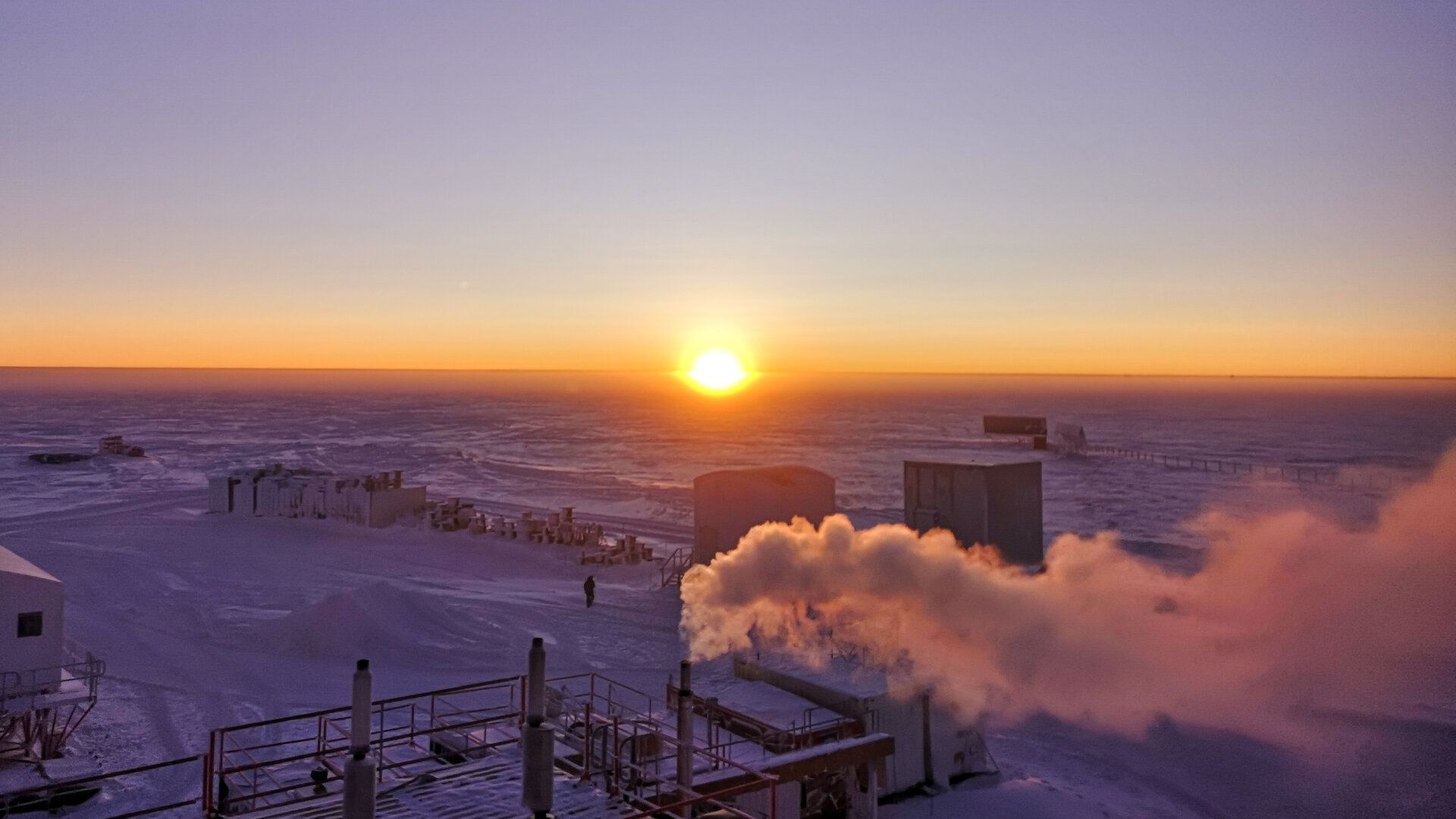
sun is low on the horizon and glowing a deep orange yellow.

The Concordia Research Station experiences four months of darkness a year. (Image credit: ESA/IPEV/PNRA–N. Smith)

Surprisingly, the team had not prepared in advance for the event.

“I wasn’t aware in advance about the eclipse and the possibility of observing it from Concordia,” Traverso said.

Capturing an annular eclipse requires solar filters — similar to eclipse glasses — to safely reduce the sun’s brightness. But none had been specifically set aside for the event.

Instead, Traverso improvised.

He found some sheets of mylar film stored at the base, which had previously been used for solar observations a long time ago and used cardboard and glue to build a makeshift filter for his camera lens.

“The solution proved to be effective,” Traverso said.

Given that his image remains the only known photograph of the eclipse from Earth, it’s hard to argue otherwise.

Tags: rocket launch
No Result
View All Result

Recent Posts

  • ‘Thor’ hammered down 15 years ago, and it’s still the only Marvel movie to do the God of Thunder justice
  • Sci-fi RPG ‘Exodus”s combat looks and feels like ‘Mass Effect’, but the dialogue system could be a big upgrade (video)
  • Nikon Action 7×50 binoculars review
  • Why does NASA’s Curiosity rover have a ‘lucky penny’ on Mars? | Space photo of the day for May 6, 2026
  • Voyager ‘very optimistic’ about Starlab amid potential NASA changes

Categories

  • Excursions
  • Kepler Mission
  • NASA
  • NASA Breaking News
  • Physical Preparation
  • Preparation
  • Space News
  • Space Station News
  • Spacewalks
  • Tours
  • Uncategorized
  • Weightlessness Training
  • What Not to Pack
  • What to Pack

Meta

  • Log in
  • Entries feed
  • Comments feed
  • WordPress.org
  • Home
  • Start Here
  • Preparing for Your Trip
  • Space Tourism Companies
  • Space Tours
  • Contact

© 2026 JNews - Premium WordPress news & magazine theme by Jegtheme.

No Result
View All Result
  • About
  • Contact
  • Feeds
  • Frequently Asked Questions
  • Preparing for Your Trip
    • Insurance and Legal Waivers
    • Physical and Medical Requirements
    • Training Programs
    • What to Expect
  • Privacy Policy
  • Space Tourism Companies
    • Axiom Space
    • Blue Origin
    • Blue Origin vs Virgin Galactic
    • Comparison Chart: Features, Pricing, Booking
    • SpaceX
    • Virgin Galactic
    • World View (stratospheric balloon flights)
  • Space Tours
    • Custom & Luxury Packages
    • Duration, Training, Costs
    • Experiences
    • Future Moon/Mars Options
    • Orbital Flights
    • Parabolic Flight Experiences
    • Private Missions
    • Stratospheric Balloon Flights
    • Suborbital Flights
    • Zero-Gravity Flights
  • Spaceflight Technologies
    • Space Tourism Balloon
  • Start Here
    • How to Book a Space Tour
    • Intro to Commercial Spaceflight
    • Is Space Tourism Safe?
    • Space Travel FAQs
    • View Earth from the Edge
    • What to Pack
  • Tours in Space is your launchpad to the world of space tourism

© 2026 JNews - Premium WordPress news & magazine theme by Jegtheme.