• Home
  • About
  • FAQ
  • Feeds
  • Glossary
  • Contact
Tours In Space
  • Home
  • Start Here
    • Intro to Commercial Spaceflight
    • How to Book a Space Tour
    • Is Space Tourism Safe?
    • Space Travel FAQs
    • View Earth from the Edge
    • What to Pack
  • Preparing for Your Trip
    • Insurance and Legal Waivers
    • Physical and Medical Requirements
    • Training Programs
    • What to Expect
  • Space Tourism Companies
    • Axiom Space
    • Blue Origin
    • SpaceX
    • Virgin Galactic
    • World View (stratospheric balloon flights)
    • Blue Origin vs Virgin Galactic
    • Comparison Chart: Features, Pricing, Booking
  • Space Tours
    • Custom & Luxury Packages
    • Duration, Training, Costs
    • Experiences
    • Future Moon/Mars Options
    • Orbital Flights
    • Parabolic Flight Experiences
    • Private Missions
    • Stratospheric Balloon Flights
    • Suborbital Flights
    • Zero-Gravity Flights
  • Spaceflight Technologies
    • Space Tourism Balloon
No Result
View All Result
  • Home
  • Start Here
    • Intro to Commercial Spaceflight
    • How to Book a Space Tour
    • Is Space Tourism Safe?
    • Space Travel FAQs
    • View Earth from the Edge
    • What to Pack
  • Preparing for Your Trip
    • Insurance and Legal Waivers
    • Physical and Medical Requirements
    • Training Programs
    • What to Expect
  • Space Tourism Companies
    • Axiom Space
    • Blue Origin
    • SpaceX
    • Virgin Galactic
    • World View (stratospheric balloon flights)
    • Blue Origin vs Virgin Galactic
    • Comparison Chart: Features, Pricing, Booking
  • Space Tours
    • Custom & Luxury Packages
    • Duration, Training, Costs
    • Experiences
    • Future Moon/Mars Options
    • Orbital Flights
    • Parabolic Flight Experiences
    • Private Missions
    • Stratospheric Balloon Flights
    • Suborbital Flights
    • Zero-Gravity Flights
  • Spaceflight Technologies
    • Space Tourism Balloon
No Result
View All Result
Tours In Space
No Result
View All Result
Home Space News

Spectacular photos of the 2026 Lyrid meteor shower captured from Earth and space

Ensign by Ensign
April 22, 2026
in Space News
0
Spectacular photos of the 2026 Lyrid meteor shower captured from Earth and space
190
SHARES
1.5k
VIEWS
Share on FacebookShare on Twitter

The Lyrid meteor shower put on a spectacular show last night as Earth plunged through the debris stream cast off by comet C/1861 G1 (Thatcher), triggering a peak of activity that saw shooting stars blaze a path away from the blue-white star Vega in the constellation Lyra.

Shooting stars appear when fragments of comets and asteroids cross paths with Earth, ending their existence in a fiery outburst as they are swiftly overwhelmed by the extreme heat and pressure of atmospheric entry. The annual Lyrid meteor shower is among the most ancient on record, having been observed for the past 2,700 years, according to NASA.

This year’s Lyrid meteor shower reached peak activity in the early hours of April 22, as Earth passed through the densest seam of comet Thatcher’s debris trail. Read on to see a selection of gorgeous images captured from Earth and space on the nights surrounding the Lyrid’s crescendo, as shooting stars tore fiery paths through the early spring sky.


You may like

Gorgeous photos of the 2026 Lyrid meteor shower

Astrophotographer Harlan Thomas captured a spectacular early morning natural light show on April 20, as a Lyrid meteor photobombed the northern lights above Alberta, Canada.

“The image was taken West of Calgary in an area called Jumping Pound on April 20, 2026 at 4:20 am MDT (1020 GMT),” Thomas told Space.com in an email. “A Coronal Hole High Speed Stream (CH HSS) had arrived the day earlier and the geomagnetic storm continued into the next day.”
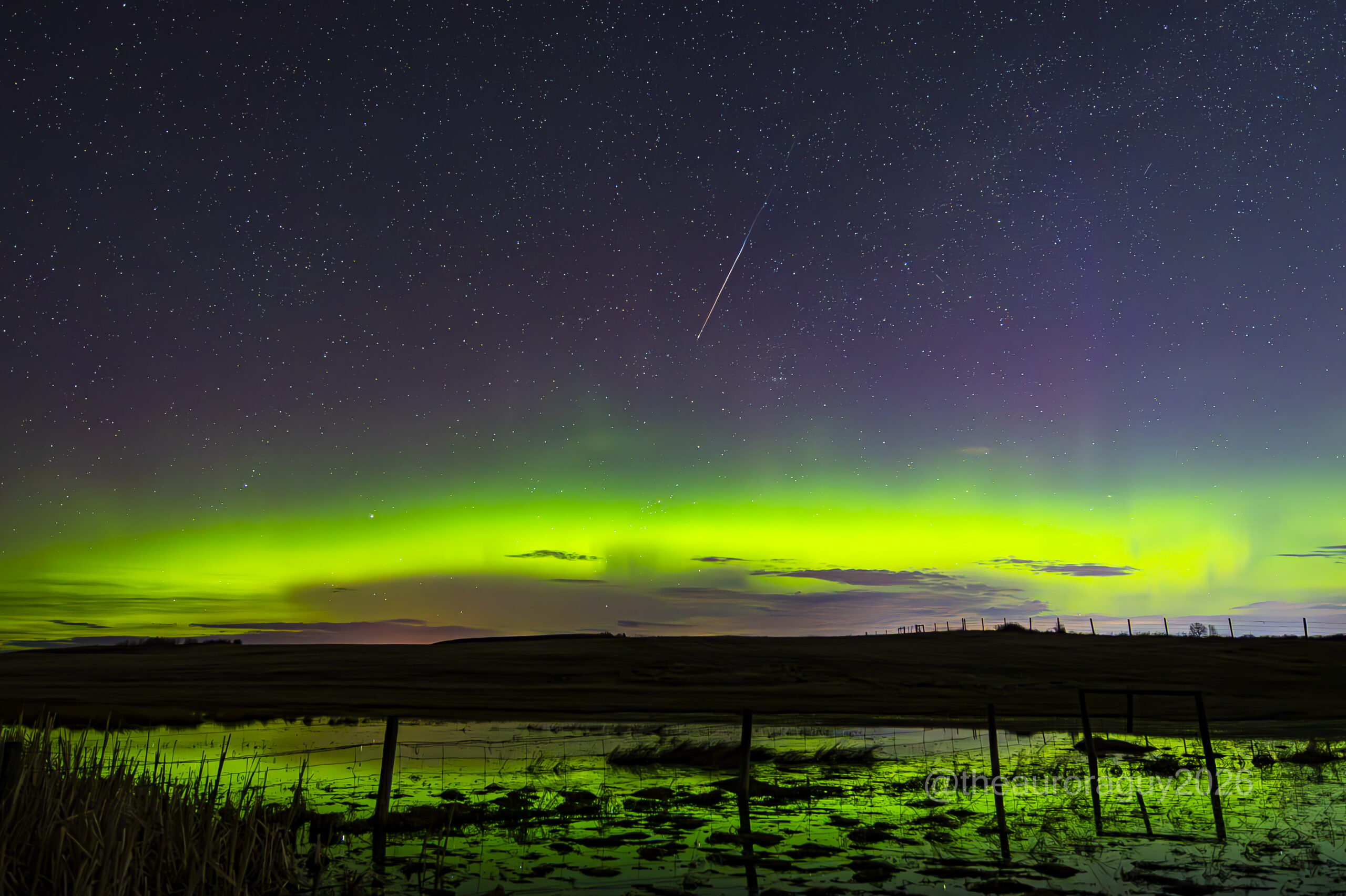
Bright green auroras glowing in a starry sky are reflected in a foreground pond as a meteor streaks earthward at the middle top of the photo.

Green auroral light shines next to a shooting star captured on April 20. (Image credit: Harlan Thomas)

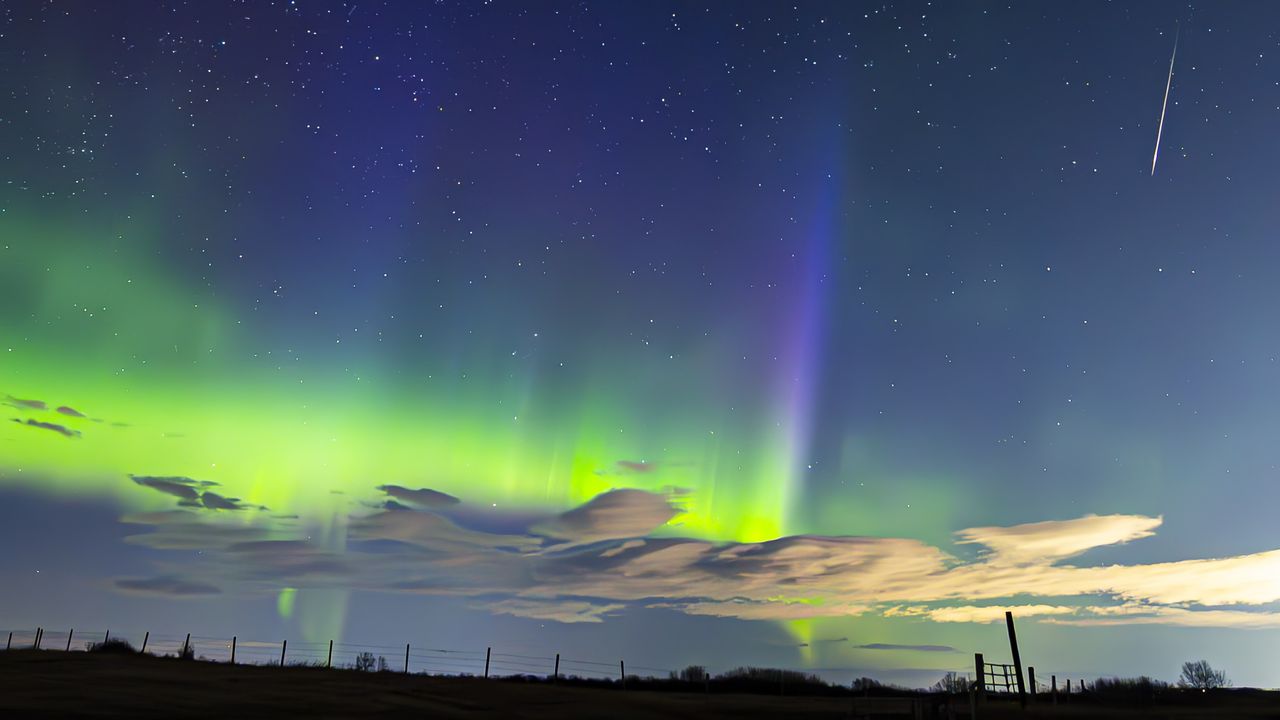
Thomas captured another bright Lyrid blazing earthward that same night, as columns of blue auroral light leapt skyward to crown a vibrant band of green, as a torrent of electrically charged particles from the sun collided with our planet’s magnetic field.
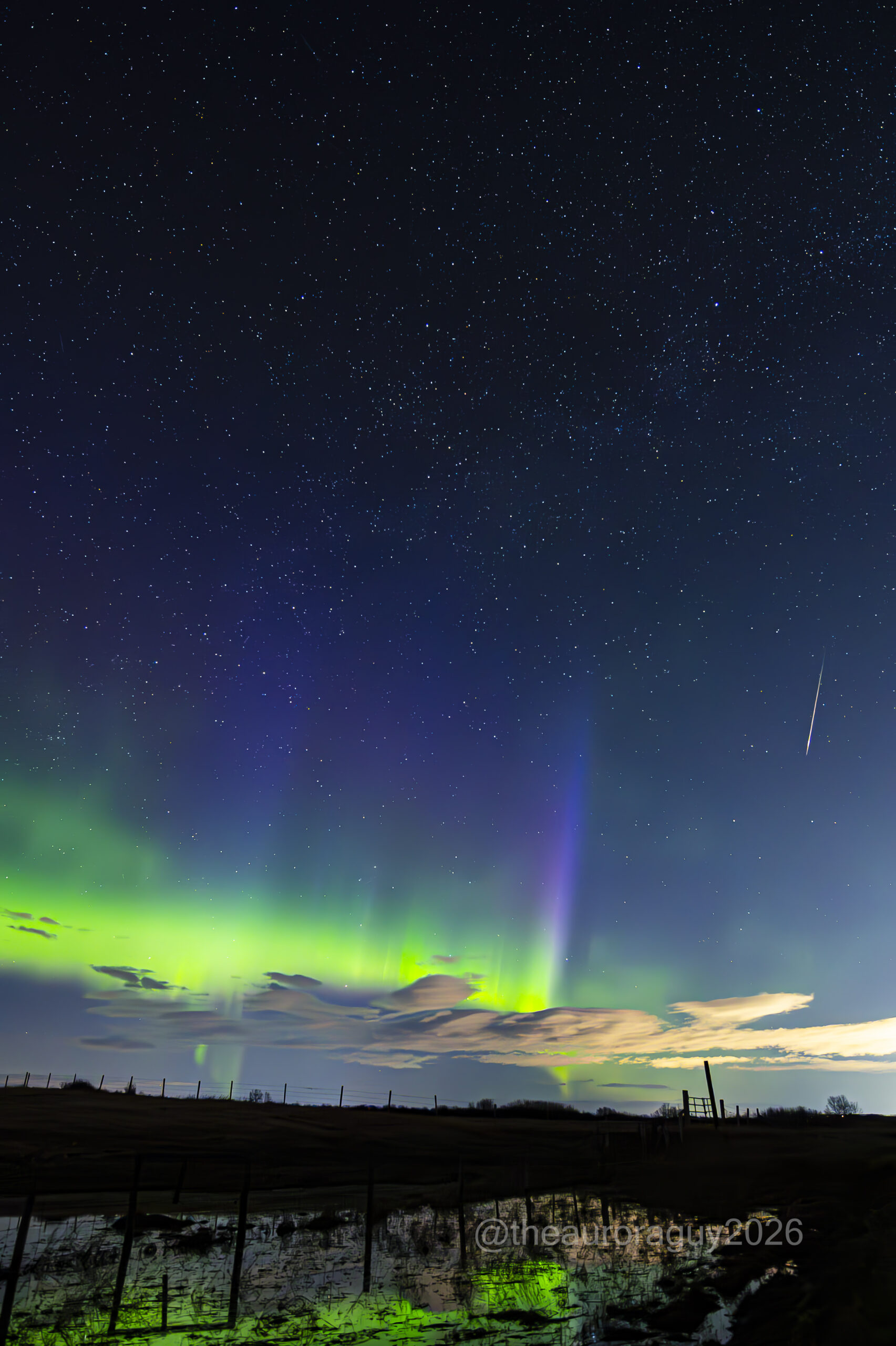
Bright green and blue aurora are photographed shining above a pond in a dark field at night as a meteor streaks earthward to the right of the photo.

A lyrid shooting star races earthward in the skies over Canada. (Image credit: Harlan Thomas)

NASA astronaut Jessica Meir, meanwhile, snapped an out-of-this-world view of a Lyrid meteor streaking through Earth’s atmosphere from the International Space Station‘s cupola, while orbiting 248 miles (400 kilometers) above our planet earlier this month.

Breaking space news, the latest updates on rocket launches, skywatching events and more!

The 3-second exposure captures the blue-white light of city lights shining below a red arc of airglow at the edge of Earth’s atmosphere, where molecules have been excited by solar radiation, causing them to emit light. The meteor can be seen to the left of the image just below the curve of Earth’s horizon.
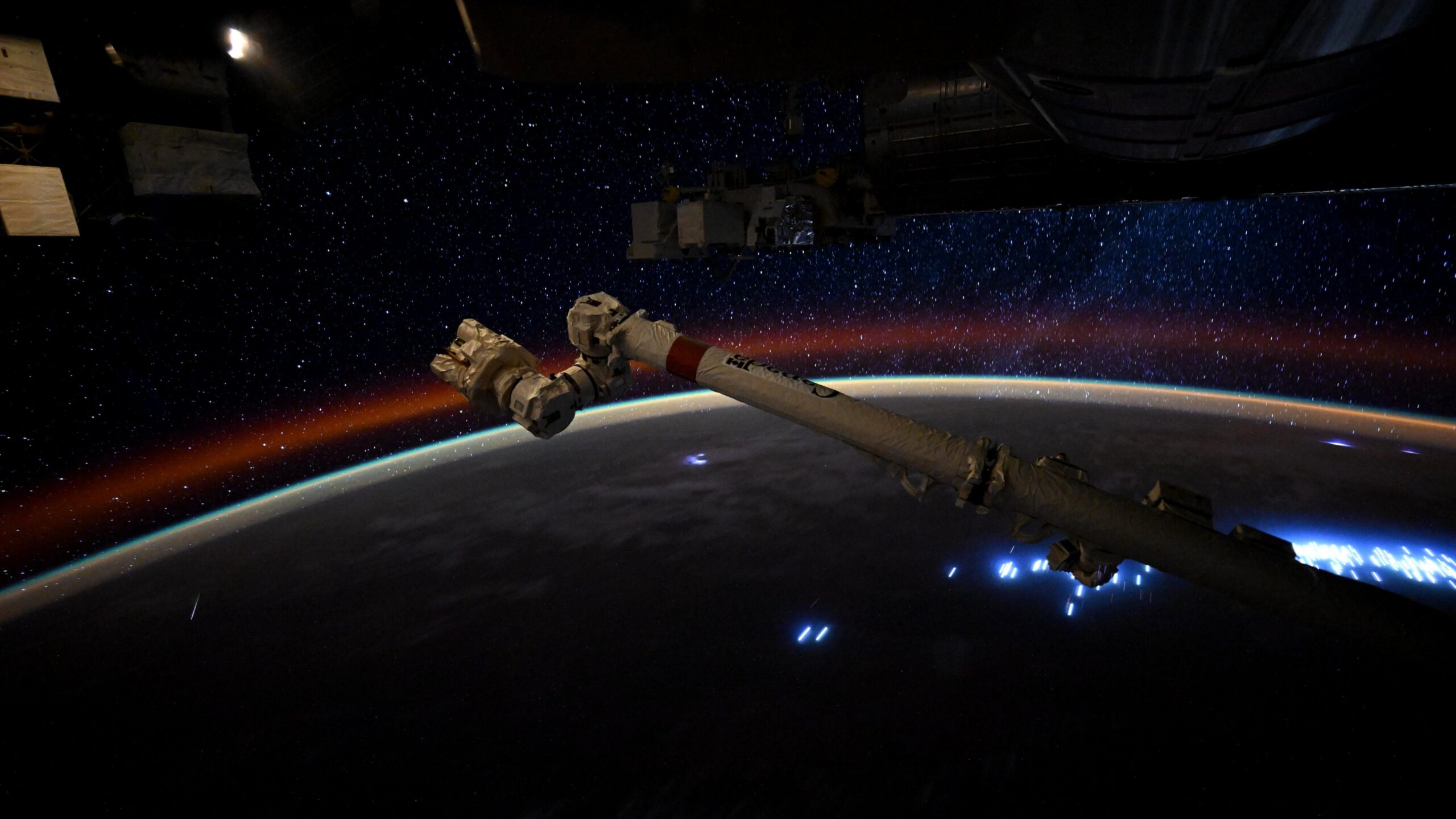
A photo of Earth's night side captured from the International Space Station showing the curvature of the planet lit by sporadic blue city lights. A meteor is visible to the left of the image.

A Lyrid meteor photographed from orbit by astronaut Jessica Meir during her stay aboard the International Space Station. (Image credit: NASA, Jessica Meir.)

Photographer Tim Pruss imaged a Lyrid shooting star as it intersected the path of a satellite between tree branches overnight on April 20-21, ahead of a potentially cloudy peak on the following night. “I reviewed over 2,000 images, frame by frame, just to find one meteor, and I’d do it again tomorrow,” Pruss said to Space.com.
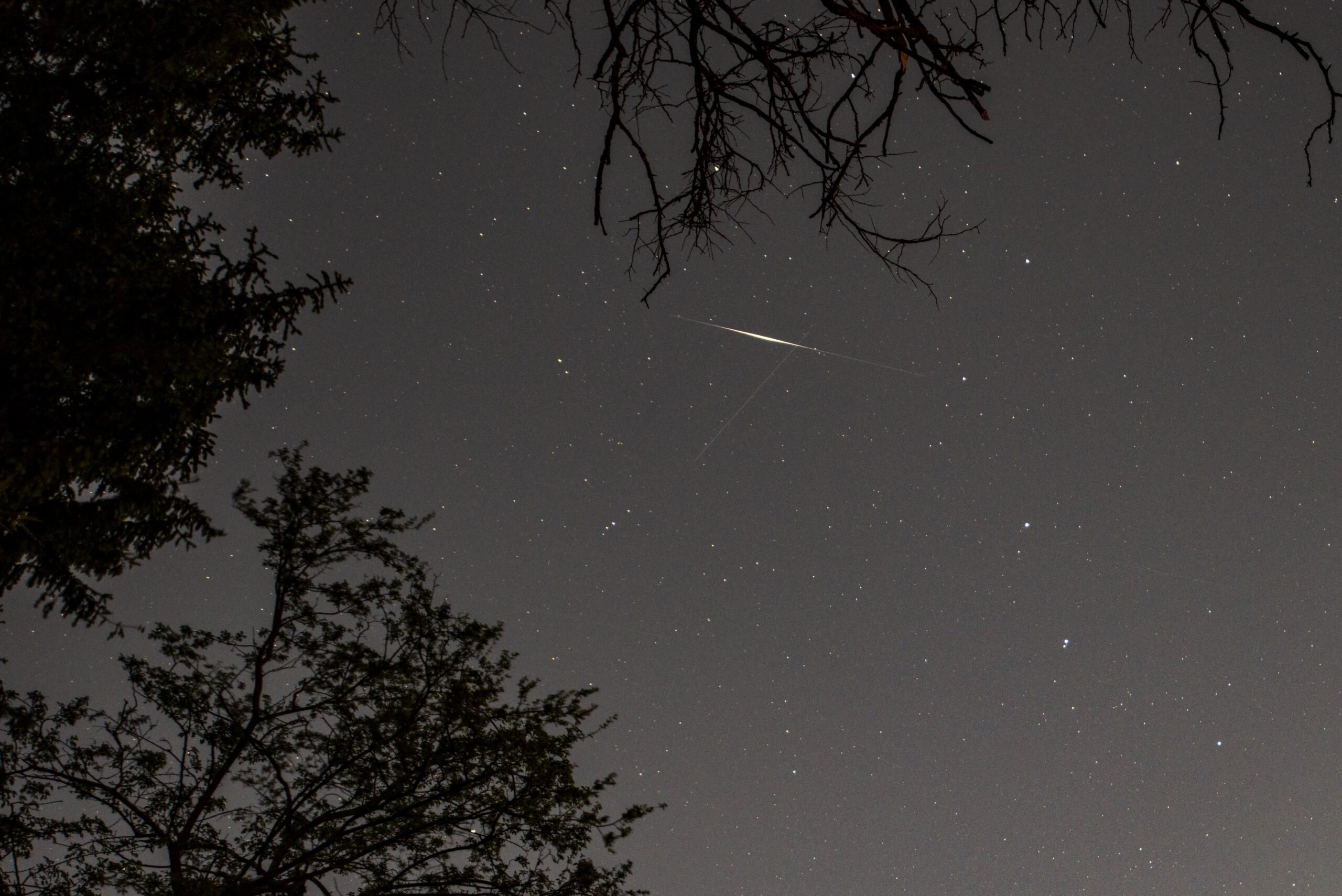
A meteor is pictured streaking through a starry sky through the silhouetted branches of trees.

A meteor flashes to life in a starry sky in this shot captured by photographer Tim Pruss. (Image credit: Tim Pruss)

X user EricTheSpaceCat recorded several bright Lyrids as they carved fiery paths through the Minnesota sky overnight on April 19-20, as activity ramped up ahead of the shower’s narrow peak a few days later.


What to read next

Meteors from last night/this morning. pic.twitter.com/JliRWqrgmXApril 20, 2026

Finally, Connecticut-based photographer Jeremy Cruz, caught a number of the fast-moving meteors that same night, using a Sony A7C II mirrorless camera set to capture 10-second exposures of the post-sunset sky.

A few Lyrid meteors from last night! The shower peaks tonight, up to 20 meteors per hour are possible.#Lyrids #MeteorShower #NightSky pic.twitter.com/sd4KiWQwRUApril 21, 2026

The Lyrid meteor shower is active until April 25 — albeit at a lower hourly rate that falls the further you get from the peak — so get outside and look up over the coming nights for a chance to spot the bright fast-moving shooting stars before they vanish from our skies for another year!

Following the Lyrids, the next major meteor shower is the eta Aquariids, which reach peak activity overnight on May 5-6, when a maximum of 50 shooting stars could be seen each hour.

Feeling inspired to capture your own meteor photos? Then be sure to read our guide to photographing shooting stars, along with our roundups of the best cameras and lenses for imaging the night sky.

Tags: NASArocket launchspace station
No Result
View All Result

Recent Posts

  • Voyager ‘very optimistic’ about Starlab amid potential NASA changes
  • Ukrainian forces test direct-to-device satellite imagery for frontline troops
  • New NGA head makes industry debut at GEOINT Symposium 2026
  • Startup develops software to help military tap commercial imaging satellites
  • Loft Orbital expands into full-service constellation deals

Categories

  • Excursions
  • Kepler Mission
  • NASA
  • NASA Breaking News
  • Physical Preparation
  • Preparation
  • Space News
  • Space Station News
  • Spacewalks
  • Tours
  • Uncategorized
  • Weightlessness Training
  • What Not to Pack
  • What to Pack

Meta

  • Log in
  • Entries feed
  • Comments feed
  • WordPress.org
  • Home
  • Start Here
  • Preparing for Your Trip
  • Space Tourism Companies
  • Space Tours
  • Contact

© 2026 JNews - Premium WordPress news & magazine theme by Jegtheme.

No Result
View All Result
  • About
  • Contact
  • Feeds
  • Frequently Asked Questions
  • Preparing for Your Trip
    • Insurance and Legal Waivers
    • Physical and Medical Requirements
    • Training Programs
    • What to Expect
  • Privacy Policy
  • Space Tourism Companies
    • Axiom Space
    • Blue Origin
    • Blue Origin vs Virgin Galactic
    • Comparison Chart: Features, Pricing, Booking
    • SpaceX
    • Virgin Galactic
    • World View (stratospheric balloon flights)
  • Space Tours
    • Custom & Luxury Packages
    • Duration, Training, Costs
    • Experiences
    • Future Moon/Mars Options
    • Orbital Flights
    • Parabolic Flight Experiences
    • Private Missions
    • Stratospheric Balloon Flights
    • Suborbital Flights
    • Zero-Gravity Flights
  • Spaceflight Technologies
    • Space Tourism Balloon
  • Start Here
    • How to Book a Space Tour
    • Intro to Commercial Spaceflight
    • Is Space Tourism Safe?
    • Space Travel FAQs
    • View Earth from the Edge
    • What to Pack
  • Tours in Space is your launchpad to the world of space tourism

© 2026 JNews - Premium WordPress news & magazine theme by Jegtheme.