

HOUSTON — The Trump administration’s latest budget proposal once again calls for steep cuts to NASA, and has set up a familiar clash with Congress over how the space agency should be funded.
The White House released its fiscal year (FY) 2027 federal budget request on April 3 — just two days after the launch of NASA’s Artemis 2 mission, while the four astronauts aboard Orion were still heading toward the moon. It mirrors the cuts outlined in last year’s FY26 presidential budget request (PBR) recommending reducing NASA’s overall budget by 23%, with a nearly 50% loss for the agency’s science funding.
But Congress, not the White House, ultimately sets NASA’s funding levels through the appropriations process.
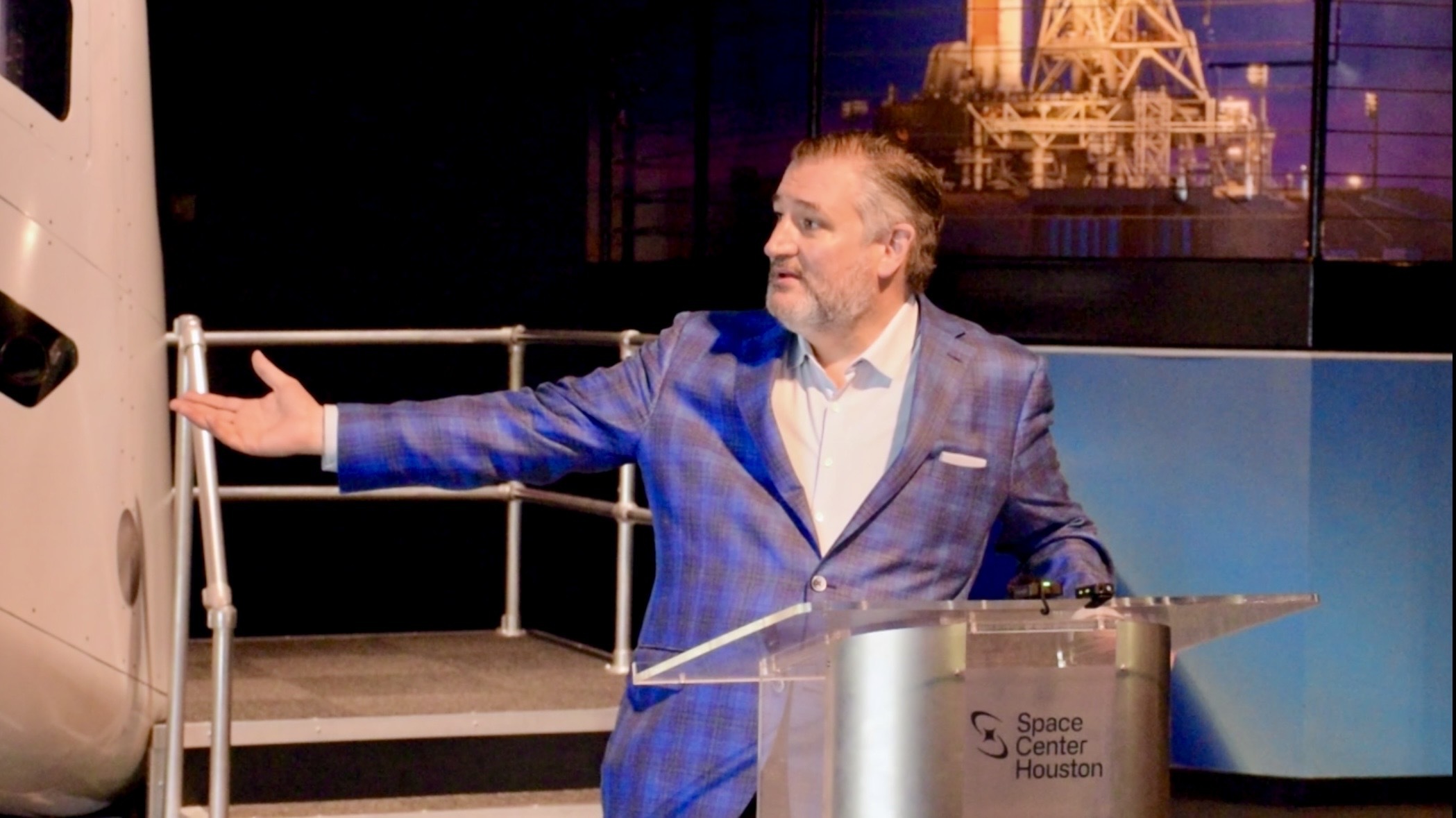
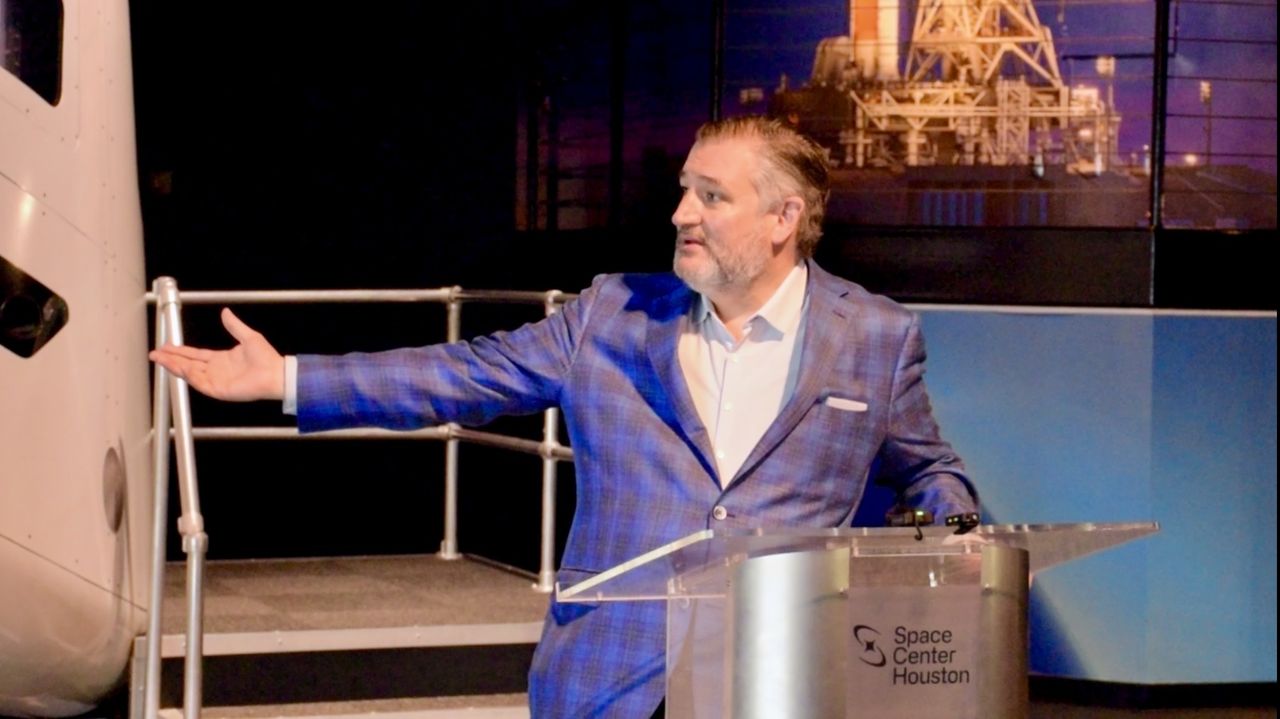
If things play out like last year, the FY27 PBR will be wholly rejected by both political parties, who continue to largely view the United States’ space program as an essential component to the country’s global standing. That includes Sen. Ted Cruz (R-Texas), Chairman of the Committee on Commerce, Science and Transportation, who has “worked very hard to keep strong support for NASA and American leadership in space, regardless of politics,” he told Space.com during a press conference on April 9.
Cruz spoke with reporters shortly after wrapping up a call he and several other members of Congress participated in with the Artemis 2 crew, about 24 hours before their successful splashdown in the Pacific Ocean.
NASA’s Artemis program aims to establish a permanent human presence on the moon, landing astronauts on the surface by 2028, and building a base near the lunar south pole in the 2030s. It’s a timeline that depends heavily on sustained funding across multiple budget cycles and presidential administrations.
China has similar ambitions for missions to Earth’s nearest celestial neighbor, with the goal of landing its own astronauts on the moon by 2030 — a fact that has spurred industry experts and U.S. lawmakers to declare that a new space race has begun. So, when the Trump administration’s proposed cuts to NASA were released in the middle of the first mission to fly astronauts around the moon in more than half a century, they drew a fast rebuke.
“I’ve told President Trump this,” Cruz said, “I don’t want to wake up one day and look up at the moon and realize the Chinese have beat us there, that we’ve lost to the Chinese communists. I think the blow to America from that would make Sputnik look mild.”
Cruz has also backed that position legislatively, proposing a $10 billion funding boost for NASA last year aimed at protecting core Artemis systems like SLS and Orion and sustaining the agency’s broader moon and Mars efforts.
While the PBR largely maintains funding for Artemis, science plays a central role in the long term execution of the program’s missions, both in how we will research and discover new things on the lunar surface, and also in the technologies we will evolve to further support crewed missions to deep space destinations like Mars, experts say.
“We’re definitely enabling science, and it’s definitely important to every single one of us that we leverage science,” said Artemis 2 mission specialist and Canadian Space Agency astronaut Jeremy Hansen During NASA’s Houston We Have a Podcast on March 27. “Science is what got us here, this ability to be able to send humans off of our planet.”
“There is overwhelming bipartisan consensus in Congress: We are going to provide what is necessary to maintain American leadership in the moon, in Mars and in space across the board,” Cruz said.
Last year’s PBR, combined with repeated “deferred resignations programs” offered to federal employees, led to cuts at NASA that gutted programs of funding and personnel — roughly 4,000 people left the NASA workforce in 2025 — before Congress was able to reject those cuts and restore NASA’s budget to previous levels.
Many at NASA and in Congress viewed those cuts as premature and potentially illegal.
“We all know we’re living in a political time where there are partisan disagreements, where Democrats and Republicans can fight over what time of day it is, and somehow, miraculously, we have managed to avoid space and space exploration and NASA being pulled into that partisan bickering,” Cruz said during the briefing earlier this month.
That bipartisan resistance was on display on Wednesday (April 22) during a House Science, Space, and Technology Committee hearing with NASA Administrator Jared Isaacman. During the event, lawmakers from both parties argued that the proposed funding levels do not align with the administration’s stated goals for NASA to win the crewed race to the moon and eventually launch astronauts to Mars.
During the hearing, Chairman Brian Babin (R-Texas) said bluntly that the proposed budget cannot support what NASA has been directed to do. Across the political aisle, Rep. Zoe Lofgren (D-California) said the cuts are unlikely to stand.
That message aligns with Cruz’s view that NASA funding remains broadly bipartisan, even as the White House proposes deep cuts. Speaking from the Space Center Houston visitor center, next to NASA’s Johnson Space Center, on April 9, Cruz said he had the opportunity to meet others at NASA connected to the Artemis 2 mission, in addition to getting to communicate with the astronauts aboard Orion.
“I had a chance to talk to the engineers who are right now controlling the mission,” Cruz said, “And my message to all of them: Focus on the mission. Focus on the science. Focus on keeping everyone safe. Focus on getting it right. We’ll take care of the politics. We’ll keep that out of your way so you can do your job.”