• Home
  • About
  • FAQ
  • Feeds
  • Glossary
  • Contact
Tours In Space
  • Home
  • Start Here
    • Intro to Commercial Spaceflight
    • How to Book a Space Tour
    • Is Space Tourism Safe?
    • Space Travel FAQs
    • View Earth from the Edge
    • What to Pack
  • Preparing for Your Trip
    • Insurance and Legal Waivers
    • Physical and Medical Requirements
    • Training Programs
    • What to Expect
  • Space Tourism Companies
    • Axiom Space
    • Blue Origin
    • SpaceX
    • Virgin Galactic
    • World View (stratospheric balloon flights)
    • Blue Origin vs Virgin Galactic
    • Comparison Chart: Features, Pricing, Booking
  • Space Tours
    • Custom & Luxury Packages
    • Duration, Training, Costs
    • Experiences
    • Future Moon/Mars Options
    • Orbital Flights
    • Parabolic Flight Experiences
    • Private Missions
    • Stratospheric Balloon Flights
    • Suborbital Flights
    • Zero-Gravity Flights
  • Spaceflight Technologies
    • Space Tourism Balloon
No Result
View All Result
  • Home
  • Start Here
    • Intro to Commercial Spaceflight
    • How to Book a Space Tour
    • Is Space Tourism Safe?
    • Space Travel FAQs
    • View Earth from the Edge
    • What to Pack
  • Preparing for Your Trip
    • Insurance and Legal Waivers
    • Physical and Medical Requirements
    • Training Programs
    • What to Expect
  • Space Tourism Companies
    • Axiom Space
    • Blue Origin
    • SpaceX
    • Virgin Galactic
    • World View (stratospheric balloon flights)
    • Blue Origin vs Virgin Galactic
    • Comparison Chart: Features, Pricing, Booking
  • Space Tours
    • Custom & Luxury Packages
    • Duration, Training, Costs
    • Experiences
    • Future Moon/Mars Options
    • Orbital Flights
    • Parabolic Flight Experiences
    • Private Missions
    • Stratospheric Balloon Flights
    • Suborbital Flights
    • Zero-Gravity Flights
  • Spaceflight Technologies
    • Space Tourism Balloon
No Result
View All Result
Tours In Space
No Result
View All Result
Home Space News

Watch comet PANSTARRS ‘switch on’ its second tail as it makes closest approach to Earth

Ensign by Ensign
April 28, 2026
in Space News
0
Watch comet PANSTARRS ‘switch on’ its second tail as it makes closest approach to Earth
189
SHARES
1.5k
VIEWS
Share on FacebookShare on Twitter

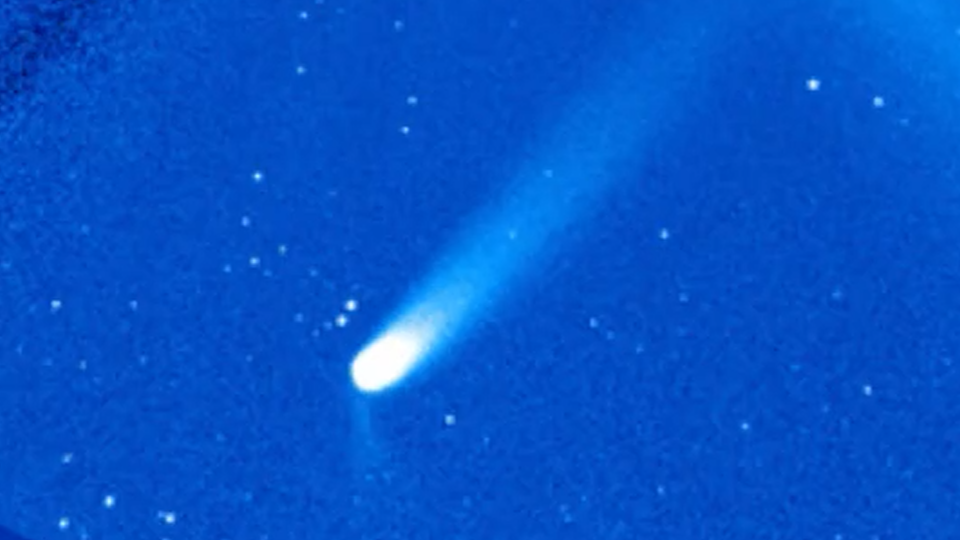
A sungazing spacecraft captured spectacular views of Comet C/2025 R3 (PanSTARRS) as its ion tail appeared to “switch on” and swing away from the sun during a close approach to Earth on April 26.

Comet C/2025 R3 was discovered in September 2025 and quickly stirred up excitement among the comet-chasing community during its rush toward the sun, with some wondering if PanSTARRS could brighten enough to be the great comet of 2026.

The wandering comet put on an impressive show in the weeks leading up to its brush with the sun during perihelion on April 19. It then went on to dazzle stargazers in spacecraft imagery around perigee, when the icy wanderer passed closest to Earth in its seemingly one-off orbit, before cutting a return path to the outer regions of the solar system.


You may like

The joint NASA/ESA Solar and Heliospheric Observatory (SOHO)’s coronograph, an instrument that blocks out the light of the sun’s bright disk, captured impressive imagery of Comet PanSTARRS’ ion tail brightening as it soared past the sun. This narrow tail shifted to stream directly away from the sun, in contrast to the broader, dust-laden primary tail.

Why does comet PanSTARRS have two tails?
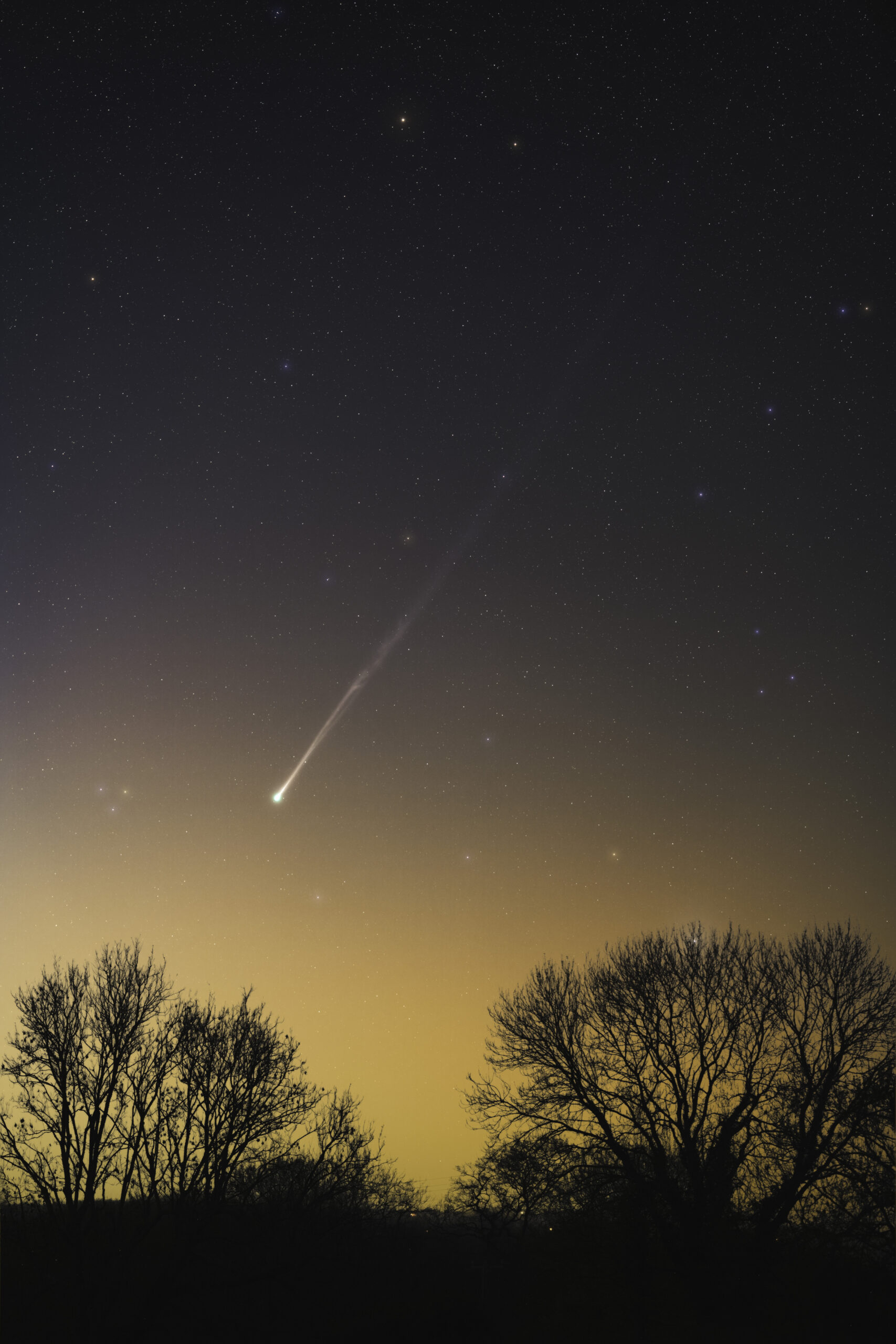
A comet is pictured shining in a field of multicolored stars above a silhouetted horizon lined with trees at night. A warm yellow-orange glow suffuses the horizon.

Comet C/2025 R3 (PanSTARRS) shines in the skies over England. (Image credit: Josh Dury.)

Comets develop tails as they approach the sun and heat up. Solar radiation causes material locked inside the comet’s solid nucleus to escape through a process called sublimation, releasing dust and gas into space. The heavier dust particles are pushed back by sunlight, forming a broad, often curved tail that reflects sunlight according to Swinburne University of Technology.

A comet’s dust tail can stretch for millions of miles and is very good at reflecting sunlight, sometimes making comets shine bright enough to be seen by the naked eye, while appearing visually spectacular in long exposure photography!

At the same time, ultraviolet radiation from the sun strips electrons from gas molecules in the comet’s coma — a process known as ionization. These charged particles are then caught up in the solar wind,creating a second, straighter tail.

Space

The ion tail always points away from the sun, driven as it is by the solar wind, which travels at hundreds of kilometers per second, while the larger particles that make up the dust tail move at a slower pace, and so lags behind its ion counterpart as the comet moves around the sun.

Celestron UpClose G2 10×50 binoculars deals

Want to be ready to capture the next commentary visitor as it approaches the sun? Then be sure to read our guide to photographing comets, along with our roundups of the best lenses and cameras for night sky photography.

<em>Editor’s Note: If you would like to share your cometary astrophotography with Space.com’s readers, then please send your photo(s), comments, and your name and location to spacephotos@space.com.

No Result
View All Result

Recent Posts

  • Voyager ‘very optimistic’ about Starlab amid potential NASA changes
  • Ukrainian forces test direct-to-device satellite imagery for frontline troops
  • New NGA head makes industry debut at GEOINT Symposium 2026
  • Startup develops software to help military tap commercial imaging satellites
  • Loft Orbital expands into full-service constellation deals

Categories

  • Excursions
  • Kepler Mission
  • NASA
  • NASA Breaking News
  • Physical Preparation
  • Preparation
  • Space News
  • Space Station News
  • Spacewalks
  • Tours
  • Uncategorized
  • Weightlessness Training
  • What Not to Pack
  • What to Pack

Meta

  • Log in
  • Entries feed
  • Comments feed
  • WordPress.org
  • Home
  • Start Here
  • Preparing for Your Trip
  • Space Tourism Companies
  • Space Tours
  • Contact

© 2026 JNews - Premium WordPress news & magazine theme by Jegtheme.

No Result
View All Result
  • About
  • Contact
  • Feeds
  • Frequently Asked Questions
  • Preparing for Your Trip
    • Insurance and Legal Waivers
    • Physical and Medical Requirements
    • Training Programs
    • What to Expect
  • Privacy Policy
  • Space Tourism Companies
    • Axiom Space
    • Blue Origin
    • Blue Origin vs Virgin Galactic
    • Comparison Chart: Features, Pricing, Booking
    • SpaceX
    • Virgin Galactic
    • World View (stratospheric balloon flights)
  • Space Tours
    • Custom & Luxury Packages
    • Duration, Training, Costs
    • Experiences
    • Future Moon/Mars Options
    • Orbital Flights
    • Parabolic Flight Experiences
    • Private Missions
    • Stratospheric Balloon Flights
    • Suborbital Flights
    • Zero-Gravity Flights
  • Spaceflight Technologies
    • Space Tourism Balloon
  • Start Here
    • How to Book a Space Tour
    • Intro to Commercial Spaceflight
    • Is Space Tourism Safe?
    • Space Travel FAQs
    • View Earth from the Edge
    • What to Pack
  • Tours in Space is your launchpad to the world of space tourism

© 2026 JNews - Premium WordPress news & magazine theme by Jegtheme.