• Home
  • About
  • FAQ
  • Feeds
  • Glossary
  • Contact
Tours In Space
  • Home
  • Start Here
    • Intro to Commercial Spaceflight
    • How to Book a Space Tour
    • Is Space Tourism Safe?
    • Space Travel FAQs
    • View Earth from the Edge
    • What to Pack
  • Preparing for Your Trip
    • Insurance and Legal Waivers
    • Physical and Medical Requirements
    • Training Programs
    • What to Expect
  • Space Tourism Companies
    • Axiom Space
    • Blue Origin
    • SpaceX
    • Virgin Galactic
    • World View (stratospheric balloon flights)
    • Blue Origin vs Virgin Galactic
    • Comparison Chart: Features, Pricing, Booking
  • Space Tours
    • Custom & Luxury Packages
    • Duration, Training, Costs
    • Experiences
    • Future Moon/Mars Options
    • Orbital Flights
    • Parabolic Flight Experiences
    • Private Missions
    • Stratospheric Balloon Flights
    • Suborbital Flights
    • Zero-Gravity Flights
  • Spaceflight Technologies
    • Space Tourism Balloon
No Result
View All Result
  • Home
  • Start Here
    • Intro to Commercial Spaceflight
    • How to Book a Space Tour
    • Is Space Tourism Safe?
    • Space Travel FAQs
    • View Earth from the Edge
    • What to Pack
  • Preparing for Your Trip
    • Insurance and Legal Waivers
    • Physical and Medical Requirements
    • Training Programs
    • What to Expect
  • Space Tourism Companies
    • Axiom Space
    • Blue Origin
    • SpaceX
    • Virgin Galactic
    • World View (stratospheric balloon flights)
    • Blue Origin vs Virgin Galactic
    • Comparison Chart: Features, Pricing, Booking
  • Space Tours
    • Custom & Luxury Packages
    • Duration, Training, Costs
    • Experiences
    • Future Moon/Mars Options
    • Orbital Flights
    • Parabolic Flight Experiences
    • Private Missions
    • Stratospheric Balloon Flights
    • Suborbital Flights
    • Zero-Gravity Flights
  • Spaceflight Technologies
    • Space Tourism Balloon
No Result
View All Result
Tours In Space
No Result
View All Result
Home Uncategorized

Startup targets radio segment of Golden Dome missile-defense network

Ensign by Ensign
April 29, 2026
in Uncategorized
0
Startup targets radio segment of Golden Dome missile-defense network
189
SHARES
1.5k
VIEWS
Share on FacebookShare on Twitter
image

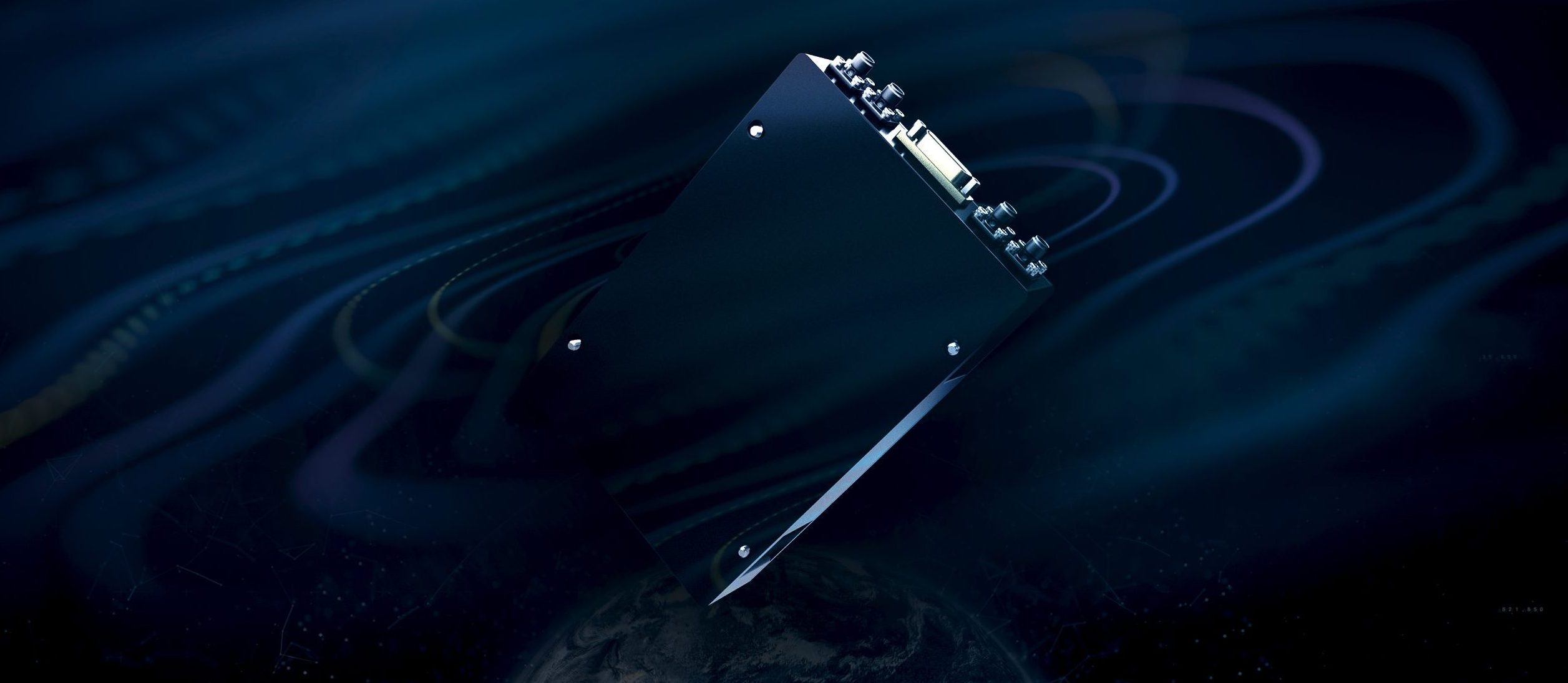
WASHINGTON — A small startup is aiming to supply a component that could become critical to the Pentagon’s missile-defense architecture in space: compact radios capable of rapidly moving targeting data between satellites and interceptors.

The Golden Dome program, which envisions space-based interceptors to defend the U.S. homeland from missile threats, depends on constant updates from sensors in orbit. Those updates must be transmitted in milliseconds, even in contested environments, placing new demands on radio-frequency communications systems.

Tensor, an early-stage company focused on space-based radio-frequency communications, is positioning itself to capture part of that market. The U.S. Space Force, which is leading development of the interceptors, is projecting demand for thousands of radios capable of running a complex waveform known as Link-182, designed to allow satellites and interceptors to securely exchange data in orbit.

Sign up for First Up: Get the latest updates on SpaceX, Artemis, NASA and more. From Jeff Foust, First Up is a recap of the day’s space industry news, including civil, commercial, and military space developments.

By submitting this form, you agree to the SpaceNews privacy policy and terms and conditions and to receive email from us and our partners. You can opt-out at any time.

The waveform has been adopted as a baseline for the service’s next-generation space data network, and Golden Dome is expected to rely on that architecture to function.

Christopher Timperio, a radio-frequency engineer, co-founded Tensor in 2025 with backing from venture investor Christopher Klaus.

“We are moving from the architecture and design phases into the prototype hardware phase,” he said.

The Space Systems Command announced last week it awarded up to $3.2 billion in contracts to 12 companies, with part of the work focused on demonstrating satellite communications using the Link-182 protocol.

“Link-182 is a complex waveform, so a big part of the work is taking that from software simulation into reliable, purpose-built hardware in the real world,” Timperio said.

A team of five engineers is currently working on the company’s prototype, with plans to complete initial ground tests later this year.

Early prototypes this year

Timperio previously worked at Relativity Space and Vast and said he saw an opening for radios designed for faster development cycles than traditional government programs. Tensor, based in Los Angeles, is pursuing Small Business Innovation Research contracts as an entry point into the defense market.

“Our current plan is to have early prototypes on the bench in Q3 of this year, followed by customer ground demonstrations in Q4,” he said. “From there, the goal is to support an orbital demonstration activity next year, where the radios will begin demonstrating compatibility with MILNET from space.”

MILNET is a Space Force satellite communications network that relies on a proliferated constellation of Starshield satellites built by SpaceX to move data across orbit.

Tensor is working with companies involved in the Golden Dome interceptor program, Timperio said. “We’ve identified early customers for the radio.”

The company has tested its radio technology in harsh environments, including at Palmer Station in Antarctica, where it evaluated S-band links with anti-jamming features. While those tests did not use Link-182 specifically, Timperio said they were designed to validate similar capabilities.

Beyond Golden Dome, the company sees broader demand across defense and commercial markets for small radios, not much larger than an iPhone, that can operate across multiple frequency bands and adapt to changing mission requirements.

“Government customers want radios that are not locked into a single narrow use case, because the threat environment is changing so rapidly,” Timperio said.

That demand could extend to applications such as in-orbit servicing and large satellite constellations, where systems must handle complex communications requirements while operating within tight size, weight and power constraints.

The company said it is designing its products and supply chain with potential large-scale production in mind, relying on manufacturing partners if demand materializes.

Even as defense agencies and industry push toward optical communications, which can move large volumes of data using laser links, demand for radio-frequency systems is expected to persist. Optical systems offer higher data rates but come with tighter pointing requirements and greater system complexity, said Timperio, making them less suitable for some missions.

“For a lot of missions, especially in defense, reliability, flexibility and resilience matter more than raw data rate,” he Timperio said.

Tags: SpaceX
No Result
View All Result

Recent Posts

  • NGA Rapid Capabilities Office to embrace speed and risk-taking
  • Scolese puts talent at center of NRO transition as he prepares to step down
  • Bringing imagery and communications under one roof
  • Eutelsat and Station Satcom sign agreement to scale LEO services for maritime fleet
  • ‘Thor’ hammered down 15 years ago, and it’s still the only Marvel movie to do the God of Thunder justice

Categories

  • Excursions
  • Kepler Mission
  • NASA
  • NASA Breaking News
  • Physical Preparation
  • Preparation
  • Space News
  • Space Station News
  • Spacewalks
  • Tours
  • Uncategorized
  • Weightlessness Training
  • What Not to Pack
  • What to Pack

Meta

  • Log in
  • Entries feed
  • Comments feed
  • WordPress.org
  • Home
  • Start Here
  • Preparing for Your Trip
  • Space Tourism Companies
  • Space Tours
  • Contact

© 2026 JNews - Premium WordPress news & magazine theme by Jegtheme.

No Result
View All Result
  • About
  • Contact
  • Feeds
  • Frequently Asked Questions
  • Preparing for Your Trip
    • Insurance and Legal Waivers
    • Physical and Medical Requirements
    • Training Programs
    • What to Expect
  • Privacy Policy
  • Space Tourism Companies
    • Axiom Space
    • Blue Origin
    • Blue Origin vs Virgin Galactic
    • Comparison Chart: Features, Pricing, Booking
    • SpaceX
    • Virgin Galactic
    • World View (stratospheric balloon flights)
  • Space Tours
    • Custom & Luxury Packages
    • Duration, Training, Costs
    • Experiences
    • Future Moon/Mars Options
    • Orbital Flights
    • Parabolic Flight Experiences
    • Private Missions
    • Stratospheric Balloon Flights
    • Suborbital Flights
    • Zero-Gravity Flights
  • Spaceflight Technologies
    • Space Tourism Balloon
  • Start Here
    • How to Book a Space Tour
    • Intro to Commercial Spaceflight
    • Is Space Tourism Safe?
    • Space Travel FAQs
    • View Earth from the Edge
    • What to Pack
  • Tours in Space is your launchpad to the world of space tourism

© 2026 JNews - Premium WordPress news & magazine theme by Jegtheme.