• Home
  • About
  • FAQ
  • Feeds
  • Glossary
  • Contact
Tours In Space
  • Home
  • Start Here
    • Intro to Commercial Spaceflight
    • How to Book a Space Tour
    • Is Space Tourism Safe?
    • Space Travel FAQs
    • View Earth from the Edge
    • What to Pack
  • Preparing for Your Trip
    • Insurance and Legal Waivers
    • Physical and Medical Requirements
    • Training Programs
    • What to Expect
  • Space Tourism Companies
    • Axiom Space
    • Blue Origin
    • SpaceX
    • Virgin Galactic
    • World View (stratospheric balloon flights)
    • Blue Origin vs Virgin Galactic
    • Comparison Chart: Features, Pricing, Booking
  • Space Tours
    • Custom & Luxury Packages
    • Duration, Training, Costs
    • Experiences
    • Future Moon/Mars Options
    • Orbital Flights
    • Parabolic Flight Experiences
    • Private Missions
    • Stratospheric Balloon Flights
    • Suborbital Flights
    • Zero-Gravity Flights
  • Spaceflight Technologies
    • Space Tourism Balloon
No Result
View All Result
  • Home
  • Start Here
    • Intro to Commercial Spaceflight
    • How to Book a Space Tour
    • Is Space Tourism Safe?
    • Space Travel FAQs
    • View Earth from the Edge
    • What to Pack
  • Preparing for Your Trip
    • Insurance and Legal Waivers
    • Physical and Medical Requirements
    • Training Programs
    • What to Expect
  • Space Tourism Companies
    • Axiom Space
    • Blue Origin
    • SpaceX
    • Virgin Galactic
    • World View (stratospheric balloon flights)
    • Blue Origin vs Virgin Galactic
    • Comparison Chart: Features, Pricing, Booking
  • Space Tours
    • Custom & Luxury Packages
    • Duration, Training, Costs
    • Experiences
    • Future Moon/Mars Options
    • Orbital Flights
    • Parabolic Flight Experiences
    • Private Missions
    • Stratospheric Balloon Flights
    • Suborbital Flights
    • Zero-Gravity Flights
  • Spaceflight Technologies
    • Space Tourism Balloon
No Result
View All Result
Tours In Space
No Result
View All Result
Home Uncategorized

Northrop Grumman delivers sensor for missile-warning satellite as Pentagon cancels program

Ensign by Ensign
May 1, 2026
in Uncategorized
0
Northrop Grumman delivers sensor for missile-warning satellite as Pentagon cancels program
190
SHARES
1.5k
VIEWS
Share on FacebookShare on Twitter
image

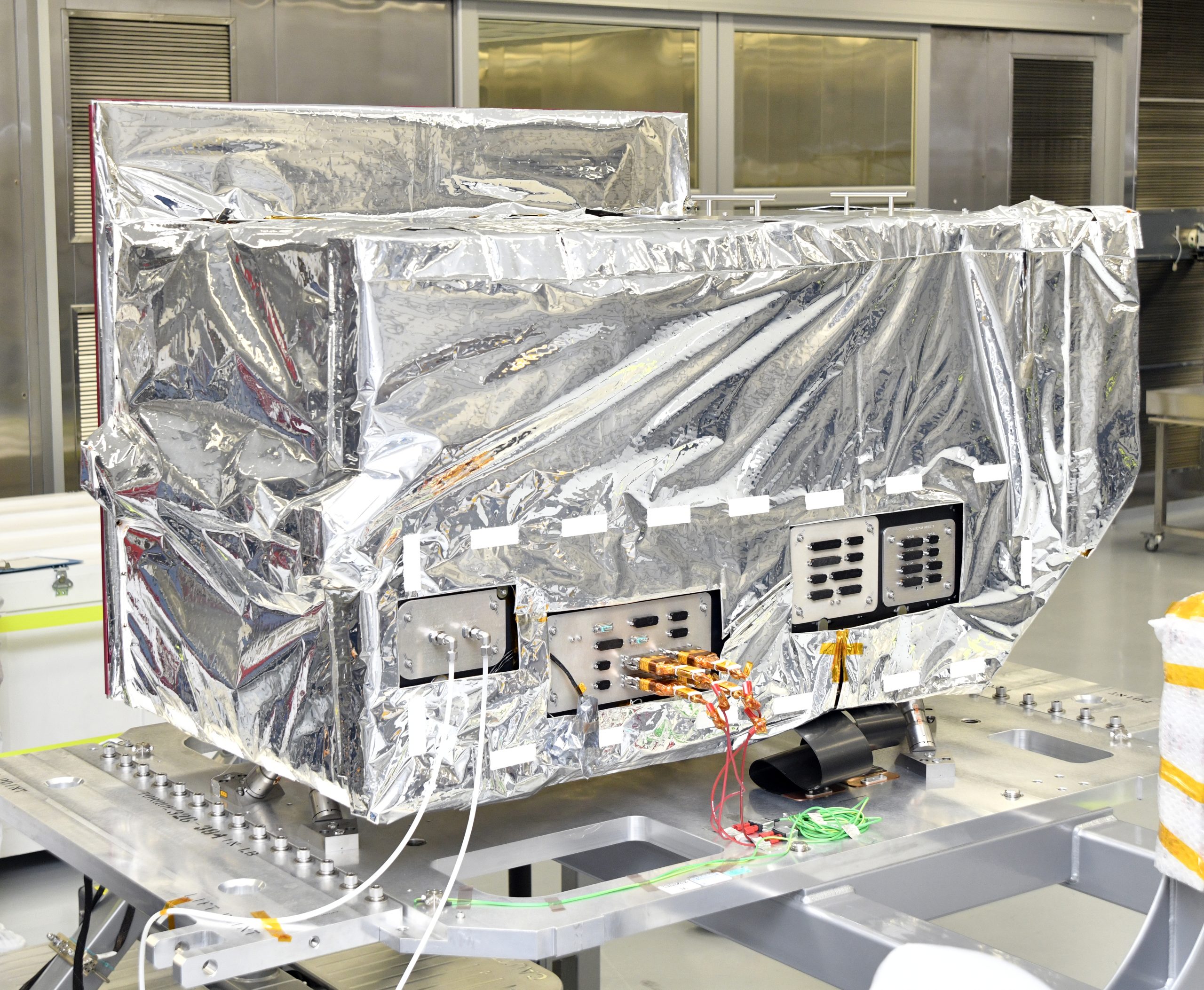
WASHINGTON — Northrop Grumman said it has taken delivery of a missile-warning sensor for a U.S. Space Force satellite program that the Pentagon is now proposing to cancel, highlighting the tension between legacy space acquisitions and a shift toward newer architectures.

The company said April 30 it accepted delivery of a sensor designed for the polar component of the Next-Generation Overhead Persistent Infrared program, known as Next-Gen OPIR Polar. The effort, launched in 2018, was intended to field two satellites in highly elliptical orbits to monitor missile threats over the Northern Hemisphere.

Northrop said the delivery “keeps the missile warning program on track.” But days earlier, the Pentagon’s proposed fiscal year 2027 budget disclosed that the Space Force “intends to terminate” the polar program and includes no funding for the program going forward.

Sign up for First Up: Get the latest updates on SpaceX, Artemis, NASA and more. From Jeff Foust, First Up is a recap of the day’s space industry news, including civil, commercial, and military space developments.

By submitting this form, you agree to the SpaceNews privacy policy and terms and conditions and to receive email from us and our partners. You can opt-out at any time.

The move to cancel Next-Gen OPIR Polar reflects a broader shift inside the Pentagon away from large, bespoke satellites toward more distributed constellations in lower orbits. Budget documents say funding for Polar OPIR is zeroed out beginning in 2027 because the Space Force no longer sees a critical need for the capability, citing investments in missile-warning systems in low and medium Earth orbit.

“Due to projected polar coverage from the Low Earth Orbit (LEO) and Medium Earth Orbit (MEO) layers of the Resilient Missile Warning/Missile Tracking (MW/MT), a risk-informed decision has been made to terminate the Next-Gen OPIR Polar program,” the document states.

The program’s projected cost is $3.4 billion, including $2.1 billion already spent. The budget allocates $436 million in 2026 primarily to close out development activities.

Termination likely to be challenged

Canceling a program of this scale is rarely straightforward. Polar OPIR is tied to a large industrial base, with Northrop Grumman employing thousands of workers across multiple states. That footprint tends to draw scrutiny from lawmakers, particularly when jobs and supply chains are at stake.

Congress has already signaled resistance. Language in the 2026 appropriations bill prohibits the Defense Department from using funds to “pause, cancel, or terminate” both the polar and geosynchronous elements of the Next-Gen OPIR program.

The timing of Northrop’s announcement suggests the fight is likely to play out on Capitol Hill. The company said it remains “on-schedule and on-budget” and emphasized the sensor’s role in detecting faint heat signatures from ballistic and hypersonic threats. A spokesperson said the program “supports a critical mission to build out the missile warning and tracking architecture for the homeland.”

The broader Next-Gen OPIR effort has been a centerpiece of the Space Force’s missile-warning modernization. Initially planned as five satellites, the program has faced delays and cost growth. Eight years in, none have launched. The first satellite — one of the geosynchronous spacecraft built by Lockheed Martin — is now targeted for launch no earlier than 2025.

The GEO portion has been scaled back. The Pentagon in 2024 reduced the planned buy from three satellites to two, with total program costs now estimated at $9.1 billion, according to budget documents.

Defense officials have been signaling this pivot for several years. As early as 2022, leaders argued that traditional missile-warning satellites — large, costly systems that take years to build — were ill-suited to a threat environment shaped by rapid advances in Chinese space capabilities. They pointed to proliferated constellations in low Earth orbit, where dozens of smaller satellites can be deployed faster and at lower cost.

That shift has only accelerated. Over the past year, Department of the Air Force officials have indicated that some legacy programs could be candidates for cancellation as the Pentagon moves toward procurement models that rely more on commercial designs and private-sector investment.

Polar OPIR sits squarely in that transition. The program is caught between a Pentagon effort to reshape its space portfolio and potential pushback from Congress that has historically been reluctant to abandon major defense programs once they are underway.

No Result
View All Result

Recent Posts

  • NGA Rapid Capabilities Office to embrace speed and risk-taking
  • Scolese puts talent at center of NRO transition as he prepares to step down
  • Bringing imagery and communications under one roof
  • Eutelsat and Station Satcom sign agreement to scale LEO services for maritime fleet
  • ‘Thor’ hammered down 15 years ago, and it’s still the only Marvel movie to do the God of Thunder justice

Categories

  • Excursions
  • Kepler Mission
  • NASA
  • NASA Breaking News
  • Physical Preparation
  • Preparation
  • Space News
  • Space Station News
  • Spacewalks
  • Tours
  • Uncategorized
  • Weightlessness Training
  • What Not to Pack
  • What to Pack

Meta

  • Log in
  • Entries feed
  • Comments feed
  • WordPress.org
  • Home
  • Start Here
  • Preparing for Your Trip
  • Space Tourism Companies
  • Space Tours
  • Contact

© 2026 JNews - Premium WordPress news & magazine theme by Jegtheme.

No Result
View All Result
  • About
  • Contact
  • Feeds
  • Frequently Asked Questions
  • Preparing for Your Trip
    • Insurance and Legal Waivers
    • Physical and Medical Requirements
    • Training Programs
    • What to Expect
  • Privacy Policy
  • Space Tourism Companies
    • Axiom Space
    • Blue Origin
    • Blue Origin vs Virgin Galactic
    • Comparison Chart: Features, Pricing, Booking
    • SpaceX
    • Virgin Galactic
    • World View (stratospheric balloon flights)
  • Space Tours
    • Custom & Luxury Packages
    • Duration, Training, Costs
    • Experiences
    • Future Moon/Mars Options
    • Orbital Flights
    • Parabolic Flight Experiences
    • Private Missions
    • Stratospheric Balloon Flights
    • Suborbital Flights
    • Zero-Gravity Flights
  • Spaceflight Technologies
    • Space Tourism Balloon
  • Start Here
    • How to Book a Space Tour
    • Intro to Commercial Spaceflight
    • Is Space Tourism Safe?
    • Space Travel FAQs
    • View Earth from the Edge
    • What to Pack
  • Tours in Space is your launchpad to the world of space tourism

© 2026 JNews - Premium WordPress news & magazine theme by Jegtheme.