

Earth’s magnetic field is like a powerful trap. It lures electrically charged particles in space, near our planet, and snares them in an invisible, doughnut-shaped pen around Earth known as the ring current.
This captive swarm of charged particles plays an important role in how Earth reacts to changing conditions in space, called space weather, which can affect the technology we rely on, such as satellites and power grids. Yet there is still a lot we do not know about the ring current.
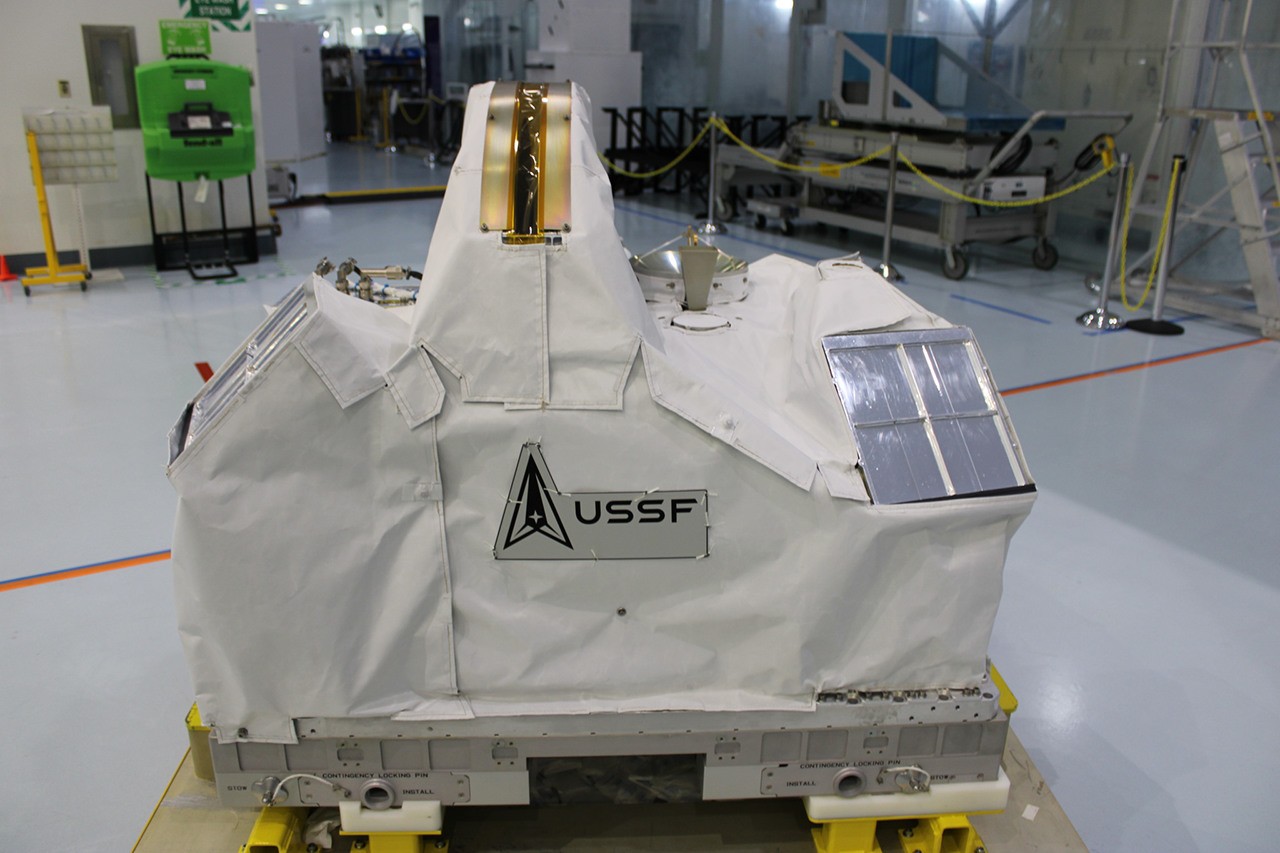
NASA is preparing to launch a mission designed to provide a unique, inside-out view of the ring current. Called STORIE (Storm Time O+ Ring current Imaging Evolution), it is scheduled to launch in May aboard the 34th SpaceX commercial resupply services mission to the International Space Station for NASA. The mission is flying as part of the Space Test Program – Houston 11 (STP-H11) payload, a partnership between the U.S. Space Force and NASA. Once it is robotically installed on the exterior of the space station (expected a few days after its arrival), STORIE will look outward at the ring current, helping scientists answer longstanding questions about how it grows and shrinks and what kind of particles it’s made of.
“These particles have important space weather impacts,” said Alex Glocer, STORIE’s principal investigator at NASA’s Goddard Space Flight Center in Greenbelt, Maryland, where the instrument was designed and constructed. “We want to understand how that trapped population is built up, and where it comes from.”
These details are especially important during solar storms, when outbursts from the Sun can lead to magnetic disturbances at Earth. Similar to Earth’s Van Allen radiation belts but filled with lower-energy particles, the ring current tends to fluctuate in size, shape, and intensity more dramatically than the radiation belts do during solar storms. Plus, in the ring current, positively charged particles and negatively charged particles flow in opposite directions, creating electrical currents. So, changes there can lead to magnetic fluctuations and induced currents on the ground, potentially affecting pipelines and power lines. The ring current can also contribute to charge buildup on the surface of Earth-orbiting satellites, which can spark spacecraft glitches. Additionally, when energy ramps up in the ring current, some of that energy gets transferred to the upper atmosphere, making it heat up, puff out, and create more drag on satellites, which can cause the spacecraft to deorbit sooner than expected.
However, it’s difficult to study the ring current directly because the particles within it are invisible. “You can’t just image them with a camera,” Glocer explained.
Instead, STORIE will scan for the glow of energetic neutral atoms, or ENAs, that are formed when charged particles trapped in the ring current manage to escape. The particles earn their freedom by stealing an electron from Earth’s outer atmosphere, known as the exosphere, and become neutral.
“Once those charged particles become neutral, they no longer feel the effects of Earth’s magnetic field, and they are no longer trapped,” Glocer said. “They can just fly off in any direction.”
By measuring the speed and direction of the ENAs, STORIE could help answer longstanding questions about the origins of particles in the ring current — whether they are supplied by a stream of particles flowing out from the Sun, known as the solar wind, or from Earth.
The STORIE team designed the instrument to pay special attention to positively charged oxygen atoms (O+) because, according to Glocer, “When you see oxygen, that comes from the atmosphere. You get very little of that from the solar wind.” If STORIE finds a lot of oxygen atoms, scientists will know the ring current is largely supplied by Earth’s atmosphere, rather than the solar wind.
Glocer and other scientists also want to find out whether the ring current’s population of charged particles build up in quick bursts or slowly and gradually. “Is it like filling a lake with the steady flow of a waterfall or a bunch of raindrops?” Glocer said.
NASA’s Goddard Space Flight Center
Previous NASA missions — such as IMAGE (Imager for Magnetopause-to-Aurora Global Exploration) and TWINS (Two Wide-angle Imaging Neutral-atom Spectrometers) — have looked at ring current ENAs before using a top-down view, which allowed them to see the whole ring current at once. However, from that perspective, ultraviolet light reflected by Earth — in the center of the ring — can interfere with the ENA observations, and the viewing geometry makes it hard to see trapped particles in the ring current near Earth’s equator.
“From STORIE’s inside-out perspective, you have Earth behind you, and you can see this trapped population near the equator that was hard for other missions to observe,” Glocer said.
Some sounding rocket experiments have gotten brief, inside-out views of the ring current in the past, but they only had a few minutes to observe and could only see a portion of the ring current during each flight. The view from STORIE will reveal one slice of the ring current at a time, but as the space station orbits Earth, STORIE will build up a complete picture of the ring current roughly every 90 minutes.
Over its six-month mission, STORIE will monitor how the ring current evolves over time and allow scientists to compare its behavior during solar storms versus when the Sun is quiet. Insights from STORIE will help us better understand how Earth responds to solar storms, improve space weather predictions, and help mitigate the effects of space weather on the technology humanity depends on.
By Vanessa Thomas
NASA’s Goddard Space Flight Center, Greenbelt, Md.