• Home
  • About
  • FAQ
  • Feeds
  • Glossary
  • Contact
Tours In Space
  • Home
  • Start Here
    • Intro to Commercial Spaceflight
    • How to Book a Space Tour
    • Is Space Tourism Safe?
    • Space Travel FAQs
    • View Earth from the Edge
    • What to Pack
  • Preparing for Your Trip
    • Insurance and Legal Waivers
    • Physical and Medical Requirements
    • Training Programs
    • What to Expect
  • Space Tourism Companies
    • Axiom Space
    • Blue Origin
    • SpaceX
    • Virgin Galactic
    • World View (stratospheric balloon flights)
    • Blue Origin vs Virgin Galactic
    • Comparison Chart: Features, Pricing, Booking
  • Space Tours
    • Custom & Luxury Packages
    • Duration, Training, Costs
    • Experiences
    • Future Moon/Mars Options
    • Orbital Flights
    • Parabolic Flight Experiences
    • Private Missions
    • Stratospheric Balloon Flights
    • Suborbital Flights
    • Zero-Gravity Flights
  • Spaceflight Technologies
    • Space Tourism Balloon
No Result
View All Result
  • Home
  • Start Here
    • Intro to Commercial Spaceflight
    • How to Book a Space Tour
    • Is Space Tourism Safe?
    • Space Travel FAQs
    • View Earth from the Edge
    • What to Pack
  • Preparing for Your Trip
    • Insurance and Legal Waivers
    • Physical and Medical Requirements
    • Training Programs
    • What to Expect
  • Space Tourism Companies
    • Axiom Space
    • Blue Origin
    • SpaceX
    • Virgin Galactic
    • World View (stratospheric balloon flights)
    • Blue Origin vs Virgin Galactic
    • Comparison Chart: Features, Pricing, Booking
  • Space Tours
    • Custom & Luxury Packages
    • Duration, Training, Costs
    • Experiences
    • Future Moon/Mars Options
    • Orbital Flights
    • Parabolic Flight Experiences
    • Private Missions
    • Stratospheric Balloon Flights
    • Suborbital Flights
    • Zero-Gravity Flights
  • Spaceflight Technologies
    • Space Tourism Balloon
No Result
View All Result
Tours In Space
No Result
View All Result
Home Space News

Don’t miss the Eta Aquarid meteor shower 2026 peak tonight! Viewing times, locations and tips

Ensign by Ensign
May 5, 2026
in Space News
0
Don’t miss the Eta Aquarid meteor shower 2026 peak tonight! Viewing times, locations and tips
189
SHARES
1.5k
VIEWS
Share on FacebookShare on Twitter

Heads up, skywatchers! Don’t miss the Eta Aquarid meteor shower tonight, as activity peaks in the predawn hours of May 6.

Under ideal conditions, it’s possible to see up to 60 meteors per hour when viewing from the Southern Hemisphere, but viewers in the Northern Hemisphere will see significantly fewer due to the Eta Aquarid radiant (the point in the sky the meteors appear to streak from) remaining low above the southeast horizon.

But viewing conditions are not looking promising for the Eta Aquarids this year. The peak occurs not long after the full moon on May 1, meaning the moon will still be about 81% illuminated during peak activity. Its bright light will wash out fainter meteors. However, that’s not to say the shower is not worth looking for if you’ve got clear skies. The Eta Aquarids are known for producing dazzling “Earthgrazers” in the past, bright meteors emerging from Aquarius and skimming the atmosphere horizontally, leaving bright, colorful, long-lasting trails.

Article continues below


You may like

Where to look

Aquarius constellation position

Right ascension: 23 hours

Declination: -15 degrees

Latitudes: Between 65 and -90 degrees

For observers in the Northern Hemisphere, the Eta Aquarids will appear low on the horizon, emanating from the constellation Aquarius. For observers in the Southern Hemisphere, the Eta Aquarids are one of the best meteor showers of the year as the radiant appears much higher in the sky.
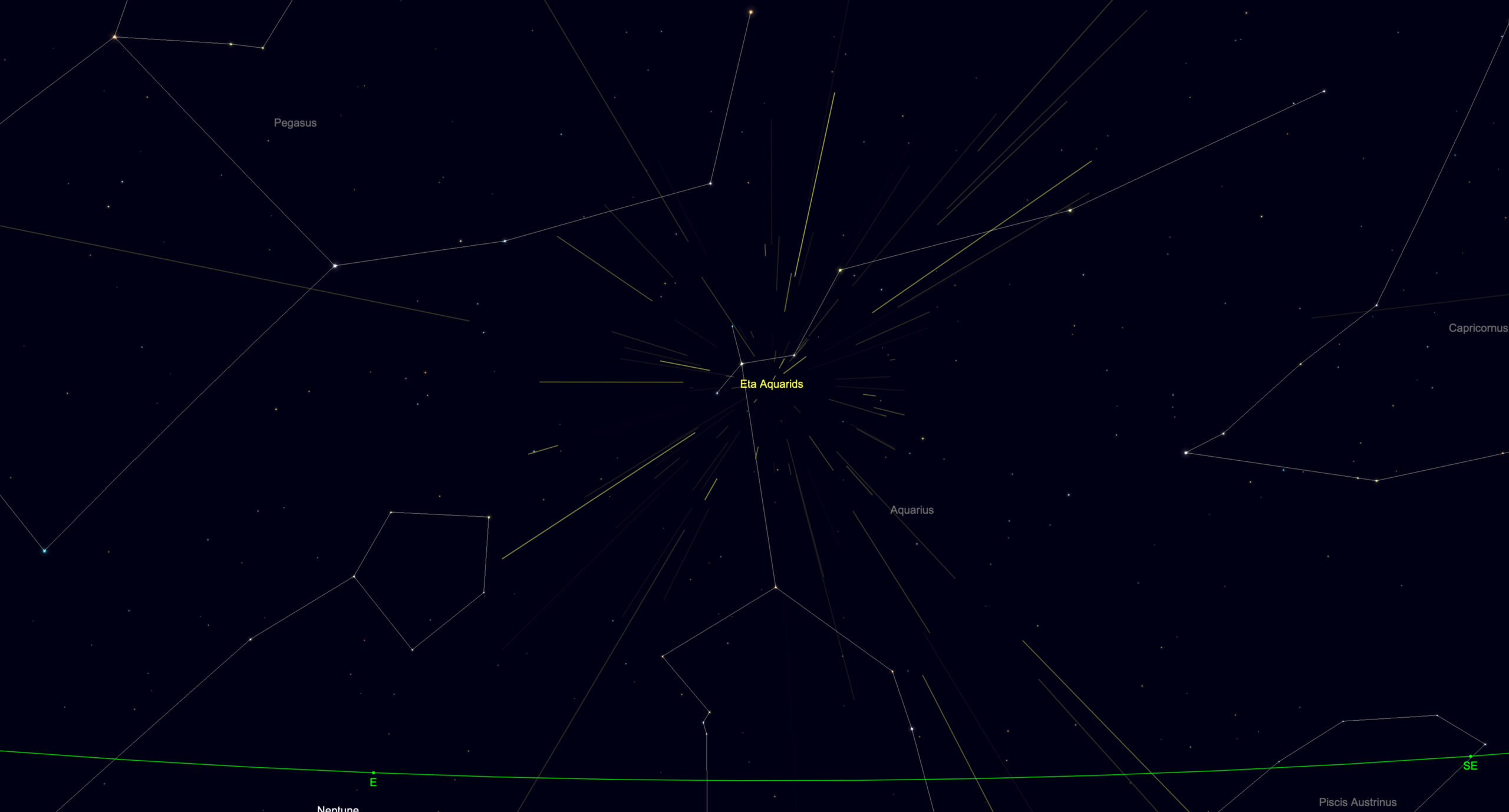
the Eta Aquarids appear to radiate from the constellation Aquarius.

The Eta Aquarids radiate from the constellation Aquarius. (Image credit: Jules-Pierre Malartre/Starry Night)

When to look

The best time to look for the Eta Aquarids is in the early morning hours of May 6, just before dawn. By this time, Aquarius is at its highest in the sky (albeit still fairly low).
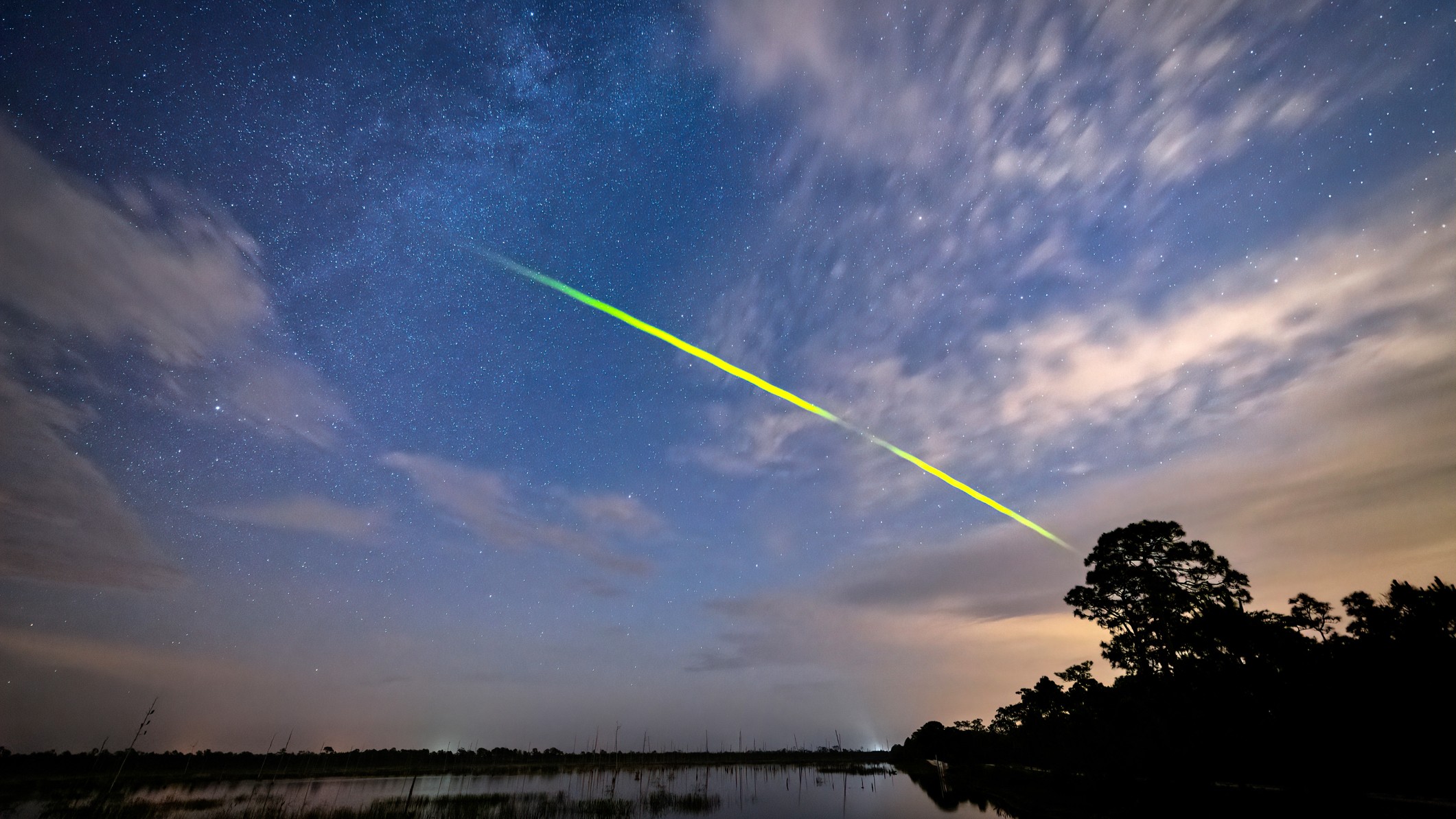
bright green streak of light in the sky.

Bright green meteor from the Eta Aquarid meteor shower captured from the Babcock Wildlife Management Area near Punta Gorda, Florida. (Image credit: Diana Robinson Photography via Getty Images)

What are they?

When you see an Aquarid meteor, you’re watching a tiny piece of Halley’s Comet burn up in Earth’s atmosphere. Halley’s Comet is a periodic comet that returns to Earth’s vicinity once every 75 years or so. It was last here in 1986 and is projected to return in 2061. The comet, officially called 1P/Halley, is named after English astronomer Edmond Halley.

Viewing tips
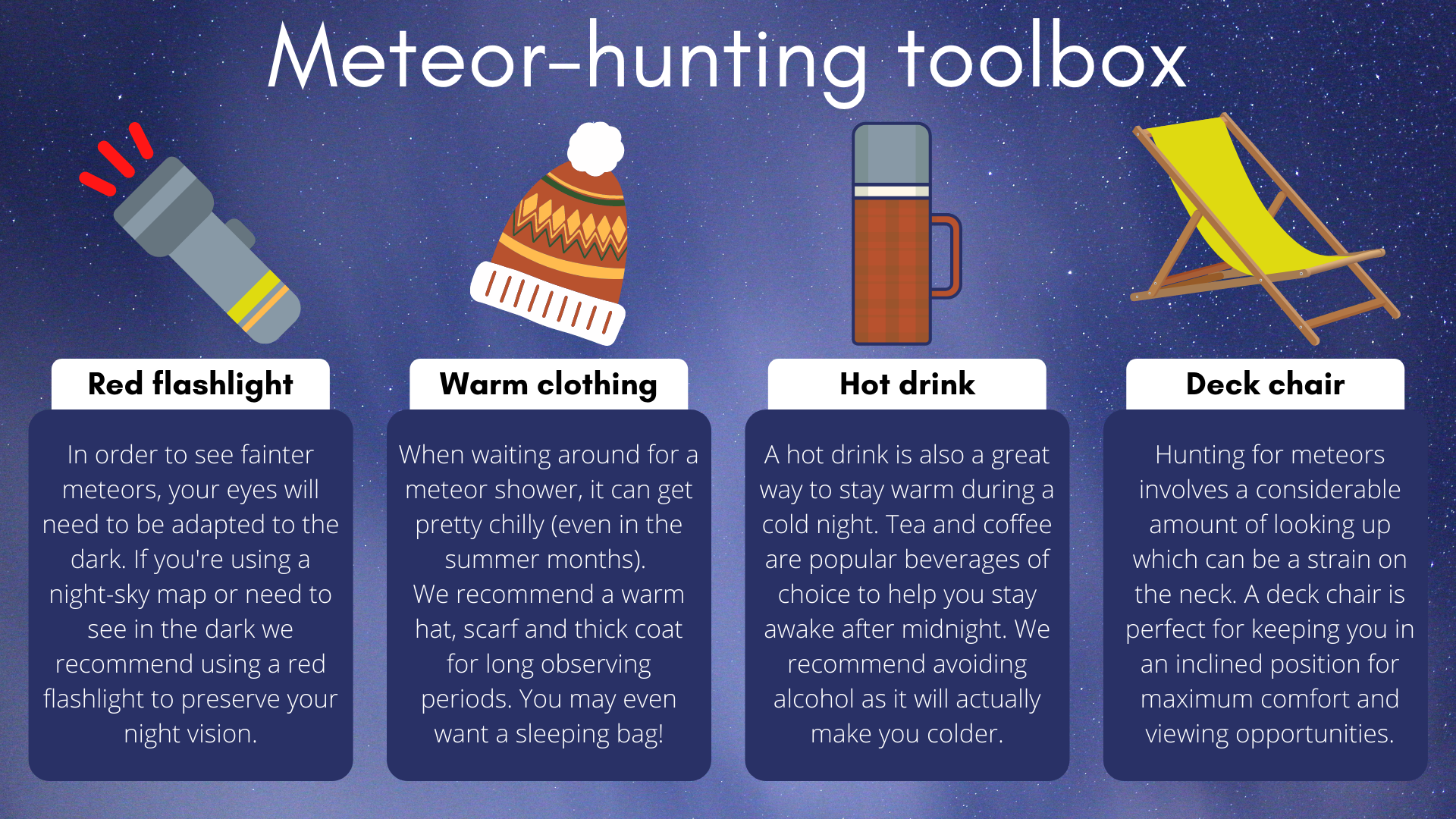
Infographic with a red flashlight, woolly hat, flask and a deck chair.

To successfully hunt for shooting stars you need to be prepared. (Image credit: Created in Canva by Daisy Dobrijevic)
  • Head to a dark location away from city lights if possible
  • Once there, allow your eyes at least 20-30 minutes to adjust to the darkness and avoid looking at your phone during this time (easier said than done!), as this will reset your night vision
  • Wrap up warm, as you could be outside for a long time. Meteors can come in bursts, so give yourself at least an hour or two to enjoy the show.

If you’re hoping to capture an Aquarid meteor on camera, our guide on how to photograph meteor showers can help. We’ve also rounded up the best cameras for astrophotography if you’re thinking of upgrading your kit for the next big sky show.

Space

<em>Editor’s Note: If you snap a photo of an Eta Aquarid meteor and would like to share it with Space.com’s readers, send your photo(s), comments, and your name and location to spacephotos@space.com.

No Result
View All Result

Recent Posts

  • These 2 companies want to start removing space junk from orbit in 2027
  • Forget the AT-ST, at 20% off this Lego Star Wars AT-TE is the king of Star Wars walkers
  • Former NASA chief Jim Bridenstine takes over as CEO of Quantum Space
  • NASA is making a powerful new ion engine to send astronauts to Mars — and it just passed its 1st test
  • Don’t miss the Eta Aquarid meteor shower 2026 peak tonight! Viewing times, locations and tips

Categories

  • Excursions
  • Kepler Mission
  • NASA
  • NASA Breaking News
  • Physical Preparation
  • Preparation
  • Space News
  • Space Station News
  • Spacewalks
  • Tours
  • Uncategorized
  • Weightlessness Training
  • What Not to Pack
  • What to Pack

Meta

  • Log in
  • Entries feed
  • Comments feed
  • WordPress.org
  • Home
  • Start Here
  • Preparing for Your Trip
  • Space Tourism Companies
  • Space Tours
  • Contact

© 2026 JNews - Premium WordPress news & magazine theme by Jegtheme.

No Result
View All Result
  • About
  • Contact
  • Feeds
  • Frequently Asked Questions
  • Preparing for Your Trip
    • Insurance and Legal Waivers
    • Physical and Medical Requirements
    • Training Programs
    • What to Expect
  • Privacy Policy
  • Space Tourism Companies
    • Axiom Space
    • Blue Origin
    • Blue Origin vs Virgin Galactic
    • Comparison Chart: Features, Pricing, Booking
    • SpaceX
    • Virgin Galactic
    • World View (stratospheric balloon flights)
  • Space Tours
    • Custom & Luxury Packages
    • Duration, Training, Costs
    • Experiences
    • Future Moon/Mars Options
    • Orbital Flights
    • Parabolic Flight Experiences
    • Private Missions
    • Stratospheric Balloon Flights
    • Suborbital Flights
    • Zero-Gravity Flights
  • Spaceflight Technologies
    • Space Tourism Balloon
  • Start Here
    • How to Book a Space Tour
    • Intro to Commercial Spaceflight
    • Is Space Tourism Safe?
    • Space Travel FAQs
    • View Earth from the Edge
    • What to Pack
  • Tours in Space is your launchpad to the world of space tourism

© 2026 JNews - Premium WordPress news & magazine theme by Jegtheme.