• Home
  • About
  • FAQ
  • Feeds
  • Glossary
  • Contact
Tours In Space
  • Home
  • Start Here
    • Intro to Commercial Spaceflight
    • How to Book a Space Tour
    • Is Space Tourism Safe?
    • Space Travel FAQs
    • View Earth from the Edge
    • What to Pack
  • Preparing for Your Trip
    • Insurance and Legal Waivers
    • Physical and Medical Requirements
    • Training Programs
    • What to Expect
  • Space Tourism Companies
    • Axiom Space
    • Blue Origin
    • SpaceX
    • Virgin Galactic
    • World View (stratospheric balloon flights)
    • Blue Origin vs Virgin Galactic
    • Comparison Chart: Features, Pricing, Booking
  • Space Tours
    • Custom & Luxury Packages
    • Duration, Training, Costs
    • Experiences
    • Future Moon/Mars Options
    • Orbital Flights
    • Parabolic Flight Experiences
    • Private Missions
    • Stratospheric Balloon Flights
    • Suborbital Flights
    • Zero-Gravity Flights
  • Spaceflight Technologies
    • Space Tourism Balloon
No Result
View All Result
  • Home
  • Start Here
    • Intro to Commercial Spaceflight
    • How to Book a Space Tour
    • Is Space Tourism Safe?
    • Space Travel FAQs
    • View Earth from the Edge
    • What to Pack
  • Preparing for Your Trip
    • Insurance and Legal Waivers
    • Physical and Medical Requirements
    • Training Programs
    • What to Expect
  • Space Tourism Companies
    • Axiom Space
    • Blue Origin
    • SpaceX
    • Virgin Galactic
    • World View (stratospheric balloon flights)
    • Blue Origin vs Virgin Galactic
    • Comparison Chart: Features, Pricing, Booking
  • Space Tours
    • Custom & Luxury Packages
    • Duration, Training, Costs
    • Experiences
    • Future Moon/Mars Options
    • Orbital Flights
    • Parabolic Flight Experiences
    • Private Missions
    • Stratospheric Balloon Flights
    • Suborbital Flights
    • Zero-Gravity Flights
  • Spaceflight Technologies
    • Space Tourism Balloon
No Result
View All Result
Tours In Space
No Result
View All Result
Home Space News

NASA wants to land astronauts on the moon in 2028. Will SpaceX’s Starship or Blue Origin’s Blue Moon lander be ready in time?

Ensign by Ensign
May 5, 2026
in Space News
0
NASA wants to land astronauts on the moon in 2028. Will SpaceX’s Starship or Blue Origin’s Blue Moon lander be ready in time?
189
SHARES
1.5k
VIEWS
Share on FacebookShare on Twitter

With the Artemis 2 crew back home after their historic circumlunar voyage, attention now turns to getting astronauts back on the surface of the moon. But how are the landers that will make such an ambitious endeavor possible progressing?

NASA recently outlined a revised plan for Artemis 3, which has the mission performing a crewed test in Earth orbit in late 2027 rather than the previously planned 2028 lunar landing. The mission will instead be an Earth-orbit rendezvous of NASA’s Orion spacecraft with one or both of the program’s moon landers, analogous to the Apollo 9 mission, setting up a lunar landing attempt with Artemis 4 in late 2028. But this plan relies on swift action by NASA’s partners.

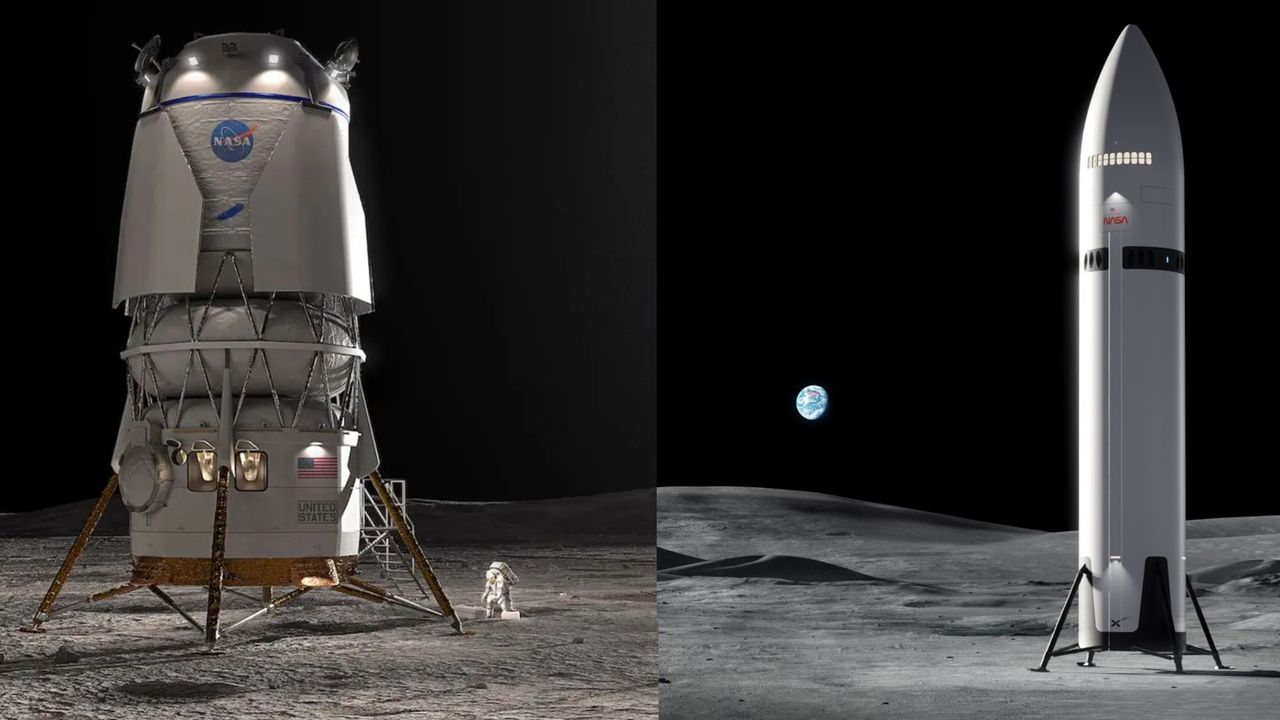
The agency earlier selected two private companies to provide crewed Artemis moon landers: SpaceX‘s Starship Human Landing System (HLS) and Blue Origin‘s Blue Moon lander, both of which are in development and facing tight deadlines for future missions.


You may like

With a number of major milestones on the horizon, the coming months will indicate if these landers can be readied for their planned 2027 orbital tests.

SpaceX and Starship HLS

SpaceX founder and CEO Elon Musk has long talked about getting humans to Mars, but recently he’s shifted his attention to the moon, despite earlier calling our natural satellite “a distraction.” Now, he’s talking about a lunar settlement. First, however, SpaceX needs to get its Starship HLS lander ready.

That vehicle, which NASA selected in 2021, is a specific configuration of Starship, which comprises the 33-engine Super Heavy booster and Starship, or “Ship,” upper stage. SpaceX says that, as of late October last year, it has hit 49 milestones related to developing the subsystems, infrastructure and operations needed to land astronauts on the moon. These include lunar life support, Raptor cold start demonstrations, Raptor lunar landing throttle tests, software, debris protection and elevator and airlock tests. The key to the major progress needed in the next 18 months, however, is flying Starship regularly and demonstrating on-orbit docking and propellant transfer.

Starship has flown 11 suborbital missions over the past three years. The 12th flight, expected later this month, will be the debut of the larger and more powerful Version 3, equipped with its new V3 Raptor engines, which will be used for orbital flights and operational payloads.

Space

In its multiple flight tests, SpaceX has hit some big development milestones, including relighting engines in space, payload deployment demonstrations and spectacular “chopstick” booster recoveries. But many more lie ahead, with time running out. These include not just reaching Earth orbit by also demonstrating orbital refueling, which involves a propellant transfer demo between two Starship upper stages. This is required, as the HLS Starship needs to be fueled up in Earth orbit with tanker missions to allow it to head for the moon.

This requirement alone demands a high launch cadence, with multiple tanker flights needed to fuel a single lunar mission, while there is also a need to verify long-duration life support for astronauts. There’s lots on the menu for SpaceX for HLS advancement, and a positive first flight of Starship V3 will be crucial.
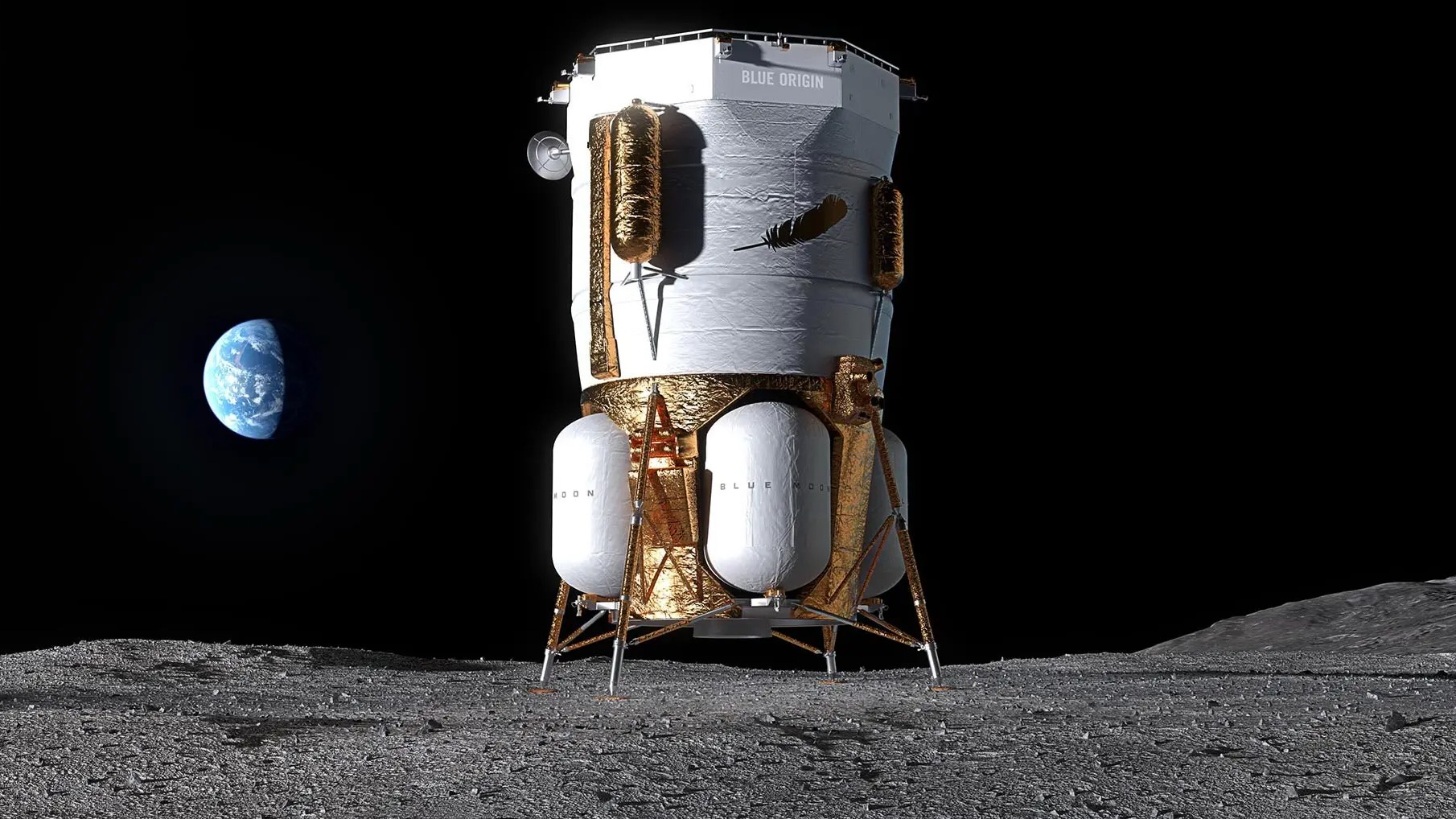
Artist's illustration of a large robotic white and gold lander on the moon, with earth in the background

Artist’s illustration of Blue Origin’s robotic Blue Moon Mark 1 lander on the moon. (Image credit: Blue Origin)

Blue Origin’s Blue Moon

Blue Origin’s Blue Moon Mk2 crewed variant lunar lander is a simpler system compared to Starship HLS, selected in 2023 and intended for the Artemis 5 mission and beyond, rather than what is now Artemis 4. But the shakeup of NASA’s Artemis plans has opened the door to an earlier landing, if Blue Moon can be made ready.


What to read next

Unlike SpaceX, Blue Origin is pursuing a stepwise approach, beginning with an uncrewed cargo lander before attempting a crewed system. The biggest test on the horizon is the launch of the smaller Blue Moon Mark-1 (Mk1) cargo lander, which is expected to launch to the moon later this year after recently undergoing vacuum chamber testing. One major issue, however, is the grounding of its rocket ride — Blue Origin’s powerful New Glenn — after a recent launch anomaly.

Getting the New Glenn launcher and uncrewed Mk1 lander ready and then acing a lunar landing will be crucial to Blue’s lunar ambitions with Artemis. As with Starship HLS, there is also the need to develop and test the life support systems for Blue Moon Mk2.

The company is typically reserved in terms of public updates on the program, but recent Congressional meetings have provided some insight into developments.

In a NASA budget hearing held by the House Committee on Appropriations, Subcommittee on Commerce, Justice, Science, and Related Agencies on April 27, NASA Administrator Jared Isaacman said that the companies assured him of their efforts to be ready.

“I’ve received responses from both vendors, both SpaceX and Blue Origin, to meet our needs for a late 2027 rendezvous docking and test the interoperability out of both landers in advance of a landing attempt in 2028,” Isaacman said.

NASA has indicated it is willing to fly with whichever lander is ready in late 2027 for Artemis 3, meaning the race is on, and could determine whether SpaceX or Blue Origin gets to ferry astronauts down to the moon on Artemis 4.

Tags: Blue OriginNASASpaceX
No Result
View All Result

Recent Posts

  • NGA Rapid Capabilities Office to embrace speed and risk-taking
  • Scolese puts talent at center of NRO transition as he prepares to step down
  • Bringing imagery and communications under one roof
  • Eutelsat and Station Satcom sign agreement to scale LEO services for maritime fleet
  • ‘Thor’ hammered down 15 years ago, and it’s still the only Marvel movie to do the God of Thunder justice

Categories

  • Excursions
  • Kepler Mission
  • NASA
  • NASA Breaking News
  • Physical Preparation
  • Preparation
  • Space News
  • Space Station News
  • Spacewalks
  • Tours
  • Uncategorized
  • Weightlessness Training
  • What Not to Pack
  • What to Pack

Meta

  • Log in
  • Entries feed
  • Comments feed
  • WordPress.org
  • Home
  • Start Here
  • Preparing for Your Trip
  • Space Tourism Companies
  • Space Tours
  • Contact

© 2026 JNews - Premium WordPress news & magazine theme by Jegtheme.

No Result
View All Result
  • About
  • Contact
  • Feeds
  • Frequently Asked Questions
  • Preparing for Your Trip
    • Insurance and Legal Waivers
    • Physical and Medical Requirements
    • Training Programs
    • What to Expect
  • Privacy Policy
  • Space Tourism Companies
    • Axiom Space
    • Blue Origin
    • Blue Origin vs Virgin Galactic
    • Comparison Chart: Features, Pricing, Booking
    • SpaceX
    • Virgin Galactic
    • World View (stratospheric balloon flights)
  • Space Tours
    • Custom & Luxury Packages
    • Duration, Training, Costs
    • Experiences
    • Future Moon/Mars Options
    • Orbital Flights
    • Parabolic Flight Experiences
    • Private Missions
    • Stratospheric Balloon Flights
    • Suborbital Flights
    • Zero-Gravity Flights
  • Spaceflight Technologies
    • Space Tourism Balloon
  • Start Here
    • How to Book a Space Tour
    • Intro to Commercial Spaceflight
    • Is Space Tourism Safe?
    • Space Travel FAQs
    • View Earth from the Edge
    • What to Pack
  • Tours in Space is your launchpad to the world of space tourism

© 2026 JNews - Premium WordPress news & magazine theme by Jegtheme.