• Home
  • About
  • FAQ
  • Feeds
  • Glossary
  • Contact
Tours In Space
  • Home
  • Start Here
    • Intro to Commercial Spaceflight
    • How to Book a Space Tour
    • Is Space Tourism Safe?
    • Space Travel FAQs
    • View Earth from the Edge
    • What to Pack
  • Preparing for Your Trip
    • Insurance and Legal Waivers
    • Physical and Medical Requirements
    • Training Programs
    • What to Expect
  • Space Tourism Companies
    • Axiom Space
    • Blue Origin
    • SpaceX
    • Virgin Galactic
    • World View (stratospheric balloon flights)
    • Blue Origin vs Virgin Galactic
    • Comparison Chart: Features, Pricing, Booking
  • Space Tours
    • Custom & Luxury Packages
    • Duration, Training, Costs
    • Experiences
    • Future Moon/Mars Options
    • Orbital Flights
    • Parabolic Flight Experiences
    • Private Missions
    • Stratospheric Balloon Flights
    • Suborbital Flights
    • Zero-Gravity Flights
  • Spaceflight Technologies
    • Space Tourism Balloon
No Result
View All Result
  • Home
  • Start Here
    • Intro to Commercial Spaceflight
    • How to Book a Space Tour
    • Is Space Tourism Safe?
    • Space Travel FAQs
    • View Earth from the Edge
    • What to Pack
  • Preparing for Your Trip
    • Insurance and Legal Waivers
    • Physical and Medical Requirements
    • Training Programs
    • What to Expect
  • Space Tourism Companies
    • Axiom Space
    • Blue Origin
    • SpaceX
    • Virgin Galactic
    • World View (stratospheric balloon flights)
    • Blue Origin vs Virgin Galactic
    • Comparison Chart: Features, Pricing, Booking
  • Space Tours
    • Custom & Luxury Packages
    • Duration, Training, Costs
    • Experiences
    • Future Moon/Mars Options
    • Orbital Flights
    • Parabolic Flight Experiences
    • Private Missions
    • Stratospheric Balloon Flights
    • Suborbital Flights
    • Zero-Gravity Flights
  • Spaceflight Technologies
    • Space Tourism Balloon
No Result
View All Result
Tours In Space
No Result
View All Result
Home Space News

Watch NASA’s new Mars helicopter rotor break the speed of sound (video)

Ensign by Ensign
May 18, 2026
in Space News
0
Watch NASA’s new Mars helicopter rotor break the speed of sound (video)
189
SHARES
1.5k
VIEWS
Share on FacebookShare on Twitter

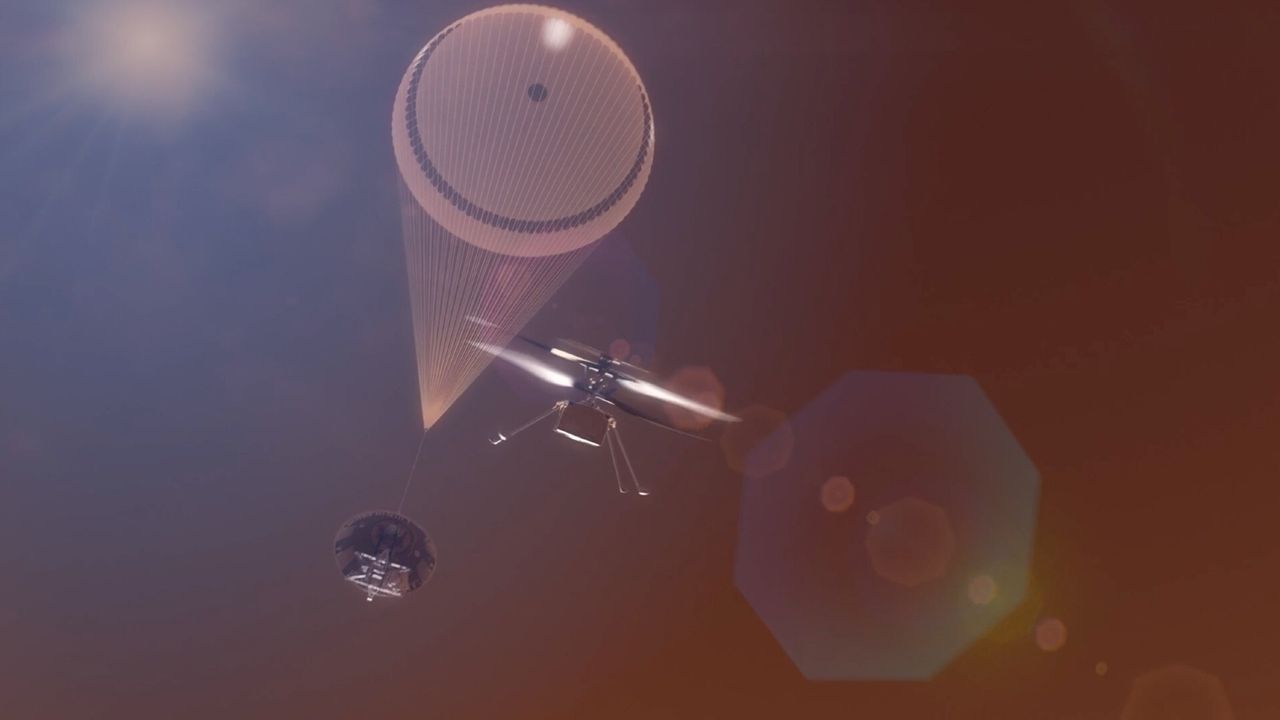
NASA is testing the limits of future Mars aircraft as it works to develop a next-generation fleet of helicopters that will fly through the thin atmosphere of the Red Planet.
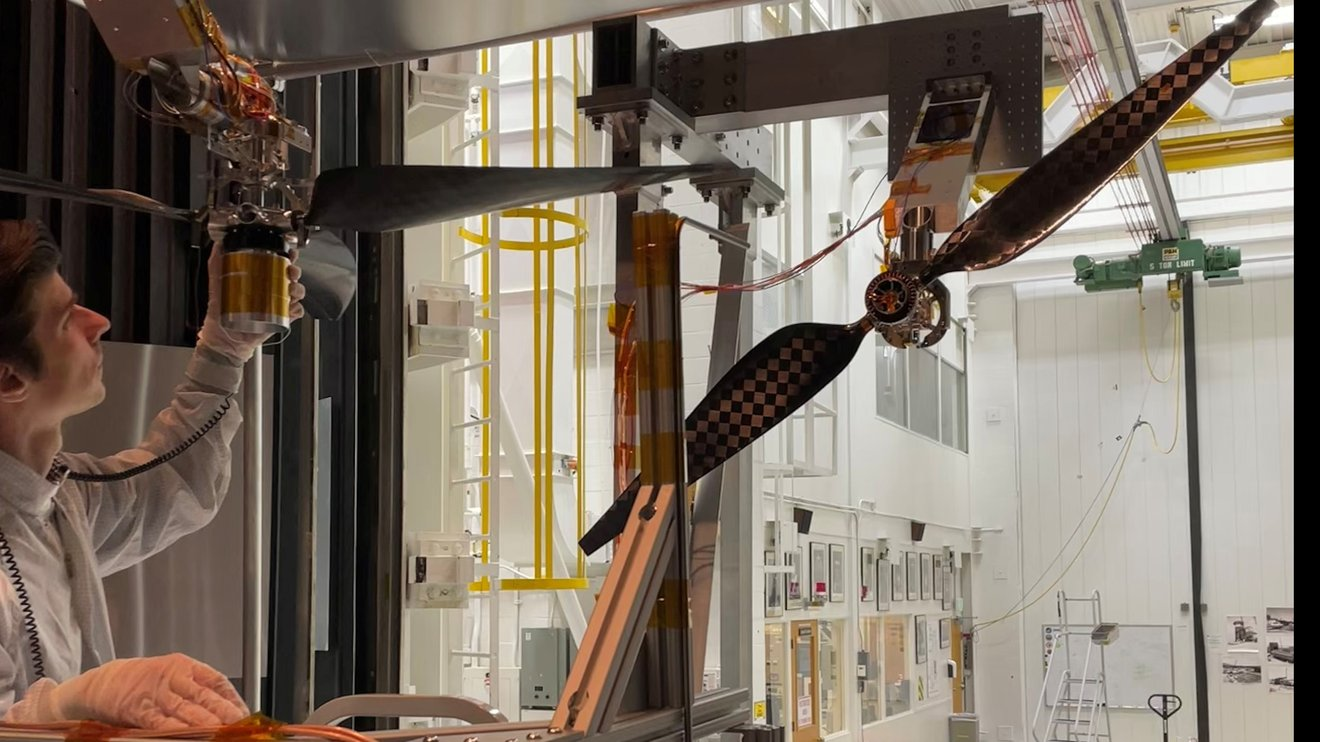
In March, engineers at NASA’s Jet Propulsion Laboratory (JPL) in Southern California completed tests on rotor designs that could be used to fly those drones, spinning the experimental helicopter blades fast enough for their tips to exceed Mach 1 (the speed of sound).

A total of 137 tests were performed inside a state-of-the-art chamber that can simulate Mars’ atmosphere by replacing the air with a low-density concentration of carbon dioxide. This work provided NASA with valuable data, which engineers say could increase the vehicle’s lift capability by 30%, allowing future Mars helicopters to carry heavier science instruments and bigger batteries over greater distances.


You may like

a helicopter rotor is secured on a test mount as someone on the left inspects.

Engineer Jaakko Karras inspects a next-generation Mars helicopter rotor blade prior to testing it at supersonic speeds in the Space Simulator at NASA’s Jet Propulsion Laboratory in November 2025. (Image credit: NASA/JPL-Caltech)

The first-ever aerodynamic flight on Mars was performed on April 19, 2021 by NASA’s Ingenuity helicopter, a prototype designed to determine if a helicopter could be effective in such a thin atmosphere. The little rotorcraft far exceeded mission managers’ expectations, completing a total of 72 flights over the course of nearly three years.

Ingenuity was not built to operate as a full science vehicle, but NASA’s next Mars helicopters are being designed to do just that. “NASA had a great run with the Ingenuity Mars Helicopter,” Al Chen, JPL’s Mars Exploration Program manager, said in a May 7 JPL statement. “But we are asking these next-generation aircraft to do even more at the Red Planet.”

Teams at JPL mounted a three-bladed rotor inside the modified chamber, which also blasted the blades with wind to simulate flight conditions. They spun the rotor at increasing speeds until its tips eventually reached Mach 1.08 without signs of damage.

Engineers also tested a longer, two-bladed rotor for SkyFall, a mission concept designed to send three next-generation Mars helicopters to the Red Planet in December 2028. The increased length of the two-bladed version allowed the rotor to reach the same near-supersonic speeds with fewer rotations per minute. Those tests collected data that are being integrated into the SkyFall mission team’s design specifications, according to the same statement.

Space

“The successful testing of these rotors was a major step toward proving the feasibility of flight in more demanding environments, which is key for next-gen vehicles,” Shannah Withrow-Maser, an aerodynamicist at NASA’s Ames Research Center in Silicon Valley, said in the statement.

The successful tests point toward a new class of Mars exploration vehicle, capable of carrying instruments over terrain that rovers may struggle to reach and that orbiters may be too far away to study.

Tags: Marsmars explorationMars HelicopterNASARed Planet
No Result
View All Result

Recent Posts

  • Watch NASA’s new Mars helicopter rotor break the speed of sound (video)
  • Venus and a slender crescent moon steal the show after sunset on May 18
  • SpaceX Dragon capsule delivers science and supplies to space station
  • Watch an asteroid the size of a blue whale hurtle towards Earth live online May 18
  • Giant radio telescope sees Artemis 2 astronauts on Orion flying around the moon. ‘There are 4 people in those pixels.’

Categories

  • Excursions
  • Kepler Mission
  • NASA
  • NASA Breaking News
  • Physical Preparation
  • Preparation
  • Space News
  • Space Station News
  • Spacewalks
  • Tours
  • Uncategorized
  • Weightlessness Training
  • What Not to Pack
  • What to Pack

Meta

  • Log in
  • Entries feed
  • Comments feed
  • WordPress.org
  • Home
  • Start Here
  • Preparing for Your Trip
  • Space Tourism Companies
  • Space Tours
  • Contact

© 2026 JNews - Premium WordPress news & magazine theme by Jegtheme.

No Result
View All Result
  • About
  • Contact
  • Feeds
  • Frequently Asked Questions
  • Preparing for Your Trip
    • Insurance and Legal Waivers
    • Physical and Medical Requirements
    • Training Programs
    • What to Expect
  • Privacy Policy
  • Space Tourism Companies
    • Axiom Space
    • Blue Origin
    • Blue Origin vs Virgin Galactic
    • Comparison Chart: Features, Pricing, Booking
    • SpaceX
    • Virgin Galactic
    • World View (stratospheric balloon flights)
  • Space Tours
    • Custom & Luxury Packages
    • Duration, Training, Costs
    • Experiences
    • Future Moon/Mars Options
    • Orbital Flights
    • Parabolic Flight Experiences
    • Private Missions
    • Stratospheric Balloon Flights
    • Suborbital Flights
    • Zero-Gravity Flights
  • Spaceflight Technologies
    • Space Tourism Balloon
  • Start Here
    • How to Book a Space Tour
    • Intro to Commercial Spaceflight
    • Is Space Tourism Safe?
    • Space Travel FAQs
    • View Earth from the Edge
    • What to Pack
  • Tours in Space is your launchpad to the world of space tourism

© 2026 JNews - Premium WordPress news & magazine theme by Jegtheme.