• Home
  • About
  • FAQ
  • Feeds
  • Glossary
  • Contact
Tours In Space
  • Home
  • Start Here
    • Intro to Commercial Spaceflight
    • How to Book a Space Tour
    • Is Space Tourism Safe?
    • Space Travel FAQs
    • View Earth from the Edge
    • What to Pack
  • Preparing for Your Trip
    • Insurance and Legal Waivers
    • Physical and Medical Requirements
    • Training Programs
    • What to Expect
  • Space Tourism Companies
    • Axiom Space
    • Blue Origin
    • SpaceX
    • Virgin Galactic
    • World View (stratospheric balloon flights)
    • Blue Origin vs Virgin Galactic
    • Comparison Chart: Features, Pricing, Booking
  • Space Tours
    • Custom & Luxury Packages
    • Duration, Training, Costs
    • Experiences
    • Future Moon/Mars Options
    • Orbital Flights
    • Parabolic Flight Experiences
    • Private Missions
    • Stratospheric Balloon Flights
    • Suborbital Flights
    • Zero-Gravity Flights
  • Spaceflight Technologies
    • Space Tourism Balloon
No Result
View All Result
  • Home
  • Start Here
    • Intro to Commercial Spaceflight
    • How to Book a Space Tour
    • Is Space Tourism Safe?
    • Space Travel FAQs
    • View Earth from the Edge
    • What to Pack
  • Preparing for Your Trip
    • Insurance and Legal Waivers
    • Physical and Medical Requirements
    • Training Programs
    • What to Expect
  • Space Tourism Companies
    • Axiom Space
    • Blue Origin
    • SpaceX
    • Virgin Galactic
    • World View (stratospheric balloon flights)
    • Blue Origin vs Virgin Galactic
    • Comparison Chart: Features, Pricing, Booking
  • Space Tours
    • Custom & Luxury Packages
    • Duration, Training, Costs
    • Experiences
    • Future Moon/Mars Options
    • Orbital Flights
    • Parabolic Flight Experiences
    • Private Missions
    • Stratospheric Balloon Flights
    • Suborbital Flights
    • Zero-Gravity Flights
  • Spaceflight Technologies
    • Space Tourism Balloon
No Result
View All Result
Tours In Space
No Result
View All Result
Home Space News

Explosive daytime fireball may have dropped meteorites on Ohio — here’s where to look and what to do if you find one

Ensign by Ensign
March 19, 2026
in Space News
0
Explosive daytime fireball may have dropped meteorites on Ohio — here’s where to look and what to do if you find one
189
SHARES
1.5k
VIEWS
Share on FacebookShare on Twitter

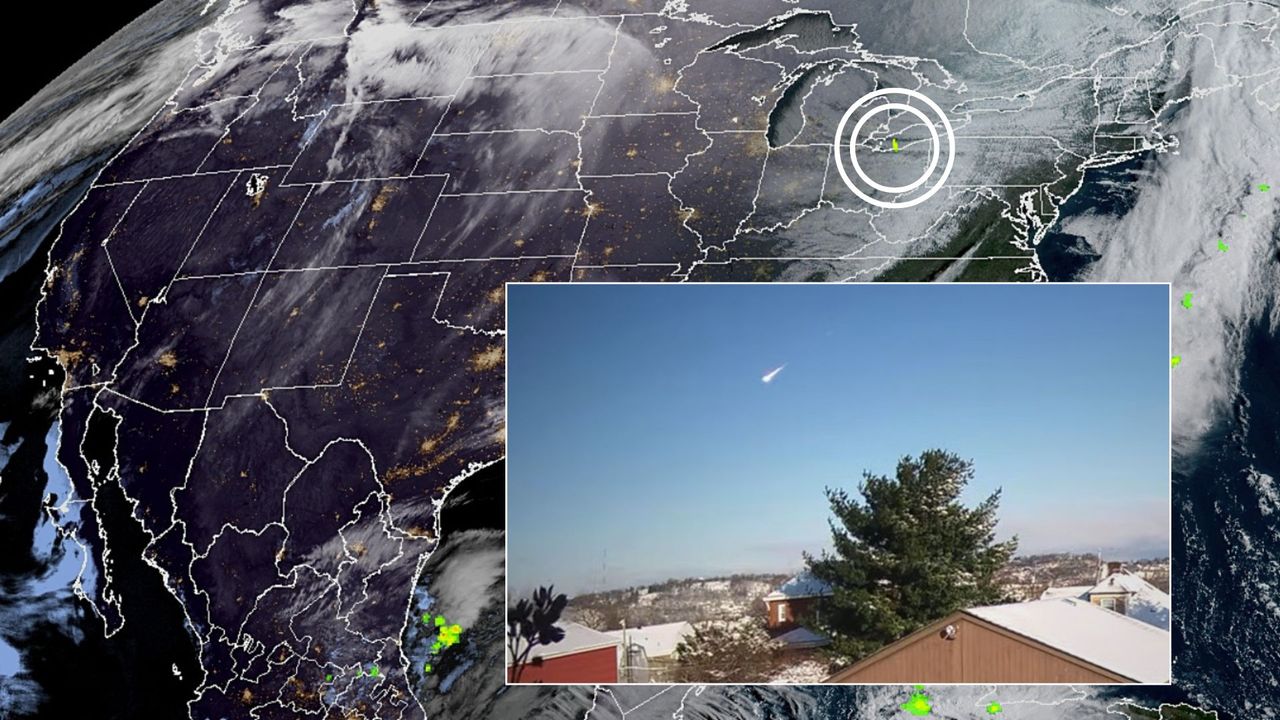
A rare daytime fireball burst to life in the skies over the Midwest on the morning of March 17, creating a loud sonic boom that rattled houses as the meteor arced Earthward before fracturing over northern Ohio with the force of 250 tons of TNT. Now, the hunt is on to find the precious shards of the ancient wanderer, which carry significant scientific and monetary value.

The 7-ton (7,000-kilogram) meteoroid struck Earth’s atmosphere at 8:57 a.m. EDT (12:57 GMT), leaving a fiery trail as it compressed the air molecules in its path, prompting over 200 fireball reports on the American Meteor Society website (AMS).

Its explosive fragmentation caused pressure waves to propagate through the air, triggering sonic booms that were heard through much of northern Ohio, while scattering fragments in the vicinity of Medina County, according to NASA. So what happened to these fragments?

Article continues below


You may like

Where did it land?

The fireball’s journey through the atmosphere ended abruptly between the cities of Akron and Canton, Ohio, according to the American Meteor Society’s computer generated map, which draws data from eyewitness reports.

A man with a white moustache and graying hair with glasses on top of his head and a navy jacket stands in front of a frozen lake with snow in the background

Robert Lunsford

Fireball report coordinator

Robert Lunsford is the fireball report coordinator, newsletter editor and treasurer at the American Meteor Society, one of the leading sources of information on meteor showers.

However, AMS meteor expert Robert Lunsford adds a note of caution to any hoping to use the data to pinpoint fragments of the meteor. “It should be known that this trajectory is obtained from data provided by those who filled out our reports,” Lunsford told Space.com in an email.

“Many of these folks are a bit haphazard in filling out these forms, especially when it comes to time and direction. I had many reports dated 2025 and several February. Therefore, this area may be off by many miles in any direction”.

What do the fragments look like?

The meteoroid that created the spectacular daytime fireball is thought to have measured 6 feet (1.8 meter) in diameter when it struck Earth’s atmosphere, However, the individual shards that you might be able to find on the ground following its demise are likely to be much smaller — just 1-2 inches (2.5-5 centimetres) in diameter.

Breaking space news, the latest updates on rocket launches, skywatching events and more!

“They would appear different from normal rocks found in the area as they usually have a fusion crust, created by the intense heat while passing through the atmosphere,” said Lunsford. “They would probably look like bits of charcoal on the outside and lighter on the inside if broken.”

Several Ohio residents have already claimed to have found chunks of the meteor, including one family from Medina County who found a walnut-sized rock in their driveway. “We haven’t touched it yet. It’s definitely black like a black coal,” she said, “You can see some areas that’s been melted as it came through, I guess,” said Ohio resident December Harris in an interview with Fox 8 News.

What to do if you find one

Meteorites are hardy enough to survive the trial of atmospheric entry, but you should still handle them with care if you’re lucky enough to find a shard lying on the ground. Thankfully, any pieces you find won’t be hot to the touch — even if you find them immediately after they’ve fallen.


What to read next

“They reach terminal velocity of about 300 mph while still many miles up in the atmosphere,” explained Lunsford. “The last part of their flight is spent free-falling through frigid air (even in summer) before reaching the ground.”

Nikon Z8
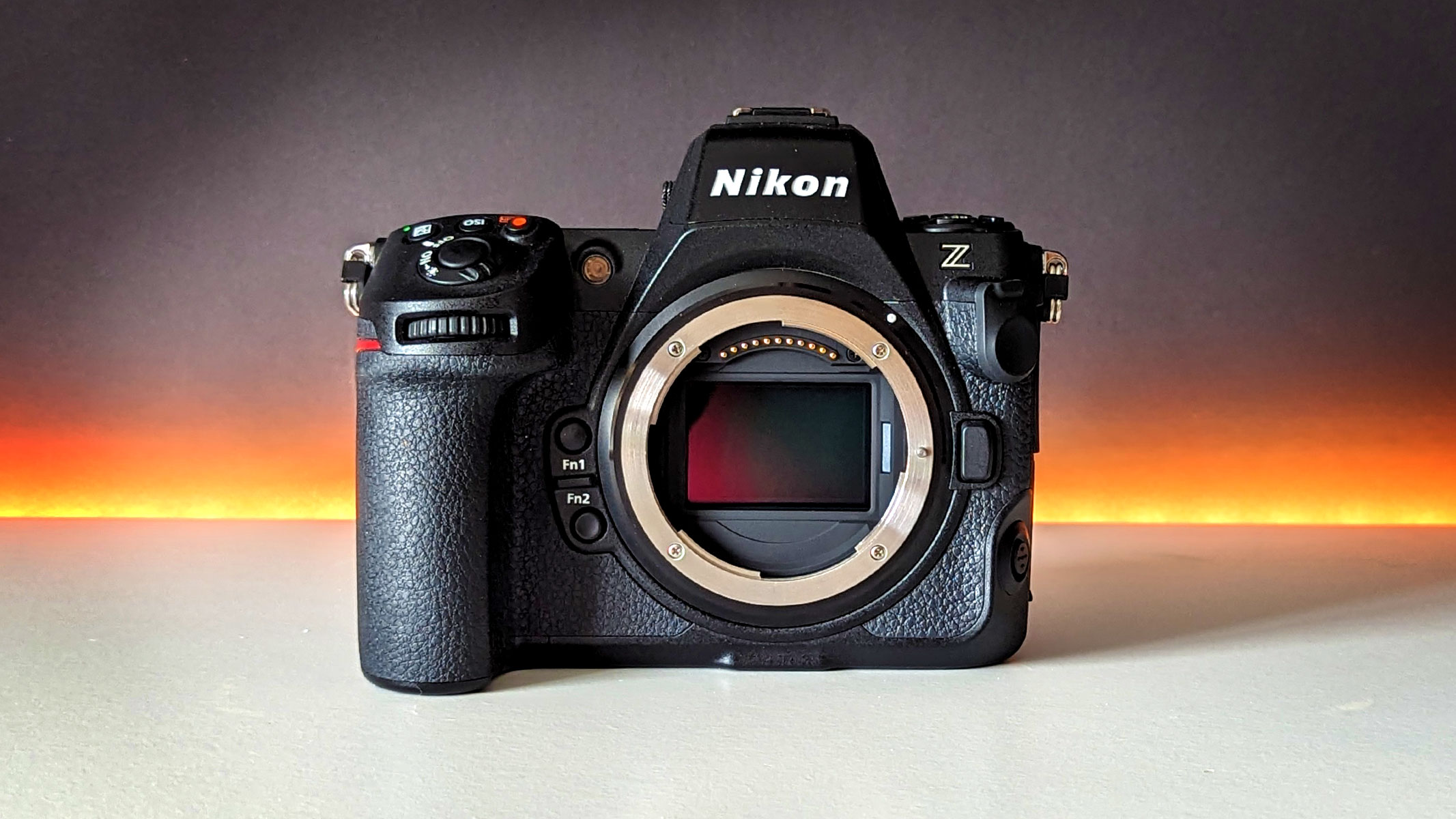
Nikon Z8 on a white table

(Image credit: Jase Parnell-Brookes)

The Nikon Z8 excels in just about every department and we rate it as the best overall camera out there. It features a full-frame 45.7MP sensor, 8K video capabilities, excellent low-light performance, very high FPS burst speed and more. It is pricey, but you get a lot of bang for your buck. Check out our Nikon Z8 review for a more in-depth look.

Try not to touch any potential meteorites with your bare hands, as the oils on your skin could degrade well-preserved samples of primordial matter that date back to the formation of our solar system billions of years ago. That said, the ancient rocks pose no health hazard to humans. “Meteorites may be radioactive, but at levels far below being dangerous,” continued Lunsford.

If you think you’ve found a space rock, you should first compare it to images of confirmed meteorites online, according to Lunsford. If it’s a good match then you could then contact the geology department of your nearest university and send them clear images of your candidate meteorite. You can also take a look at it through a microscope using our home guide to identifying and observing meteorite features!

While the odds of it dropping fragments on Earth are quite low, the next major meteor shower is the Lyrids, which is active from April 16-25 and comes to a peak on the night of April 21-22, when up to 18 meteors — and the occasional fireball — could be spotted each hour. Why not get ready for the natural light show by reading our guide to photographing shooting stars with a camera? While you’re at it be sure to peruse our roundups of the best lenses and cameras for capturing the night sky.

<em>Editor’s Note: If you would like to share your astrophotography with Space.com’s readers, then please send your photo(s), comments, and your name and location to spacephotos@space.com.

Tags: rocket launch
No Result
View All Result

Recent Posts

  • NGA Rapid Capabilities Office to embrace speed and risk-taking
  • Scolese puts talent at center of NRO transition as he prepares to step down
  • Bringing imagery and communications under one roof
  • Eutelsat and Station Satcom sign agreement to scale LEO services for maritime fleet
  • ‘Thor’ hammered down 15 years ago, and it’s still the only Marvel movie to do the God of Thunder justice

Categories

  • Excursions
  • Kepler Mission
  • NASA
  • NASA Breaking News
  • Physical Preparation
  • Preparation
  • Space News
  • Space Station News
  • Spacewalks
  • Tours
  • Uncategorized
  • Weightlessness Training
  • What Not to Pack
  • What to Pack

Meta

  • Log in
  • Entries feed
  • Comments feed
  • WordPress.org
  • Home
  • Start Here
  • Preparing for Your Trip
  • Space Tourism Companies
  • Space Tours
  • Contact

© 2026 JNews - Premium WordPress news & magazine theme by Jegtheme.

No Result
View All Result
  • About
  • Contact
  • Feeds
  • Frequently Asked Questions
  • Preparing for Your Trip
    • Insurance and Legal Waivers
    • Physical and Medical Requirements
    • Training Programs
    • What to Expect
  • Privacy Policy
  • Space Tourism Companies
    • Axiom Space
    • Blue Origin
    • Blue Origin vs Virgin Galactic
    • Comparison Chart: Features, Pricing, Booking
    • SpaceX
    • Virgin Galactic
    • World View (stratospheric balloon flights)
  • Space Tours
    • Custom & Luxury Packages
    • Duration, Training, Costs
    • Experiences
    • Future Moon/Mars Options
    • Orbital Flights
    • Parabolic Flight Experiences
    • Private Missions
    • Stratospheric Balloon Flights
    • Suborbital Flights
    • Zero-Gravity Flights
  • Spaceflight Technologies
    • Space Tourism Balloon
  • Start Here
    • How to Book a Space Tour
    • Intro to Commercial Spaceflight
    • Is Space Tourism Safe?
    • Space Travel FAQs
    • View Earth from the Edge
    • What to Pack
  • Tours in Space is your launchpad to the world of space tourism

© 2026 JNews - Premium WordPress news & magazine theme by Jegtheme.