• Home
  • About
  • FAQ
  • Feeds
  • Glossary
  • Contact
Tours In Space
  • Home
  • Start Here
    • Intro to Commercial Spaceflight
    • How to Book a Space Tour
    • Is Space Tourism Safe?
    • Space Travel FAQs
    • View Earth from the Edge
    • What to Pack
  • Preparing for Your Trip
    • Insurance and Legal Waivers
    • Physical and Medical Requirements
    • Training Programs
    • What to Expect
  • Space Tourism Companies
    • Axiom Space
    • Blue Origin
    • SpaceX
    • Virgin Galactic
    • World View (stratospheric balloon flights)
    • Blue Origin vs Virgin Galactic
    • Comparison Chart: Features, Pricing, Booking
  • Space Tours
    • Custom & Luxury Packages
    • Duration, Training, Costs
    • Experiences
    • Future Moon/Mars Options
    • Orbital Flights
    • Parabolic Flight Experiences
    • Private Missions
    • Stratospheric Balloon Flights
    • Suborbital Flights
    • Zero-Gravity Flights
  • Spaceflight Technologies
    • Space Tourism Balloon
No Result
View All Result
  • Home
  • Start Here
    • Intro to Commercial Spaceflight
    • How to Book a Space Tour
    • Is Space Tourism Safe?
    • Space Travel FAQs
    • View Earth from the Edge
    • What to Pack
  • Preparing for Your Trip
    • Insurance and Legal Waivers
    • Physical and Medical Requirements
    • Training Programs
    • What to Expect
  • Space Tourism Companies
    • Axiom Space
    • Blue Origin
    • SpaceX
    • Virgin Galactic
    • World View (stratospheric balloon flights)
    • Blue Origin vs Virgin Galactic
    • Comparison Chart: Features, Pricing, Booking
  • Space Tours
    • Custom & Luxury Packages
    • Duration, Training, Costs
    • Experiences
    • Future Moon/Mars Options
    • Orbital Flights
    • Parabolic Flight Experiences
    • Private Missions
    • Stratospheric Balloon Flights
    • Suborbital Flights
    • Zero-Gravity Flights
  • Spaceflight Technologies
    • Space Tourism Balloon
No Result
View All Result
Tours In Space
No Result
View All Result
Home Space News

Scientists find 2 ‘failed stars’ that may have a second chance to shine bright — by getting together

Ensign by Ensign
March 24, 2026
in Space News
0
Scientists find 2 ‘failed stars’ that may have a second chance to shine bright — by getting together
190
SHARES
1.5k
VIEWS
Share on FacebookShare on Twitter

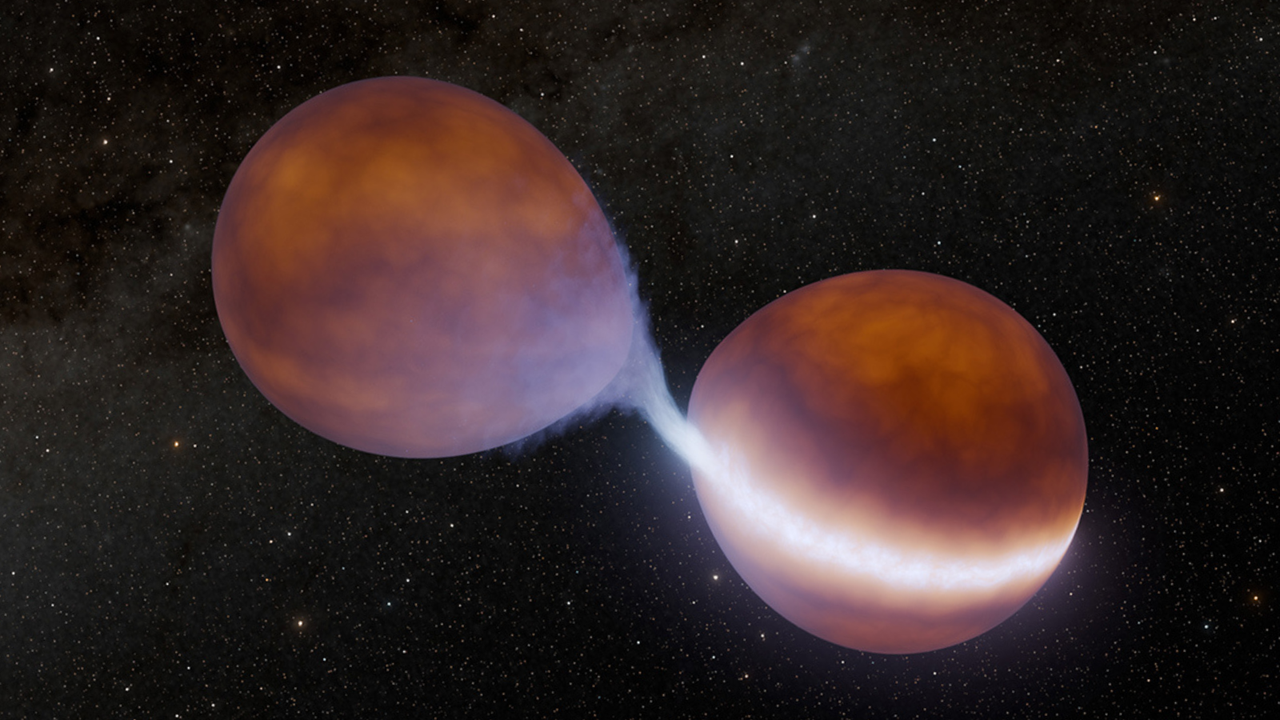
Brown dwarfs may have gained the unfortunate nickname “failed stars,” but new research suggests they can collide and merge for a second chance at success.

Brown dwarfs are cosmic objects with around 13 to 80 times the mass of Jupiter, making them around 0.013 to 0.08 times as massive as the sun. They are deemed as having “failed” because despite forming like normal stars — when vast, overly dense patches of matter collapse in interstellar clouds of gas and dust — they fail to gather enough mass from these clouds to trigger the nuclear fusion of hydrogen to helium in their cores, the process that defines a “main sequence” star, like the sun.

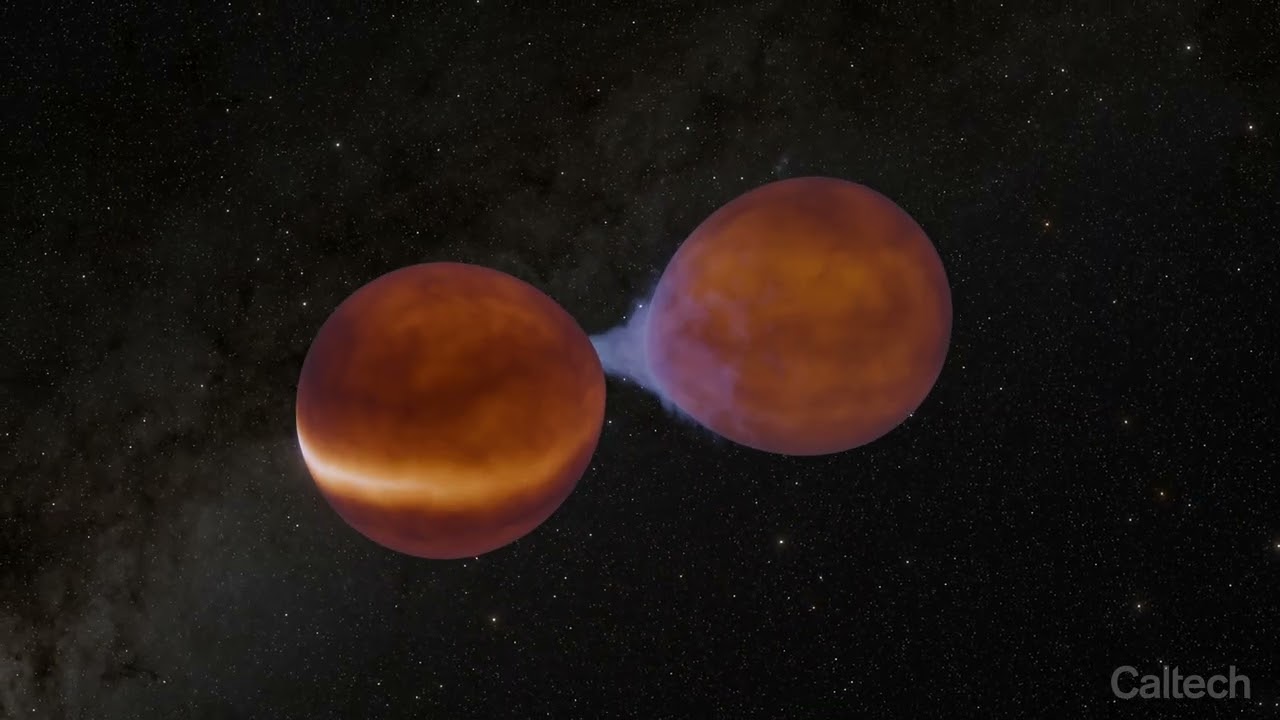
However, after searching through observations collected by the Zwicky Transient Facility (ZTF) at Palomar Observatory, a team of scientists has discovered a tightly orbiting pair of brown dwarfs that are working together to combat this “failure.” One brown dwarf is actively siphoning material from its companion, meaning it could achieve the mass needed to trigger nuclear fusion in its core and become a fully-fledged star. Either that, or these brown dwarfs will collide and merge, birthing an entirely new star with enough mass to trigger nuclear fusion.

Article continues below


You may like

“The failed stars get a second chance,” team leader Samuel Whitebook, from California Institute of Technology (Caltech), said in a statement. “Brown dwarfs don’t have internal engines like stars do, but this result shows they can exhibit very interesting dynamic physics.”

The team’s findings are extraordinary because, though similar mass transfer has been seen in binary objects before, this has occurred between stellar bodies with far greater masses.

“These are very exotic objects,” team member Tom Prince of Caltech said. “We’ve told some of our colleagues about them, and they didn’t believe such a thing exists.”
Two Dim Stars Team Up to Shine Brightly – YouTube
Two Dim Stars Team Up to Shine Brightly - YouTube

Watch On

The brown dwarf pairing at the heart of this discovery, found in the ZTF Variability Archive, is designated ZTF J1239+8347 (ZTF J1239) and is located around 1,000 light-years away in the constellation Ursa Major. The two brown dwarfs, both 60 to 80 times as massive as Jupiter, orbit each other so tightly that the entire ZTF J1239 system would fit between Earth and the moon.

Breaking space news, the latest updates on rocket launches, skywatching events and more!

The researchers can’t be sure how these brown dwarfs initially came to orbit each other, but they suspect that the failed stars were pulled from separate systems and pushed together by the gravitational influence of another star. Once orbiting each other, the brown dwarfs would have gradually spiraled closer and closer together, with the gravitational influence of one brown dwarf causing its counterpart to puff out and become less dense.

“When one star’s gravity is overcome by the other’s, matter starts flowing from the less dense star to the denser star,” Whitebook said. “It’s like the matter sloughs off through a nozzle.”

This “nozzle” sprays matter from the puffy brown dwarf to one spot on its denser companion. This region is heated and begins to glow brightly. As this bright spot rotates with its parent brown dwarf, it generates a significant change in the brightness of this system every 57 seconds. It is this signal that first made this system stand out among the 2 billion objects of the ZTF Variability Archive.

This is the first mass transfer process seen in a brown dwarf pairing, but the team believes there could be many more brown dwarf pairings such as this just waiting to be uncovered.

“We expect the Vera Rubin Observatory [a major ground-based observatory in Chile] to detect dozens more of these objects,” Whitebook concluded. “We want to find more to understand the population and how common it is. We predict this happens more than you think.”

The team’s research was published on Wednesday (March 18) in The Astrophysical Journal Letters.

Tags: rocket launch
No Result
View All Result

Recent Posts

  • NGA Rapid Capabilities Office to embrace speed and risk-taking
  • Scolese puts talent at center of NRO transition as he prepares to step down
  • Bringing imagery and communications under one roof
  • Eutelsat and Station Satcom sign agreement to scale LEO services for maritime fleet
  • ‘Thor’ hammered down 15 years ago, and it’s still the only Marvel movie to do the God of Thunder justice

Categories

  • Excursions
  • Kepler Mission
  • NASA
  • NASA Breaking News
  • Physical Preparation
  • Preparation
  • Space News
  • Space Station News
  • Spacewalks
  • Tours
  • Uncategorized
  • Weightlessness Training
  • What Not to Pack
  • What to Pack

Meta

  • Log in
  • Entries feed
  • Comments feed
  • WordPress.org
  • Home
  • Start Here
  • Preparing for Your Trip
  • Space Tourism Companies
  • Space Tours
  • Contact

© 2026 JNews - Premium WordPress news & magazine theme by Jegtheme.

No Result
View All Result
  • About
  • Contact
  • Feeds
  • Frequently Asked Questions
  • Preparing for Your Trip
    • Insurance and Legal Waivers
    • Physical and Medical Requirements
    • Training Programs
    • What to Expect
  • Privacy Policy
  • Space Tourism Companies
    • Axiom Space
    • Blue Origin
    • Blue Origin vs Virgin Galactic
    • Comparison Chart: Features, Pricing, Booking
    • SpaceX
    • Virgin Galactic
    • World View (stratospheric balloon flights)
  • Space Tours
    • Custom & Luxury Packages
    • Duration, Training, Costs
    • Experiences
    • Future Moon/Mars Options
    • Orbital Flights
    • Parabolic Flight Experiences
    • Private Missions
    • Stratospheric Balloon Flights
    • Suborbital Flights
    • Zero-Gravity Flights
  • Spaceflight Technologies
    • Space Tourism Balloon
  • Start Here
    • How to Book a Space Tour
    • Intro to Commercial Spaceflight
    • Is Space Tourism Safe?
    • Space Travel FAQs
    • View Earth from the Edge
    • What to Pack
  • Tours in Space is your launchpad to the world of space tourism

© 2026 JNews - Premium WordPress news & magazine theme by Jegtheme.