• Home
  • About
  • FAQ
  • Feeds
  • Glossary
  • Contact
Tours In Space
  • Home
  • Start Here
    • Intro to Commercial Spaceflight
    • How to Book a Space Tour
    • Is Space Tourism Safe?
    • Space Travel FAQs
    • View Earth from the Edge
    • What to Pack
  • Preparing for Your Trip
    • Insurance and Legal Waivers
    • Physical and Medical Requirements
    • Training Programs
    • What to Expect
  • Space Tourism Companies
    • Axiom Space
    • Blue Origin
    • SpaceX
    • Virgin Galactic
    • World View (stratospheric balloon flights)
    • Blue Origin vs Virgin Galactic
    • Comparison Chart: Features, Pricing, Booking
  • Space Tours
    • Custom & Luxury Packages
    • Duration, Training, Costs
    • Experiences
    • Future Moon/Mars Options
    • Orbital Flights
    • Parabolic Flight Experiences
    • Private Missions
    • Stratospheric Balloon Flights
    • Suborbital Flights
    • Zero-Gravity Flights
  • Spaceflight Technologies
    • Space Tourism Balloon
No Result
View All Result
  • Home
  • Start Here
    • Intro to Commercial Spaceflight
    • How to Book a Space Tour
    • Is Space Tourism Safe?
    • Space Travel FAQs
    • View Earth from the Edge
    • What to Pack
  • Preparing for Your Trip
    • Insurance and Legal Waivers
    • Physical and Medical Requirements
    • Training Programs
    • What to Expect
  • Space Tourism Companies
    • Axiom Space
    • Blue Origin
    • SpaceX
    • Virgin Galactic
    • World View (stratospheric balloon flights)
    • Blue Origin vs Virgin Galactic
    • Comparison Chart: Features, Pricing, Booking
  • Space Tours
    • Custom & Luxury Packages
    • Duration, Training, Costs
    • Experiences
    • Future Moon/Mars Options
    • Orbital Flights
    • Parabolic Flight Experiences
    • Private Missions
    • Stratospheric Balloon Flights
    • Suborbital Flights
    • Zero-Gravity Flights
  • Spaceflight Technologies
    • Space Tourism Balloon
No Result
View All Result
Tours In Space
No Result
View All Result
Home Uncategorized

Kepler to lead interoperability tests for ESA’s HydRON optical relay network

Ensign by Ensign
April 15, 2026
in Uncategorized
0
Kepler to lead interoperability tests for ESA’s HydRON optical relay network
189
SHARES
1.5k
VIEWS
Share on FacebookShare on Twitter
image

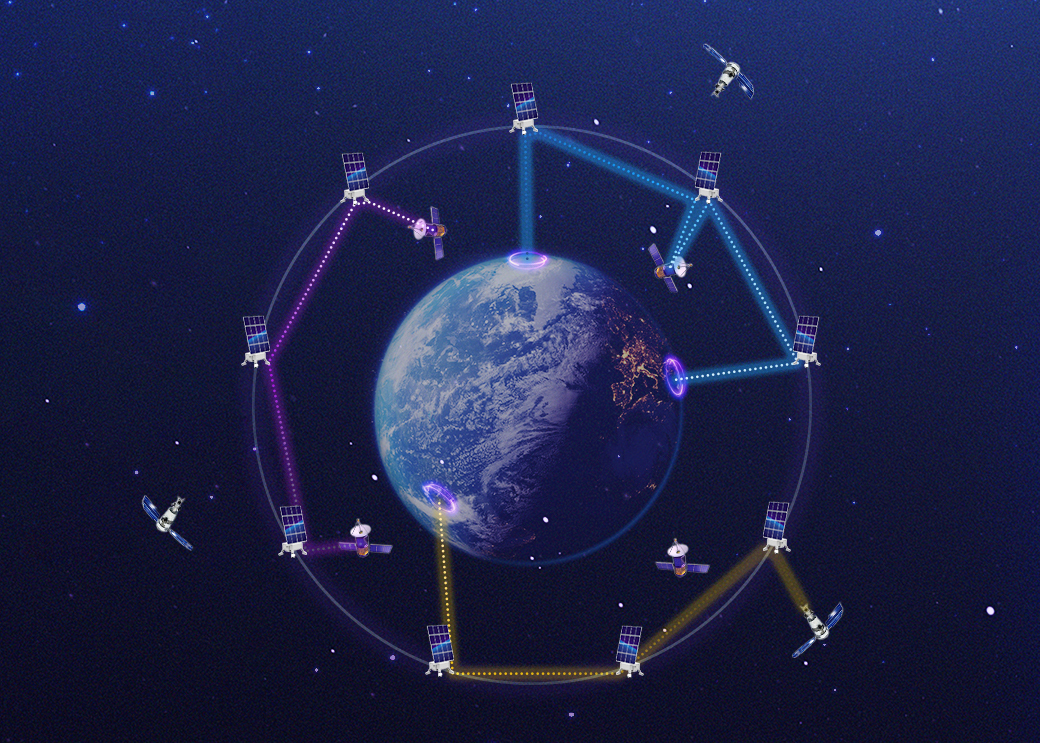
TAMPA, Fla. — The European Space Agency has picked Canadian small satellite operator Kepler Communications to lead a hosted payload mission to test terminal interoperability for HydRON, ESA’s flagship optical relay network program.

Kepler signed an 18.6 million euro ($22 million) prime contract April 14 for the third element of HydRON (High-throughput Optical Network), the final step in demonstrating a multi-orbit, terabit-per-second transport system designed to extend the reach of terrestrial fiber networks.

ESA selected the Canadian company in 2024 to lead the first HydRON element, comprising a ring of 10 optical satellites. Kepler CEO Mina Mitry told <em>SpaceNews that those satellites, along with the hosted payload third element, are slated for deployment in low Earth orbit (LEO) around 2028.

Sign up for First Up: Get the latest updates on SpaceX, Artemis, NASA and more. From Jeff Foust, First Up is a recap of the day’s space industry news, including civil, commercial, and military space developments.

By submitting this form, you agree to the SpaceNews privacy policy and terms and conditions and to receive email from us and our partners. You can opt-out at any time.

Europe’s Thales Alenia Space was picked to lead a second element, involving a LEO spacecraft designed to connect with ground stations and other LEO satellites, as well as a geostationary spacecraft to showcase HydRON’s multi-orbit extension.

Both elements span initial design to deployment, with additional contracts likely to follow to support a demonstration phase.

Testing interoperability

The third HydRON element focuses on validating interoperability across multiple optical communication systems.

Kepler said it will provide a satellite platform for the mission, using the same bus planned for its HydRON relay spacecraft. It will be joined by multiple European partners, including: 

  • TESAT Spacecom, providing optical communication terminal hardware;
  • Mbryonics, providing optical communication terminal hardware;
  • Astrolight, providing optical communication terminal hardware.

Germany’s Vyoma is also providing a space situational awareness hosted payload for the mission.

“HydRON will serve as the world’s first multi-orbital optical communications network with a terabit per second capacity, offering resilient and efficient data transfer to address the challenges of bringing connectivity to multiple users securely, quickly and reliably,” said Laurent Jaffart, ESA director of resilience, navigation and connectivity. 

“Today’s signature with Kepler Communications continues our collaboration on the project, as they contribute their expertise in concert with their consortium to deliver Element 3; the component of HydRON that’s key to building new industrial capabilities, demonstrating new service concepts, fostering system extensions and promoting international cooperation and interoperability.”

Building a relay network

Kepler is also deploying its own optical data relay constellation, after shifting away from a legacy satellite business providing low-data-rate connectivity for devices beyond the reach of terrestrial networks.

The company, which first tested optical inter-satellite links between a pair of prototypes in LEO in 2024, launched the first tranche of 10 optical relay satellites for its own network in January.

The roughly 300-kilogram satellites are equipped with optical terminals and onboard computing to enable low-latency data transfer and processing in orbit.

“We will launch Tranche 2 in approximately 2028 and will launch additional hosted payload missions in between to expedite customer adoption of optical technology,” Mitry said via email.

HydRON’s Element 1 satellites are slated to be part of Kepler’s Tranche 2.

No Result
View All Result

Recent Posts

  • Kepler to lead interoperability tests for ESA’s HydRON optical relay network
  • Blue Origin moves toward launch at Vandenberg
  • NRO highlights government and industry partnerships
  • SES and Boeing move toward factory-installed multi-orbit inflight connectivity
  • Commercial Space Federation (CSF) Welcomes ispace-U.S. to Board of Directors

Categories

  • Excursions
  • Kepler Mission
  • NASA
  • NASA Breaking News
  • Physical Preparation
  • Preparation
  • Space News
  • Space Station News
  • Spacewalks
  • Tours
  • Uncategorized
  • Weightlessness Training
  • What Not to Pack
  • What to Pack

Meta

  • Log in
  • Entries feed
  • Comments feed
  • WordPress.org
  • Home
  • Start Here
  • Preparing for Your Trip
  • Space Tourism Companies
  • Space Tours
  • Contact

© 2026 JNews - Premium WordPress news & magazine theme by Jegtheme.

No Result
View All Result
  • About
  • Contact
  • Feeds
  • Frequently Asked Questions
  • Preparing for Your Trip
    • Insurance and Legal Waivers
    • Physical and Medical Requirements
    • Training Programs
    • What to Expect
  • Privacy Policy
  • Space Tourism Companies
    • Axiom Space
    • Blue Origin
    • Blue Origin vs Virgin Galactic
    • Comparison Chart: Features, Pricing, Booking
    • SpaceX
    • Virgin Galactic
    • World View (stratospheric balloon flights)
  • Space Tours
    • Custom & Luxury Packages
    • Duration, Training, Costs
    • Experiences
    • Future Moon/Mars Options
    • Orbital Flights
    • Parabolic Flight Experiences
    • Private Missions
    • Stratospheric Balloon Flights
    • Suborbital Flights
    • Zero-Gravity Flights
  • Spaceflight Technologies
    • Space Tourism Balloon
  • Start Here
    • How to Book a Space Tour
    • Intro to Commercial Spaceflight
    • Is Space Tourism Safe?
    • Space Travel FAQs
    • View Earth from the Edge
    • What to Pack
  • Tours in Space is your launchpad to the world of space tourism

© 2026 JNews - Premium WordPress news & magazine theme by Jegtheme.