• Home
  • About
  • FAQ
  • Feeds
  • Glossary
  • Contact
Tours In Space
  • Home
  • Start Here
    • Intro to Commercial Spaceflight
    • How to Book a Space Tour
    • Is Space Tourism Safe?
    • Space Travel FAQs
    • View Earth from the Edge
    • What to Pack
  • Preparing for Your Trip
    • Insurance and Legal Waivers
    • Physical and Medical Requirements
    • Training Programs
    • What to Expect
  • Space Tourism Companies
    • Axiom Space
    • Blue Origin
    • SpaceX
    • Virgin Galactic
    • World View (stratospheric balloon flights)
    • Blue Origin vs Virgin Galactic
    • Comparison Chart: Features, Pricing, Booking
  • Space Tours
    • Custom & Luxury Packages
    • Duration, Training, Costs
    • Experiences
    • Future Moon/Mars Options
    • Orbital Flights
    • Parabolic Flight Experiences
    • Private Missions
    • Stratospheric Balloon Flights
    • Suborbital Flights
    • Zero-Gravity Flights
  • Spaceflight Technologies
    • Space Tourism Balloon
No Result
View All Result
  • Home
  • Start Here
    • Intro to Commercial Spaceflight
    • How to Book a Space Tour
    • Is Space Tourism Safe?
    • Space Travel FAQs
    • View Earth from the Edge
    • What to Pack
  • Preparing for Your Trip
    • Insurance and Legal Waivers
    • Physical and Medical Requirements
    • Training Programs
    • What to Expect
  • Space Tourism Companies
    • Axiom Space
    • Blue Origin
    • SpaceX
    • Virgin Galactic
    • World View (stratospheric balloon flights)
    • Blue Origin vs Virgin Galactic
    • Comparison Chart: Features, Pricing, Booking
  • Space Tours
    • Custom & Luxury Packages
    • Duration, Training, Costs
    • Experiences
    • Future Moon/Mars Options
    • Orbital Flights
    • Parabolic Flight Experiences
    • Private Missions
    • Stratospheric Balloon Flights
    • Suborbital Flights
    • Zero-Gravity Flights
  • Spaceflight Technologies
    • Space Tourism Balloon
No Result
View All Result
Tours In Space
No Result
View All Result
Home Space News

Don’t miss the Lyrid meteor shower 2026 peak tonight! Viewing times, location and tips

Ensign by Ensign
April 21, 2026
in Space News
0
Don’t miss the Lyrid meteor shower 2026 peak tonight! Viewing times, location and tips
190
SHARES
1.5k
VIEWS
Share on FacebookShare on Twitter

Heads up, skywatchers! Don’t miss the Lyrid meteor shower tonight, as activity peaks in the predawn hours of April 22.

Under ideal conditions, it’s possible to see up to 20 meteors per hour during the peak, with the chance to witness dramatically bright flashes known as fireballs.

Viewing conditions are looking promising for the Lyrids this year. The moon will set around midnight, leaving darker skies for the peak hours before dawn. While the shower continues through April 25, tonight offers your best chance to catch it at its peak.


You may like

Where to look

Lyrids can appear anywhere in the sky, but they trace back to an origin point known as a radiant in the constellation Lyra, near the bright star Vega.

Lyra rises in the northeast and climbs higher as the night goes on, making the early morning hours the best time to watch. For the most impressive streaks, look slightly away from the radiant — this is where meteors appear longer and more dramatic,

And if you can’t get outside, you can still enjoy the show via live night sky streams from around the world.
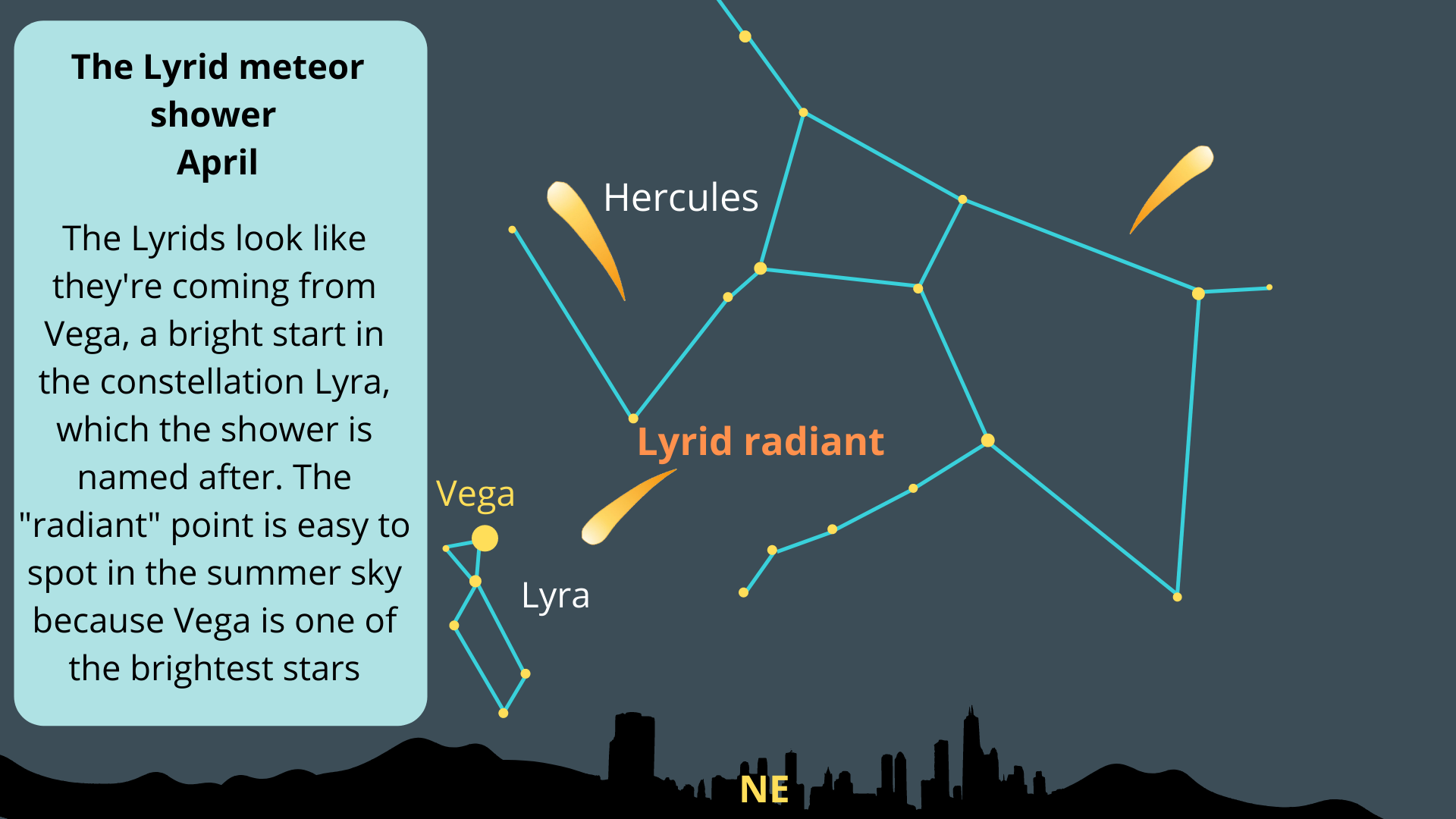
Graphic showing the Lyrid radiant and meteors appearing to originate there.

The radiant of the Lyrid meteor shower is located near the Hercules-Lyra border. (Image credit: Future)

When to look

The best time to look for Lyrids is in the early morning hours of April 22, just before dawn. By this time, Lyra is high in the sky and the moon has already set, reducing light interference.
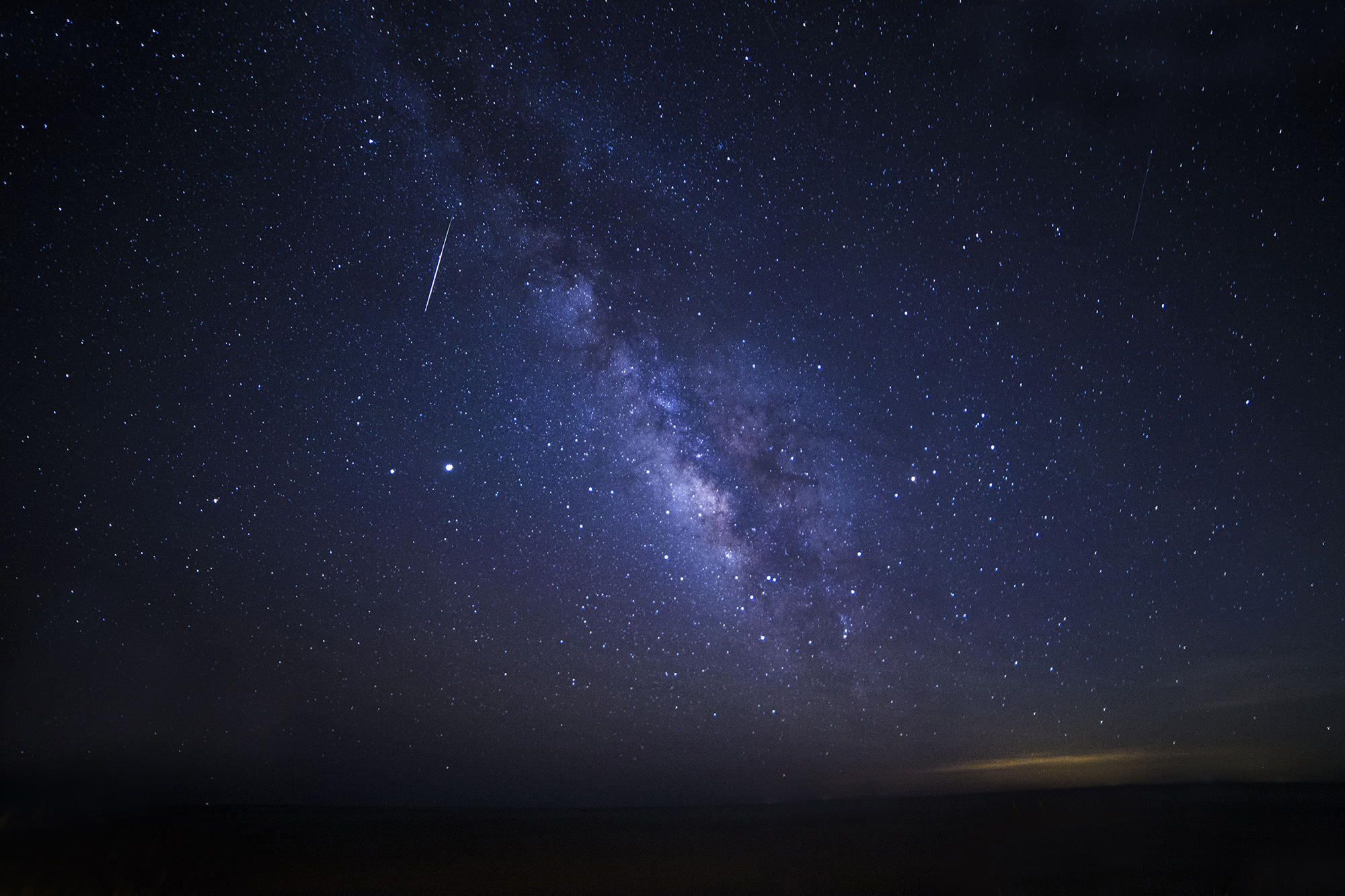
milky way streaks across the center of the image and a meteor in the top left corner leaves a long white trail in the sky.

A Lyrid meteor crosses the Milky Way galaxy in this photo taken by Tina Pappas Lee on Fripp Island, South Carolina. The photo was taken at approximately 4:45 a.m. local time on April 22, 2020. (Image credit: Courtesy of Tina Pappas Lee)

What are they?

When you see a Lyrid meteor, you’re watching a tiny piece of Comet Thatcher burning up in Earth’s atmosphere.

Comet Thatcher is a long-period comet that last made its closest approach to Earth in 1861. Each year, our planet plows through the debris it left behind, producing the Lyrid meteor shower.

Viewing tips
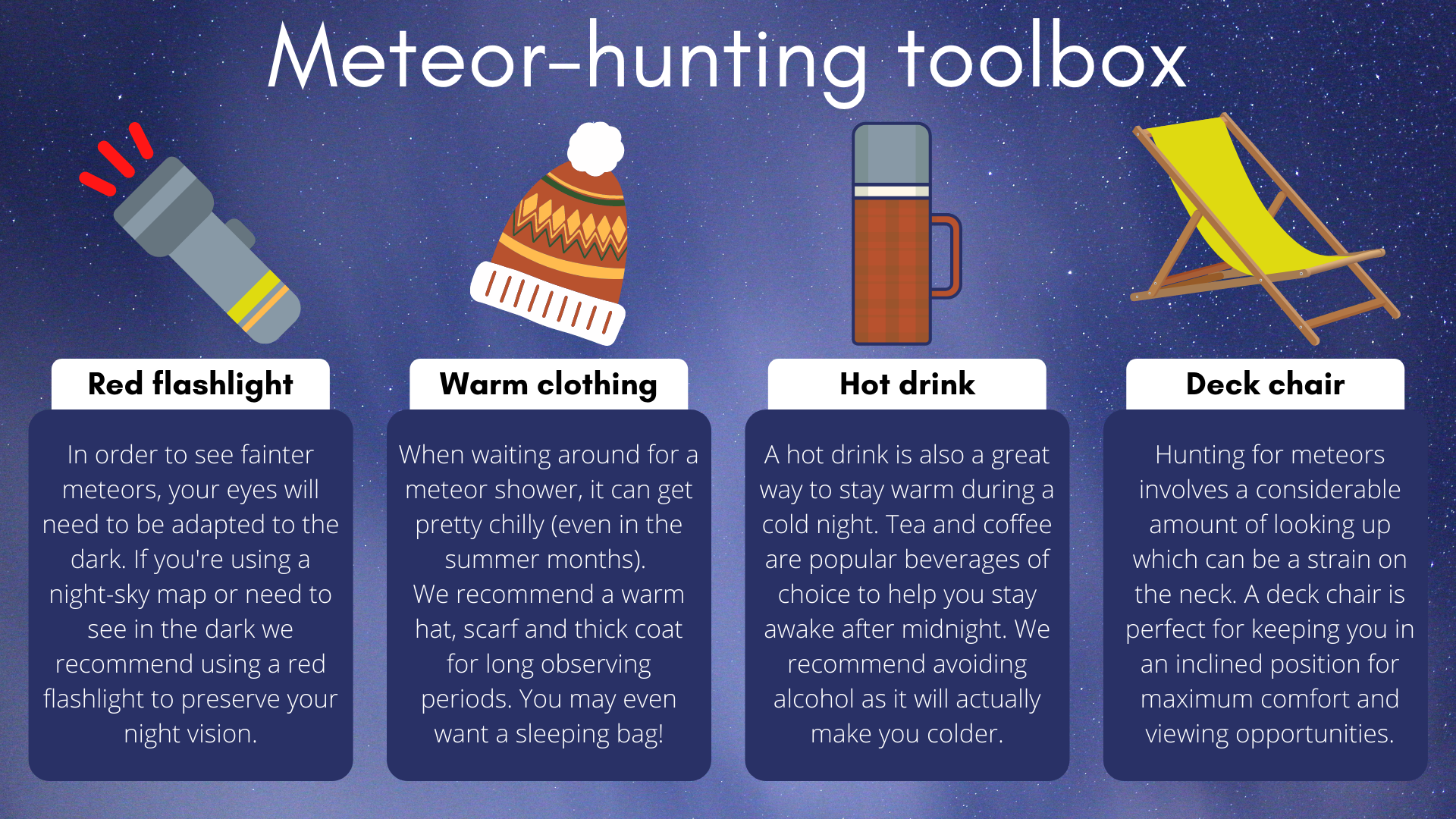
To best see the Lyrids, go to the darkest possible location, lean back and relax.

To best see the Lyrids, go to the darkest possible location, lean back and relax. (Image credit: Future)
  • Head to a dark location away from city lights if possible
  • Once there, allow your eyes at least 20-30 minutes to adjust to the darkness and avoid looking at your phone during this time (easier said than done!) as doing so will reset your night vision
  • Wrap up warm as you could be outside for a long time. Meteors can come in bursts, so give yourself at least an hour to enjoy the show.

If you’re hoping to capture the Lyrid meteor shower on camera, our guide on how to photograph meteor showers can help. We’ve also rounded up the best cameras for astrophotography if you’re thinking of upgrading your kit for the next big sky show.

<em>Editor’s note: If you capture a photo of the Lyrid meteor shower and would like to share it with Space.com’s readers, send your photo(s), comments, and your name and location to spacephotos@space.com.

No Result
View All Result

Recent Posts

  • Voyager ‘very optimistic’ about Starlab amid potential NASA changes
  • Ukrainian forces test direct-to-device satellite imagery for frontline troops
  • New NGA head makes industry debut at GEOINT Symposium 2026
  • Startup develops software to help military tap commercial imaging satellites
  • Loft Orbital expands into full-service constellation deals

Categories

  • Excursions
  • Kepler Mission
  • NASA
  • NASA Breaking News
  • Physical Preparation
  • Preparation
  • Space News
  • Space Station News
  • Spacewalks
  • Tours
  • Uncategorized
  • Weightlessness Training
  • What Not to Pack
  • What to Pack

Meta

  • Log in
  • Entries feed
  • Comments feed
  • WordPress.org
  • Home
  • Start Here
  • Preparing for Your Trip
  • Space Tourism Companies
  • Space Tours
  • Contact

© 2026 JNews - Premium WordPress news & magazine theme by Jegtheme.

No Result
View All Result
  • About
  • Contact
  • Feeds
  • Frequently Asked Questions
  • Preparing for Your Trip
    • Insurance and Legal Waivers
    • Physical and Medical Requirements
    • Training Programs
    • What to Expect
  • Privacy Policy
  • Space Tourism Companies
    • Axiom Space
    • Blue Origin
    • Blue Origin vs Virgin Galactic
    • Comparison Chart: Features, Pricing, Booking
    • SpaceX
    • Virgin Galactic
    • World View (stratospheric balloon flights)
  • Space Tours
    • Custom & Luxury Packages
    • Duration, Training, Costs
    • Experiences
    • Future Moon/Mars Options
    • Orbital Flights
    • Parabolic Flight Experiences
    • Private Missions
    • Stratospheric Balloon Flights
    • Suborbital Flights
    • Zero-Gravity Flights
  • Spaceflight Technologies
    • Space Tourism Balloon
  • Start Here
    • How to Book a Space Tour
    • Intro to Commercial Spaceflight
    • Is Space Tourism Safe?
    • Space Travel FAQs
    • View Earth from the Edge
    • What to Pack
  • Tours in Space is your launchpad to the world of space tourism

© 2026 JNews - Premium WordPress news & magazine theme by Jegtheme.