• Home
  • About
  • FAQ
  • Feeds
  • Glossary
  • Contact
Tours In Space
  • Home
  • Start Here
    • Intro to Commercial Spaceflight
    • How to Book a Space Tour
    • Is Space Tourism Safe?
    • Space Travel FAQs
    • View Earth from the Edge
    • What to Pack
  • Preparing for Your Trip
    • Insurance and Legal Waivers
    • Physical and Medical Requirements
    • Training Programs
    • What to Expect
  • Space Tourism Companies
    • Axiom Space
    • Blue Origin
    • SpaceX
    • Virgin Galactic
    • World View (stratospheric balloon flights)
    • Blue Origin vs Virgin Galactic
    • Comparison Chart: Features, Pricing, Booking
  • Space Tours
    • Custom & Luxury Packages
    • Duration, Training, Costs
    • Experiences
    • Future Moon/Mars Options
    • Orbital Flights
    • Parabolic Flight Experiences
    • Private Missions
    • Stratospheric Balloon Flights
    • Suborbital Flights
    • Zero-Gravity Flights
  • Spaceflight Technologies
    • Space Tourism Balloon
No Result
View All Result
  • Home
  • Start Here
    • Intro to Commercial Spaceflight
    • How to Book a Space Tour
    • Is Space Tourism Safe?
    • Space Travel FAQs
    • View Earth from the Edge
    • What to Pack
  • Preparing for Your Trip
    • Insurance and Legal Waivers
    • Physical and Medical Requirements
    • Training Programs
    • What to Expect
  • Space Tourism Companies
    • Axiom Space
    • Blue Origin
    • SpaceX
    • Virgin Galactic
    • World View (stratospheric balloon flights)
    • Blue Origin vs Virgin Galactic
    • Comparison Chart: Features, Pricing, Booking
  • Space Tours
    • Custom & Luxury Packages
    • Duration, Training, Costs
    • Experiences
    • Future Moon/Mars Options
    • Orbital Flights
    • Parabolic Flight Experiences
    • Private Missions
    • Stratospheric Balloon Flights
    • Suborbital Flights
    • Zero-Gravity Flights
  • Spaceflight Technologies
    • Space Tourism Balloon
No Result
View All Result
Tours In Space
No Result
View All Result
Home Space News

See the moon shining in the daytime sky this week: Here’s where to look

Ensign by Ensign
April 22, 2026
in Space News
0
See the moon shining in the daytime sky this week: Here’s where to look
190
SHARES
1.5k
VIEWS
Share on FacebookShare on Twitter

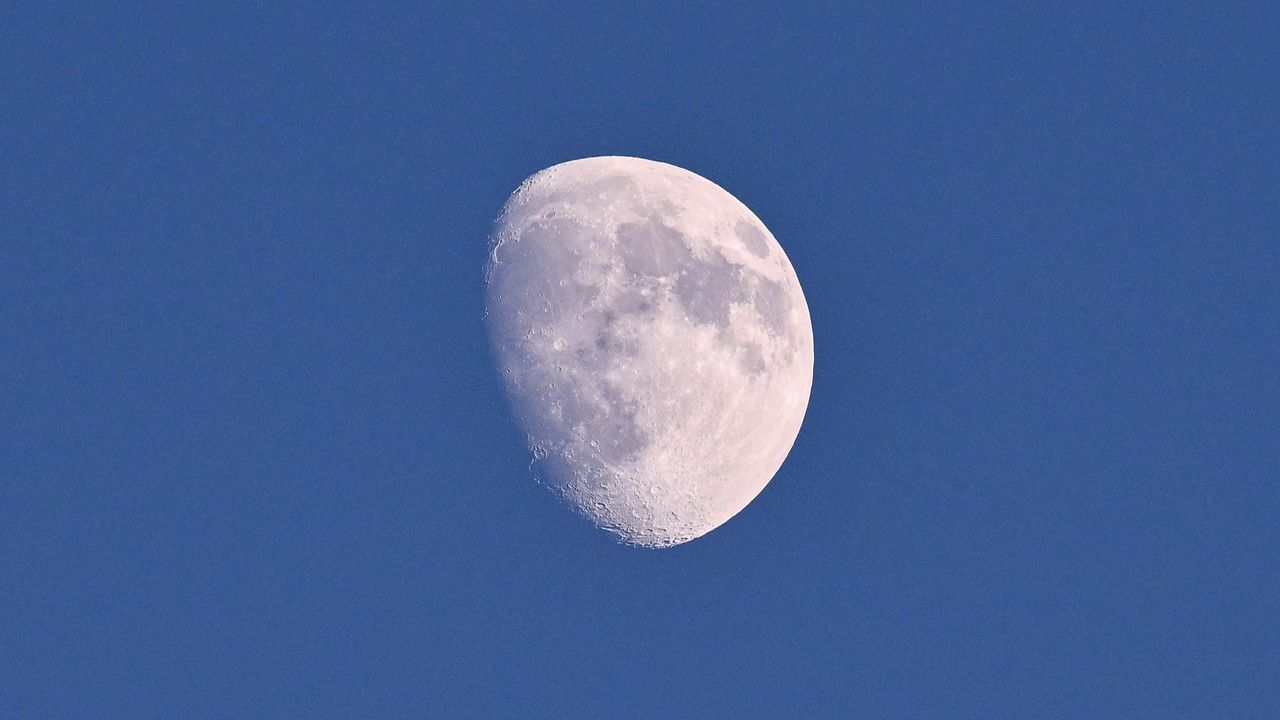
Don’t miss the first quarter moon shining close to Jupiter in the daytime sky this week!

Earth’s moon is one of the few objects bright enough to be seen in the daytime sky — along with the most dazzling planets such as Jupiter and Venus and, more rarely, Jupiter, under ideal conditions. Then there’s the sun, whose light saturates the atmosphere from dawn until dusk, shielding the cosmos from our sight.

This week, the moon will be visible gliding silently through the daytime sky from today (April 22), up until the next full moon phase on May 1.


You may like

Why can I see the moon during the day?

The moon rises and sets about 50 minutes later with each passing night, according to NASA (local moonrise and moonset times depend on location). As a result, it can appear in both the daytime and nighttime depending on its phase. For example, a first quarter moon rises around midday and sets around midnight, making it easy to spot in the afternoon sky, while a last quarter moon rises around midnight and lingers into hours after sunrise.

Where will the moon be in the daytime sky?

Look to the eastern sky at midday on April 22 to find the 30%-lit waxing crescent moon close to the horizon, with its lower half hidden in shadow. Jupiter will be visible as a steady point of light 5 degrees below the lunar crescent — roughly the width of your three middle fingers held at arm’s length against the sky — though you may need a pair of binoculars to spot it in the glare of the daytime sky.
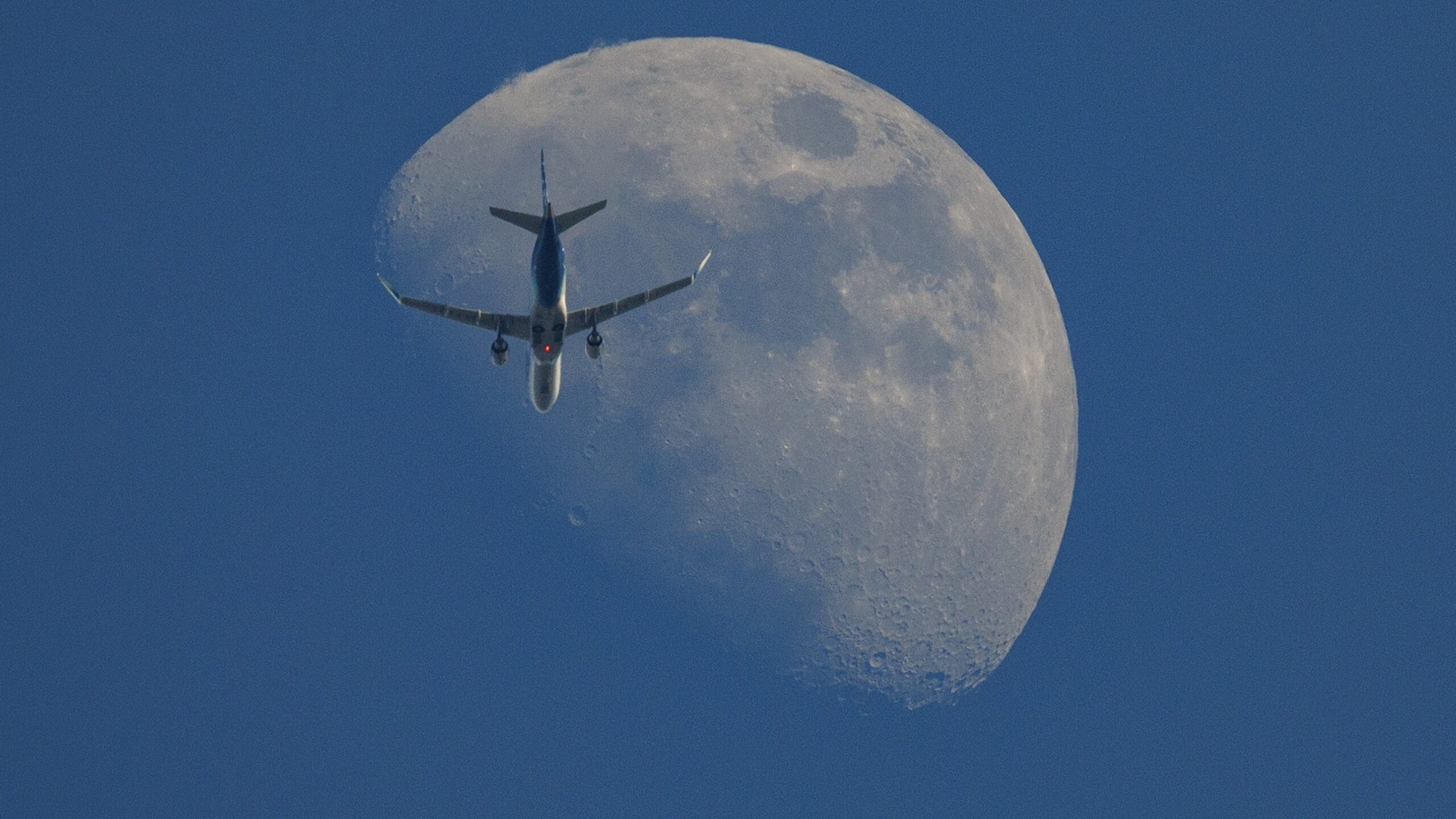
A waxing moon is pictured in the blue daytime sky with its right side lit by sunlight as a commercial jet flies in front of its disk.

A commercial jet soars in front of a waxing lunar disk in the skies over California. (Image credit: Photo by Kevin Carter/Getty Images)

The moon will tread a lazy arcing path high overhead in the daytime sky for viewers in the U.S., before gracing the southwestern sky at sunset, ready to begin its night shift and set around midnight.

Is it safe to observe the moon with a telescope during the day?

Observing the moon through a telescope or binoculars during the day does not pose a risk to your vision, though the utmost care must be taken to never point your scope or binoculars in the direction of the sun, as doing so can cause immediate and permanent loss of sight. Try to position your telescope in the shade, with a large object or building blocking your line of sight to the sun and be sure to keep a check on its position as it travels towards the western horizon throughout the day.

Breaking space news, the latest updates on rocket launches, skywatching events and more!

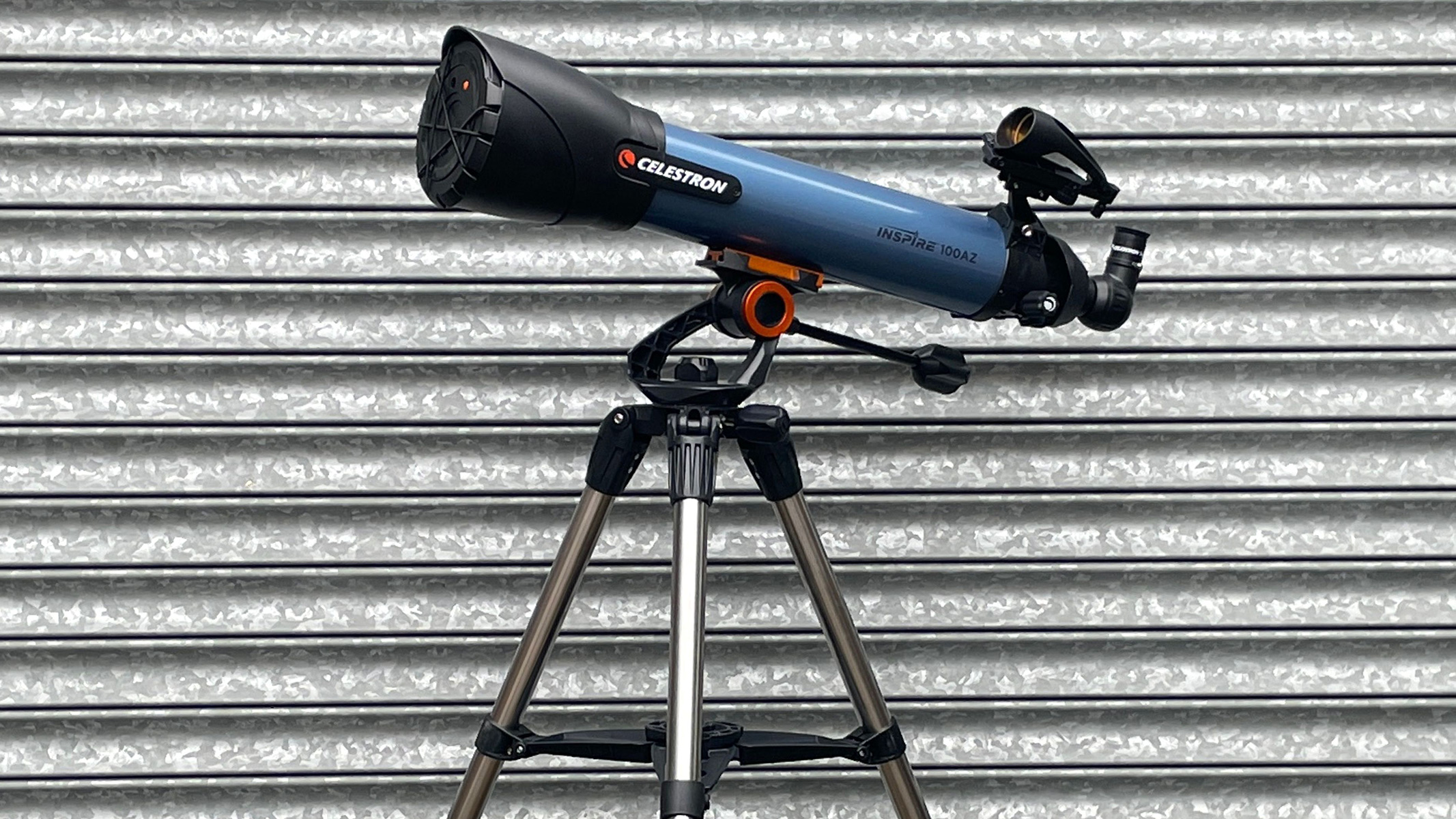
Celestron Inspire 100AZ

A side profile view of the telescope against a corrugated iron backdrop

(Image credit: Jamie Carter)

The Celestron Inspire 100AZ is an affordable model that provides crisp views of the moon and planets and it provides an opportunity to do some basic astrophotography. Check out our Celestron Inspire 100AZ review to find out more.

The dark forms of lunar maria, or lunar seas, will be easy to see with the naked eye, scarring the lunar surface where ancient lava flows once flooded networks of impact basins before hardening to form sweeping basaltic planes. A telescope will also reveal dramatic shadows playing across craters that sit close to the line separating night from day on the lunar surface, known as the terminator.

Want to get a closer look at the moon? Then be sure to peruse our picks of the best telescopes and binoculars for exploring the night sky. You may also want to read our guide to photographing the moon, along with our roundup of the top cameras and lenses for astrophotography.

<em>Editor’s Note: If you capture an image of the moon in the daytime sky and want to share it with Space.com’s readers, then please send your lunar photo(s), comments, name and location to spacephotos@space.com.

Tags: rocket launch
No Result
View All Result

Recent Posts

  • Voyager ‘very optimistic’ about Starlab amid potential NASA changes
  • Ukrainian forces test direct-to-device satellite imagery for frontline troops
  • New NGA head makes industry debut at GEOINT Symposium 2026
  • Startup develops software to help military tap commercial imaging satellites
  • Loft Orbital expands into full-service constellation deals

Categories

  • Excursions
  • Kepler Mission
  • NASA
  • NASA Breaking News
  • Physical Preparation
  • Preparation
  • Space News
  • Space Station News
  • Spacewalks
  • Tours
  • Uncategorized
  • Weightlessness Training
  • What Not to Pack
  • What to Pack

Meta

  • Log in
  • Entries feed
  • Comments feed
  • WordPress.org
  • Home
  • Start Here
  • Preparing for Your Trip
  • Space Tourism Companies
  • Space Tours
  • Contact

© 2026 JNews - Premium WordPress news & magazine theme by Jegtheme.

No Result
View All Result
  • About
  • Contact
  • Feeds
  • Frequently Asked Questions
  • Preparing for Your Trip
    • Insurance and Legal Waivers
    • Physical and Medical Requirements
    • Training Programs
    • What to Expect
  • Privacy Policy
  • Space Tourism Companies
    • Axiom Space
    • Blue Origin
    • Blue Origin vs Virgin Galactic
    • Comparison Chart: Features, Pricing, Booking
    • SpaceX
    • Virgin Galactic
    • World View (stratospheric balloon flights)
  • Space Tours
    • Custom & Luxury Packages
    • Duration, Training, Costs
    • Experiences
    • Future Moon/Mars Options
    • Orbital Flights
    • Parabolic Flight Experiences
    • Private Missions
    • Stratospheric Balloon Flights
    • Suborbital Flights
    • Zero-Gravity Flights
  • Spaceflight Technologies
    • Space Tourism Balloon
  • Start Here
    • How to Book a Space Tour
    • Intro to Commercial Spaceflight
    • Is Space Tourism Safe?
    • Space Travel FAQs
    • View Earth from the Edge
    • What to Pack
  • Tours in Space is your launchpad to the world of space tourism

© 2026 JNews - Premium WordPress news & magazine theme by Jegtheme.