

In 2025, Space42’s systems helped save over 660 lives across 25 distress events, from earthquakes in Myanmar, Nepal, and Turkey to cyclones in Mozambique and floods in Nigeria. In each case, the difference between data received and aid delivered came down to connectivity, observation, and response working in unison.
The space economy is scaling quickly. Its value is estimated to reach $1.8 trillion by 2035, as satellite communications, Earth observation (EO), and data platforms become foundational to how other industries operate. Yet the pace of capability growth has outrun the architecture holding it together, and we think that is the central problem the industry needs to confront. The real gap is between what individual systems can do and what the world actually needs them to do: work as one.
When fragmentation becomes the bottleneck

Connectivity has expanded significantly but remains uneven, with an estimated 2.2 billion people still offline in 2025. Even where coverage is available, the environments that depend on it most (remote energy platforms, maritime corridors, disaster zones) operate far from terrestrial networks and under conditions where fragmented systems extract the highest cost.
Data generated in one layer, transmitted in another, and analyzed in a third accumulates latency at every handoff. The divide between receiving information and acting on it is where lives and assets are lost. EO workflows are typically designed for analytical depth, while satellite communications infrastructure is optimized for coverage and throughput. Bridging the two is expensive and requires shared standards that neither was originally built to accommodate. Closing this divide requires more than better individual capabilities.
The commercial implications are stark. Mobile operators face customer churn when coverage fails in remote areas. Energy companies calculate lost revenue in hours when offshore platforms lose connectivity during critical operations. Emergency services measure the cost in response time.
Integration as an operational model
This is why we structured Space42 the way we did. Customers today pay multiple vendors to solve pieces of the problem, then spend millions more trying to integrate the pieces themselves.
We are building a different model: integrating satellite communications, Earth observation, and AI-powered analytics under one operational framework from the ground up. No other company is constructing this combination at the level of integration we are pursuing, and that reflects a deliberate judgment that fragmented systems, however capable individually, cannot close this divide on their own.
Our integrated approach operates across the full stack. In practice, that means Thuraya and YahClick extending reach into remote and infrastructure-limited regions; the Foresight constellation providing persistent, all-weather monitoring through Synthetic Aperture Radar (SAR) imagery; High-Altitude Platform Systems (HAPS) bridging coverage between terrestrial and space-based networks; and GIQ, our AI-powered geospatial intelligence platform, translating data into decision-ready insight. When these capabilities are built around the same operational realities, they move faster, reduce handoffs, and are less prone to failure at the moments that matter most.
Execution shapes competitive advantage
During Turkey’s 2023 earthquake, SAR imagery confirmed infrastructure status at a moment when optical satellites were blinded by dust and debris. That imagery moved directly into GIQ, which generated actionable guidance while our satellite communications channels kept coordination centers connected to field teams. SAR imagery, AI-powered analysis, and satellite communications working as one system reduced coordination from hours to minutes, and the decisions made were better for it.
Capabilities remain important, but their contribution across the full decision chain matters equally, and this is increasingly visible in how customers procure and deploy solutions. Systems that integrate from the outset, reduce operational complexity, and deliver consistent performance over time are winning preference. The World Meteorological Organization reports that 60% of countries now have multi-hazard early warning systems, highlighting both how far the sector has come and the remaining gap in operational readiness. The harder question is whether those systems can detect, communicate, and act as one when the moment arrives. That is the standard against which integrated infrastructure should be measured, and it is the one we designed Space42 to meet.
To learn more about Space42’s capabilities and insights, read more here.
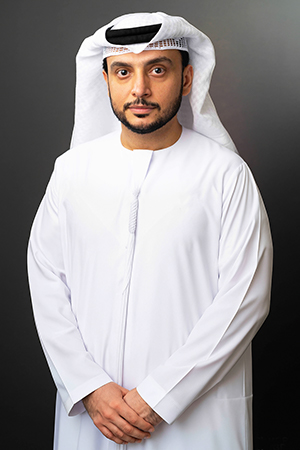
Written by Sulaiman Al Ali – Chief Commercial Officer – Business, Space42