• Home
  • About
  • FAQ
  • Feeds
  • Glossary
  • Contact
Tours In Space
  • Home
  • Start Here
    • Intro to Commercial Spaceflight
    • How to Book a Space Tour
    • Is Space Tourism Safe?
    • Space Travel FAQs
    • View Earth from the Edge
    • What to Pack
  • Preparing for Your Trip
    • Insurance and Legal Waivers
    • Physical and Medical Requirements
    • Training Programs
    • What to Expect
  • Space Tourism Companies
    • Axiom Space
    • Blue Origin
    • SpaceX
    • Virgin Galactic
    • World View (stratospheric balloon flights)
    • Blue Origin vs Virgin Galactic
    • Comparison Chart: Features, Pricing, Booking
  • Space Tours
    • Custom & Luxury Packages
    • Duration, Training, Costs
    • Experiences
    • Future Moon/Mars Options
    • Orbital Flights
    • Parabolic Flight Experiences
    • Private Missions
    • Stratospheric Balloon Flights
    • Suborbital Flights
    • Zero-Gravity Flights
  • Spaceflight Technologies
    • Space Tourism Balloon
No Result
View All Result
  • Home
  • Start Here
    • Intro to Commercial Spaceflight
    • How to Book a Space Tour
    • Is Space Tourism Safe?
    • Space Travel FAQs
    • View Earth from the Edge
    • What to Pack
  • Preparing for Your Trip
    • Insurance and Legal Waivers
    • Physical and Medical Requirements
    • Training Programs
    • What to Expect
  • Space Tourism Companies
    • Axiom Space
    • Blue Origin
    • SpaceX
    • Virgin Galactic
    • World View (stratospheric balloon flights)
    • Blue Origin vs Virgin Galactic
    • Comparison Chart: Features, Pricing, Booking
  • Space Tours
    • Custom & Luxury Packages
    • Duration, Training, Costs
    • Experiences
    • Future Moon/Mars Options
    • Orbital Flights
    • Parabolic Flight Experiences
    • Private Missions
    • Stratospheric Balloon Flights
    • Suborbital Flights
    • Zero-Gravity Flights
  • Spaceflight Technologies
    • Space Tourism Balloon
No Result
View All Result
Tours In Space
No Result
View All Result
Home Uncategorized

Countering missile threats ‘left of launch’

Ensign by Ensign
April 17, 2026
in Uncategorized
0
Countering missile threats ‘left of launch’
189
SHARES
1.5k
VIEWS
Share on FacebookShare on Twitter
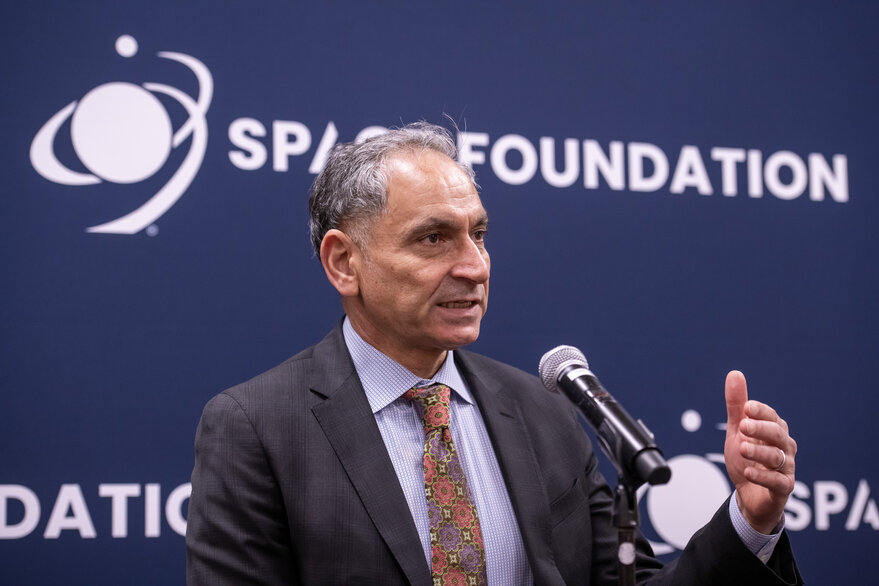
image

COLORADO SPRINGS – U.S. government agencies are working with industry to develop tools to disrupt missiles before they take flight, a timespan called ‘left of launch.’

“We’re looking at different aspects of the threat as it evolves,” Erich Hernandez-Baquero, Raytheon Intelligence and Space vice president of space intelligence, surveillance, reconnaissance, said at the Space Symposium. “Different types of capabilities, authorities and elements have to come into play, both operationally and in terms of mission capabilities, in order to stay on top of that threat, hold it at risk and ultimately defend against it.”

Effective missile defense will require diverse technologies, policies and strategies, a panel of experts said April 15.

Sign up for First Up: Get the latest updates on SpaceX, Artemis, NASA and more. From Jeff Foust, First Up is a recap of the day’s space industry news, including civil, commercial, and military space developments.

By submitting this form, you agree to the SpaceNews privacy policy and terms and conditions and to receive email from us and our partners. You can opt-out at any time.

“If you go far enough to the left, you are in the realm of foundational intelligence,” said Dan Chang, NASA Jet Propulsion Laboratory national security area executive. “As you get closer to the actual time of launch, you’re in the realm of indications and warnings.”

While these types of analyses are often carried out with different technologies and funded through distinct programs, “they have to work together in a timeline that sometimes will be very fast and sometimes might play out over a period of days,” Chang said. “It’s something that requires a lot of agility.”

Faster and Dimmer

U.S. defense and intelligence agencies are eager to evaluate missile capabilities. How fast can they travel, for example, and how bright or dim are their spectral signatures?

That type of information will help SDA establish the Proliferated Warfighter Space Architecture, a low‑Earth orbit constellation to warn of and track missiles “because our job really starts at launch,” said Gurpartap “GP” Sandhoo, U.S, Space Force Space Development Agency (SDA) director. “When we look at left of launch, it is understanding, science and knowledge.”

Earth-observation satellites that monitor activity around the world over days, weeks or months may shed light on evolving threats. For instance, Vantor’s Earth-observation constellation provides high-resolution electro-optical imagery.

“But there’s a lot of additional information that comes from combining visible imagery” with synthetic aperture radar, infrared and lidar “to provide context about activity around sites of interest,” said Matt Jenkins, Vantor chief space officer. “We want to track that, understand where it’s going, and provide information on where threats might come from.”

Multiple vendors gather remote sensing data through diverse phenomenologies. While that makes “fielding and engineering and integration harder,” it’s necessary to address “the holistic problem we face,” Sandhoo said. “The threat is going to get faster and dimmer. There is not a single solution.”

Once data on potential missile threats is obtained, speedy processing that combines artificial intelligence with large language models, real (or human) intelligence and physics models will be critical, Sandhoo said.

U.S. agencies also will be on the lookout for cyberattacks before and after any missiles launch. “The cyber domain, obviously, is going to be the key area of conflict” throughout the left-of-launch timeline, Hernandez-Baquero said.

Tags: NASA
No Result
View All Result

Recent Posts

  • ‘For All Mankind’ alternative timeline vs reality: How Apple TV’s sci-fi show diverges from history
  • India’s TakeMe2Space sets sights on 50-kilowatt data center
  • Countering missile threats ‘left of launch’
  • Taiwan floats shared satcom constellation amid calls for more space collaboration
  • Companies make the case for commercial space station markets

Categories

  • Excursions
  • Kepler Mission
  • NASA
  • NASA Breaking News
  • Physical Preparation
  • Preparation
  • Space News
  • Space Station News
  • Spacewalks
  • Tours
  • Uncategorized
  • Weightlessness Training
  • What Not to Pack
  • What to Pack

Meta

  • Log in
  • Entries feed
  • Comments feed
  • WordPress.org
  • Home
  • Start Here
  • Preparing for Your Trip
  • Space Tourism Companies
  • Space Tours
  • Contact

© 2026 JNews - Premium WordPress news & magazine theme by Jegtheme.

No Result
View All Result
  • About
  • Contact
  • Feeds
  • Frequently Asked Questions
  • Preparing for Your Trip
    • Insurance and Legal Waivers
    • Physical and Medical Requirements
    • Training Programs
    • What to Expect
  • Privacy Policy
  • Space Tourism Companies
    • Axiom Space
    • Blue Origin
    • Blue Origin vs Virgin Galactic
    • Comparison Chart: Features, Pricing, Booking
    • SpaceX
    • Virgin Galactic
    • World View (stratospheric balloon flights)
  • Space Tours
    • Custom & Luxury Packages
    • Duration, Training, Costs
    • Experiences
    • Future Moon/Mars Options
    • Orbital Flights
    • Parabolic Flight Experiences
    • Private Missions
    • Stratospheric Balloon Flights
    • Suborbital Flights
    • Zero-Gravity Flights
  • Spaceflight Technologies
    • Space Tourism Balloon
  • Start Here
    • How to Book a Space Tour
    • Intro to Commercial Spaceflight
    • Is Space Tourism Safe?
    • Space Travel FAQs
    • View Earth from the Edge
    • What to Pack
  • Tours in Space is your launchpad to the world of space tourism

© 2026 JNews - Premium WordPress news & magazine theme by Jegtheme.